When those entrusted with justice are called to account, who watches the watchers?
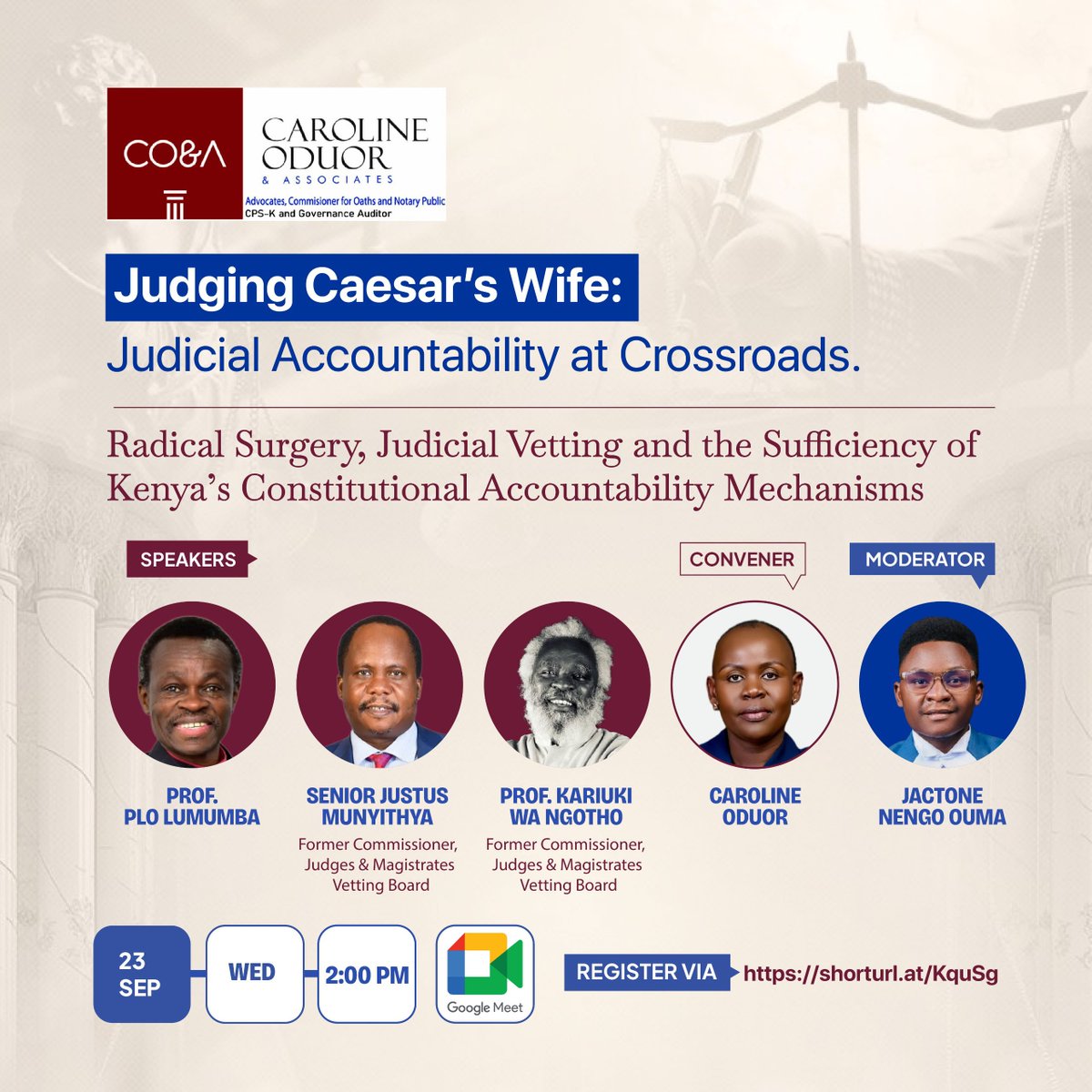
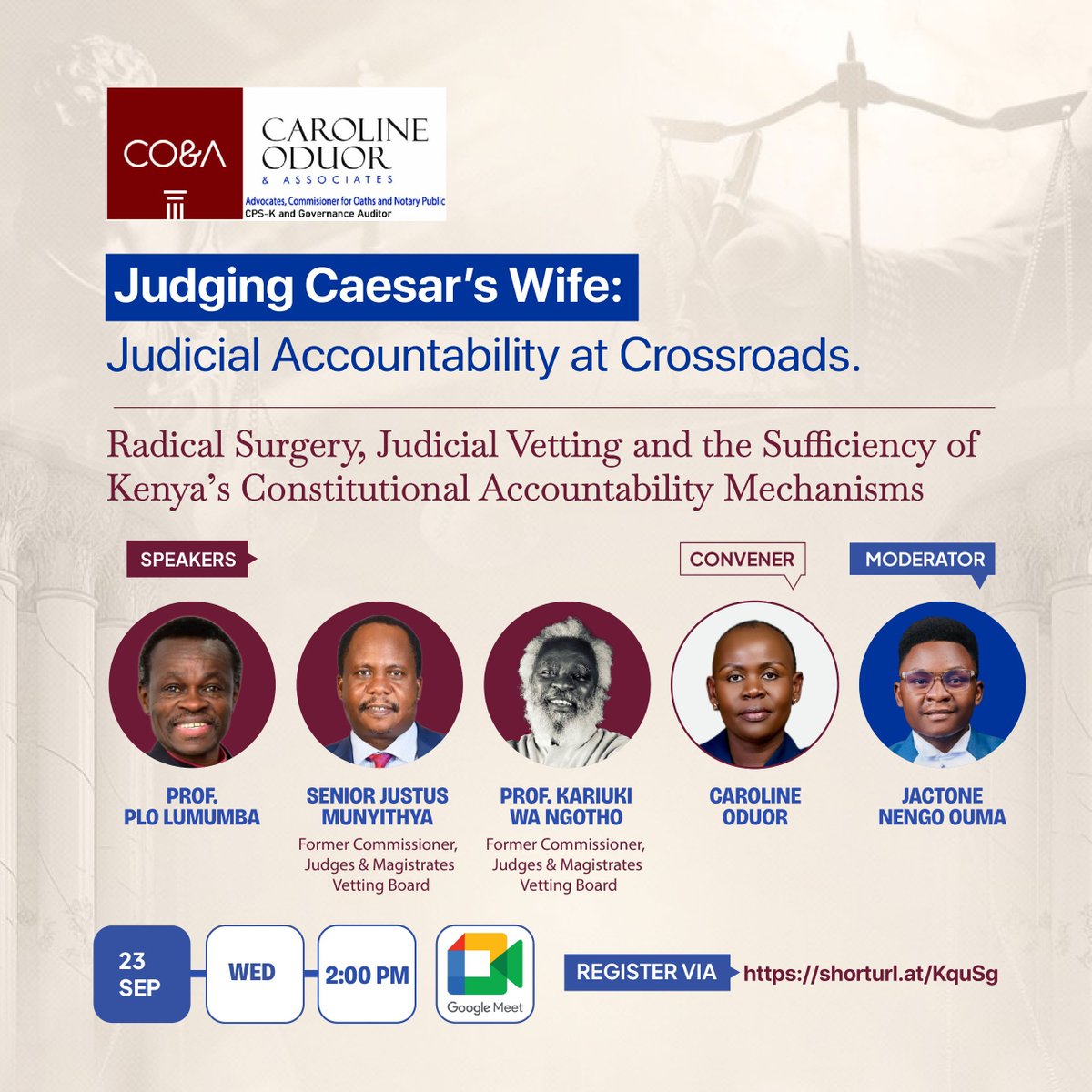
Hayawi hayawi huwa. Join us TODAY at 2PM for Session 1 of “Judging Caesar’s Wife: Judicial Accountability at Crossroads.”
Register: https://t.co/BXtYO1yVFf
🚨 Court of Appeal holds that a new board cannot tear up a deal its predecessor lawfully signed. When fresh leadership at NETFUND tried to escape a KSh 5.56 million payout to the former CEO, the court said no. The principle protects contracts across every organisation in Kenya. Here is the analysis.
The case is National Environment Trust Fund (NETFUND) v Ndegwa (Civil Appeal E497 of 2024) [2026]. NETFUND had entered into a separation agreement, an exit settlement, with its departing chief executive, worth about KSh 5.56 million. A new board later took over and sought to avoid honouring it. The Court of Appeal upheld the agreement and held NETFUND bound.
The central principle is the continuity of corporate obligations. A statutory body or company is a legal person distinct from the individuals who run it at any moment. When its authorised organs enter a valid contract, the obligation belongs to the entity, not to the particular board that signed it. A change of leadership does not change the contracting party: the entity remains the same, and its commitments survive the people who made them. An incoming board inherits both the assets and the liabilities of the organisation, and cannot disown lawful agreements it finds inconvenient.
Underlying this is the sanctity of contract. As the Court of Appeal held in National Bank of Kenya Ltd v Pipeplastic Samkolit (K) Ltd, "a court of law cannot rewrite a contract between parties; the parties are bound by the terms of their contract, unless coercion, fraud, or undue influence is pleaded and proved." A valid contract binds, and a party cannot escape it merely because it later regrets the bargain, or because new decision-makers would have chosen differently. Absent a proven vitiating factor, fraud, illegality, duress, or a genuine lack of authority when the deal was made, the agreement stands.
The legal dispute worth naming. On one side is contractual certainty: counterparties, employees, suppliers, lenders, must be able to rely on agreements made with an organisation, or no one could safely transact with any entity whose leadership periodically changes. On the other is accountability: incoming boards sometimes inherit genuinely improper deals, over-generous exit packages, or contracts tainted by irregularity, and the law must leave room to challenge those. The reconciliation lies in the vitiating factors. A new board that believes a predecessor's contract was procured by fraud, exceeded the signatory's authority, or was otherwise unlawful can challenge it on those specific grounds, but it cannot simply refuse to honour a valid agreement because it disagrees with it. Disagreement is not a ground; illegality or fraud is.
The practical takeaways. For organisations and their boards: the commitments you make bind the institution, not just the current leadership, so your successors will be held to your deals, and you to your predecessors'. For anyone contracting with a company or public body, including departing executives negotiating exit terms: a properly authorised agreement is enforceable regardless of future leadership changes, so ensure it is validly made and clearly documented. For incoming boards: if you believe an inherited contract is tainted, the route is to prove a vitiating factor in court, not to unilaterally repudiate it. An organisation's word, lawfully given, does not expire when its leadership changes.
👉 Follow @Lexken_EMSLaw for practical legal insights on corporate governance, contract and commercial disputes.
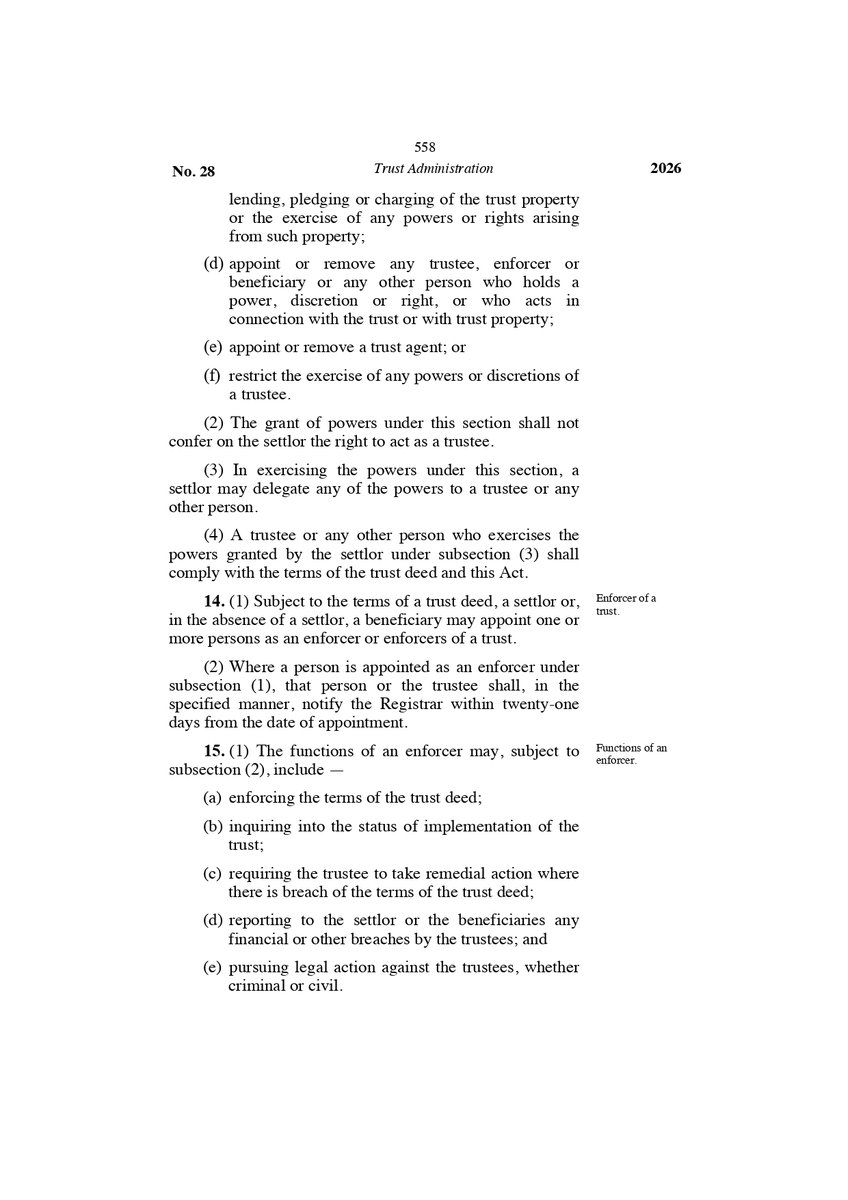
Fact 10 | Trustees now have a statutory watchdog
The Trust Administration Act, 2026 provides for an enforcer to monitor compliance with the trust deed, demand remedial action, report breaches and take legal action against trustees. The enforcer can access relevant trust records.
“Submissions do not constitute evidence at all.”
In Moi v Muriithi & another [2014] eKLR, the Court of Appeal held that submissions cannot take the place of evidence. A party who fails to prove his case through evidence cannot seek to remedy that failure through submissions.
🚨 The High Court has confirmed you can be bound by, and benefit from, a contract made entirely on your behalf by someone else.
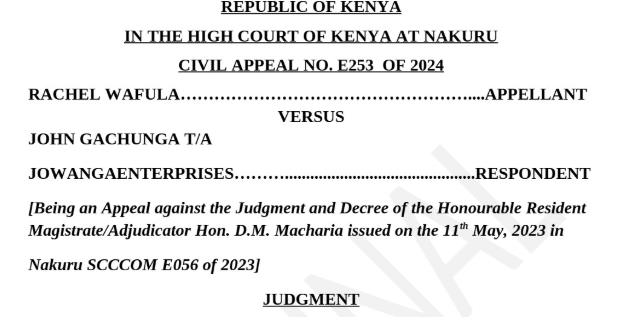
In Rachel Wafula v John Gachunga t/a Jowanga Enterprises, Rachel bought a vehicle engine for Sh920,000, but did not select or negotiate it herself; her brother-in-law, acting on her instructions, used her logbook and engaged mechanics to procure it. When a dispute arose, the seller argued there was no contract with Rachel because she had never personally dealt with him. The court disagreed.
The central principle is agency. The acts of an authorised agent bind the principal as if done personally, captured in the maxim qui facit per alium facit per se, "he who does anything through another, does it himself." Because her brother-in-law acted within her authority, and the seller supplied the engine and took her Sh920,000, a direct contract, privity, existed between Rachel and the seller.
But a contract does not mean every complaint about the goods succeeds. The court considered Section 16 of the Sale of Goods Act on fitness for purpose and merchantable quality, but found those conditions unproven: the engine had been chosen through the buyer's own representatives, not in reliance on the seller's judgment, and there was no sufficient evidence it was defective. The court also corrected the lower court's contradictory position, finding no contract yet ordering a refund, and directed that the Sh920,000 be refunded after sale of the engine, failing which the seller pays unconditionally.
In the recent Ngao v Ngonge, the High Court held, on similar facts, that a contract existed through implied or ratified agency, relying on Garnac Grain Co v HMF Faure & Fairclough. A principal is bound by, and benefits from, an agent's authorised acts.
The takeaway: you gain real contractual rights when you buy through an authorised agent, but choose that agent carefully, because where your representatives select the goods, you may not be able to blame the seller for the choice. Authority is the hinge, acts done within the authority you grant are, in law, your own.
👉 Follow @Lexken_EMSLaw for practical legal insights on contract, agency and commercial disputes.
"Four things belong to a judge: to listen courteously, answer wisely, consider soberly and decide impartially."
Join me for Part 1 of the 3-part webinar, Judging Caesar’s Wife: exploring judicial accountability in Kenya. 23 Sept 2026.
Register: https://t.co/BXtYO1ynPH
Arbitration and ADR do more than settle disputes—they shape environmental, social and economic outcomes.
Their future lies in integrating sustainability, justice, innovation and accountability.@k_muigua
Read: https://t.co/68LoaO9Z4t
#Arbitration#ADR#Sustainability
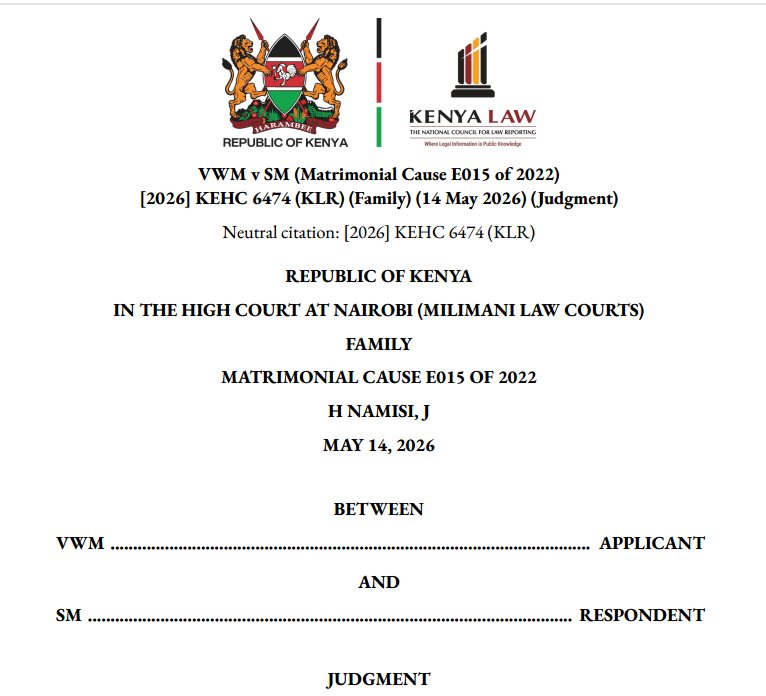
VWN -v- SM Matrimonial Caise E015/2022
Property inherited during subsitence of marriage form part of matrimonial property amenable to division in the event of a divorce, more so where the Applicant proves contribution.
property is jointly registetred, joint tenancy is severed
Marine pollution crosses borders. Effective solutions must do the same.
The article examines how coordinated governance, global agreements and coastal-community action can protect marine health. @k_muigua
Read: https://t.co/iPWAN0eJuk
#Hotoffthebench
Access yesterday's decisions by Justice Nyaundi finding the Inspector General of Police guilty of contempt of court and declaring sections of the PPP Act unconstitutional here:
https://t.co/1fmrKRruMX
🚨 Banker sues his employer for Sh137 million in commission he says he earned on the Sh106 billion Kenya Pipeline IPO, then was denied.
In Patrick Ouma Kwome v Rock Investment Bank, filed at the Employment and Labour Relations Court, a former associate at the bank (Faida Investment Bank's partner on the KPC IPO) claims Sh137.2 million in withheld commission. He alleges he was forced to resign into a hostile environment, and asks the court to declare the non-payment a fundamental breach, award the commission, and grant 12 months' salary for constructive dismissal.
Two principles sit at the centre.
Contractual entitlement to commission is governed by the agreement: an employer cannot withhold what was contractually earned, but the employee must prove the entitlement crystallised on the agreed terms. And constructive dismissal treats a resignation as a dismissal where the employer's conduct fundamentally breaches the relationship, though the burden lies on the employee to prove it.
The bank is yet to respond, and the process should run its course.
The practical lesson: reduce commission terms to writing with precision, the trigger for payment, the calculation, the timing, and what happens on exit. Ambiguity is where these disputes are born, and what your contract says about when commission is earned, not the value you feel you added, is what a court will enforce.
👉 Follow @Lexken_EMSLaw for practical legal insights on employment law, contract and dispute resolution.
#hotoffthebench
Important:
Parliament must have oversight where Public-Private Partnership projects create financial obligations for the government.
Parliament cannot surrender its oversight function!
@katibainstitute@hp_gichana
🚨 DO YOU STILL THINK YOU MUST SIGN THE DEAL YOURSELF FOR THE LAW TO HOLD YOU ACCOUNTABLE? YOU ARE MISTAKEN!
The High Court at Nakuru has made the position clear in Rachel Wafula v John Gachunga t/a Jowanga Enterprises, Civil Appeal No. E253 of 2024, delivered on 14th September 2026. Rachel purchased an engine through her brother-in-law, who acted on her instructions, used the vehicle’s logbook and engaged mechanics in identifying and procuring the engine. When a dispute arose, the seller argued that Rachel had no contractual relationship with him because she had not personally negotiated or selected the engine. The High Court disagreed. Applying the principles of agency, the Court held that the acts of an authorized agent bind the principal and that, once the agent acted within Rachel’s authority, the seller supplied the engine and accepted the Kshs. 920,000 payment, contractual privity existed directly between Rachel and the seller. The Court relied on the established principle that he who does anything through another, does it himself.
But there was another important qualification. Having a contract does not automatically mean that every complaint about the goods will succeed. The Court considered section 16 of the Sale of Goods Act on fitness for purpose and merchantable quality, but found that those implied conditions had not been established because the engine had been selected through the buyer’s own representatives and there was insufficient evidence that the replacement engine was defective. The Court nevertheless found an error of law in the lower court’s contradictory position that there was no contract while simultaneously ordering a refund, and ultimately directed that the Kshs. 920,000 be refunded after sale of the engine, failing which the seller would have to pay the amount unconditionally. The jurisprudence is clear: you can transact through an authorized agent without personally signing or negotiating the deal and still acquire enforceable contractual rights and obligations.
Kindly retweet widely🙏
🚨 Court of Appeal holds that a lawyer who spent years chasing his fees in the wrong court cannot recover them, because the clock never stopped running.
In Mugambi & another v Wangai (Civil Appeal No. 64 of 2020) [2026], the Court of Appeal restated a principle that an advocate's claim for professional fees arises from the contract of retainer with the client, and it is therefore subject to the six-year limitation period for contract claims under Section 4(1)(a) of the Limitation of Actions Act. Because the cause of action had accrued on 8 February 2010, the bill of costs filed on 20 June 2016 was time-barred, filed just outside the six-year window.
The crucial, and most consequential, holding is what the Court refused to do. The advocate had spent part of that period pursuing the claim, but in a court that ultimately lacked jurisdiction. He argued, in effect, that time should not count against him while he was genuinely litigating, wrongly, but in good faith. The Court held that Kenyan law does not recognise "equitable tolling", the suspension of the limitation clock while a party prosecutes a claim in a court without jurisdiction. Time runs regardless. Pursuing your claim in the wrong forum does not pause the deadline; it wastes it.
The legal dispute. This sits on a genuine fault line between two values the law holds dear. On one side is certainty and finality: limitation periods exist so defendants are not exposed to stale claims indefinitely, and so disputes are brought while evidence is fresh. On the other is substantive justice: it can seem deeply unfair that a litigant who was actively fighting for their right, and merely chose the wrong door, loses that right entirely to the passage of time. The Court came down firmly on the side of certainty: the limitation statute means what it says, and there is no general judicial discretion to extend it out of sympathy.
The contrast with other jurisdictions is instructive. In the United States, the Supreme Court in United States v Kwai Fun Wong (2015) held that even certain statutory time bars can be equitably tolled where a claimant was diligent but prevented from filing in time, because they were not expressly made jurisdictional. Kenya has deliberately not travelled that road. Our courts treat limitation, like jurisdiction, as hard-edged, and the principle from Samuel Kamau Macharia v Kenya Commercial Bank, that "jurisdiction is everything" and cannot be conferred by consent or good intentions, reinforces why time spent in a court that never had power to hear the claim simply does not count.
The judgment also settled a costs point worth noting: the High Court properly exercised its discretion under Section 27 of the Civil Procedure Act in awarding full costs to the successful party. Even though that party won on the limitation point alone, that single issue disposed of the entire case, making them the successful party fully entitled to costs. Winning on one dispositive ground is winning.
The practical takeaway. For advocates and litigants alike, the lesson is doubly pointed. First, diarise limitation from the moment a cause of action accrues, and file within time, in the correct forum, because there is no safety net if you get the forum wrong and the clock expires. Second, jurisdiction is not a technicality to be sorted out later; filing in the wrong court can be fatal, not merely inconvenient, because the time lost there is gone for good. In Kenya, being right about your claim means nothing if you are late, and litigating in the wrong court will not save you.
👉 Follow @Lexken_EMSLaw for practical legal insights on civil litigation, limitation of actions and legal practice.
Your former employee’s photograph is not your property simply because you once had permission to use it.
In Ibrahim Limo v Seneca East Africa Limited, the Office of the Data Protection Commissioner (ODPC) found that the continued commercial use of a former employee’s image constituted processing of personal data and was required to be supported by a lawful basis under the Data Protection Act, 2019. In circumstances where consent was the applicable lawful basis, continued use without the requisite consent amounted to a violation of Section 37(1) of the Act.
The consequences in this case were tangible. The ODPC ordered Seneca East Africa Limited to pay KES 500,000 in compensation to the former employee.


![Lexken_EMSLaw's tweet photo. 🚨 Court of Appeal holds that a new board cannot tear up a deal its predecessor lawfully signed. When fresh leadership at NETFUND tried to escape a KSh 5.56 million payout to the former CEO, the court said no. The principle protects contracts across every organisation in Kenya. Here is the analysis.
The case is National Environment Trust Fund (NETFUND) v Ndegwa (Civil Appeal E497 of 2024) [2026]. NETFUND had entered into a separation agreement, an exit settlement, with its departing chief executive, worth about KSh 5.56 million. A new board later took over and sought to avoid honouring it. The Court of Appeal upheld the agreement and held NETFUND bound.
The central principle is the continuity of corporate obligations. A statutory body or company is a legal person distinct from the individuals who run it at any moment. When its authorised organs enter a valid contract, the obligation belongs to the entity, not to the particular board that signed it. A change of leadership does not change the contracting party: the entity remains the same, and its commitments survive the people who made them. An incoming board inherits both the assets and the liabilities of the organisation, and cannot disown lawful agreements it finds inconvenient.
Underlying this is the sanctity of contract. As the Court of Appeal held in National Bank of Kenya Ltd v Pipeplastic Samkolit (K) Ltd, "a court of law cannot rewrite a contract between parties; the parties are bound by the terms of their contract, unless coercion, fraud, or undue influence is pleaded and proved." A valid contract binds, and a party cannot escape it merely because it later regrets the bargain, or because new decision-makers would have chosen differently. Absent a proven vitiating factor, fraud, illegality, duress, or a genuine lack of authority when the deal was made, the agreement stands.
The legal dispute worth naming. On one side is contractual certainty: counterparties, employees, suppliers, lenders, must be able to rely on agreements made with an organisation, or no one could safely transact with any entity whose leadership periodically changes. On the other is accountability: incoming boards sometimes inherit genuinely improper deals, over-generous exit packages, or contracts tainted by irregularity, and the law must leave room to challenge those. The reconciliation lies in the vitiating factors. A new board that believes a predecessor's contract was procured by fraud, exceeded the signatory's authority, or was otherwise unlawful can challenge it on those specific grounds, but it cannot simply refuse to honour a valid agreement because it disagrees with it. Disagreement is not a ground; illegality or fraud is.
The practical takeaways. For organisations and their boards: the commitments you make bind the institution, not just the current leadership, so your successors will be held to your deals, and you to your predecessors'. For anyone contracting with a company or public body, including departing executives negotiating exit terms: a properly authorised agreement is enforceable regardless of future leadership changes, so ensure it is validly made and clearly documented. For incoming boards: if you believe an inherited contract is tainted, the route is to prove a vitiating factor in court, not to unilaterally repudiate it. An organisation's word, lawfully given, does not expire when its leadership changes.
👉 Follow @Lexken_EMSLaw for practical legal insights on corporate governance, contract and commercial disputes.](https://pbs.twimg.com/media/HSzWXodWIAAzwtB.jpg)
![Lexken_EMSLaw's tweet photo. 🚨 Court of Appeal holds that a new board cannot tear up a deal its predecessor lawfully signed. When fresh leadership at NETFUND tried to escape a KSh 5.56 million payout to the former CEO, the court said no. The principle protects contracts across every organisation in Kenya. Here is the analysis.
The case is National Environment Trust Fund (NETFUND) v Ndegwa (Civil Appeal E497 of 2024) [2026]. NETFUND had entered into a separation agreement, an exit settlement, with its departing chief executive, worth about KSh 5.56 million. A new board later took over and sought to avoid honouring it. The Court of Appeal upheld the agreement and held NETFUND bound.
The central principle is the continuity of corporate obligations. A statutory body or company is a legal person distinct from the individuals who run it at any moment. When its authorised organs enter a valid contract, the obligation belongs to the entity, not to the particular board that signed it. A change of leadership does not change the contracting party: the entity remains the same, and its commitments survive the people who made them. An incoming board inherits both the assets and the liabilities of the organisation, and cannot disown lawful agreements it finds inconvenient.
Underlying this is the sanctity of contract. As the Court of Appeal held in National Bank of Kenya Ltd v Pipeplastic Samkolit (K) Ltd, "a court of law cannot rewrite a contract between parties; the parties are bound by the terms of their contract, unless coercion, fraud, or undue influence is pleaded and proved." A valid contract binds, and a party cannot escape it merely because it later regrets the bargain, or because new decision-makers would have chosen differently. Absent a proven vitiating factor, fraud, illegality, duress, or a genuine lack of authority when the deal was made, the agreement stands.
The legal dispute worth naming. On one side is contractual certainty: counterparties, employees, suppliers, lenders, must be able to rely on agreements made with an organisation, or no one could safely transact with any entity whose leadership periodically changes. On the other is accountability: incoming boards sometimes inherit genuinely improper deals, over-generous exit packages, or contracts tainted by irregularity, and the law must leave room to challenge those. The reconciliation lies in the vitiating factors. A new board that believes a predecessor's contract was procured by fraud, exceeded the signatory's authority, or was otherwise unlawful can challenge it on those specific grounds, but it cannot simply refuse to honour a valid agreement because it disagrees with it. Disagreement is not a ground; illegality or fraud is.
The practical takeaways. For organisations and their boards: the commitments you make bind the institution, not just the current leadership, so your successors will be held to your deals, and you to your predecessors'. For anyone contracting with a company or public body, including departing executives negotiating exit terms: a properly authorised agreement is enforceable regardless of future leadership changes, so ensure it is validly made and clearly documented. For incoming boards: if you believe an inherited contract is tainted, the route is to prove a vitiating factor in court, not to unilaterally repudiate it. An organisation's word, lawfully given, does not expire when its leadership changes.
👉 Follow @Lexken_EMSLaw for practical legal insights on corporate governance, contract and commercial disputes.](https://pbs.twimg.com/media/HSzWXocX0AExmp3.jpg)

![OduorACaroline's tweet photo. “Submissions do not constitute evidence at all.”
In Moi v Muriithi & another [2014] eKLR, the Court of Appeal held that submissions cannot take the place of evidence. A party who fails to prove his case through evidence cannot seek to remedy that failure through submissions. https://t.co/ZuGuAkEpPu](https://pbs.twimg.com/media/HSvw2tTWsAAW9SP.jpg)


![Lexken_EMSLaw's tweet photo. 🚨 Court of Appeal holds that a lawyer who spent years chasing his fees in the wrong court cannot recover them, because the clock never stopped running.
In Mugambi & another v Wangai (Civil Appeal No. 64 of 2020) [2026], the Court of Appeal restated a principle that an advocate's claim for professional fees arises from the contract of retainer with the client, and it is therefore subject to the six-year limitation period for contract claims under Section 4(1)(a) of the Limitation of Actions Act. Because the cause of action had accrued on 8 February 2010, the bill of costs filed on 20 June 2016 was time-barred, filed just outside the six-year window.
The crucial, and most consequential, holding is what the Court refused to do. The advocate had spent part of that period pursuing the claim, but in a court that ultimately lacked jurisdiction. He argued, in effect, that time should not count against him while he was genuinely litigating, wrongly, but in good faith. The Court held that Kenyan law does not recognise "equitable tolling", the suspension of the limitation clock while a party prosecutes a claim in a court without jurisdiction. Time runs regardless. Pursuing your claim in the wrong forum does not pause the deadline; it wastes it.
The legal dispute. This sits on a genuine fault line between two values the law holds dear. On one side is certainty and finality: limitation periods exist so defendants are not exposed to stale claims indefinitely, and so disputes are brought while evidence is fresh. On the other is substantive justice: it can seem deeply unfair that a litigant who was actively fighting for their right, and merely chose the wrong door, loses that right entirely to the passage of time. The Court came down firmly on the side of certainty: the limitation statute means what it says, and there is no general judicial discretion to extend it out of sympathy.
The contrast with other jurisdictions is instructive. In the United States, the Supreme Court in United States v Kwai Fun Wong (2015) held that even certain statutory time bars can be equitably tolled where a claimant was diligent but prevented from filing in time, because they were not expressly made jurisdictional. Kenya has deliberately not travelled that road. Our courts treat limitation, like jurisdiction, as hard-edged, and the principle from Samuel Kamau Macharia v Kenya Commercial Bank, that "jurisdiction is everything" and cannot be conferred by consent or good intentions, reinforces why time spent in a court that never had power to hear the claim simply does not count.
The judgment also settled a costs point worth noting: the High Court properly exercised its discretion under Section 27 of the Civil Procedure Act in awarding full costs to the successful party. Even though that party won on the limitation point alone, that single issue disposed of the entire case, making them the successful party fully entitled to costs. Winning on one dispositive ground is winning.
The practical takeaway. For advocates and litigants alike, the lesson is doubly pointed. First, diarise limitation from the moment a cause of action accrues, and file within time, in the correct forum, because there is no safety net if you get the forum wrong and the clock expires. Second, jurisdiction is not a technicality to be sorted out later; filing in the wrong court can be fatal, not merely inconvenient, because the time lost there is gone for good. In Kenya, being right about your claim means nothing if you are late, and litigating in the wrong court will not save you.
👉 Follow @Lexken_EMSLaw for practical legal insights on civil litigation, limitation of actions and legal practice.](https://pbs.twimg.com/media/HSZQuiBXUAATVRn.jpg)
![Lexken_EMSLaw's tweet photo. 🚨 Court of Appeal holds that a lawyer who spent years chasing his fees in the wrong court cannot recover them, because the clock never stopped running.
In Mugambi & another v Wangai (Civil Appeal No. 64 of 2020) [2026], the Court of Appeal restated a principle that an advocate's claim for professional fees arises from the contract of retainer with the client, and it is therefore subject to the six-year limitation period for contract claims under Section 4(1)(a) of the Limitation of Actions Act. Because the cause of action had accrued on 8 February 2010, the bill of costs filed on 20 June 2016 was time-barred, filed just outside the six-year window.
The crucial, and most consequential, holding is what the Court refused to do. The advocate had spent part of that period pursuing the claim, but in a court that ultimately lacked jurisdiction. He argued, in effect, that time should not count against him while he was genuinely litigating, wrongly, but in good faith. The Court held that Kenyan law does not recognise "equitable tolling", the suspension of the limitation clock while a party prosecutes a claim in a court without jurisdiction. Time runs regardless. Pursuing your claim in the wrong forum does not pause the deadline; it wastes it.
The legal dispute. This sits on a genuine fault line between two values the law holds dear. On one side is certainty and finality: limitation periods exist so defendants are not exposed to stale claims indefinitely, and so disputes are brought while evidence is fresh. On the other is substantive justice: it can seem deeply unfair that a litigant who was actively fighting for their right, and merely chose the wrong door, loses that right entirely to the passage of time. The Court came down firmly on the side of certainty: the limitation statute means what it says, and there is no general judicial discretion to extend it out of sympathy.
The contrast with other jurisdictions is instructive. In the United States, the Supreme Court in United States v Kwai Fun Wong (2015) held that even certain statutory time bars can be equitably tolled where a claimant was diligent but prevented from filing in time, because they were not expressly made jurisdictional. Kenya has deliberately not travelled that road. Our courts treat limitation, like jurisdiction, as hard-edged, and the principle from Samuel Kamau Macharia v Kenya Commercial Bank, that "jurisdiction is everything" and cannot be conferred by consent or good intentions, reinforces why time spent in a court that never had power to hear the claim simply does not count.
The judgment also settled a costs point worth noting: the High Court properly exercised its discretion under Section 27 of the Civil Procedure Act in awarding full costs to the successful party. Even though that party won on the limitation point alone, that single issue disposed of the entire case, making them the successful party fully entitled to costs. Winning on one dispositive ground is winning.
The practical takeaway. For advocates and litigants alike, the lesson is doubly pointed. First, diarise limitation from the moment a cause of action accrues, and file within time, in the correct forum, because there is no safety net if you get the forum wrong and the clock expires. Second, jurisdiction is not a technicality to be sorted out later; filing in the wrong court can be fatal, not merely inconvenient, because the time lost there is gone for good. In Kenya, being right about your claim means nothing if you are late, and litigating in the wrong court will not save you.
👉 Follow @Lexken_EMSLaw for practical legal insights on civil litigation, limitation of actions and legal practice.](https://pbs.twimg.com/media/HSZQuh_WEAA5IqH.jpg)
![Lexken_EMSLaw's tweet photo. 🚨 Court of Appeal holds that a lawyer who spent years chasing his fees in the wrong court cannot recover them, because the clock never stopped running.
In Mugambi & another v Wangai (Civil Appeal No. 64 of 2020) [2026], the Court of Appeal restated a principle that an advocate's claim for professional fees arises from the contract of retainer with the client, and it is therefore subject to the six-year limitation period for contract claims under Section 4(1)(a) of the Limitation of Actions Act. Because the cause of action had accrued on 8 February 2010, the bill of costs filed on 20 June 2016 was time-barred, filed just outside the six-year window.
The crucial, and most consequential, holding is what the Court refused to do. The advocate had spent part of that period pursuing the claim, but in a court that ultimately lacked jurisdiction. He argued, in effect, that time should not count against him while he was genuinely litigating, wrongly, but in good faith. The Court held that Kenyan law does not recognise "equitable tolling", the suspension of the limitation clock while a party prosecutes a claim in a court without jurisdiction. Time runs regardless. Pursuing your claim in the wrong forum does not pause the deadline; it wastes it.
The legal dispute. This sits on a genuine fault line between two values the law holds dear. On one side is certainty and finality: limitation periods exist so defendants are not exposed to stale claims indefinitely, and so disputes are brought while evidence is fresh. On the other is substantive justice: it can seem deeply unfair that a litigant who was actively fighting for their right, and merely chose the wrong door, loses that right entirely to the passage of time. The Court came down firmly on the side of certainty: the limitation statute means what it says, and there is no general judicial discretion to extend it out of sympathy.
The contrast with other jurisdictions is instructive. In the United States, the Supreme Court in United States v Kwai Fun Wong (2015) held that even certain statutory time bars can be equitably tolled where a claimant was diligent but prevented from filing in time, because they were not expressly made jurisdictional. Kenya has deliberately not travelled that road. Our courts treat limitation, like jurisdiction, as hard-edged, and the principle from Samuel Kamau Macharia v Kenya Commercial Bank, that "jurisdiction is everything" and cannot be conferred by consent or good intentions, reinforces why time spent in a court that never had power to hear the claim simply does not count.
The judgment also settled a costs point worth noting: the High Court properly exercised its discretion under Section 27 of the Civil Procedure Act in awarding full costs to the successful party. Even though that party won on the limitation point alone, that single issue disposed of the entire case, making them the successful party fully entitled to costs. Winning on one dispositive ground is winning.
The practical takeaway. For advocates and litigants alike, the lesson is doubly pointed. First, diarise limitation from the moment a cause of action accrues, and file within time, in the correct forum, because there is no safety net if you get the forum wrong and the clock expires. Second, jurisdiction is not a technicality to be sorted out later; filing in the wrong court can be fatal, not merely inconvenient, because the time lost there is gone for good. In Kenya, being right about your claim means nothing if you are late, and litigating in the wrong court will not save you.
👉 Follow @Lexken_EMSLaw for practical legal insights on civil litigation, limitation of actions and legal practice.](https://pbs.twimg.com/media/HSZQuh8W4AA4TL9.jpg)





![Lexken_EMSLaw's tweet photo. 🚨 Court of Appeal holds that a new board cannot tear up a deal its predecessor lawfully signed. When fresh leadership at NETFUND tried to escape a KSh 5.56 million payout to the former CEO, the court said no. The principle protects contracts across every organisation in Kenya. Here is the analysis.
The case is National Environment Trust Fund (NETFUND) v Ndegwa (Civil Appeal E497 of 2024) [2026]. NETFUND had entered into a separation agreement, an exit settlement, with its departing chief executive, worth about KSh 5.56 million. A new board later took over and sought to avoid honouring it. The Court of Appeal upheld the agreement and held NETFUND bound.
The central principle is the continuity of corporate obligations. A statutory body or company is a legal person distinct from the individuals who run it at any moment. When its authorised organs enter a valid contract, the obligation belongs to the entity, not to the particular board that signed it. A change of leadership does not change the contracting party: the entity remains the same, and its commitments survive the people who made them. An incoming board inherits both the assets and the liabilities of the organisation, and cannot disown lawful agreements it finds inconvenient.
Underlying this is the sanctity of contract. As the Court of Appeal held in National Bank of Kenya Ltd v Pipeplastic Samkolit (K) Ltd, "a court of law cannot rewrite a contract between parties; the parties are bound by the terms of their contract, unless coercion, fraud, or undue influence is pleaded and proved." A valid contract binds, and a party cannot escape it merely because it later regrets the bargain, or because new decision-makers would have chosen differently. Absent a proven vitiating factor, fraud, illegality, duress, or a genuine lack of authority when the deal was made, the agreement stands.
The legal dispute worth naming. On one side is contractual certainty: counterparties, employees, suppliers, lenders, must be able to rely on agreements made with an organisation, or no one could safely transact with any entity whose leadership periodically changes. On the other is accountability: incoming boards sometimes inherit genuinely improper deals, over-generous exit packages, or contracts tainted by irregularity, and the law must leave room to challenge those. The reconciliation lies in the vitiating factors. A new board that believes a predecessor's contract was procured by fraud, exceeded the signatory's authority, or was otherwise unlawful can challenge it on those specific grounds, but it cannot simply refuse to honour a valid agreement because it disagrees with it. Disagreement is not a ground; illegality or fraud is.
The practical takeaways. For organisations and their boards: the commitments you make bind the institution, not just the current leadership, so your successors will be held to your deals, and you to your predecessors'. For anyone contracting with a company or public body, including departing executives negotiating exit terms: a properly authorised agreement is enforceable regardless of future leadership changes, so ensure it is validly made and clearly documented. For incoming boards: if you believe an inherited contract is tainted, the route is to prove a vitiating factor in court, not to unilaterally repudiate it. An organisation's word, lawfully given, does not expire when its leadership changes.
👉 Follow @Lexken_EMSLaw for practical legal insights on corporate governance, contract and commercial disputes.](https://pbs.twimg.com/media/HSzWXofXQAAf4Kf.jpg)

![OduorACaroline's tweet photo. “Submissions do not constitute evidence at all.”
In Moi v Muriithi & another [2014] eKLR, the Court of Appeal held that submissions cannot take the place of evidence. A party who fails to prove his case through evidence cannot seek to remedy that failure through submissions. https://t.co/ZuGuAkEpPu](https://pbs.twimg.com/media/HSvw-gdXkAA0SHn.jpg)


![Lexken_EMSLaw's tweet photo. 🚨 Court of Appeal holds that a lawyer who spent years chasing his fees in the wrong court cannot recover them, because the clock never stopped running.
In Mugambi & another v Wangai (Civil Appeal No. 64 of 2020) [2026], the Court of Appeal restated a principle that an advocate's claim for professional fees arises from the contract of retainer with the client, and it is therefore subject to the six-year limitation period for contract claims under Section 4(1)(a) of the Limitation of Actions Act. Because the cause of action had accrued on 8 February 2010, the bill of costs filed on 20 June 2016 was time-barred, filed just outside the six-year window.
The crucial, and most consequential, holding is what the Court refused to do. The advocate had spent part of that period pursuing the claim, but in a court that ultimately lacked jurisdiction. He argued, in effect, that time should not count against him while he was genuinely litigating, wrongly, but in good faith. The Court held that Kenyan law does not recognise "equitable tolling", the suspension of the limitation clock while a party prosecutes a claim in a court without jurisdiction. Time runs regardless. Pursuing your claim in the wrong forum does not pause the deadline; it wastes it.
The legal dispute. This sits on a genuine fault line between two values the law holds dear. On one side is certainty and finality: limitation periods exist so defendants are not exposed to stale claims indefinitely, and so disputes are brought while evidence is fresh. On the other is substantive justice: it can seem deeply unfair that a litigant who was actively fighting for their right, and merely chose the wrong door, loses that right entirely to the passage of time. The Court came down firmly on the side of certainty: the limitation statute means what it says, and there is no general judicial discretion to extend it out of sympathy.
The contrast with other jurisdictions is instructive. In the United States, the Supreme Court in United States v Kwai Fun Wong (2015) held that even certain statutory time bars can be equitably tolled where a claimant was diligent but prevented from filing in time, because they were not expressly made jurisdictional. Kenya has deliberately not travelled that road. Our courts treat limitation, like jurisdiction, as hard-edged, and the principle from Samuel Kamau Macharia v Kenya Commercial Bank, that "jurisdiction is everything" and cannot be conferred by consent or good intentions, reinforces why time spent in a court that never had power to hear the claim simply does not count.
The judgment also settled a costs point worth noting: the High Court properly exercised its discretion under Section 27 of the Civil Procedure Act in awarding full costs to the successful party. Even though that party won on the limitation point alone, that single issue disposed of the entire case, making them the successful party fully entitled to costs. Winning on one dispositive ground is winning.
The practical takeaway. For advocates and litigants alike, the lesson is doubly pointed. First, diarise limitation from the moment a cause of action accrues, and file within time, in the correct forum, because there is no safety net if you get the forum wrong and the clock expires. Second, jurisdiction is not a technicality to be sorted out later; filing in the wrong court can be fatal, not merely inconvenient, because the time lost there is gone for good. In Kenya, being right about your claim means nothing if you are late, and litigating in the wrong court will not save you.
👉 Follow @Lexken_EMSLaw for practical legal insights on civil litigation, limitation of actions and legal practice.](https://pbs.twimg.com/media/HSZQui8XQAARMG4.jpg)


