I’ve have been thinking a lot about what happened with the Binance Top 100 contest. Yonatan Sompolinsky (@hashdag ) Kaspa founder, was voted the number one independent researcher. @michaelsuttonil was voted the number three industry advocate. Both results came straight from the community, not from an exchange or a marketing machine.
Then Yonatan publicly said he would not attend the Binance event where the awards were going to be handed out. It was mostly a protest against exchanges listing silly meme coins while ignoring this century’s greatest advancements in internet speed digital money. Calling them out from going wayward from the original version of cryptocurrency.
This weekend Binance gave the trophy to the second place winner and never mentioned Yonatan at all.
There is a lot wrapped up in that moment.
Right after Yonatan’s protestpost, @Kaspa_Commons used a simple phrase in a post as an acknowledgment to the potential for Kaspa to find greater use cases outside Cryptoland and as a small dig at the exchange.
Nov. 7
Can you imagine?!
"Tokens backed by real multibillion dollar assets that actually have utility and generate revenues for decades."
@Kaspa_Commons can.
@KaspaKii can.
👋🏼Bye-nance, enjoy Cryptoland and your millions.
That simple tag, “Bye-nance”, seemed to resonate and a small rebellion started. Bye-nance was a direct message, a goodbye to Binance that encouraged others to step away.
After the award ceremony failed to mention Yonatan’s name, the community responded in force. That little pebble dropped in the pond was becoming a tsunami. A huge wave of Kaspians have been dropping the tag and deleting their accounts and Binance is clearly not thrilled about it. We have yet to verify this, but I heard that Binance approached @Kaspa_KEF reps to ask them to encourage the community to stand down. 🤣
But the bigger story is what this whole episode reveals.
First, the Kaspa community is one of the most engaged and passionate groups in the entire blockchain space. The voting proved it. The unified response after the snub proved it. People showed up for Yonatan because he has shown up for the principles that matter.
Second, this was a chance for crypto to take a stand again. Yonatan did. It reminded me that Bitcoin began as a protest against captured institutions. It was a push for self sovereignty, economic freedom, and independence from the usual gatekeepers. Over time, the space drifted. Memes, speculation, and exchange driven hype drowned out the deeper purpose.
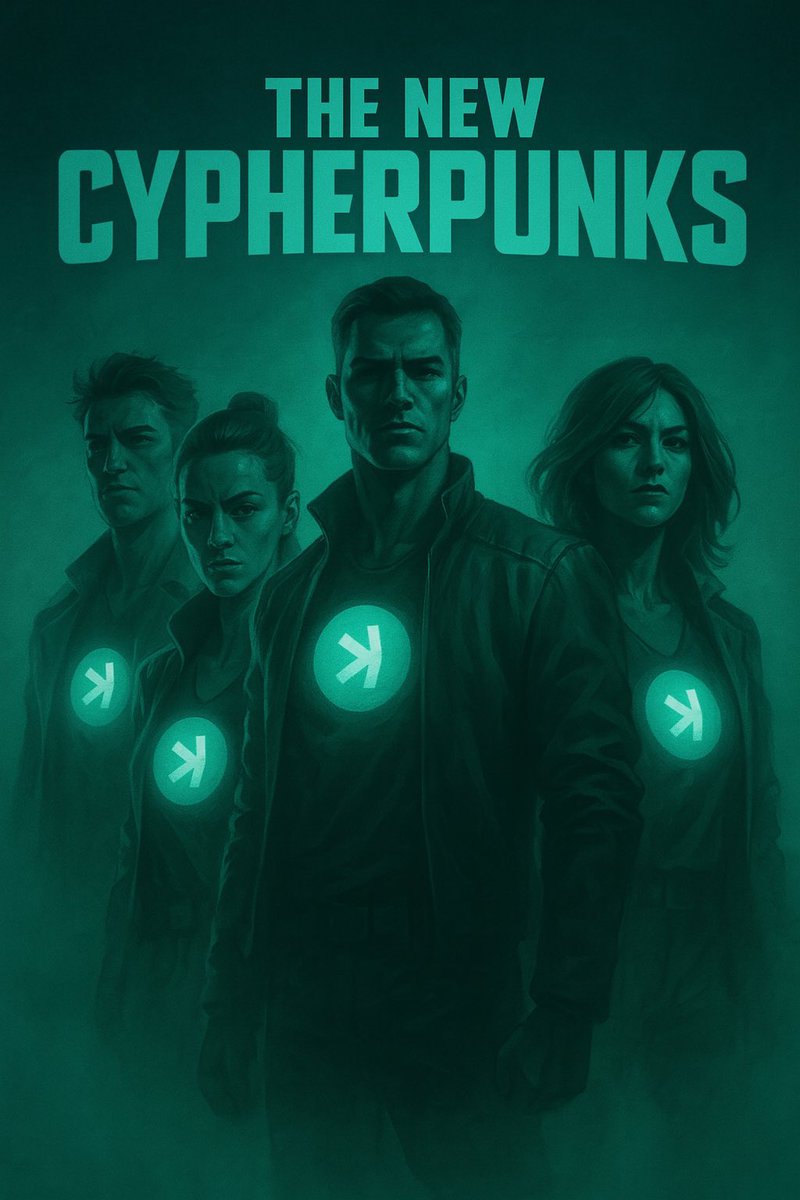
Seeing the reaction this week makes it clear that a new wave of cypherpunks is rising again. Builders who care about research, engineering, and integrity. Researchers like Yonatan. Developers like Michael Sutton. And communities like Kaspa. People who want crypto and blockchain tech to mean something again.
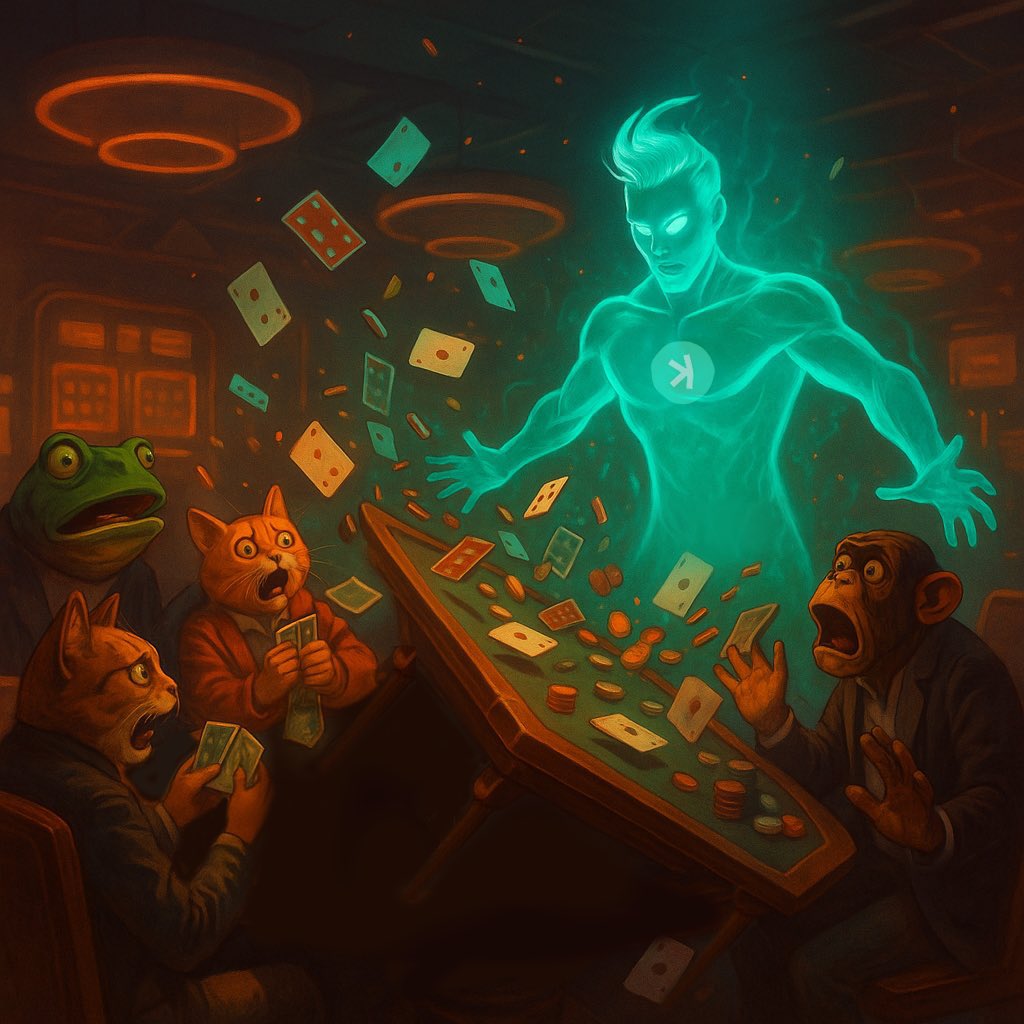
Third, the whole thing exposed the true nature of some of these L1 exchanges and classic crypto in general. The incentives. The politics. The greed. The selective celebration. The silence when the results do not serve their interests. Many people are looking at that and deciding they are done.
So let us not waste this moment. What we just saw is a big opportunity. An opportunity to show the strength of our community. It is obvious. An opportunity to reintroduce a modern cypherpunk spirit. It is happening. An opportunity to shine a light on the difference between real builders, real solutions, and the bad actors inside the Cryptoland circus.
The original Bitcoin movement of protest was against real world finance and government control. It is interesting and ironic that Kaspa’s latest protest is against the dark side of Cryptoland itself.
Let us not waste this moment. And even though we are focused on one exchange and their actions, we need to turn our backs on the entire Cryptoland mindset.
Let us start here. Everyone, say it with me. 👋🏼 Bye-nance
Allow me to further Ribbit-hole on $TIBBIR 573 meaning, complementary to existing observations noted by others...
The number 573 is a form of Goro Awase (Japanese numeric substitution) for the name Konami. In Japanese, the numbers can be read as:
5 = ko
7 = na
3 = mi
Therefore, 573 can be read as "ko-na-mi".
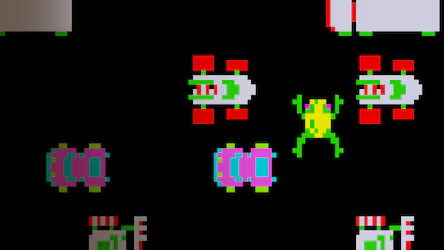
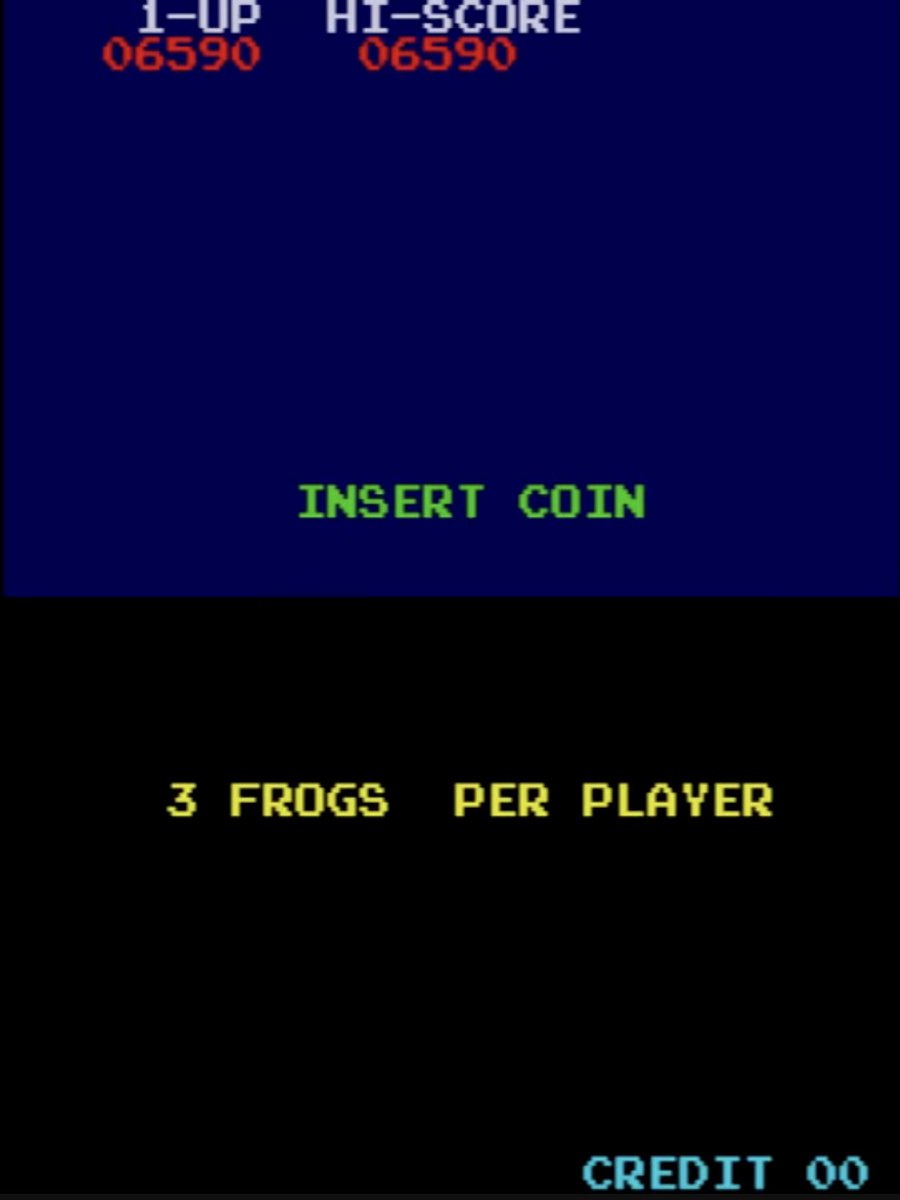
Konami is the developer of classic arcade games, including Frogger, and 573 is often used as an easter egg number in their products. Konami also released a model of their arcade hardware platform named "System 573."
The number 573 was Konami's hidden verification system. If you recognized the code, you understood the creator (just like this @Coinbase ad).
Konami’s iconic character, Frogger, can be understood as a digital protoagent – a decision maker navigating a hostile environment, reacting in real time, and managing risk with limited resources.
The crucial link is the arcade token model. To play Frogger, you needed to feed the machine (the verifier) with a token (the credential), granting permission to act inside the system. No token, no play.
Now make the connection to $TIBBIR as the token applying this credentialed access system to the massive KYA (Know Your Agent) opportunity space.
This mirrors the @RibbitCapital 2025 Token Letter perfectly – agents need verifiable identity token credentials and cannot transact without cryptographic permission, just as arcades required tokens to access their trust kernels.
GЯIBBIT 🐸
Kaspa’s runtime architecture achieves scalability not by optimizing block-level throughput, but by rethinking the role of blocks entirely. Instead of treating state transitions as discrete batches that must be processed sequentially, Kaspa models them as a continuous stream of causally-related transactions, with blocks serving only as logical markers that define the boundaries of possible reorgs.
This shift in perspective moves the performance bottleneck away from "how fast can we process everything inside a block" toward "how can we parallelize all currently known tasks across the entire DAG". When a block contains a spike of non-parallelizable work, traditional blockchains must stall until the block is fully processed. Kaspa does not. Because unrelated transactions can be scheduled immediately - even those belonging to future blocks - the system avoids idle CPU cycles and eliminates the classic straggler problem.
Most existing DLT architectures tightly couple block production with state commitments, proofs, or other finalization steps, making their execution model inherently sequential. Even if they support some parallelism within a block, they still wait for a block to finish before moving on to the next one. This introduces unnecessary latency and forces the runtime to juggle responsibilities that are orthogonal to efficient workload distribution.
Kaspa’s strict separation of concerns allows the entire execution model to collapse into a minimal, expressive, and highly generic framework - small enough to run any ACL (access-control list) enabled VM at essentially bare-metal performance.
Its design models causal dependencies at the lowest hardware-relevant level, enabling an execution flow that is:
- completely lock-free
- free of WAL flushes or global sync barriers
- based entirely on eventual consistency
This results in a simpler, more scalable, and far more hardware-efficient architecture than anything deployed in blockchain systems today.
In effect, Kaspa does for distributed ledgers what TensorFlow and CUDA Graphs did for machine learning: it exposes a parallel execution model that can scale seamlessly with modern hardware, turning theoretical throughput into practical reality (the 64000 TPS that Solana achieves in the lab let's bring that to practice).
I am extremely excited about this as this is exactly what I always wanted to build with IOTA and now it's finally done.
We are still working on implementing the higher levels of abstraction like designing a capability based linear type system abstraction for state management and resource access that gets rid of the need for manual capabilities wiring like in SUI and there is still a bit of work left but I don't think that you will ever be able to build a more scalable architecture than directly modeling the causal structure of state changes down to the lowest hardware layer.
Kaspa is going to melt faces my friends and it's going to be so much better that it will be impossible to ignore!
And it's such a simple API with Rayon level abstraction ... I am seriously getting a nerd-gasm just looking at the code 😅: https://t.co/aLvm843GiA
This goes out to KEF and the entire community:
Thank you so much for allowing me to take part in this journey - this really feels like coming home! 🥰
Seeing two prominent community figures clashing publicly over Kas X is very refreshing, and I genuinely hope to see more such fights being aired openly. Our strength as a community lies in our disunity; the strength of bitcoin lies in the reality that opposing entities and individuals are collaborating and cooperating over it, for different interests or even conflicting values. Rigid cohesive communities are less likely to give birth to moneys -- collectibles yes, moneys no. (cf. the Andean/Inca civilization)
Assuming Kaspa grew out of the socially-cohesive crypto-village phase, it is essential to reflect this maturity in public discourse, and to avoid thinking in terms of "trusting the community", "we the community opinion", etc. FWIW I for one genuinely do not know what these terms are referring to. Concretely, what makes an Alice, Bob, or Junny less representative of the community than Charlie, Dave, or Shai. And am I, Yonatan, considered a trusted, "the community", or a third party?
Without picking sides in this particular quarrel, I suppose it'd be useful to exemplify the heterogeneity of the community by sharing my own assessment of @Kaspa_KEF. Namely, as a profit-seeking entity which has a deep "long" on KAS and whose selfish interests align with Kaspa's as I assess them today. The fact that they represent the interests of a large group of miners is an even stronger case for aligning incentives and cooperating, since Kaspa is mining-secured by construction. This is not to say that the interests of miners, or of this group of miners, are guaranteed to continuously overlap with those of KAS as I see them. Rather that so far KEF's contributions, adoption efforts, and market penetration initiatives seem by and large favourable and aligned with KAS. Even the KRC20 memes project, which I dislike and never promoted, has positive effects on miners' revenue, and in turn on network security (more on aligning degen activity with fundamental values in a separate post).
While I believe both sides of this aisle are acting in good faith, and while I consider Shai a friend, I recommend placing little weight on assumed intentions and friendships. In Milton Friedman's words, roughly, the way you solve things is not by electing the right people but by making it profitable for the wrong people to do the right things. And so whatever KEF's motivations and intentions are, I view the organization as one which is highly aligned with the growth of Kaspa, and insofar as this alignment continues, I will continue collaborating with them.
Whether my judgement in this case is merited or naive, I encourage kasfam to comprehend and embrace the cultural implications of moneyness, of which contention and disagreement over values are essential elements.
@hashdag 🫡
(BTW I've always loved your PoW DAG ideas, as you know, and I kind of try to keep a little awareness of current Kaspa development, mostly just by reading twitter, but of course I'm too focused on Crosslink and a fee market for Zcash to keep up...)
🤯 Kaspa Fans, You MUST Read This! Vprogs MasterClass Highlights (by @michaelsuttonil)
Hey fellow Kaspians! I just finished digesting the 1.5-hour Vprogs MasterClass with Michael Sutton, and my mind is completely blown. This isn't just a new feature; it's a fundamental rewrite of the rules for DeFi and smart contracts.
I've compiled the key highlights that every Kaspa fan needs to know. This is the blueprint for Kaspa's future!
1. What are Vprogs? (Hint: It's Not a Traditional L2!)
In simple terms, Vprogs can be understood as "tiny, tiny base roll-ups" [03:30].
L1 (Kaspa) Does the Heavy Lifting: The Kaspa L1 acts as the single Sequencer, Data Availability (DA) layer, and Settlement layer.
Off-Chain Execution, On-Chain Verification: All smart contract computation happens off-chain, but is verified on L1 using ZK Proofs (specifically, Validity Proofs).
This means the L1 stays extremely lightweight while securely enabling complex applications.
2. The Vprogs' Killer Feature: Synchronous Composability
This is the key that sets Vprogs apart from the entire Ethereum L2 ecosystem.
The Ethereum L2 Pain Point: Fragmented Liquidity. The Uniswap pool on Optimism and the Uniswap pool on Base are completely separate pools of money.
The Kaspa Solution: Because the Kaspa L1 is the single Canonical Sequencer, all Vprogs share one unified global state.
The Result: Unified Liquidity!
This means one Vprog (like a DEX) can interact with another Vprog (like a lending protocol) atomically [08:11] within a single transaction, just as if they were both on L1. This makes it possible to build a unified "Asset Hub" [27:42] and says goodbye to liquidity silos forever.
3. The Grand Ambition: Vprogs are VM-Agnostic
The goal of Vprogs is not to pick "one" virtual machine (VM) to rule them all.
The design is VM-agnostic. This means:
Developers from the Solana ecosystem (who know Rust)
Developers from the Ethereum ecosystem (who know Solidity)
...can all use "templates" they are familiar with to build Vprogs on Kaspa! This massively lowers the barrier to entry for developers worldwide.
4. L1's Secret Weapon: The "Computational DAG" (CDAG)
You might be wondering: If L1 doesn't execute contracts, how does it manage all this?
The answer: The Computational DAG (CDAG).
The Kitchen Analogy: Michael used a great analogy. Think of Vprogs as a big kitchen with many chefs (Vprogs) working with shared ingredients (state).
The CDAG = The Master Chore Chart: The CDAG on L1 is like a "master chore chart" on the fridge [55:07]. It doesn't do the cooking (execution), but it precisely tracks "which chef (Vprog) read or wrote which ingredient (state) at what time."
L1's Real Job: L1's job is to Regulate this CDAG, ensuring the "computational scope" and cost for each Vprog stays within its limits. This prevents a "noisy neighbor" (a high-traffic Vprog) from slowing down the whole system and achieves true Sovereignty.
5. Why Vprogs Scale Infinitely: A Perfect Incentive Loop
The scalability of Vprogs comes from a brilliant market-driven mechanism: Proof Frequency.
The Problem: If ZK proofs are submitted too infrequently (e.g., once a day), the dependencies between Vprogs become highly "Entangled" [01:12:11]. This eventually forces every Vprog to run everyone else's data, and the system collapses into one "fat L2."
The Vprogs Solution: The operator of a Vprog (the dApp) has a strong financial incentive to pay a Prover to submit proofs more frequently.
Why?
Frequent proofs = Dependencies are "broken," keeping the system light.
Cheaper composability = Attracts more user traffic.
More traffic = The Vprog earns more fees.
This is a Sovereign scaling flywheel, driven by the self-interest of each Vprog!
Final Thoughts: This is Kaspa's Grand Vision
Michael emphasized that this all stems from the "Ethereum fragmentation problem" [32:43] that Yonatan (Kaspa's founder) saw back in 2020. Kaspa's goal from the start was to solve this the right way.
Vprogs are tackling the "Interoperability Dilemma" [37:14] of blockchain, offering a truly synchronous, composable, and trustless system.
What can we do as a community?
Educate! Understand how powerful Vprogs are and spread the word.
The future of Kaspa is the future of DeFi.
#Kaspa #KAS $KAS #Vprogs #MichaelSutton #DeFi #SmartContracts #ZK #Rollups #Layer2 #UnifiedLiquidity #Blockchain