"Large minimum lot sizes are one of the most effective economic exclusion tools in a zoning toolkit. It directly limits who can afford a house based upon the amount of land required. We didn't used to do this historically.
Small, legal lots were the norm."
----#EricKronberg, #Atlanta #Architect
Pretty remarkable recent study which anyone interested in housing should take note of:
Houston reduced its minimum lot sizes to 1,400 sf and the resulting redevelopments produced far higher quality homes, that were dramatically more affordable, than the ones they replaced
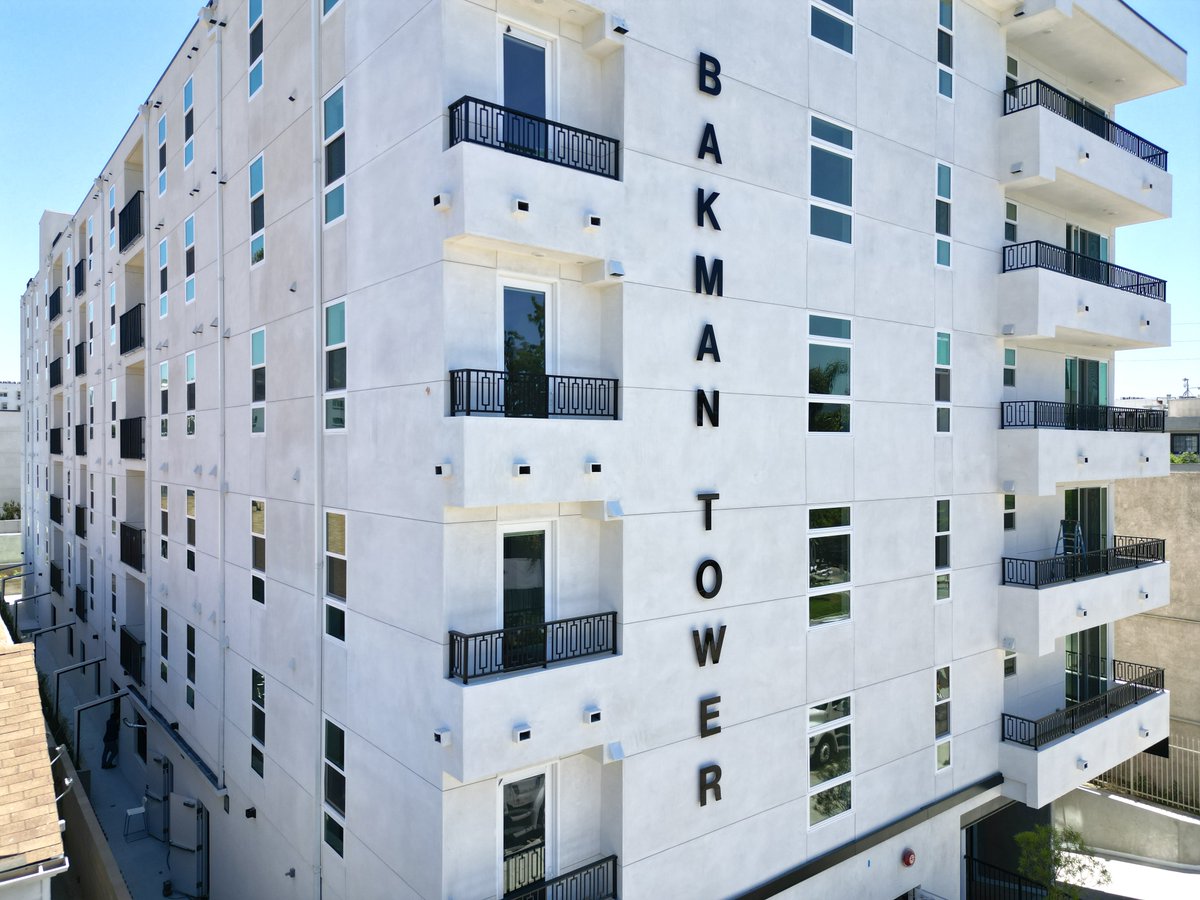
Here’s a 65 unit building we manage, sitting empty while we wait for LADWP.
Without a Certificate of Occupancy, we cannot fill the units. The owners never underwrote five months of delays.
Los Angeles does not have a housing shortage. It has an overregulation problem, compounded by the most backward landlord/tenant laws in the country.
Placing disproportionate financial, administrative and legal risk on housing providers will not lower rents. It does the exact opposite.
Tenants, Los Angeles has failed you.
@robbiehendricks This is a great reminder that it's okay to keep things "boring" and "simple" to be successful. A lot of filler content out there on how to be flashy and complex to will deals into existence.
The United States has a housing shortage, but it’s not a lack of homes ~everywhere ... its a lack of the kinds of homes Americans want, located in the places they want to live
There are only three ways to solve the problem:
1) Allow more houses to be built (in the places people already want to live)
2) Reduce the cost of construction (espwhere it's highest)
3) Create more places worth living in (both revitalize existing and building new ones)
Driving thru some neighborhoods in greater Boston, I can count several parcels I worked on a sometimes year-long approvals process for housing that ended up not getting built.
Literally hundreds of units, that didn't get built.
I remember one particularly contentious neighborhood meeting, where I was up front getting screamed at.
"Why are there only 12 affordable units??"
Me: "because that is the required number (20%)"
Them: "they ALL need to be affordable!!"
Me: "I get it, I really do. But how many affordable units are on that site now?"
Of course...none. But that attitude - all or nothing - leads to a whole lot of nothing.
These are complicated issues, and it isn't just about "zoning makes buildings illegal" on one side and "developers are greedy scum" on the other.
God forbid we actually work toward *real* solutions. Until then, we have a whole lot of nothing.
For those unfamiliar how this works
If you want to do a 4 lot subdivision in Palo Alto for example
Let’s say 4 three bedroom units at 1600 sqft
They will cost $1.1M to build and you must sell one of the homes for $700k
Guess who needs to eat the $400k loss
I’m realizing how few people understand how development is actually paid for.
I’ve had several conversations lately with tenants, friends and acquaintances who seem to think developers are sitting on giant piles of cash, buying properties and paying construction costs out of their checking accounts.
There have been times over the years when I’ve had less cash in my bank account than most of those same tenants.
Most development is financed with a combination of investor equity and debt. Developers raise capital, take out construction loans, often personally guarantee that debt, and carry interest and other costs for years before a project ever produces a dollar for them.
That’s a massive amount of financial risk. And yes, the people taking that risk expect to get paid for it.
If your entire housing policy is designed to stifle how developers and property owners get paid, you aren't really interested in increasing housing supply. Ms. Raman 👋
We don’t have a starter-home problem as much as we have an expectations problem.
People want affordable homes—but fight them when they’re built nearby.
Buyers want starter-home pricing—but not starter-home size, finishes, density, or location.
Everybody wants the Lexus.
Everybody wants to pay Hyundai money.
At 24 I quit my day job to flip houses & start a junk removal business with a dump trailer
That sentence sounds like I was confident (I was terrified)
I'd been buying rentals on the side since I was 21. seller financed my first duplex with money I had from a cleaning biz I ran in college. Put $10k down, found the seller through a mailer, figured out the rest as I went.
By 23 I had 8 units across 4 properties. It was working, but I was doing everything around a 9-5 that was draining me. Every rehab happened on nights and weekends. Every seller call happened on my lunch break.
So I left.
…then reality hit me.
It took me 4 months to get my first flip under contract after I quit. 4 months of watching my savings get smaller while I waited for the phone to ring.
That's why I bought the dump trailer for $12k, a ford f250 I financed, and a willingness to haul other people's garbage for money. I did junk removal between deals just to keep the lights on.
I'm talking about 70-hour weeks. sweat, rust, rotting furniture, stuff you'd never touch without gloves. There were mornings I sat in the truck and genuinely asked myself if I'd made the worst decision of my life.
but flips started closing.
1 flip my first year. then 3. then 9 in 2024, my first full calendar year without a paycheck from anyone else.
the junk removal business taught me something I didn't expect. When you're hauling trash out of a hoarder house at 7am and you know you have a flip walkthrough at noon and a seller call at 3, you stop romanticizing entrepreneurship real fast. You just execute. There's no time to overthink when the work is that physical and that constant.
That urgency carried into everything. I was just trying to survive.
I started sending more mailers. Tightened my numbers. Learned which deals to walk away from instead of forcing every one to work. Bought smarter properties, stopped over-renovating, and built a crew so I wasn't swinging the hammer myself on every rehab.
I'm at 15 doors now. Flipped more houses last year than the previous 3 years combined. I broker hard money loans for other investors getting into their first deals.
None of it feels like the version of success you see on social media
It feels like a series of problems I got slightly better at solving, one at a time, for 4 years straight.
If you're sitting in a job right now running numbers on whether you can afford to leave, here's the honest answer. You probably can't, and it's going to be harder than you think.
But do it anyway. Just make sure you have your version of a dump trailer.
A newly signed lease is always a great feeling, I don't care how big or small your portfolio is.
I might be a small fry, but I'm in the game - investing and operating real estate since 2010 - and I'm proud of that.
Growing my own business while growing the real estate side simultaneously (with no outside investors or partners, and a relatively conservative/scrappy approach) means tough decisions and prioritization sometimes. And it means my motto has to be "slow and steady."
But, if you'll notice, I'm still here in 2026, with no vacancy and about 45% LTV across the portfolio, sooo...
If you're thinking you aren't moving "fast enough," I hear you, there have been years when I really felt like I was leaving money on the table. And I'm sure I was.
But as far as I can tell, this game is about longevity.
So that's what I'm up to.