🟪El Síndrome de Brugada (SBr) predomina en el sudeste asiático, 65% de los casos se dan en asiáticos con mayor prevalencia en hombres respecto de las mujeres (8-10♂️ : 1♀️)... ¿Por qué se da mas en hombres? 🧐🤔⤵️
🟪El SBr es el responsable del 14-12% del total de muertes súbitas y de hasta un 20% de las MS en ausencia de cardiopatía estructural de hombres jóvenes, de los cuales casi un 20-50% ya tenían antecedentes familiares de MS y un 23% historia previa de síncope. 🚨🔎
✔️Estas diferencias parecen deberse a causas hormonales, los estrógenos provocan disminución de la magnitud de la corriente Ito y la testosterona aumenta la corriente lenta de K+.
✔️También se debe a diferencias de expresión de determinadas corrientes ionicas cardíacas entre hombres y mujeres, ya que existe mayor expresión de los canales Ito y en mayor densidad en el epicardio del ventrículo derecho de los hombres.
PAPER OF THE DAY: Summary
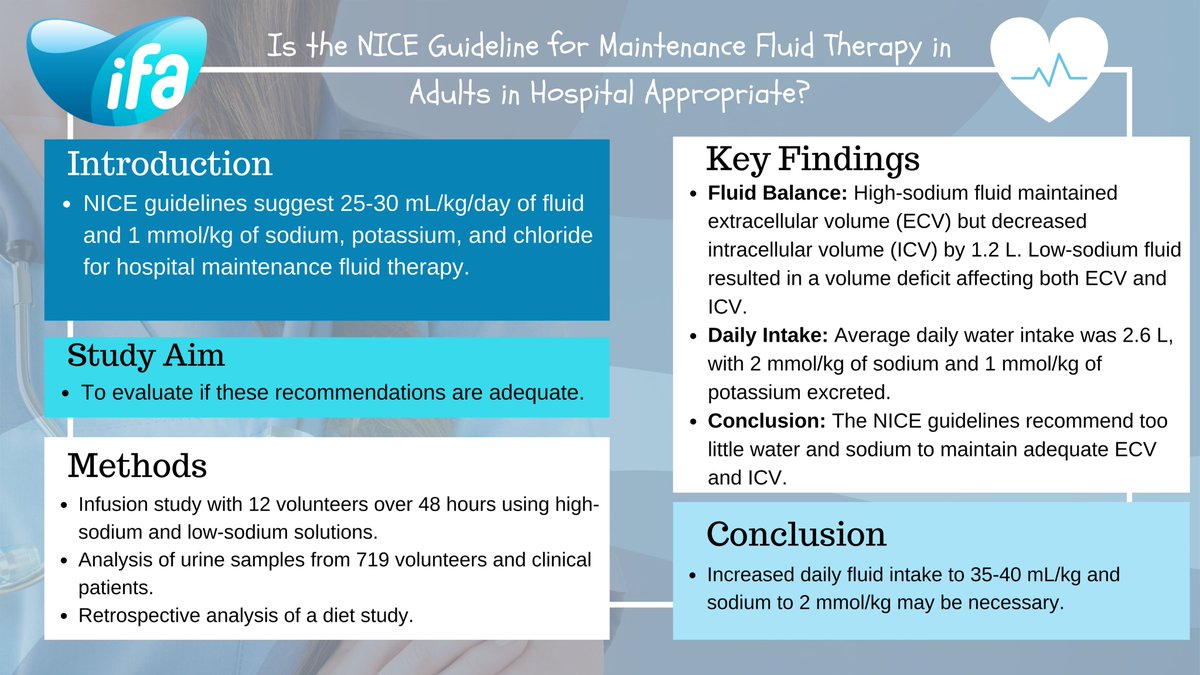
The article "Is the NICE Guideline for Maintenance Fluid Therapy in Adults in Hospital Appropriate?" by Robert G. Hahn and Niels Van Regenmortel @icu_nivare evaluates the adequacy of the National Institute for Health and Care Excellence (NICE) guidelines for maintenance fluid therapy in hospitalized adults. The study compares the NICE recommendations with data from the authors' own research to assess their effectiveness in maintaining fluid balance and electrolyte homeostasis.
Key Points
NICE Guidelines Overview:
- NICE recommends 25-30 mL/kg/day of fluid and 1 mmol/kg each of sodium, potassium, and chloride.
- These guidelines are based on older dietary recommendations and may not reflect current needs.
Study Methods:
The authors conducted additional analyses on their own datasets:
- a 48-hour intravenous infusion study with 12 healthy volunteers, comparing high-sodium and low-sodium maintenance fluids.
- the urinary excretion of sodium and potassium from 719 volunteers and patients.
- a diet study on 20 hospital workers to estimate water and electrolyte intake.
Findings:
- Both high-sodium and low-sodium infusions resulted in fluid volume deficits and dehydration.
- High-sodium fluid maintained extracellular fluid volume (ECV) but decreased intracellular fluid volume (ICV) by 1.2 L.
- Low-sodium fluid caused a 1.7 L volume deficit affecting both ECV and ICV.
- Habitual water intake was estimated at 35-40 mL/kg/day, higher than the NICE recommendation.
- Sodium excretion was approximately 2 mmol/kg/day, double the NICE guideline, possibly because the usual dietary sodium intake of the participants is higher than the guideline-recommended amount of 1 mmol per kilogram or 2.3g per day.
Conclusion:
- The current NICE guideline may recommend insufficient water and sodium for adequate maintenance of ECV and ICV.
- Suggested adjustments: increase fluid to 35-40 mL/kg/day, sodium to 2 mmol/kg/day, and maintain potassium at 1 mmol/kg/day.
Clinical Implications:
- Guidelines should be revised to prevent dehydration and electrolyte imbalances in hospitalized patients.
- More frequent monitoring of urinary sodium could improve fluid and electrolyte management.
Limitations:
- This study has used data from healthy volunteers; results may differ in critically ill patients.
- Further research is needed to confirm findings in diverse patient populations.
FULL TEXT: https://t.co/h3XzXnz1Pv
READ MORE: https://t.co/TzMzxHQTuT
#FOAMed #FOAMcc #ICU #fluids #maintenance
#CritCare#OpenAccess
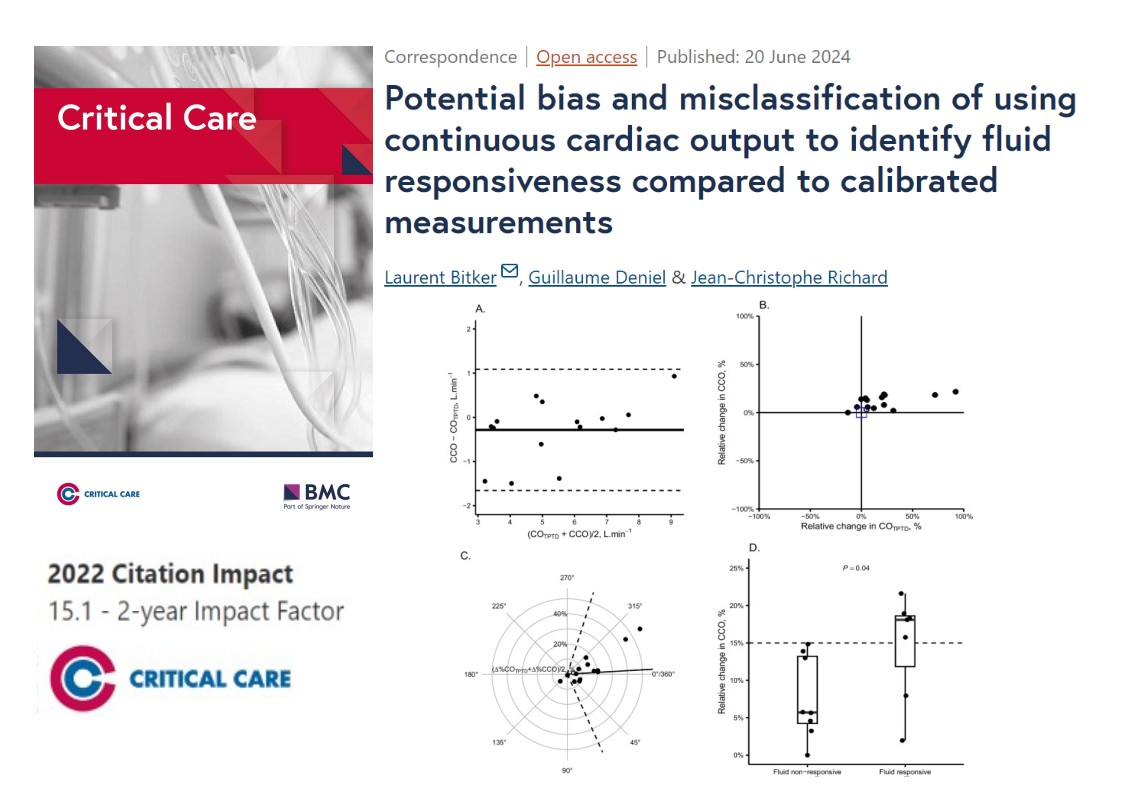
Potential bias and misclassification of using continuous cardiac output to identify fluid responsiveness compared to calibrated measurements
Read the full article:
https://t.co/AzjHFCCMtY
@jlvincen@ISICEM#FOAMed#FOAMcc
Ultrasonido pulmonar en la insuficiencia cardíaca aguda y crónica:consenso clínico de la Asociación Europea de Imágen Cardiovascular https://t.co/JwjzEISaZu
¡Primer encuentro nacional dedicado a ti! ¿Eres un médico residente ansioso por aprender, conectarte y crecer? ¡No te pierdas Mirestesia 24! Hospital La Paz. 27 de enero 2024. ¡Mantente atento a las actualizaciones! #MIRESTESIA24#SedarJoven#ResidentesAnestesia
@medinternajg Jaime que gran motivación encontrar estos estudiantes. Probablemente hay muchos más que no logramos visualizar. El aprendizaje basado en el estudiante nos lleva a sacar lo mejor de cada uno, y detectar al que nos necesita para desarrollar las competencias esperadas. Un abrazo.
#NeurocienciasSEDAR🧠 El próximo 31 de enero a las 18h tenemos nuestro próximo Foro Debate sobre el manejo anestésico en neurointervencionismo, atentos al mail de invitación… no te lo puedes perder‼️
💥¿Has probado ya la app Tok Medicine?
📆Diseñada para colgar tus sesiones de servicio
🏆Participa tambien en el concurso y recibiras un diploma que acreditará tu formación profesional.
👇¡Aquí tienes un resumen!
#SedarJoven#TokMedicine@SCISEDAR
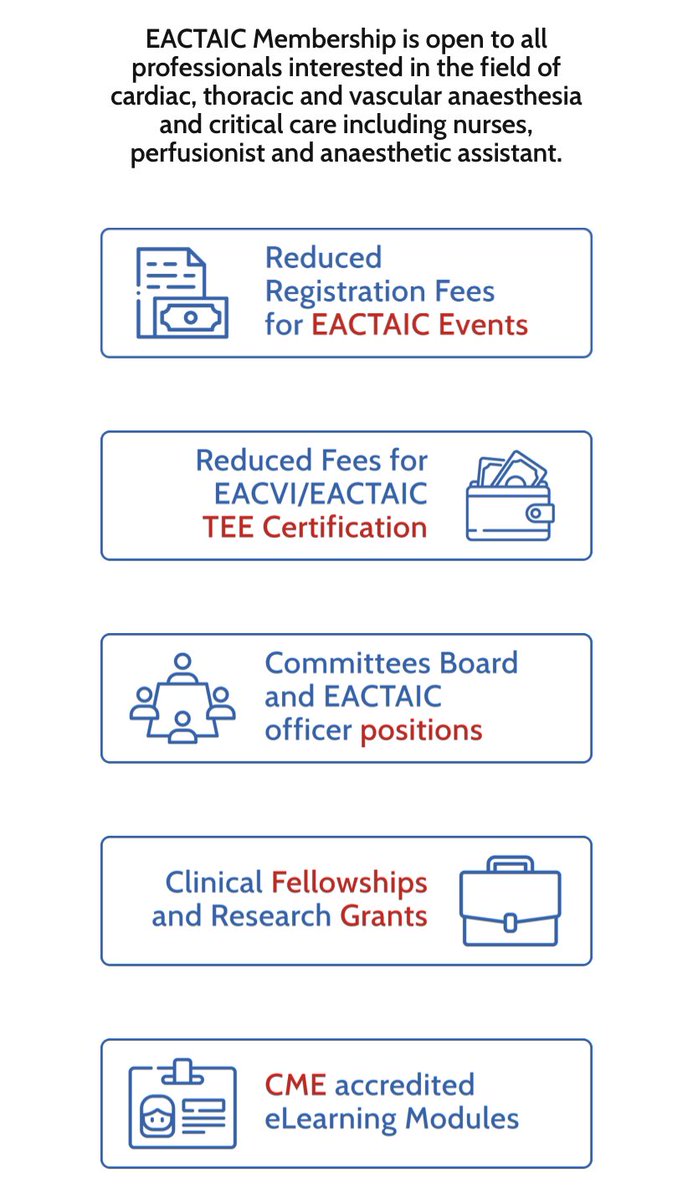
Tienes especial interés en Anestesia y Críticos en Cirugía Cardíaca, toracica o vascular? Te animo a ser miembro de la @EACTAIC!! Por 140€/año tienes formación online de alta calidad, acceso a @JCVAonline, descuento de 150€ al congreso anual… @sedar_es@SCISEDAR@JG_Anestesia
Good news! 🌳
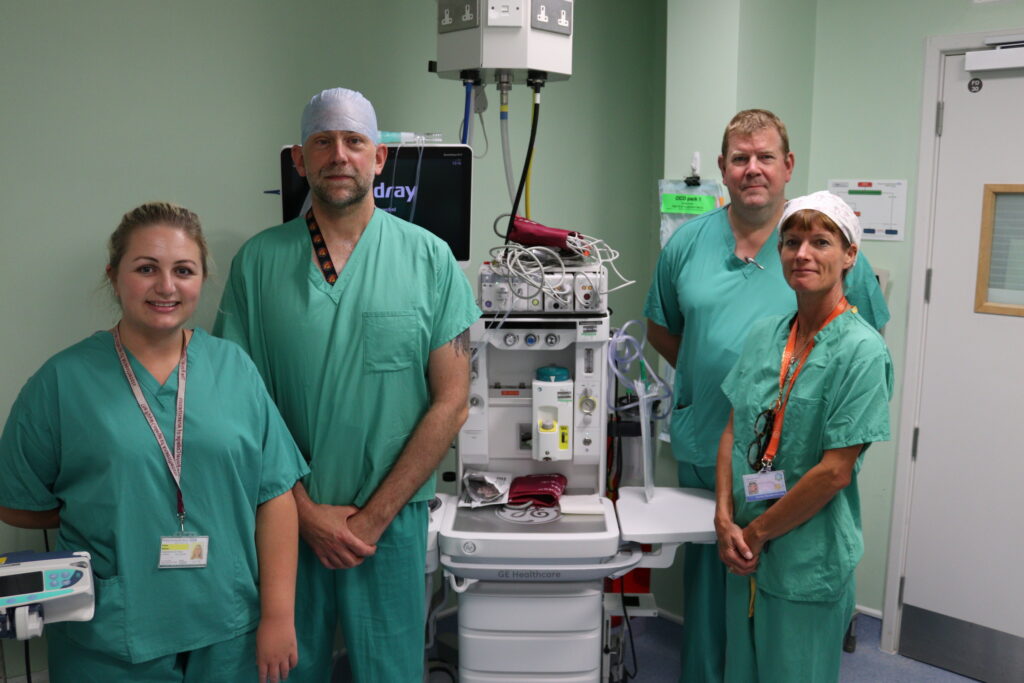
Use of desflurane across the NHS has fallen from 20% to approximately 3% in the last 4-5 years, reducing emissions equivalent to taking 29,000 cars off the road. #sustainability
https://t.co/Ax6wr55ncg