@BadShipAdvice@Bobbythirdway No dumbass, it’s more that women select healthier men for marriage so those that do get marriage typically live longer but that would have happened anyway… women rarely marry someone weak and sick.
@Rich_Cooper I don’t think rich is posting this crap goes against everything he says. 30 is pretty damn young, the best chicks I’ve had I’ve gotten at 32-33 and at 37 the best ones have been in SEA.
@briesmith@duckbillPla@truecrypto@elonmusk Wouldn’t be possible if the ice for some reason sank to the bottom of the ocean and froze bottom up tho… Earth has been a ball of ice at least once in its history
The Quetzalpapálotl Complex in Teotihuacan was meticulously reconstructed in the 1960s to showcase the iconic Teotihuacan architecture. During the restoration, original architectural elements were carefully restored, including pilasters adorned with mythological birds, most notably quetzals, which were depicted with butterflies on their chests. These artistic representations, deeply intertwined with themes of night, death, and the underworld, were instrumental in naming the complex. This effort to bring back to life the complex's ancient aesthetics not only revitalized its physical appearance but also reconnected contemporary audiences with the profound spiritual and cultural significances that these symbols held for the Teotihuacan civilization.
This Maya shell pendant features a water bird with a long neck and outspread wings, intricately combined with the image of a god. The delicate carving brings out individual feathers and the distinctive, serrated beak of the bird, likely a cormorant, known for sunning its wings after diving. The deity's face is etched into the bird's body, complete with a large, expressive eye and a curling, spiral pupil. The heavy brows and stepped hairline merge seamlessly into the bird's form. Look closer, and you'll see an ear spool and a single large tooth, characteristic of Maya depictions of aged, wise figures. This piece, possibly worn as a pendant or attached to clothing, reflects a revered myth, persisting through time in the Maya's visual stories.
The Maya utilized conch shells in a rather unique way: as ink pots. These shells, specifically chosen for their smooth interiors, were well-suited for holding and mixing pigments.
One notable example of a Maya conch shell ink pot dates back to 761 CE and is part of Princeton University's special collections. This particular shell bears a hieroglyphic inscription and was identified as the ink pot of an artist in a royal court of a Maya city-state during the Classic period.
From my book, "Learn Spanish Reading Mexican Myths and Legends." The book now includes free audio recordings of the vocabulary.
Get it from Amazon: https://t.co/O19UDtR6cU
In the heart of Veracruz, Mexico, lies a village cradled by a flourishing orange grove. The grove was once tended by a man whose generosity was as abundant as the fruits on his trees. Though he was protective of his orchard, his heart was open to the needs of his community. He would often slaughter a sheep or a pig, making carnitas and chicharrón to feed the villagers, even if it meant incurring debt. His benevolence earned him the love and respect of the locals, who sought him as a godfather for their children.
The man took great pride in his orchard, viewing it as a legacy for his three sons. But one day, tragedy struck. News of his untimely death in an accident sent ripples of sorrow throughout the village. Soon after, whispers began to circulate about sightings of the man wandering his beloved grove.
A local woman claimed to have conversed with him amidst the orange trees. He asked her to relay messages to his sons, Ramiro, Pedro, and Joaquín, but each time a son went to meet him, only silence greeted them. Doubts about the woman's sanity arose, yet the sons, upon discussing, realized she might have a unique gift to communicate with their father.
The brothers, along with the woman, gathered in the orange grove, hoping to connect with their father through her. The orchard continued to thrive under their care, surpassing even their father's success. The brothers maintained their father’s legacy of generosity, and whenever they sought his counsel, they would visit the woman in the grove. The story of the benevolent man and the mystical woman became a legend.
I recently published a book about the codex, titled "The Maya Codex of Mexico: The Oldest Book of the Americas, Digitally Restored" This is a beautiful picture book with over 300 illustrations. Please consider checking it out on Amazon:
https://t.co/unZUiKwPY9
The Maya Codex of Mexico, originally known as the Grolier Codex, is a unique artifact of pre-Columbian heritage. Crafted by a single scribe, this screenfold manuscript is one of only four surviving Maya codices and the only one remaining in the Americas. Initially appearing in the 1960s and displayed in New York in 1971, its authenticity was long debated, partly due to its significant Toltec influences. However, recent studies, including a 2018 analysis by Mexico's National Institute of Anthropology and History, have affirmed its authenticity, dating it between 1021 and 1154 CE. This makes it not only a genuine Maya creation but also the oldest book in the Americas, ending years of skepticism over its origin and historical value.
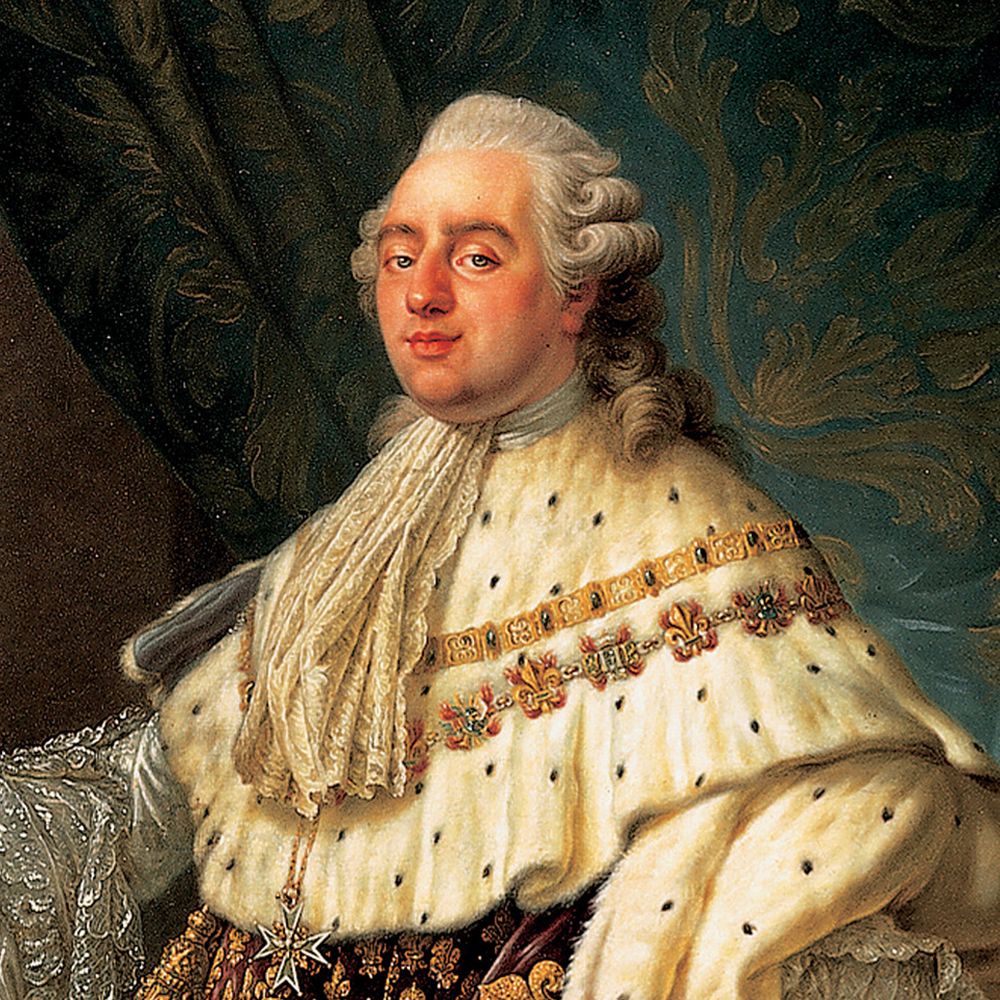
In the sprawling corridors of Versailles, Louis XVI moved amidst a world of opulence and precarious power dynamics, a king whose reign would come to symbolize the dichotomies of an era on the cusp of drastic change. From his earliest days, Louis navigated a life riddled with political intrigue and grand gestures, none more prominent than his decision to support the fledgling United States in their audacious quest for independence from the British Empire. The young monarch's aid, both financial and military, was instrumental in tipping the scales in favor of the American revolutionaries, lending them the necessary resources to challenge and eventually overcome their colonial masters.
Yet, while the winds of liberty blew in favor of the Americans across the Atlantic, a storm was brewing on French soil, one that would threaten to engulf the monarchy and bring about the end of an age-old system. The financial toll of supporting the American cause, coupled with longstanding economic grievances and a growing resentment towards the aristocracy, sowed the seeds of a revolution. As voices cried out for equality, liberty, and fraternity, the very foundations of the Bourbon dynasty began to crumble, and Louis found himself ensnared in a web of popular discontent.
The fervor of the French Revolution quickly escalated, leading to a vortex of events that few could have predicted. Despite attempts to placate the masses and reform the government, Louis XVI's fate was inexorably sealed. The same man who had once championed freedom for a distant land now stood, humbled and defeated, before the revolutionary Tribunal. In a poignant twist of irony, the guillotine—an instrument emblematic of the revolution's thirst for equality—would claim the life of the king, marking the end of one era and the dawn of another.
If you enjoyed this story you might enjoy my latest book: Learn Spanish Reading Mexican Ghost Stories. It includes 15 stories with Spanish vocabulary.
https://t.co/w4fctkMYuv
Don Ernesto was an elderly man who had recently moved to an apartment building in the heart of Mexico City's historic center. He lived completely alone; his children never visited him, and they hadn’t given him any grandchildren, as they were too engrossed in their work. This didn’t bother Don Ernesto much; in fact, he might even say it was better this way, having never been fond of children.
It was a September evening when, as usual, he was preparing dinner in his apartment. He poured himself a cup of coffee and headed to the living room to watch television. After taking a sip, he set the cup on the table beside him. Moments later, when he reached for another sip, he was shocked to find the cup had vanished. Confused, he looked around. He heard whispers from behind him, sending chills down his spine, but when he turned, there was no one there. Muttering about getting old and imagining things, he went back to the kitchen, only to find his coffee wasn’t there. Returning to the living room, he saw the cup right where he'd left it, accompanied by the sound of faint childish giggles. Panicking, Don Ernesto hurriedly left his apartment and bumped into his neighbor, returning from shopping.
"Good evening," he greeted the man.
"Why hasn’t anyone warned me about children in this building? Some little pranksters just played a trick on me. If I find out who they are, I'll give their parents an earful! Did you see any children?"
The neighbor replied, "Don Ernesto, you must be mistaken. No children live here."
"But I heard them laughing!"
“Don Ernesto, do you know that this building was constructed over the remains of an old primary school? It was destroyed in the 1985 earthquake. Many kids were trapped in the rubble and couldn't be rescued in time.”
Chilled to the bone, Don Ernesto stammered, “Are you suggesting that...?”
The neighbor, opening his apartment door, said, “I’m not suggesting anything. You’re not the first to see them. My advice? Don't bother yourself. They might be dead, but they're harmless. All they want is to play. Goodnight.”
Trembling, Don Ernesto returned home, deciding from that moment to simply ignore the occasional giggles he heard.