Orion’s crew and service module have separated. The crew module continues on its path towards Earth while the service module will harmlessly burn up in Earth’s atmosphere over the Pacific Ocean. The Artemis II return trajectory is designed to ensure any remaining debris does not pose a hazard to land, people, or shipping lanes.
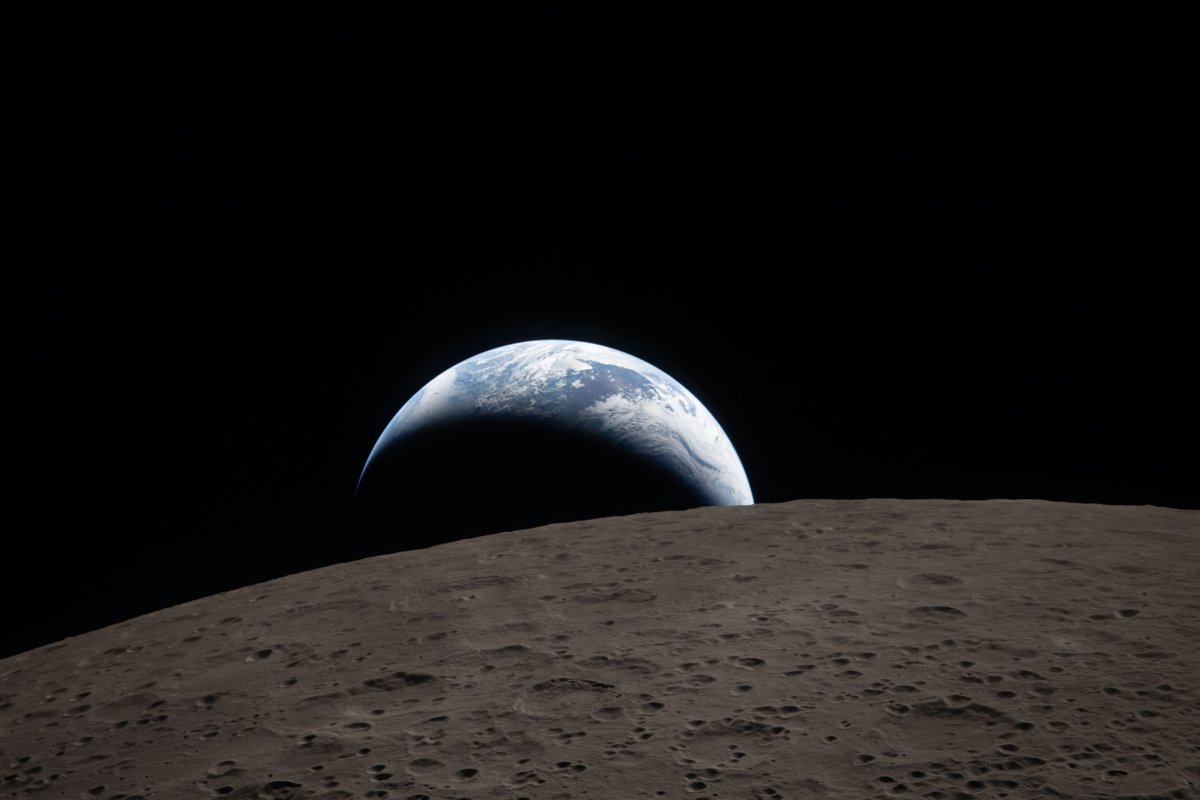
Earthset.
The Artemis II crew captured this view of an Earthset on April 6, 2026, as they flew around the Moon. The image is reminiscent of the iconic Earthrise image taken by astronaut Bill Anders 58 years earlier as the Apollo 8 crew flew around the Moon.
We see our home planet as a whole, lit up in spectacular blues and browns. A green aurora even lights up the atmosphere. That's us, together, watching as our astronauts make their journey to the Moon.
For the first time in over 50 years, humans are Moonbound.
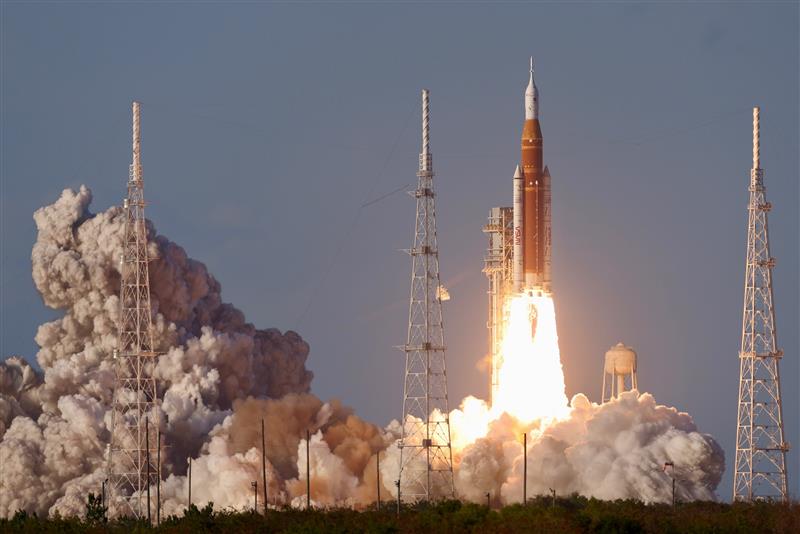
At 6:35 p.m. EDT (2235 UTC) NASA’s Space Launch System rocket and the Orion spacecraft lifted off from the agency’s Kennedy Space Center in Florida, sending four astronauts on a planned test flight around the Moon and back. https://t.co/0Q9ZB4IWVI
We're going around the Moon. Come watch with us. Artemis II's four-astronaut crew is lifting off from @NASAKennedy on an approximately 10-day mission that will bring us closer to living on the Moon and Mars. The launch window opens at 6:24pm ET (2224 UTC). https://t.co/X27QJejNDt