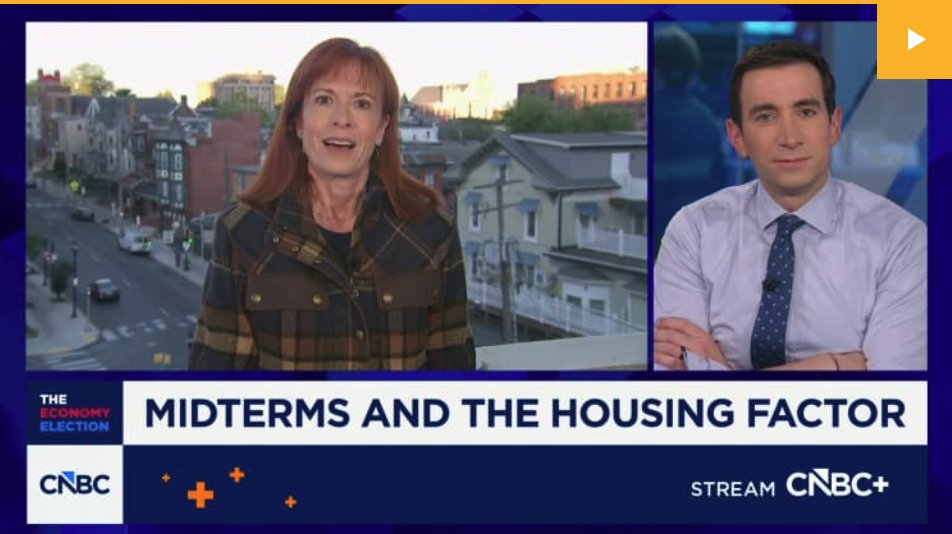
October 6, 2026, Kristin Olson, Goldman Sachs Asset Management’s global head of alternatives for wealth, spoke on CNBC regarding alternative investments and private credit.
Key Takeaways from the Interview:
Resilient Demand: Despite a challenging year and redemption concerns in private credit, a new Goldman Sachs survey found that 93% of current alternative asset owners remain happy with their investments.
Performance Expectations: 97% of respondents stated that their alternative investments have performed better than or as expected.
Investor Sentiment: Among investors familiar with negative private credit headlines, 56% reported no change in their view of alternatives, 30% became more cautious, and 14% grew more positive.
Investors are expanding beyond private credit into private equity, infrastructure, and real assets
Distressed U.S. leveraged loans trading at or below 80 cents on the dollar have reached $139.8 billion, marking a nearly 90% increase over the past 12 months according to data reported by JPMorgan Chase.???
Values issue not an economic issue...
"I'm going to pay $500k for a house my Mom paid $100k for...makes no sense" says a young man 26 earning six figures a year living with his parents.
Goldman found that 38-40% of those earning $500k or more a year are living paycheck to paycheck...(https://t.co/8M0jhSUvcE)
a record 21.2% of financed new-car purchases had monthly payments of $1,000 or more in the third quarter, up from 19.1% a year earlier, according to Edmunds. Among those buyers with four-figure payments, 69% financed their cars for 72 months or longer. (https://t.co/W5zeD7FX8q)
About 16% to 37% of consumers use BNPL services regularly. Because most providers historically did not report short-term payment data to major credit bureaus, traditional lenders face a major blind spot when calculating a borrower’s debt-to-income (DTI) ratio for mortgages or auto loans. However, credit scoring agencies like FICO are beginning to integrate BNPL data into standard credit files
(ACA International)
https://t.co/zwMTS0XwVC
“I am not an advocate for frequent changes in laws and constitutions. But laws and institutions must go hand in hand with the progress of the human mind. As that becomes more developed, more enlightened, as new discoveries are made, new truths discovered and manners and opinions change, with the change of circumstances, institutions must advance also to keep pace with the times. We might as well require a man to wear still the coat which fitted him when a boy as civilized society to remain ever under the regimen of their barbarous ancestors” - Thomas Jefferson
Charlie Munger: “A lot of people think that if they have 100 stocks they’re investing more professionally…I call that ‘di-worsification.’
I’m way more comfortable owning 2 or 3 stocks which I think I know something about and where I think I have an advantage.”
S&P 500 earnings are projected to rise 27%, but that headline hides extreme concentration. $SPY $QQQ
Just two sectors, technology and energy, are expected to generate nearly 80% of the index's growth this quarter. $NVDA and $MU alone account for more than 33% of Q3 growth.
Big Tech capex is forecast to jump 116%.
For the median S&P 500 company, revenue growth slows to 6% and margins compress to 14.7%.
Seeking Alpha Quant Ratings: $NVDA and $AMZN = Strong Buy. $MSFT and $GOOGL = Hold.
A 27% headline, a 6% reality for the median company.
Is this a broad earnings boom or a narrow one?
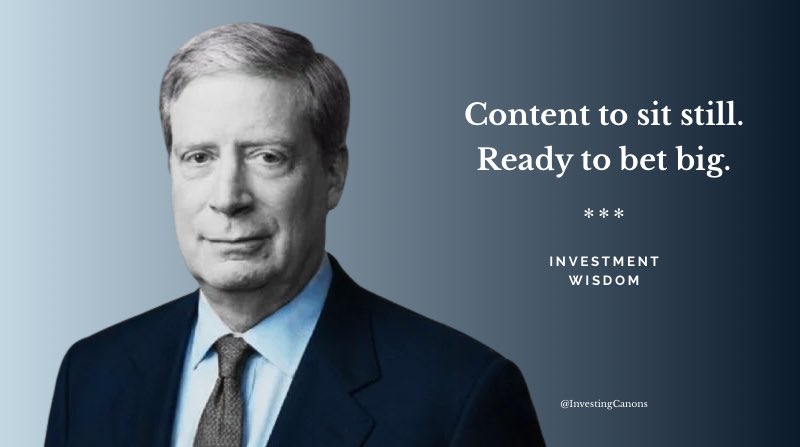
Stanley Druckenmiller: “I like to be very patient and then when I see something, go a little bit crazy.”
The great opportunities are rare. That’s why they require patience & aggression.
The ability to sit still when nothing stands out. The ability to bet big when something does
Bill Ackman’s post about inflation took me back to the late 1970s, when similar concerns were everywhere. What followed was stronger growth and falling inflation, helped by the PC and software revolution. We believe today’s innovation platforms could have an even greater impact.
Most people think our forecast for high single-digit real GDP growth is crazy. I understand why. We’ve spent our lives in a roughly 3% global growth world.
But look at AI. At a fixed level of performance, inference costs are falling 99.99% a year. Yet OpenAI’s annualized revenue run rate has jumped from $20 billion to $70 billion. As prices fall, demand explodes. We’ve never seen anything like this kind of growth!
We believe those cost declines will seep into the broader economy, lifting productivity and profitability while pushing inflation much lower than most investors expect. That’s “good deflation.” Interest rates could rise in that environment because real growth is stronger.
In this month's In The Know, I respond to Bill’s concerns, explain the research behind our outlook, and examine what credit markets are telling us about the AI investment boom. Watch it here: https://t.co/G0ikwI6QkN
Howard Marks:
Many people think the way you make money as an investor is by “…buying a good building, stock in a good company, or something like that. That is not the secret for success.”
“The secret for success in investing is buying things for less than their worth.”
Charlie Munger: “You become what you pretend to be, to some considerable extent.”
“I've known a lot of roguish people who made a fair amount of money and they start giving a little money to show off. And, 20 years later, they are actually real philanthropists.”
Peter Buffett inherited $90,000 in Berkshire Hathaway stock at nineteen. His father was Warren Buffett.
He sold every share. Moved to San Francisco, rented a small apartment, bought recording gear.
No one asked him to become a musician. He chose it anyway.
He'd watched siblings burn through cash fast. He wanted a different kind of pressure.
That stock, held, would be worth over $500 million today.
"I used my nest egg to buy something infinitely more valuable than money," he said. "I used it to buy time."
He never called it a mistake.
The safest asset is still a bet. Sometimes the house is your own last name.
Howard Marks: “There is no asset which is so good that it can’t become overpriced and dangerous.”
The higher you pay, the less room for error.
A great company can deserve a premium without deserving any premium.