🚨 PRIME MINISTER (OMUHIKIRWA) Vs HEAD OF BABIITO CLAN ( OMUSUUGA).
TOORO KINGDOM SUCCESSION BATTLE CONTINUES
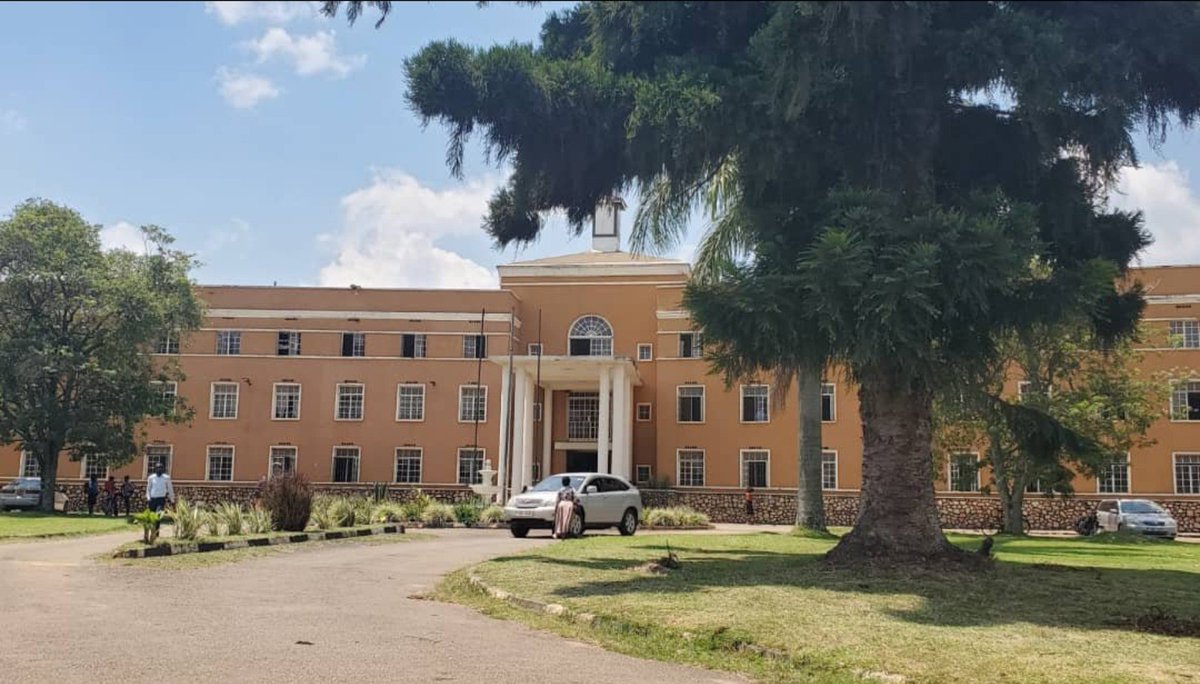
Security is now at the Tooro Kingdom offices in Fort Portal after the Prime Minister postponed today's Rukurato sitting. Some members still showed up anyway, led by the Babiito clan head, but police blocked them from the chambers on the PM's orders.
The clan spokesperson says the PM has no right to stop the council. This is all tied to the succession fight over who takes over from the late King Oyo, his body is due back in Uganda on Thursday.
POLITICS MIGHT BE THE END OF TOORO KINGDOM 📌🙌
10 Ways to Turn a Salary into Wealth
1. Live Below Your Means
Spend less than you earn, regardless of income level.
Wealth is built from the gap between income and expenses.
2. Pay Yourself First
Save and invest a percentage of every salary before spending. Aim for at least 10-20% of your income.
3. Invest Consistently
Put money into assets such as businesses, real estate, stocks, or mutual funds.
Consistency matters more than timing.
4. Avoid Lifestyle Inflation
As your salary increases, increase your investments rather than your expenses.
Don't upgrade every aspect of your lifestyle with every raise.
5. Build Multiple Income Streams
Use your salary to start side businesses or acquire income-producing assets.
Wealth grows when money works beyond your job.
6. Acquire Valuable Skills
Invest in education, leadership, sales, communication, and technology skills.
The higher your value, the higher your earning potential.
7. Stay Out of Bad Debt
Avoid unnecessary consumer debt that finances liabilities rather than assets.Use debt strategically for investments that generate returns.
8. Create a Financial Plan
Set clear goals for savings, investments, retirement, and major purchases.A salary without a plan often disappears.
9. Build Strategic Networks
Relationships often open doors to business, investment, and career opportunities.
Your network can significantly influence your net worth.
10. Think Like an Owner, Not Just an Employee Use your salary as seed capital to acquire assets.The goal is to move from earning money to owning things that earn money.
How politics and public money shape the economy
A significant proportion of government expenditure is already committed to wages, debt servicing and statutory obligations. This limits the government’s ability to redirect money towards emerging priorities https://t.co/NiDAy6sUM5
#MonitorUpdates
Customary Marriage in Tooro
Marriage was central in Batooro culture; a man was not considered complete until married. Formerly, parents of the boy and girl arranged marriages, sometimes without the couple's knowledge or consent.
The boy's family sought a middleman called Kibonabuko, whose role was socially recognized and rewarded. His duty was to investigate the girl's character, family background, reputation, and ability to work. According to Arthur Namara Alaari, Tooro's Minister of Information, the responsibility of finding a suitor rested with parents. Once a candidate was found, the Kibonabuko would go to spy on the girl's family.
He would appear at the girl's home and declare, "Sir, I come to you that you should build a house for me. I would like you to be part of my clan; I have come to ask for a wife, the builder of the house." The father's standard reply was, "I don't have any child." The Kibonabuko would insist and name the girl. If the father consented, he would kneel in appreciation.
Unlike other tribes, Batooro parents then sought the girl's own consent. If she agreed, the boy's family took beer to her parents to fix brideprice.
Brideprice was cows, varying between classes. For Bahuma pastoralists it was 6 to 20 cows; for Bairu cultivators the ceiling was about 8 cows, often paid in goats and hoes. Only men sat in for negotiations, as women were married, not marrying.
Payment was received at a ceremony called Okujuka, marked by eating, drinking and merrymaking. Then barkcloth and skins were sent for the bride's dress.
On the wedding day, roasted coffee beans and milk were given to nine people from the groom's side in a ritual called okuterura amata, welcoming them. Coffee was served in small baskets, milk in milk pots.
The bride was collected around 6-7 pm. Before leaving she performed okubukara, sitting on her parents' laps. She was then carried on a litter to the groom's home, where she sat on her in-laws' laps and was sprinkled with herbal water, endemezi, for blessing. Before feasting, the groom and bride performed okucwa amagita in bed. If she was found virgin, a cow or goat was sent to her mother.
On the third day, her friends brought gifts to see where she was taken. After confinement, an elaborate ceremony initiated her into cooking and housekeeping. In case of divorce, brideprice was refunded, though part was retained if she had children.
Religiously,Batooro believed in Ruhanga, the supreme, benevolent creator. But the world was full of evil spirits and sorcerers who caused disease, barrenness and drought. They believed in mediums, some of Ruhanga, some of the devil, and in the Emandwa cult. Shrines were in every home, praised with drums, trumpets, skins decorated with beads and cowries, and a barkcloth headdress with horns, ekisingo. A mufumu diviner was consulted in misfortune, and supplications were at night by fire, using altered pronunciation and Runyankole terms like omugabe for Omukama.
Blood brotherhood was practiced, even between man and woman, using coffee berries, barkcloth, knife, fig branches and ejubwe grass. The climax was drinking each other's blood from a cut below the navel with coffee berries, swearing brotherhood before witnesses.
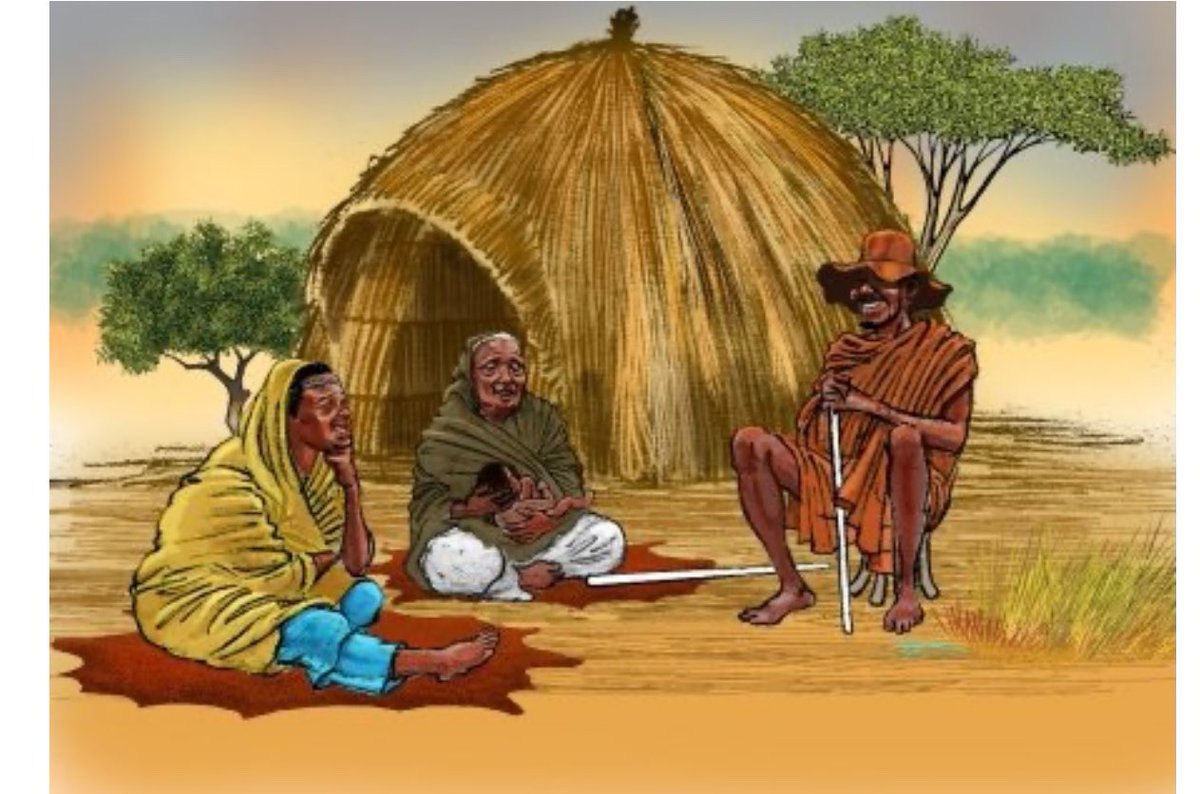
Economically, Bahuma were pastoralists, Bairu agriculturalists. They grew millet, sorghum, bananas, peas and greens, valued cattle as wealth, and produced iron spears, hoes, knives, barkcloth, salt, pottery and baskets. Men built circular thatched huts, cleared bush and hunted communally.
Politically, Tooro was centralized under the hereditary Omukama from the Babiito dynasty. Kaboyo Kansunsunkwanzi founded it in 1830, succeeded by Nyaika, then Kasagama, who was dethroned by Kabalega and restored in 1891 by Lugard of IBEA Co. Chiefs assisted him, and Mwenge county served as a school of governance for princes, princesses, expectant queens and rebellious princes, so no war was fought there. The kingdom was abolished in 1967 and restored in 1993.
HIV lost its fear. Gen Z needs a reminder
The answer is not to recreate the fear campaigns of the 1990s. It is to make prevention matter again https://t.co/ruTluDEUeO
#MonitorUpdates
Why do I climax too quickly during sex?
"I recently got married, but I climax almost immediately whenever I have sex with my wife."
#MonitorUpdates
https://t.co/Ks3J0pwFoz
🚨 A mutooro woman named Sandra Karungi claims Bruno K repeatedly messaged her on Instagram asking for money while also making romantic advances.
She says he prefers brown-skinned women and those from the Batooro community, and even shared an Airtel number ending in 61 plus his Kyanja address.
She made the claims at the vigil for the late King Oyo in Buziga. She says if Baganda come for her, she'll hit back through the one they care about, Bruno, by airing his messages and preferences.
Bruno K hasn’t responded publicly yet.
OPINION: Business first, house later. Does this advice really work?
The business-first advice sounds great, and many young Ugandans are taking it seriously #MonitorUpdates https://t.co/BkpByUIsaV
Thank you, Katikiro @cpmayiga
We discussed so much about making a real difference in the lives of our people, and I truly believe this would have been a phenomenal opportunity to turn many of those conversations into reality.
Sadly, it was not to be.
God’s plans are greater than our own. We may not always understand His timing, but we must trust His will.
We now have a responsibility to carry forward the dreams, ideas and hopes that were left with us.
Power isn’t about being loud—it’s about being calm, disciplined, observant, and intentional. 🧠🔥
Speak less. Think more. Move with purpose. Let your actions speak for you. 💯
A man must build 3 things:
1. A body that can handle pressure.
2. A mind that doesn't panic.
3. A skill that creates income.
Miss one, and the others suffer.
Sex won’t satisfy you.
Fame won’t satisfy you.
Drugs won’t satisfy you.
Money won’t satisfy you.
Alcohol won’t satisfy you.
Success won’t satisfy you.
Life is empty without God. He is the only one who can satisfy your heart.
WHY KING OYO WAS CALLED OYO - THE LUO SECRET OF TOORO AND BUNYORO
If you are a Mutooro or a Munyoro, your King has a Luo name. Oyo, Olimi, Rukidi, Winyi, Kaboyo, Duhaga. How? Long ago, we had no Babiito, we had the Bachwezi. The Kitara Empire was powerful, with its capital at Bigo bya Mugenyi, but then things fell apart. King Wamara's cows started producing blood instead of milk, Mugenyi's sacred cow Bihogo died at a salt lick, and rebellions broke out everywhere. Wamara called his diviners, who brought a fattened calf, rinsed their mouths with milk and slaughtered it to read the future, but when they cut it open there were no entrails inside.
No one could explain it until a Luo diviner named Nyakoka from across the Nile came forward. He hit the head and the legs of the calf and the entrails fell out, covered in black soot from the fire. He interpreted the omen: an empty stomach means the reign of the Bachwezi is over, entrails in the head and legs mean the Bachwezi will survive only as spirits in the Mbandwa shrines, and the black soot means Kitara will be taken by dark strangers from another land. The Bachwezi tried to kill him for this prophecy, but he escaped north across the Nile back to Bukidi, today's Lango and Acholi.
Who was waiting in Bukidi? Years before, a Chwezi Prince called Isimbwa had gone hunting in Luo land and left his son Kyomya behind. Kyomya married a Lango woman, Nyatworo, daughter of Labongo of the Mukwonga clan, and their child was of mixed blood. They called him Isingoma Mpuga Rukidi - Isingoma meaning father of drums, the Bantu name his subjects gave him, Mpuga from empuuga, the black-and-white cow symbolizing his mixed ancestry, Rukidi from his birthplace, and Labongo from his Luo grandfather. He and his brothers were hunters, loved by the Luo people. Nyakoka found him resting under a Bito tree, which is why they are called Babiito, and told him: "Kitara has no king. Go and take it."
So a small group of Biito-Luo crossed the Nile - legend says they had to sacrifice a child to cross - and when they arrived at the empty Chwezi capital, the Banyoro viewed them with suspicion because they were half Bantu and half Luo. Rukidi asked Wamara's wives, Bunono and Iremera, "Where did the Bachwezi go?" They answered, "They disappeared towards Lake Victoria, they will never return." He took the drum, and that was the start of Bunyoro-Kitara. The new kings lost their Luo language and spoke Runyoro, but they kept Luo names as throne names. That is why the first Bunyoro kings are Rukidi, Ocaki, Oyo Nyiba, Winyi I, Olimi I, Chwa, Nyabongo and others, because when you become Omukama you drop your childhood name and pick an ancestor name to prove you are a true Mubiito.
That is why the founder of Tooro in 1830, Prince Kaboyo who rebelled against his father Kyebambe III of Bunyoro, called himself Kaboyo Olimi I on the throne, taking a Luo ancestor name, and why Oyo's father named him Oyo Nyimba before going to Cuba as ambassador, with elders later adding Rukidi IV after his grandfather. They even brought Empaako, the word pako itself is Luo meaning to praise someone, and names like Amooti, Akiiki, Abwooli and Ateenyi are Luo pet names with direct meaning in Luo language. The Babiito are also the only clan in Bunyoro that does not marry outside; they marry within to keep that royal blood. Even in Buganda, Rukidi's twin brother is Kato Kimera, the third King of Buganda. So we are Bantu people, but our kings are sons of the Luo. That is why the Tooro anthem says, "We are children of Bachwezi, grandchildren of Batembuzi, but sons of Rukidi Mpuga." Oyo was not just a name. It was 800 years of history. Rest well, Rukidi IV.