Neurology trainees: Bookmark this study resource!
The Resident & Fellow Section Video Collection offers free, searchable teaching videos—filter by topic or subspecialty for focused, relevant learning. Start exploring now: https://t.co/ahZYDCVEtx
#NeurologyRF
Consent✅
'Shock horror' - Occasionally I see upper limb stuff
Here's a simple formula -
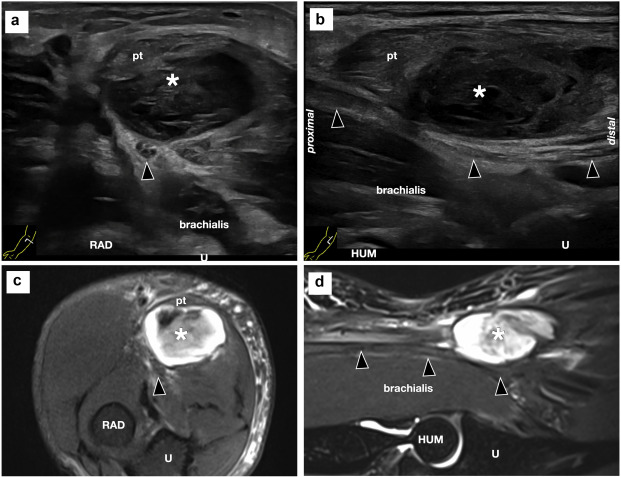
Anterior elbow pain + beach weights before Ibiza holiday = biceps tendinopathy
It's not an esoteric median or radial nerve neural tension issue, and its not the neck 🙄
Remember -
Brachialis is the main pure elbow flexor
Biceps brachii (the tendon typically implicated) is the supinator (screw driver test) - and also recruited more in flexion in hammer curl position
Test accordingly
Here -
Anterior approach for distal biceps is often tricky to visualise the very distal insertion at the radial tuberosity - so we need to fully lock out into extension & supinate
But given the obliquity of the tendon, also need to 'heel in' to remain parallel to the tendon
With patience, we can get really nice images of the insertion even in powerfully built patients - plus take advantage of the 'acoustic enhancement' phenomenon via the brachial artery - first image
The cheat code is the medial view 'supinator window' - second image
Another example that demonstrates how dynamic maneuvers (in particular, the resisted abduction), can clearly show a non-retracted supraspinatus full-thickness tear, difficult on static ultrasound images.
If you have not already read how to do, check https://t.co/bAHrbdC4QA
Dynamic Maneuvers improve US detection of SSP tendon tear. A Chile-Switzerland-Italy collaboration!
https://t.co/bAHrbdC4QA
The movies can be seen in Supporting Information here https://t.co/Cm5UDkwo4e
@GSERRANOB_MSK@Rheumatology
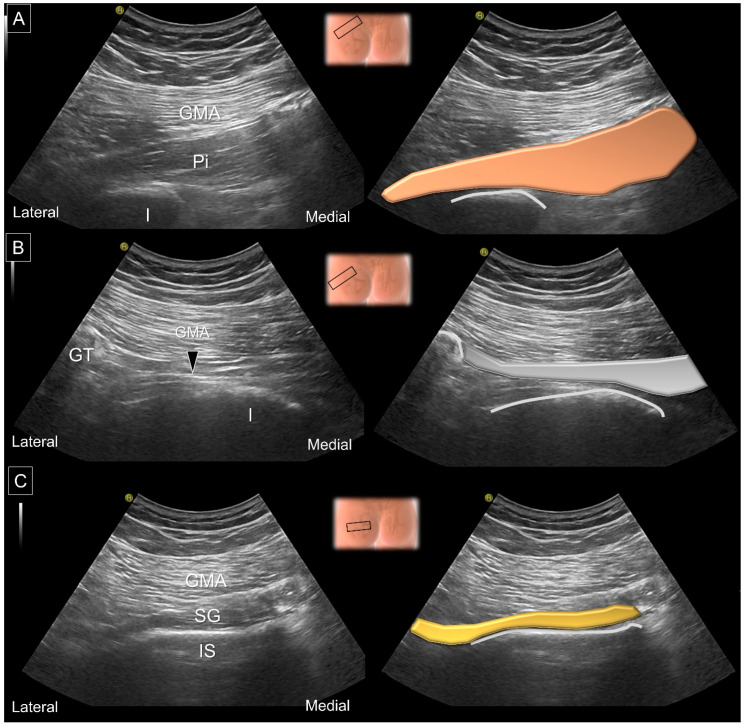
[Neuromuscular ultrasound] Tawfik et al. "This review provides a practical framework for brachial plexus ultrasound, covering applied anatomy, systematic scanning approach, sonographic parameters and their interpretation, condition-specific findings, scanning protocols, and an evidence-based summary of its current indications. https://t.co/DkJQrG9XY4
Conclusion: Current data suggests oral NR supplementation at these doses cannot be recommended to prevent neuropathy or improve nerve regeneration in humans. Much higher doses may be required to achieve the pharmacological effects seen in earlier models.
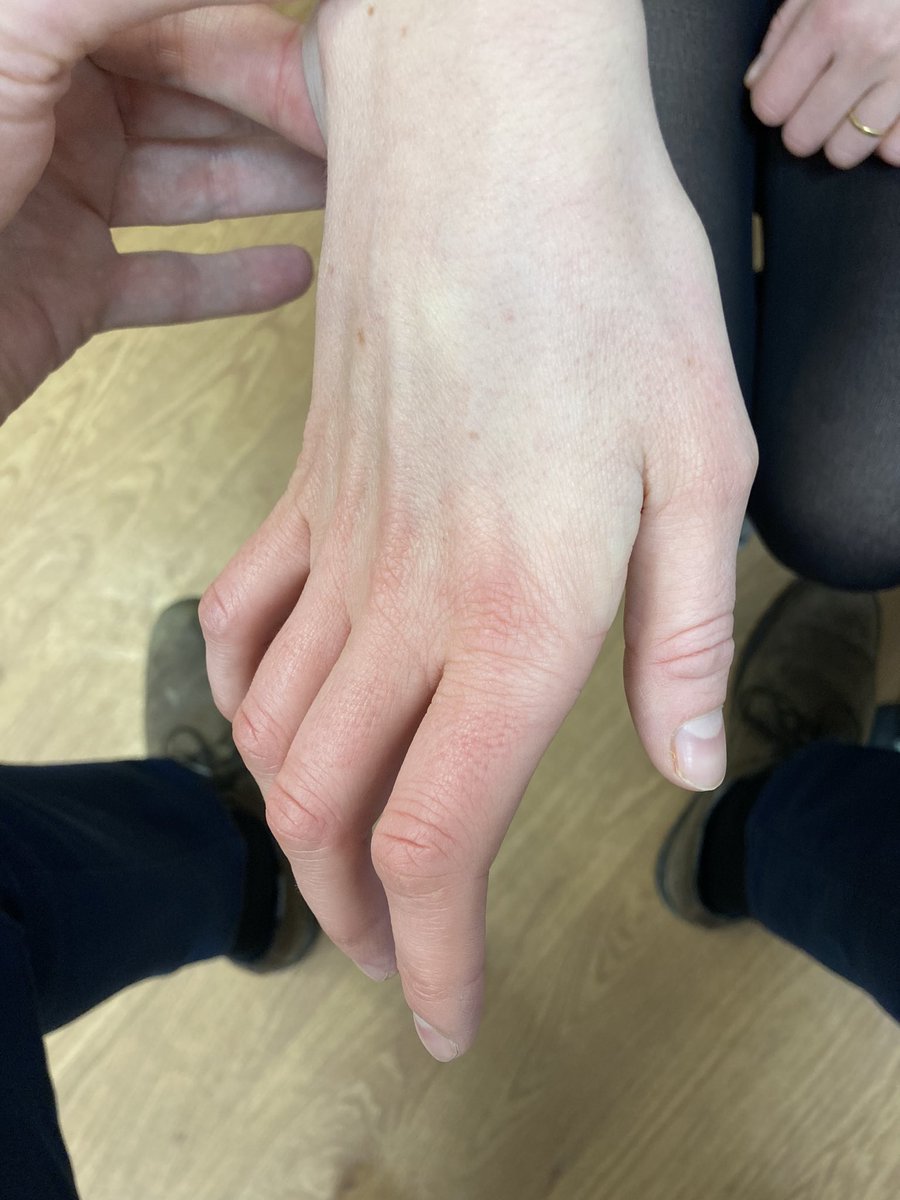
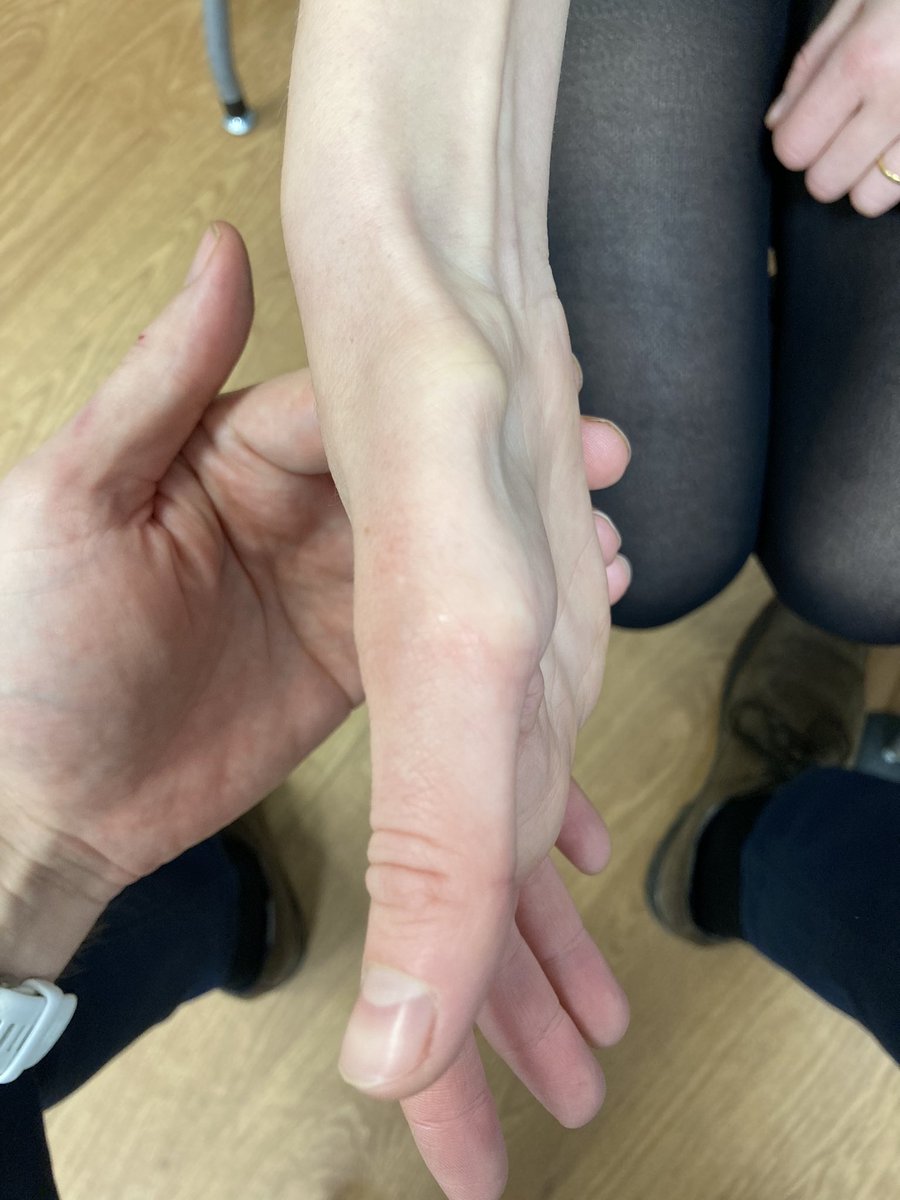
Gilliatt-Sumner hand is a term for a loss of both median and Ulnar intrinsics with intact median sensation as is seen her (with consent) in a patient with a longstanding undiagnosed thoracic outlet compression #TOS
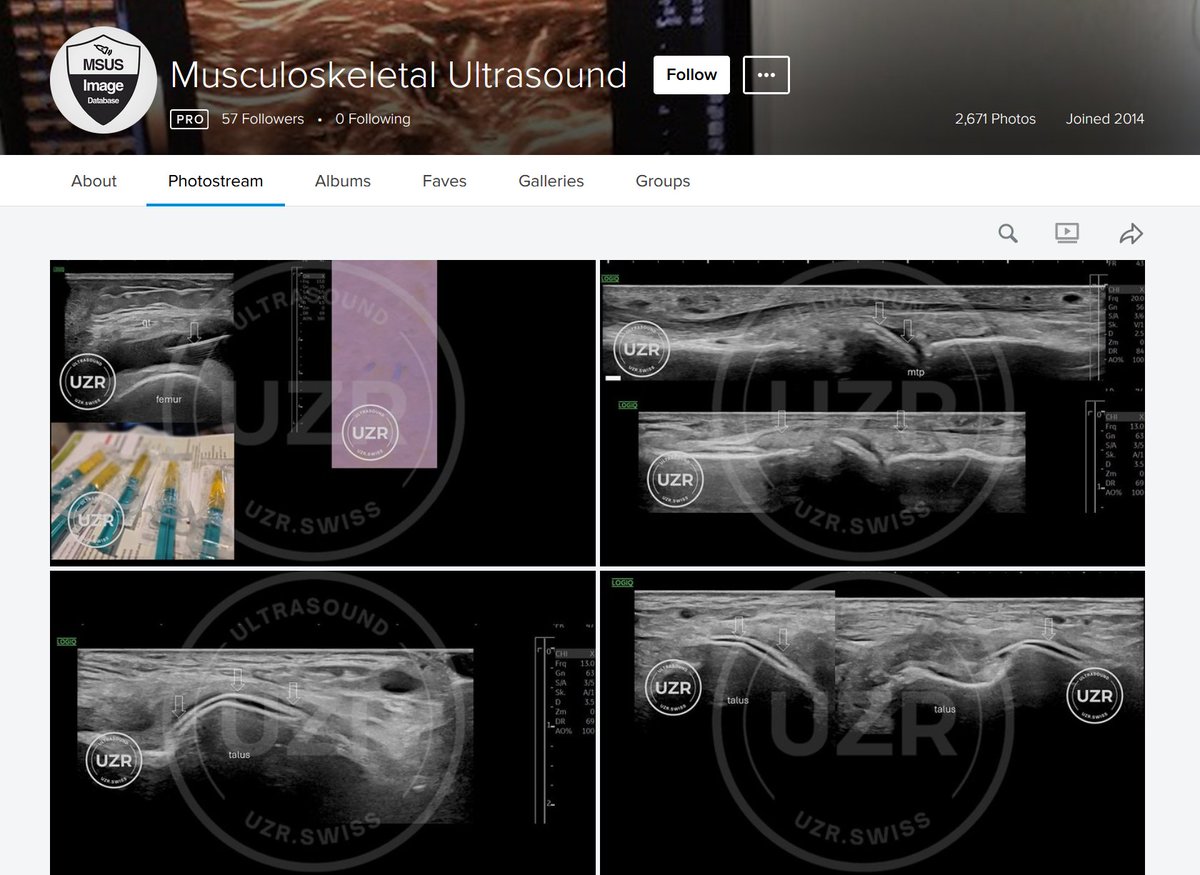
We now have more than 2600 images and videos in the FREE MSUS Database!
https://t.co/ddUAKphI6O
______________
Video Channel https://t.co/WKqhWUWnLL
Textbook: https://t.co/ZstTDdf38P
Chondrocalcinosis of the knee 👇
Pearls:
- Fibrocartilage CPPD (in the meniscus) occurs at a younger age and is more prevalent than femoral hyaline cartilage CPPD.
- Chondrocalcinosis in both the fibrocartilage and hyaline cartilage is frequent in patients > 80 years old (47% and 23%, respectively).
What is your age cutoff to screen for secondary causes of CPPD?! --> hypophasatesia, hypomagnesemia, hyperparathyroidism and hemochromatosis
Reference for a deeper dive: Cipolletta E, Francioso F, Smerilli G, Di Battista J, Filippucci E. Ultrasound reveals a high prevalence of CPPD in consecutive patients with knee pain. Clin Rheumatol. 2024 Jan;43(1):435-441. doi: 10.1007/s10067-023-06805-3. Epub 2023 Nov 17. PMID: 37975949.
#MSKUS #RheumUS


![ClinicalNeuroph's tweet photo. [Neuromuscular ultrasound] Tawfik et al. "This review provides a practical framework for brachial plexus ultrasound, covering applied anatomy, systematic scanning approach, sonographic parameters and their interpretation, condition-specific findings, scanning protocols, and an evidence-based summary of its current indications. https://t.co/DkJQrG9XY4](https://pbs.twimg.com/media/HLDgknVWwAA52oG.jpg)
![ClinicalNeuroph's tweet photo. [Neuromuscular ultrasound] Tawfik et al. "This review provides a practical framework for brachial plexus ultrasound, covering applied anatomy, systematic scanning approach, sonographic parameters and their interpretation, condition-specific findings, scanning protocols, and an evidence-based summary of its current indications. https://t.co/DkJQrG9XY4](https://pbs.twimg.com/media/HLDgkc9WgAAuYgW.jpg)
![ClinicalNeuroph's tweet photo. [Neuromuscular ultrasound] Tawfik et al. "This review provides a practical framework for brachial plexus ultrasound, covering applied anatomy, systematic scanning approach, sonographic parameters and their interpretation, condition-specific findings, scanning protocols, and an evidence-based summary of its current indications. https://t.co/DkJQrG9XY4](https://pbs.twimg.com/media/HLDgkQDWoAAmgUZ.jpg)








![ClinicalNeuroph's tweet photo. [Neuromuscular ultrasound] Tawfik et al. "This review provides a practical framework for brachial plexus ultrasound, covering applied anatomy, systematic scanning approach, sonographic parameters and their interpretation, condition-specific findings, scanning protocols, and an evidence-based summary of its current indications. https://t.co/DkJQrG9XY4](https://pbs.twimg.com/media/HLDgkwfW0AALVH4.jpg)