Durov is missing the point here, and the students he claims to speak for are exactly who NTA is trying to protect.
Let me give credit where it is due, because I think NTA got this mostly right.
Let me start with what was actually happening.
The NTA has categorically said that no paper was leaked. So, there was no real leak.
What there was, was rackets running channels openly named "PAPER LEAKED NEET" and "Re-NEET 2026," selling fake papers to terrified kids and demanding anything from a few thousand to a few lakh rupees.
Durov says Telegram shows when a message was edited, and that they are making that edited tag more prominent. Fine.
But think about who is on the other side of this.
A 17 year old at 1 AM before the biggest exam of their life, running on no sleep and pure fear. When a channel flashes a "leaked paper" at them, they are not going to squint for a tiny edited label.
Scared people do not read the fine print. NTA understood that. Durov does not seem to.
But the most important bit is simply the fact that Telegram has no office in India and answers to nobody.
India tried taking these channels down one by one, and it went nowhere. New ones appeared faster than the old ones came down.
When the platform refuses to be reachable and lets extortion run in the open, what exactly is a government supposed to do, shrug and let students get robbed?
So NTA did something smart, if you read the actual order.
The block is only till June 22, around the re-exam. The editing curb runs till June 30. It is targeted, time bound, and tied to one specific exam window.
Yes, a temporary block is not a perfect tool, and we should always be careful about blocking apps. Fair.
But clearly, Telegram would just not cooperate and the platform continued to run rackets that were actively fleecing scared children.
NTA chose to protect the kids. That was the right call.
Durov is defending his app. NTA was defending 22 lakh students. I know whose side I am on. :)
@kushal_mehra@wip2050 Whether it’ll deter companies or not to change policies is yet to be seen, but govt flexing its muscles (without acting on it) still sends a message across and that’s the point!
@kushal_mehra@wip2050 What a silly counter @kushal_mehra . I didn’t find anything over the top in @wip2050 suggestions for you to be giving up. I agree govt bans these handles in India, but that’s still very passive response! Calling these media companies out/warning them is much better starting point
One of the most powerful symbols of India’s unbroken civilizational continuity!
Discovered at Mohenjo-daro in undivided India this steatite seal, about 4,300-year-old, shows a seated figure in yogic posture (widely seen as Shiva-Pashupati) seated in Mulabandhasana, surrounded by animals.
While ancient sites may lie across modern borders, India remains the living custodian of this heritage. The yogic posture, Shaivite symbolism, and spiritual ethos seen in the Pashupati Seal continue to thrive in India’s temples, daily worship of Shiva, yogic traditions, and cultural life even today.
From the Vedic period to contemporary Bharat, this civilizational thread has remained alive and unbroken — deeply embedded in our philosophy, rituals, and collective consciousness.🇮🇳
#PashupatiSeal #IndusSaraswatiCivilization #LivingIndianHeritage
Justification behind Navi Mumbai airport, it's exact location, the congestion issues at Mumbai (the busiest airports in the world in its class in terms of flight density) are all well known issues for decades. The new airport helping to fix these issues was always the expectation, not Adani monopoly!
India's greatest Internal National Security Threat has been ELIMINATED!
As we mark 12 years of PM Modi, we look at one of his biggest wins: the neutralisation of Naxalism.
This is the story of how the Red Corridor faded in India.
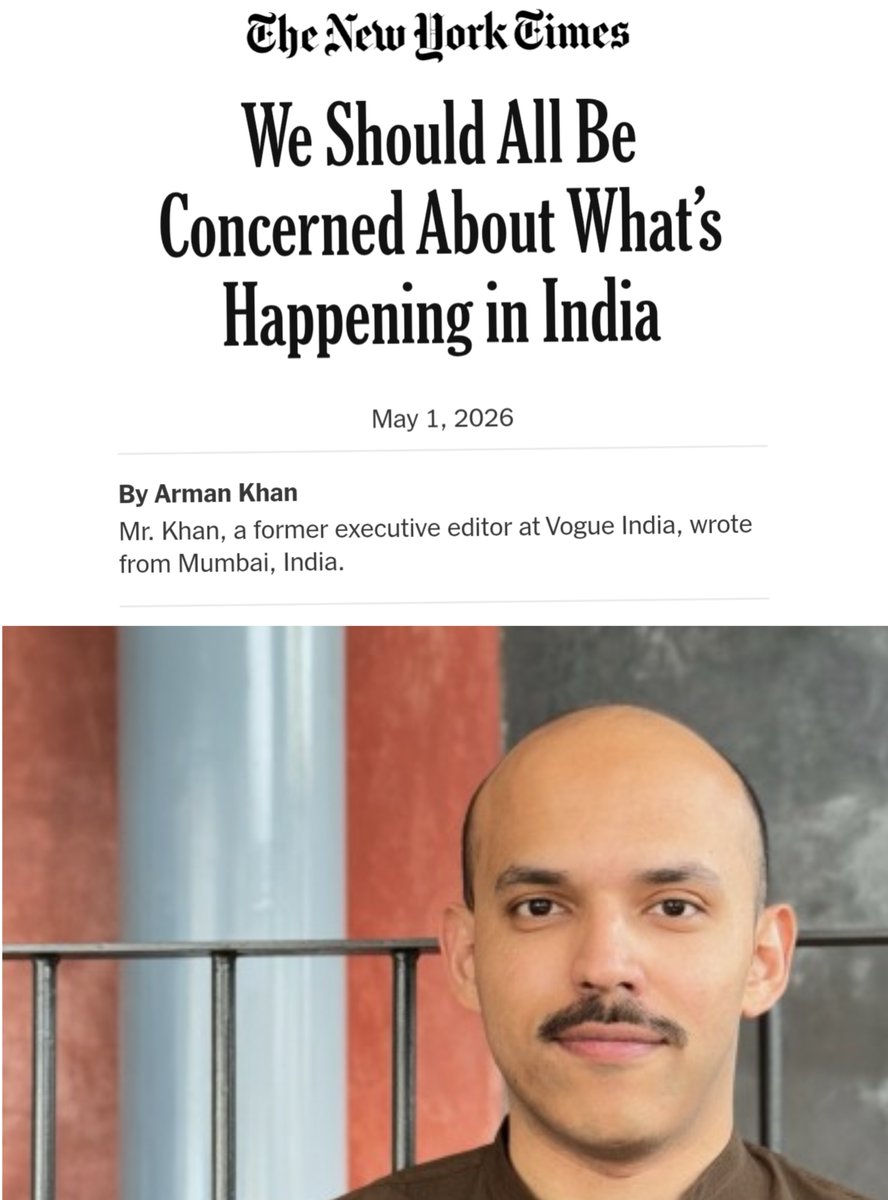
The Brown Sepoy for the day is Mr. Arman Khan, a Professor at Mayo College, Ajmer.
Arman wants the world to be concerned about what's happening in India, he doesn't feel safe in India.
Arman writes in this article: "The stakes are particularly high for Muslims like me, who face constant pressure in Mr. Modi’s Hindu-chauvinist India"
Yet, Arman continues to thrive in India, has a cushy job, write whatever he wishes to, without any repercussions.
Our team tracked 10 different anti India articles by Arman Khan published in international media since 2021.
Yet he was neither "persecuted" for this, nor he was put in jail as he claims in his various articles.
A news channel has editors and they still did what this channel did. Imagine what YouTubers are doing. Imagine the wild west that YouTube is! When I keep telling people to develop intuitive tools to decipher news there is a reason. You are being fed information by illiterate non experts.
I am a Kannadiga Hindu.
I respect Ch. Shivaji Maharaj, of Maharashtra.
I respect Raja Marthanda Varma of Kerala.
I respect the Cholas of Tamil Nadu.
I respect Raja Hemachandra Vikramaditya of Rajasthan. I respect Rana Pratap of Mewar.
I respect Raja Lalitaditya Muktapida of Kashmir.
I respect Lachit Borphukan of Assam.
I respect Bappa Rawal of Rajasthan.
I respect Rani Naikidevi of Gujurat
I respect Maharaja Ranjit Singh of ancient Punjab.
I respect Krishnadevaraya of Karnataka.
I respect Rani abbakka, Sangolli Rayanna of Karnataka.
I respect the Kakatiyas of Andhra Pradesh.
This list is not finite, and I know I have missed many important names.
But the point is, I respect the countless warriors, from every single part of our Bharatavarsha, who have given their lives and spirit for the defence and growth of our shared Hindu civilisation.
And every Hindu must do so if they value our culture.
His body had wasted away piece by piece.
His ribs had begun to show.
He no longer had the strength even to move.
When the British saw that this 25-year-old young man would not break, they tried to force-feed him by thrusting a tube through his nose.
The tube entered his lungs instead of his food pipe.
Milk filled his lungs.
He writhed in agony, vomited blood, but still refused to end his hunger strike.
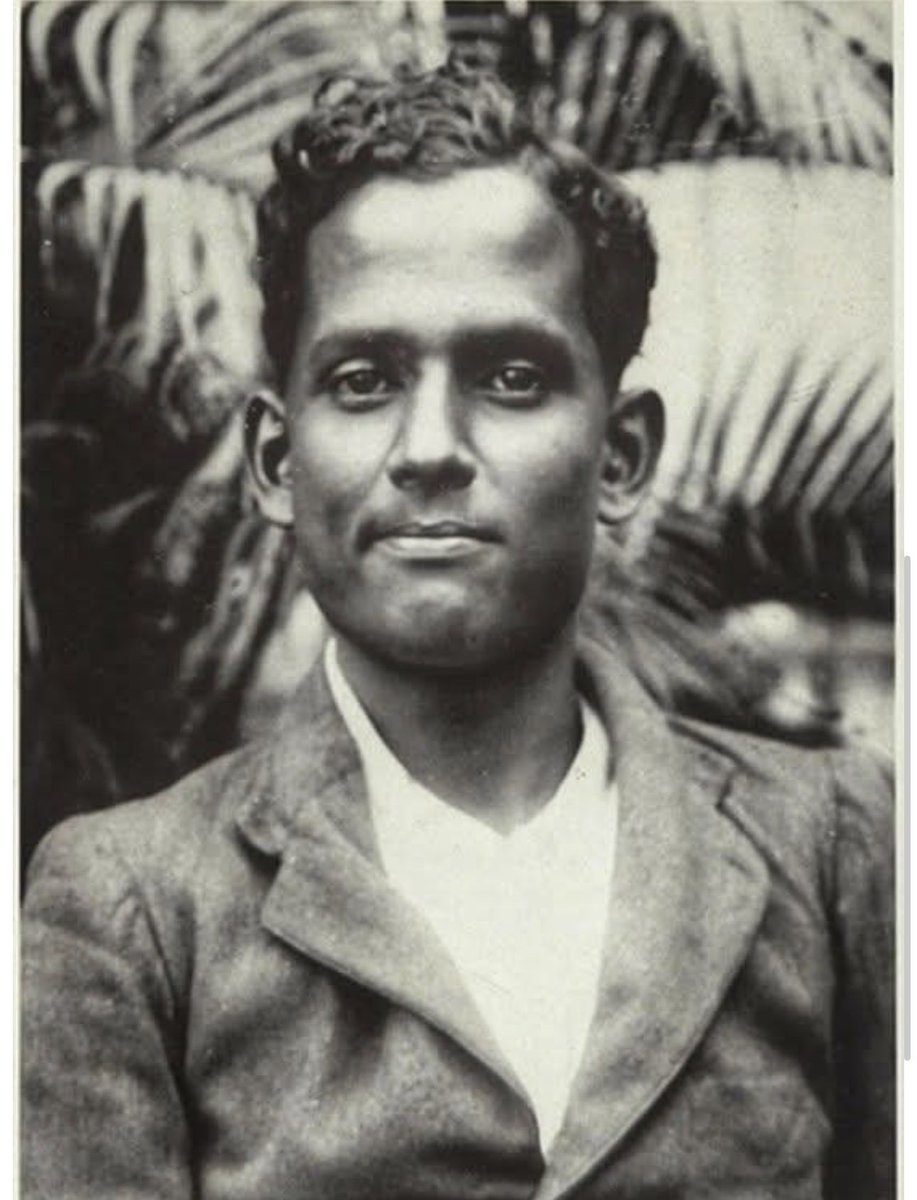
On 13 September 1929, inside Lahore Jail, a revolutionary gave his life.
For 63 days yes, 63 days he had not eaten a single grain of food.
History often remembers the hanging of Bhagat Singh, but forgets the comrade who died in Bhagat Singh’s arms.
That revolutionary was Jatindra Nath Das known across India as Jatin Da.
He was an expert in making bombs, but in the end, his greatest weapon became his own body.
He could have apologized.
He could have accepted food.
He could have saved his life.
But he had only one demand:
“Stop treating Indian political prisoners like animals.”
The British believed hunger would crush his spirit.
They did not realize that this was not a body made of flesh alone it was forged in iron.
As his condition worsened, the British crossed every limit of cruelty.
Prison doctors and guards pinned him down.
They forced a tube into his nose.
He screamed in pain, but his resolve never trembled.
When news of his martyrdom reached the public, the nation wept.
It is said that as his body was carried from Lahore to Calcutta, thousands stood at every railway station with flowers in their hands.
In Calcutta, more than 600,000 people joined his funeral procession.
Subhas Chandra Bose himself helped carry his body on his shoulders.
But today, how many still remember that 63-day sacrifice?
Before his death, Jatin Da reportedly said:
“I am no saint. I am simply an ordinary man who wishes to die for the dignity of his country.”
People may debate how India won freedom.
But one truth cannot be denied:
The foundations of that freedom were laid upon the withered bones of young men like Jatin Da.
India’s freedom was not charity.
Someone paid for it with his youth, his pain, and 63 days of unimaginable suffering.
Every Indian should know the price of the air they breathe today.
London had an underground railway in 1863. The first electric underground railway was built in 1891.
Under-freaking-ground. In 1891.
Gandhi (later Nehru and all freedom-fighting stalwarts) studied in London during that era.
Surely they would have seen this underground railway but it’s surprising none of them said we should have a culture that builds this kind of thing in India when it’s free.
Like how do you see an underground freaking railway in 18 freaking 91 and not get mesmerized by grand miracles of industrialization ?
The one thing driving London during that era was industrialization. And yet they didn’t connect the two ? Japanese got that. You didn’t ?
Like what was the grand plan ? Let’s free this country and turn it into a massive village ?
That the country should have crooked, unplanned roads in cities 100 years after independence ? That the might of train engines should never be produced, and that no modern train engine, car engine or any modern industrial design should come out of the country ever ?
To import every single thing from a neighbor that got to industrialization on its own despite not having any London-educated founding members ?
Honestly what even was their vision for the country ?
The masses are uneducated I get that. But the leaders didn’t have eyes ? They were right there in London! What was the option - to not be industrialized ? Rural economy forever ? Shitty cities ?
Questions are rhetorical.
जाति देखकर टिकट दोगे
जाति देखकर स्कॉलरशिप दोगे
जाति देखकर कानून पास करोगे
जाति देखकर मंत्री और राष्ट्रपति बनाओगे
जाति देखकर आयोग बनाओगे
जाति देखकर मंत्रालय बाटोगे
जाति देखकर नौकरी दोगे
जाति देखकर परीक्षा में पास करोगे
जाति देखकर पार्टी अध्यक्ष बनाओगे
फिर कहोगे कि देश में जातिवाद बढ़ रहा है।
सबसे कट्टर जातिवादी तो भारत के बेशर्म राजनैतिक दल हैं...
$1,000. That’s ₹30,000 in PPP terms, give or take. Make that the fine in India and give every station a monthly quota.
No, you don’t have to catch every single offender.
No, you don’t have to worry about bribery.
Just make this amount statutory.
And see civic sense magically return to this country in a matter of months.
Don’t worry about corrupt cops. Let them earn. When the amount is prohibitive, so is the bribe. No havaldar is letting you off with ₹500 when the fine is ₹30,000.
Making India civic is the lowest hanging fruit for the government. Takes NOTHING more than political will.
No “swachhata abhiyan.”
No pointless cess.
No mission.
No PSA or drives that fall on deaf ears anyway.
Just an unforgettable penalty.
An example from the past illustrating how UGC rules, if implemented, can be weaponised to settle personal vendettas:
Dr. Vaibhav Jain was a meritorious student at Indore Medical College in 2012. His MBBS classmate, Neha Verma, asked him to fill the medical entrance exam form again and sit behind her sister Pooja in the exam to tell her answers and help her pass. Vaibhav refused.
Neha got angry and retaliated by creating a fake Facebook profile in his name and uploading obscene content, then implicated him under the SC/ST Act, alleging he used casteist slurs. Vaibhav spent 50 days in jail and even took his second-year exams in handcuffs. Despite completing MBBS, the case blocked his chances of a govt job.
He fought a six-year legal battle before being acquitted. But imagine the trauma, embarrassment, struggle, and stigma he and his family endured for no fault of theirs.
UGC rules add an internal, low-threshold complaint route where allegations can trigger immediate academic or administrative action without rigorous scrutiny. Along with the SC/ST Act, this can be used to escalate pressure and settle scores faster.
We have arrived at a stage where Law and Order is now subservient to caste considerations. Politicians, Police and media - all of them act only after checking which caste is the alleged perpetrator and who is victim. Otherwise this person would be serving a jail sentence. We need equanimous laws applied equally towards people from all castes and religions.