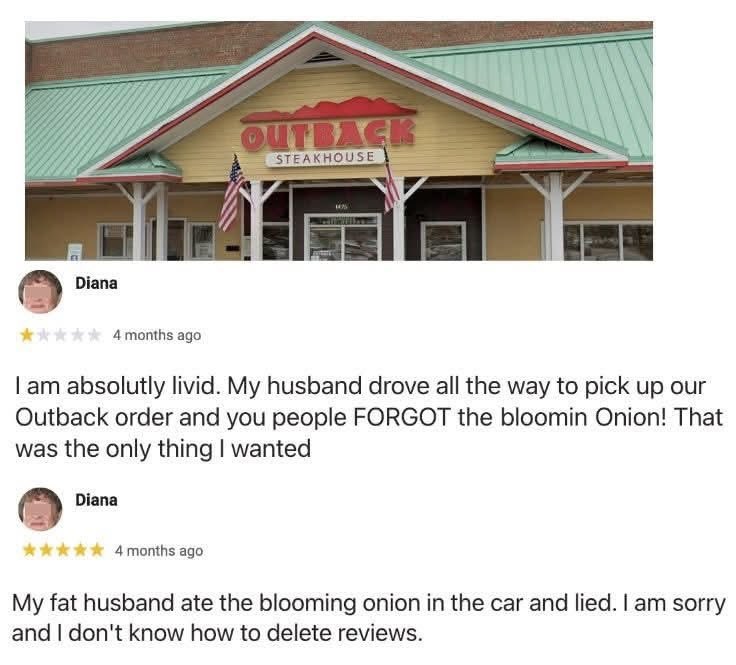
"The fat was always the point. The salad was just keeping it company."
I don't have a good word for the style (example above) of this fake-profound LLM last sentence in an essay structure, but it is driving me crazy.
It is everywhere right now. 100x worse than em dashes
This nauseating propaganda screed justifying the Tiananmen massacre is disheartening in its reflection of the Party-state apologism that passes for some China commentary these days, and of the worsening deterioration of Twitter’s (dis)information environment. But it is also a helpfully instructive lesson in recognizing the actual emptiness of such pro-CCP rhetoric.
- It represents established history as fresh, previously-obscure facts. The understanding that much of the killing of civilians occurred off the square, for example, is well-known. Consider Robin Munro’s (of Human Rights Watch fame, no less) 1993 book on the demonstrations: “There was no massacre in Tiananmen Square. But on the western approach roads there was a blood bath that claimed hundreds of lives. To insist on this distinction is not splitting hairs.”
- It plays loose with details, implying (with careful plausible deniability and ambiguity) that soldiers opened fire only after demonstrators had killed members of the army. Contrast this with one eyewitness account from a British tourist: “three young girl students knelt down in front of him and begged him to stop firing. And he killed them. An old gentleman put his hand up because he wanted to cross the road, and he shot him. The magazine of his gun was empty so he tried to reload and the crowd came in and hung him from a tree."
- It appeals to the complicatedness of history while actually flattening the narrative. She protests that “peaceful protesters vs brutal regime” is an incomplete picture but then seeks to replace it with a characterization of “violent protestors vs unprepared troops”, in turn omitting the voices of demonstrators clearly captured in so much of the archival footage directing the crowd to stick to their commitments to peacefully protest, asking compatriots to put down sticks and captured weapons, convincing comrades to spare a captured soldier. The famous footage she chose to share is arguably among the most peaceful segments out of hours upon hours of video captured at ground level that would much more honestly capture the complexity and chaos—but in a far less favorable light for the soldiers.
- It is flagrantly non-journalistic in its claims about how Chinese view these events today. Citation: “Most ordinary Chinese people I know”??? It’d be a bad joke if it wasn’t such an infuriatingly obvious attempt to seize the microphone and speak for entire peoples.
- It is notably Panglossian and deterministic in its historical storyline. There was no “more right” thing that the Party-state could possibly have done for China. Brutally suppressing the demonstrators in fact “saved” the country. Who knows what “might” have happened if the government had negotiated with those protesting or taken their perspective seriously? Oh, and all of modern Russia’s ills by the way can clearly be traced back to the country’s political reforms and the dissolution of the Soviet Union.
In conclusion, if the Chinese state’s use of live ammunition and lethal force to disperse vast civilian demonstrations in June 1989 can be excused as acceptable, then there is practically no limit to the violence that any government anywhere can inflict upon the people it governs. The ends can justify any means. Any assembly by the people to demand redress can be dismissed as externally-driven destabilization. Perhaps a trickle of bots, little pinks, and useful tankie idiots will soon begin accosting me for this post by exclaiming whatabout the United States’ historical crimes and failings, but my fear—and yours—should precisely be the fear of increasingly legitimized authoritarianism anywhere, be it in Washington, Beijing, Naypyidaw, or Jerusalem. We must fight for institutions that codify the self-restraint of the power-holders, and stand in solidarity with those carrying out similar fights elsewhere.
My hope for the future remains for a better world that is more fair, just, free, and prosperous. In no conceivable version of that better world could there possibly be room for a notion that the Tiananmen massacre was excusable or correct.
Feel like Blu*sky is a microcosm for all of American liberalism right now. The entire left-of-center became defined by cancel culture. Now the spaces where that culture exists are shrinking under external attack, but everyone on the left just stays within those shrinking spaces.
My descent into the Cotswolds vision of hell, from @The_Fence_Mag's new book 'The Pub' is now online.
Features a lot of Belstaff jackets, beer foam-soaked mutton chops, and what I firmly believe to be the worst 'pub' on earth.
https://t.co/tNoiFC9dz2
Not to dismiss the very real economic pain *a lot* of people in China are facing, but for many middle class urbanites the pessimism comes from not being able to move upward the way their parents’ generation did—which was, by all accounts, an absolute rarity in human history
Read Robert Foyle Hunwick's (@MrRFH) review of Margaret Boittin's "The Regulation of Prostitution in China," which examines how sex workers in China view their industry and themselves.
Only at China Books Review: https://t.co/D4fiUArKOS
A truly incredibly review by @MrRFH on Margaret Boittin's excellent study of prostitution in China, which excels when it asks sex workers how they view the industry and their selves.
https://t.co/ulnFTMSQuO
Based on this new report, 'Cold Crisis: Academic freedom and interference in China studies in the UK', academia sounds free to the extent that it touches anything China. Shocking read ⤵️
“We were told about a visiting scholar from China harassing one academic repeatedly, on one occasion whispering into this person's ear at an event, ' We're watching you', and on another shouting and interrogating them about their personal history.”
“We were told about research cancelled, funding denied, and a 'quasi-demotion' because of concerns about the Chinese government.”
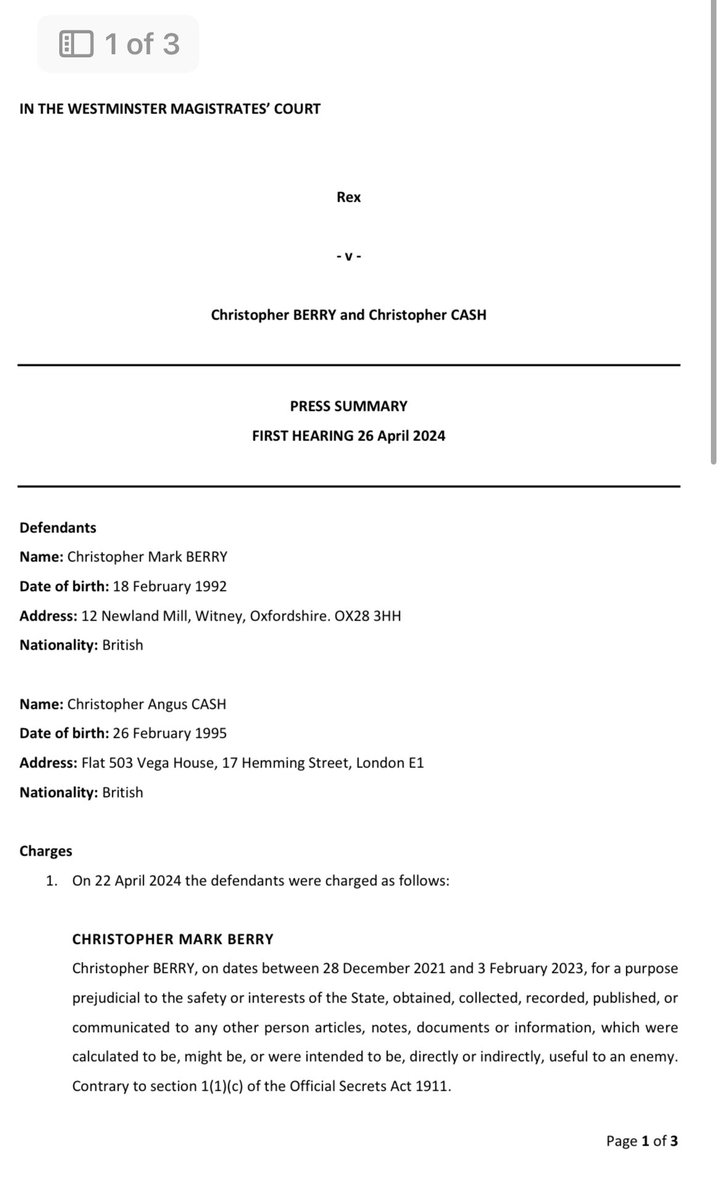
For context, China’s previous Minister of Justice, Fu Zhenghua, a Xi protege who led several high-profile campaigns against vice and graft, was jailed in 2022 for accepting $14.7 million in bribes. So at least the cost of corruption is going down
Liu Zhiqiang, a former vice minister of justice in China, was sentenced to 13 years in prison for taking bribes of over 42.45 million yuan ($5.92 million), according to a ruling made by the Wuhu Intermediate People's Court.
ChinaDiction is out and it's transitioning into a mostly review publication. This week it's the highly recommended The Troublemaker by Mark L. Clifford on Jimmy Lai. Please read, subscribe (it's free and will stay so) and pass on the word.
https://t.co/H9PvNnp5mo