It’s a good one from @amymayforrester and @adamboxer1 . Lots of discussion surrounding school culture.
‘Who was the student….. actually, it doesn’t matter’ 🫶👌👍
Lovely to hear @Ruth_Ashbee talk passionately on curriculum! 🤓📚
@adamboxer1 and @Carousel_Learn put on a very insightful webinar on observing teaching.
“Are they working or are they busy tricking!?” 🤓👌
As always, love the granularity! 🫶
It’s a great question. PPT only allows a limited number of actions or possibilities which - arguably - aren’t well suited to the back & forth cycling of a lesson structure. They work well for a presentation because it’s unidirectional. In terms of ecological psychology, the ‘perceived affordance’ of a slide deck limits both it can be used and how we *think* it can be used. So, while it’s possible to do wild stuff with slides, this is outside of what most users think is either possible or worthwhile
If anyone thinks a smartboard is better than a visualiser or tablet, they haven't been in a classroom for at least ten years.
If anyone thinks a visualiser is better than a tablet + OneNote, that's much more forgivable, as the latter is expensive +rarer.
But it's MUCH better.
Been an absolute privilege to be involved in making this course.
Whenever I ask teachers and leaders if they’ve ever had training on observations they always say no.
Another in the “you’re just expected to be good at it” category…
It’s not until you go on holiday and give everything to your family that you realise how much teaching takes out of you. It’s so lovely to give them time without being absolutely shattered. I know it’s the same for all jobs and I’m not comparing but it’s just nice ❤️
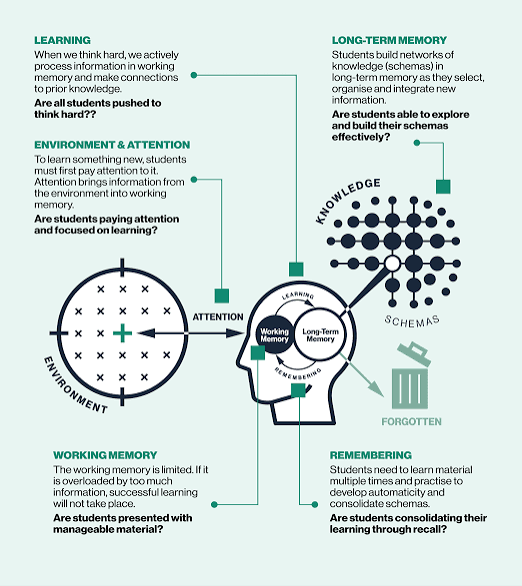
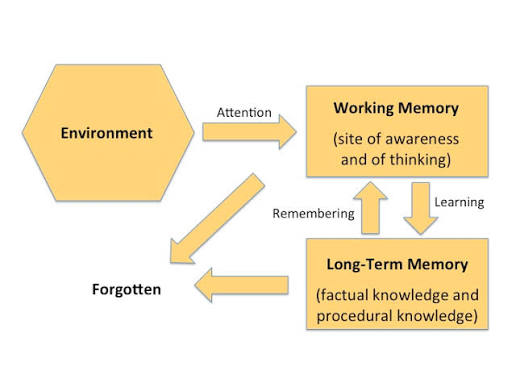
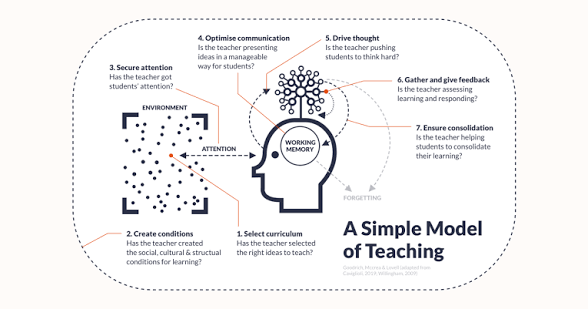
There are now many versions of Willingham's Simple Memory Model. Each has its pros and cons.
Mainly though, im interested in the difference it makes. So the slide goes up in CPD presentations across the land. But what then? What are you trying to achieve? What difference do you want to make in people's classrooms?
Good CPD isn't about raising awareness. It's about leaving people with something concrete that they can use in their actual teaching. If you don't have that, you can have the best working memory model in the world, but your CPD is a waste of time.
@thsuburbanmommy@adamboxer1 Teach unit 1 as normal Teach unit 2 whilst continually revisiting unit 1 Low stakes cumulative quizzes Interleaving old and new content Delayed retrieval practice Cumulative assessments at end of each unit
Then repeat with units 3,4 ect
“A big part of being able to improve [as a teacher] is having the cognitive headspace to improve”
Is this one of the most important thing school leaders can do for their staff?
@SCottinghatt discusses this and more in the latest episode of ‘The Science of Learning’ podcast
Memory & learning, professional development, coaching…
Bradley and I discuss all this in what looks like his living room!
Shout outs to @DrSamSims@Steplab_co and all schools doing great work with PD!
Adaptive teaching isn’t only reactive - it begins with anticipation.
Expert teachers predict misconceptions, knowledge gaps, literacy barriers & working memory challenges before instruction begins.
https://t.co/VbgEUEhWqZ
Adaptive teaching isn’t only reactive - it begins with anticipation.
Expert teachers predict misconceptions, knowledge gaps, literacy barriers & working memory challenges before instruction begins.
https://t.co/VbgEUEhWqZ
Useful @EducEndowFound blog on 'How school leaders can support adaptive teaching in the classroom'. Effective implementation...
"When the focus is on ‘getting through’ the curriculum, it becomes harder for teachers to take the time to check and adapt."
https://t.co/PPBKeqo86A
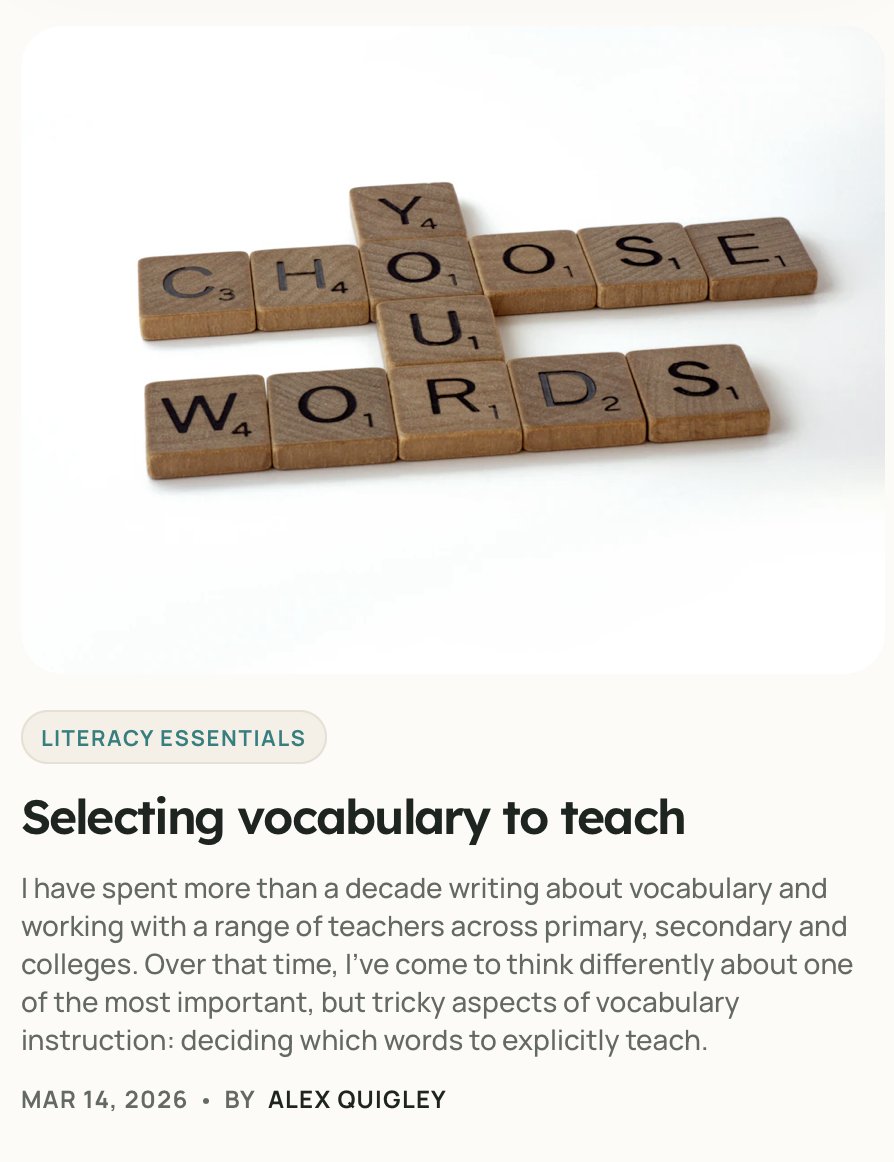
One of the trickiest questions in vocabulary instruction is deceptively simple:
Which words should we explicitly teach?
After years working with schools on vocabulary, I explore that challenge here:
https://t.co/FRpWuHalAM
*** NEW POST ***
Developing vocabulary is about more than memorising definitions.
I look at how understanding the morphology of geographical vocabulary supports pupils to read & write better and its curriculum, pedagogical and assessment implications.
https://t.co/PzEiflRX5E