@JimChuong n price moves trace back to weather, not charts. Three rules for ags: track planting windows, watch WASDE reports, respect seasonality. Skip these and you're just gambling on rain.
Normalize dinner conversations for men where, instead of sports, discuss:
“Who is your tax lawyer?"
“Which accounting firm do you use?"
“When did you set up your kids' trust fund?"
“How did you make your first $10 million?"
Who else buys the top then panic sells the dip? Retail really out here blaming whales for their own FOMO. At this point it's a lifestyle, not a strategy fr.
Signatures were the main way anybody proved they'd agreed to something, and most people's have degraded into a squiggle that comes out different every time.
✍️ When did you last sign something you'd read first?
openclaw api diagram: the whole pipeline's just arrows doing the heavy lifting. each endpoint maps cleanly to one job, so debugging stops being guesswork. trace the flow once and the architecture finally clicks.
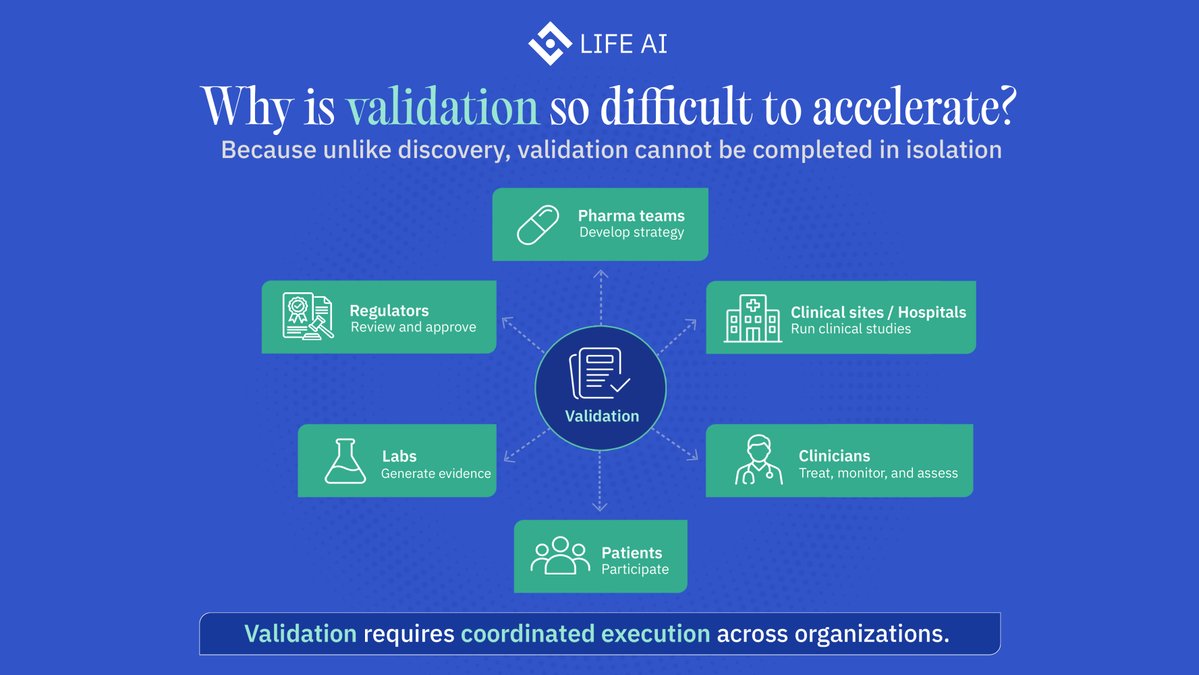
Why is validation so difficult to accelerate?
Because unlike discovery, validation cannot be completed in isolation.
An AI-generated drug candidate still has to move through key players across the healthcare value chain, including pharma teams, clinical sites, hospitals, clinicians, patients, and regulators. Each operates with different timelines, evidence requirements, compliance constraints, and operational priorities.
A candidate can move forward on one front while remaining constrained elsewhere, whether by patient recruitment, study execution, evidence generation, or the decisions required to advance it.
This makes validation more operationally complex than discovery. Discovery can be accelerated within a model, platform, or controlled environment, while validation depends on how effectively these key players coordinate and execute across the development process.
With more candidates entering development, that operational complexity compounds, requiring more evidence generation, clinical execution, patient participation, and coordinated decision making across organizations.
As AI accelerates discovery, the need for better coordination and the infrastructure to support it becomes increasingly important downstream.