It has taken 7 years and 10 months, 42 prosecution witnesses, and 81 exhibits presented by the ODPP for justice for Sharon Otieno to finally arrive.
Today, as Sharon's family sat in court to hear the verdict, we were reminded of the immense cost of justice delayed.
While we commend the prosecution, justice must not take nearly a decade. Across Kenya, from young girls to grandmothers, women continue to be lost to a horrific wave of femicide.
Our police, ODPP, and courts must bring the same rigor, urgency, and commitment to every case. not only those that attract national attention. We must all to our part to end the killing of women.
#ActNowToEndGBV #EndFemicideKE
Take photos and videos of everything…your future self will thank you. This was Tumiso’s 1st birthday, and the 1st time I ever sang sweet love publicly ☺️
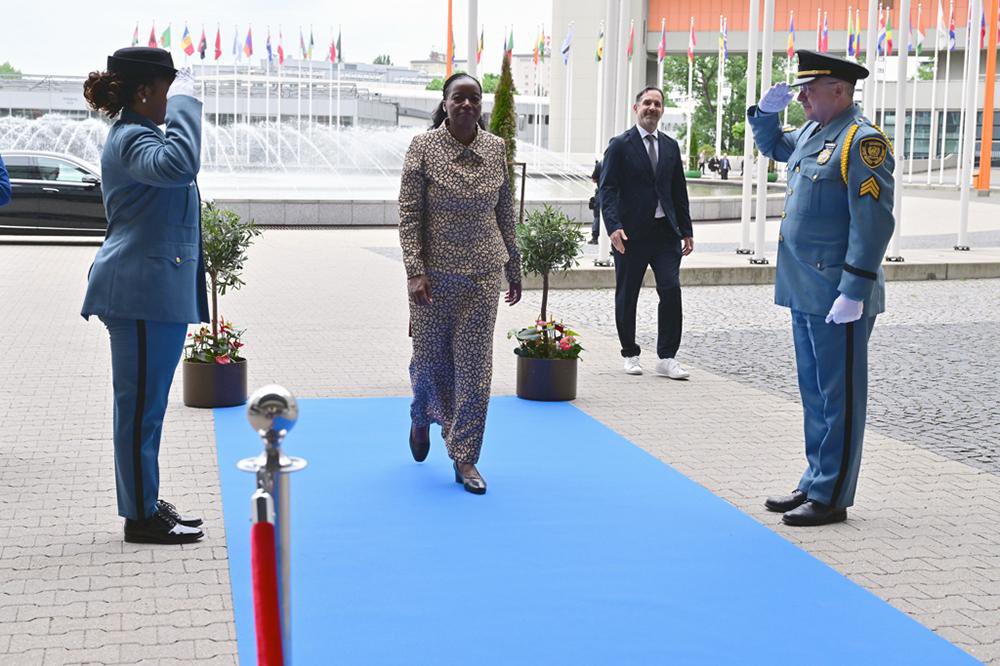
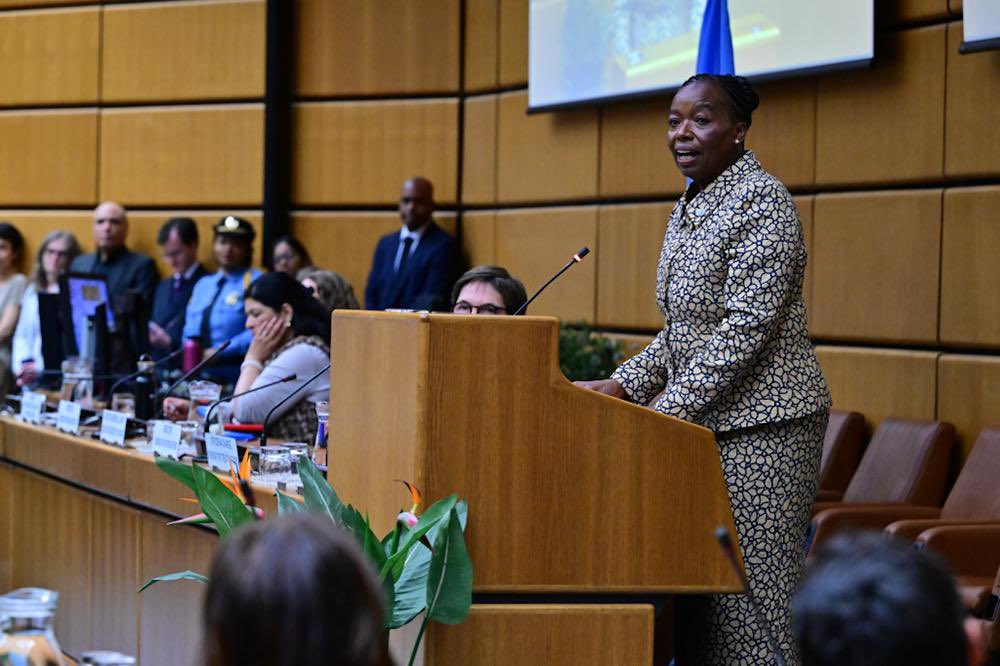
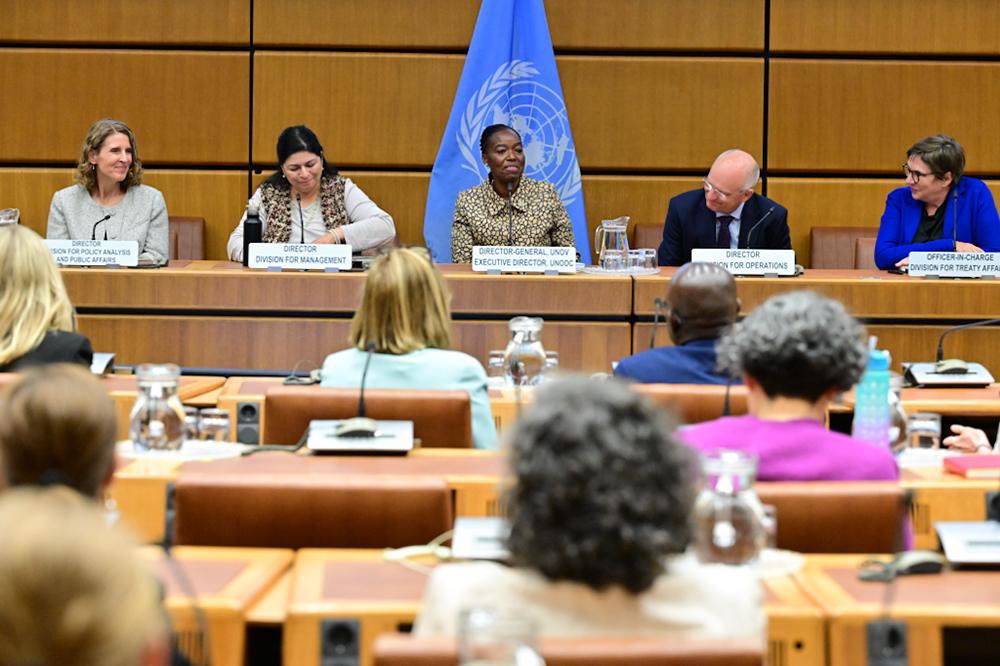
I am deeply proud and honoured to start my tenure as Director-General/Executive Director of the UN Office at Vienna/@UNODC.
I look forward to leading the @UN’s work in addressing the challenges of drugs, organized crime, corruption and terrorism, for a safer and more just world.
A warm welcome to Monica Juma from #Kenya, the new Director-General of #UNVienna and Executive Director of the UN Office on Drugs and Crime @UNODC, on her first day in the office today.
Photo credit: Dean Calma / IAEA
This was absolute peak to watch
From entering the atmosphere to traveling 25000 miles per hour down to parachutes coming out.
We rarely ever get to see stuff like this man, SHOUTOUT NASA ❤️
"She saved a stranger’s child with $15. Decades later, she discovered why he had been searching for her.
In 1982, a Kenyan boy named Chris Mburu stood on the brink of losing everything. He was the brightest student in his rural district, studying by lamplight inside an earthen house without electricity. But his family could not afford his school fees. Without help, his education would end — along with any chance of escaping a life spent picking coffee in the fields.
Meanwhile, across the world in Sweden, an 80-year-old kindergarten teacher named Hilde Back came across a notice for a child sponsorship program. She chose a name from a list: Chris Mburu, Kenya. She began sending $15 every school term. There was no recognition, no expectation of gratitude — just a quiet decision to help a child she believed she would never meet.
That small amount changed everything.
Chris stayed in school. Over time, he and Hilde exchanged letters. She asked about his teachers, his studies, and his dreams. Through her words, he realized she wasn’t just part of an organization. She was a real person who believed in him. And he never forgot her.
Chris eventually graduated at the top of his law class at the University of Nairobi. He later earned a Fulbright scholarship to Harvard. He went on to become a United Nations human rights lawyer, helping prosecute genocide and crimes against humanity around the world.
Yet one thing always weighed on his heart. He had never properly thanked the woman who made his journey possible. In truth, he barely knew who she was.
In 2001, Chris founded a scholarship program for children like himself — talented students from poor families whose potential might otherwise be lost. He asked the Swedish Ambassador in Kenya to help him locate his mysterious sponsor so he could name the foundation after her.
They found her. Hilde Back. Still alive. Still living quietly in Sweden.
Chris traveled to meet her for the first time. He expected to meet a wealthy philanthropist. Instead, he found a humble, warm woman living simply — genuinely surprised that anyone considered her actions remarkable.
Then filmmaker Jennifer Arnold began documenting their reunion. During her research, she uncovered something Hilde had never told Chris.
Hilde Back had not been born in Sweden. She was born in Nazi Germany in 1922 to a Jewish family. At sixteen, when Hitler’s Nuremberg Laws banned Jewish children from attending school, strangers helped smuggle her to Sweden. Her parents stayed behind because Sweden’s refugee policies did not allow older Jews to enter. Both were later sent to concentration camps. Her father died there. Her mother disappeared, never to be heard from again.
Hilde survived the Holocaust because strangers helped her escape. She lost her own education because of who she was.
Fifty years later, she quietly paid for the education of a child across the world — a child who would grow up to fight the same hatred that destroyed her family.
When Chris learned her story, he wept. Hilde, meanwhile, had no idea that the boy she sponsored had devoted his life to prosecuting genocide.
In 2003, Hilde traveled to Kenya for the inauguration of the Hilde Back Education Fund. The entire village welcomed her as an honorary elder. In 2012, she returned again to celebrate her 90th birthday, surrounded by hundreds of children whose futures had been transformed through her generosity.
Hilde Back passed away on January 13, 2021, at the age of 98.
Today, the Hilde Back Education Fund has supported nearly 1,000 Kenyan children in continuing their education. Many have graduated from universities around the world. Many now give back — mentoring younger students and contributing monthly donations to support the next generation.
One woman. Fifteen dollars. One child.
That child created a foundation. That foundation changed hundreds of lives. And those lives continue to change others.
A grandmother overheard her 5-year-old granddaughter playing "wedding." The wedding vows went like this:
"You have the right to remain silent, anything you say may be held against you, you have the right to have an attorney present. You may kiss the bride."
MTV officially shut down its 24-hour music channels yesterday. They ended their final broadcast with 'Video killed the radio star' by The Buggles, the very first video broadcasted by MTV on August 1st, 1981.
This is a testimony of what @alexmwanzo says. Wake up and pick something to do, anything especially the stupid one, that which no one sees as sensible, even you. Then just be consistent in it. It might not make work for others, but in the long run, even is it doesn't work for you too enjoy the process while at it. This girl's life will never be the same again, and it's all coz she didn't listen to us, especially those that called her dream "silly".
This is a testimony of what @alexmwanzo says. Wake up and pick something to do, anything especially the stupid one, that which no one sees as sensible, even you. Then just be consistent in it. It might not make work for others, but in the long run, even is it doesn't work for you too enjoy the process while at it. This girl's life will never be the same again, and it's all coz she didn't listen to us, especially those that called her dream "silly".
For nine months, my wife, Brooklyn, carried our baby boy. And for nine months, we lived in a place between hope and heartbreak.
Early in the pregnancy, we learned something was terribly wrong. Around the three- to four-month mark, doctors told us our son had severe hydrocephalus — fluid building so rapidly in his brain that it pushed everything aside. They used to call it “water on the brain,” but the simplicity of the name didn’t soften the reality.
We were eventually referred to Cincinnati Children’s Hospital, where some of the best fetal specialists in the country met with us. And they gave us the kind of news no parent is ever prepared to hear.
His condition was so severe, so extreme, that they stopped measuring. There was no point, they said. The MRI images were devastating. We were told there was a greater than 90% chance our son would either:
• Die shortly after birth, or
• Survive with such profound cognitive impairment that life — real life — would not be possible.
We sat through meetings no parent should ever sit through. Conversations about breathing tubes. About how long to try. About the moment we might have to make the decision to let him go.
Brooklyn moved to Cincinnati to be close to the hospital. I drove back and forth — working, caring for our daughters Sophie and Lily, and trying to keep our home standing while our world felt like it was falling apart.
Then came July 8th.
Just 15 minutes before Brooklyn’s C-section, we sat with doctors again and discussed when — not if — we might have to remove life support and let our son go to heaven.
I don’t have words for that kind of pain.
And then — Charlie Edward Schnarr entered this world crying.
A strong, loud, defiant cry.
The most beautiful sound I have ever heard.
He stayed in the NICU until yesterday… and now we are home. Together. Holding him. Loving him. Watching him breathe. Watching him live.
He has mild ventricular enlargement we will keep an eye on — but otherwise?
He is thriving. Eating. Wiggling. Yawning. Gripping our fingers. Looking around at a world that was never supposed to be his.
The doctors have no explanation. They said his brain somehow cleared the blockage on its own — something none of them have seen in a case this severe. The word that kept echoing through the NICU from seasoned nurses and top specialists was the same:
“Miracle.”
“Divine intervention.”
They said it. Not us.
We know thousands of people — family, friends, coworkers, strangers — were praying for our son. I believe with everything in me that God heard those prayers. That He placed His hand on Charlie. That He said, not this one.
I will spend the rest of my life thanking Him.
To every person who prayed for us — every text, every message, every whispered intention — thank you. You carried us when we were too exhausted to carry ourselves.
Prayer is real.
God is real.
And miracles… they still happen.
With a full and grateful heart,
—Nick
GIMA RAILA NENO KOBET PINY.
When I was a little girl,My Dad would say:
‘Gima Raila neno kobet piny,Okinyal neno kata ichung e wi got.”
Which means
‘What Raila sees while seated,You will never see if you stood on top of a Mountain’
And this words have never rang True until after his death.
When the family lawyer instructed two things:
1.That Raila insisted to be buried in 72 Hours.
2.That Raila insisted to be buried not at his home in Opoda,But at Kang’o Ka Jaramogi.
My kids with whom I have been having a lot of discussions on Raila asked:
‘If Raila was very Pro Luo Culture,Why is he being buried in 72 hours unlike a very important man in the community,Also Why is he being buried outside his home?”
And My answer was:
"I have no Idea but I am sure it will make sense soon"
I think a lot about Ida.
After spending 40 years with this man,
From the word go She had to lend him to the people,Had to lend him to 6 years of detention.
In her own words she says
"I thought I was marrying and Engineer which is a very quiet profession..little did I know,I was marrying a political engineer"
For that illustrious 40 years,You are thinking Probably in death,She gets to now have Raila to herself.
But from the moment his death is announced,Mourners start pouring into her home in Karen.
Ida received the news at 7 and at 8 People were already headed to her home in Karen and they stayed there throughout until the day Raila left for Kisumu,She did not really have a moment,a day,to take stock of what had happened to her.
The body arrives from India and at JKIA Raila is taken over by the People,All the way to Kasarani it’s the People,To Nyayo It’s the people,To Kisumu it’s the People,To Bondo It’s the People.
Two weeks later,She has shaken more hands than any person in the country.
From dawn to dusk guests Pour in to commiserate with her.
She has shaken hands of Political friends and Political enemies,
The young and the Old,
Billionaires and Peasants,
Pilots and Boda Boda riders,
The Pious and the Sinners,
The sane and the Insane.
The sober and the drunk.
And it so happens that even in death,Raila belongs to the people.
I read Chimamanda’s book ‘Notes on Grief’ and there is a chapter where she says ‘In Africa when a man dies,People say do not leave the wife alone,But what if the Wife wants to be alone?”
I recall in moments of great grief,I want to be left alone.
But This is a Luxury Ida does not afford,
Atleast not now.
She has to welcome,has to host,has to give speeches,has to smile,has to postpone her grief,her tears, and the crater the love of her life has left.
She has to forsake her own loss to console the broken.
And that is to be the Mother of the Nation.
Raila sat down,Looked at his wife and realized that if he was to go before her,He will spare her weeks of people streaming into their home in Karen before the burial and settled at 72 Hours,Make it as quick as possible.
He then realized his wife will need Privacy at some point after his death at their Opoda home
And that his grave may be turned into a Shrine for Raila Pilgrims travelling from far and wide for years to come,So he decided to be buried not at the home he built for her,but at Kang’o Ka Jaramogi which is more or less a Public Museum which is always open to visitors.
So Ida May find Peace.
Raila’s gift to Ida finally was Peace.
And I Pray she finds it sometime soon.
~ Deborah Auko