Reading books and buying them are two separate hobbies. In 2024 I am not setting a numerical reading goal. Instead, I will be using a TBR jar to get through the books that have been sitting on my shelves, both physical and on Kindle.
The 2026 AP World History: Modern Exam scores:
5: 14%; 4: 36%; 3: 16%; 2: 26%; 1: 8%
The 2026 AP World History: Modern exam was taken by ~443,000 students, roughly 3% of the U.S. high school population.
AP World History: Modern — Multiple-Choice Questions (MCQs)
AP World History: Modern students performed well across all units and thematic learning objectives. A few notable patterns stood out:
• Students showed their strongest MCQ performance on questions focused on Units 3 and 4 — Land-Based Empires and Transoceanic Interconnections (1450–1750 CE). Students earning AP 3s typically answered at least 70% of these questions correctly, students earning AP 4s: ~85% right, and students earning AP 5s generally answered 100% of these questions correctly. These results indicate that AP World History students with scores of 3+ have developed solid understanding of the early modern period and the forces that shaped it.
• The most challenging MCQ content was for Units 7 and 8 — Global Conflict and the Cold War and Decolonization (1900–present). Nonetheless, students earning scores of 3+ were able to answer most or all of these questions correctly, while students receiving scores of 1 and 2 were not.
AP World History: Modern — Exam Design and Rigor
The AP World History: Modern Exam Development Committee — composed of university historians and experienced AP teachers — built a 2026 free-response section that I find genuinely impressive in its breadth and intellectual ambition. It’s also important to note that students do all of this writing within a fixed time limit in a proctored room on an AI-blocked platform.
Here's a link to this year's free-response questions:
https://t.co/WCZZEgvao2
Since AP scores are reported on a 5-point scale, the free-response questions deliberately include some very difficult points to differentiate AP 5s from AP 4s, points of varying difficulty to differentiate AP 4s, 3s, and 2s, and more foundational points to separate AP 2s from AP 1s.
AP World History: Modern — Short Answer Questions (SAQs)
Each AP exam has multiple versions for different time zones. The commentary below focusses on the version taken by the majority of AP World History: Modern students:
SAQ 1, the Mansa Musa and Trans-Saharan Trade question, focused on a secondary source, asked students to identify historical causation (Mansa Musa’s motivations), deploy outside evidence to extend a scholarly claim, and explain the impacts of long-distance trade routes on particular societies – a robust and challenging task that primarily differentiated AP students achieving scores of 4 and 5, who could typically answer all parts of the question thoroughly, and students earning scores of 3, who did not typically earn all points possible on this question.
SAQ 2, which asked students to analyze a 1549 primary source (a letter by Spanish Jesuit missionary Francis Xavier written from India) and SAQ 3 (describing and explaining Indian Ocean trade networks) were each less challenging than SAQ 1, serving well to differentiate between students receiving AP scores of 2, who could usually answer one part of these questions correctly, and students receiving AP scores of 3+, who earned most or all points possible.
SAQ 4 (describing and explaining global trade from 1750-1914), was far and away the most challenging SAQ; in fact, it was the lowest-scoring of all the FRQs. Students receiving 1s and 2s were generally unable to earn any points on this question, which instead differentiated between performance at AP 3, 4, and 5 levels.
AP World History: Modern — Document-Based Question (DBQ)
This question asked students to evaluate the extent to which twentieth-century military conflicts changed the role of women in society, by analyzing seven primary documents from China, the British Empire, Tsarist Russia, France, Mexico, Kenya, and the Soviet Union. The DBQ is always one of the most impressive tasks across all AP subjects, and this year’s was no exception, given the intellectual sophistication this question demanded — students had to hold multiple imperial and national contexts in view simultaneously and synthesize across them to write a compelling historical argument.
The DBQ serves well to differentiate students who qualify for college credit from those who don’t, as students receiving an AP 3+ score earned most of these points, whereas students earning 1s and 2s did not.
Crafting a historical claim / thesis: 86% of students earned the thesis point, a differentiator between AP scores of 1 and 2, as students receiving a 2 consistently earned this point, whereas students receiving a 1 did not.
Use of evidence from the primary source documents: this skill also differentiated between AP scores of 1 and 2, as students receiving a 2 were able to extract at least some historical evidence from the documents, whereas students receiving a 1 were not. Students receiving a 3 or higher typically earned full points for this skill.
Outside evidence and contextualization. These two historical thinking skills differentiated AP scores of 3 from AP scores of 4 and 5, as students achieving AP 4s and 5s were generally able 1) to summon and integrate outside evidence into this source-based essay, and 2) to situate their argument within a broader historical context. Students earning AP 3s demonstrated these skills less consistently than students earning AP 4s and 5s.
Sourcing. Similarly, students achieving AP 4s more consistently earned the sourcing point — requiring them to explain how the point of view, purpose, historical situation, or audience of two or more of the documents is relevant to their argument — than students earning AP 3s.
Complexity of analysis and reasoning. 22% of students earned the complex understanding point, the most demanding point on the DBQ, a differentiator between students achieving AP 5s, who are consistently earning this point, and students earning AP 4s, who are much less consistently earning this point within the intensity of timed, proctored essay writing.
AP World History: Modern — Long Essay Question (LEQ)
Students choose one of three long essay prompts. Here’s a summary of their performance on each:
• LEQ 2, in which students evaluated the relationship between military conflicts and state building in Afro-Eurasia (1200–1600), proved more challenging for students than the other two LEQ topics. 25% of students achieved all or all but one of the total points possible, but the overall difficulty of this essay was such that students receiving 1s did not earn any points on it.
• LEQ 3, in which students evaluated migrations from 1600-1900 and their relationship to social and cultural changes, was somewhat less difficult for students than LEQ 2, as students receiving 1s were typically able to earn several points related to their thesis or evidence they cited. 25% of students achieved all or all but one of the total points possible.
• LEQ 4, in which students evaluated whether peacemaking efforts in the 20th century were successful, had the highest overall scores of any of the Long Essay topics. 34% of students achieved all or all but one of the total points possible.
All subjects’ AP score distributions for 2026 will be posted here when available: https://t.co/OrkaQhPZYO.
Voting matters in 2025.
From wages and housing to healthcare and climate change, the local officials we elect impact our everyday lives AND how we are impacted by what happens at the national level.
Make sure your voter registration is up to date at https://t.co/RDI2MHG1TP.
Greg Abbott claims his private school voucher scam will help working families.
But when I questioned the bill author, he admitted that it would give $1.2 million in taxpayer funds to Elon Musk.
Vouchers are welfare for the wealthy.
The success of public schools is vitally important for all of our students and their futures. Yet Texas schools are being asked to do more with less.
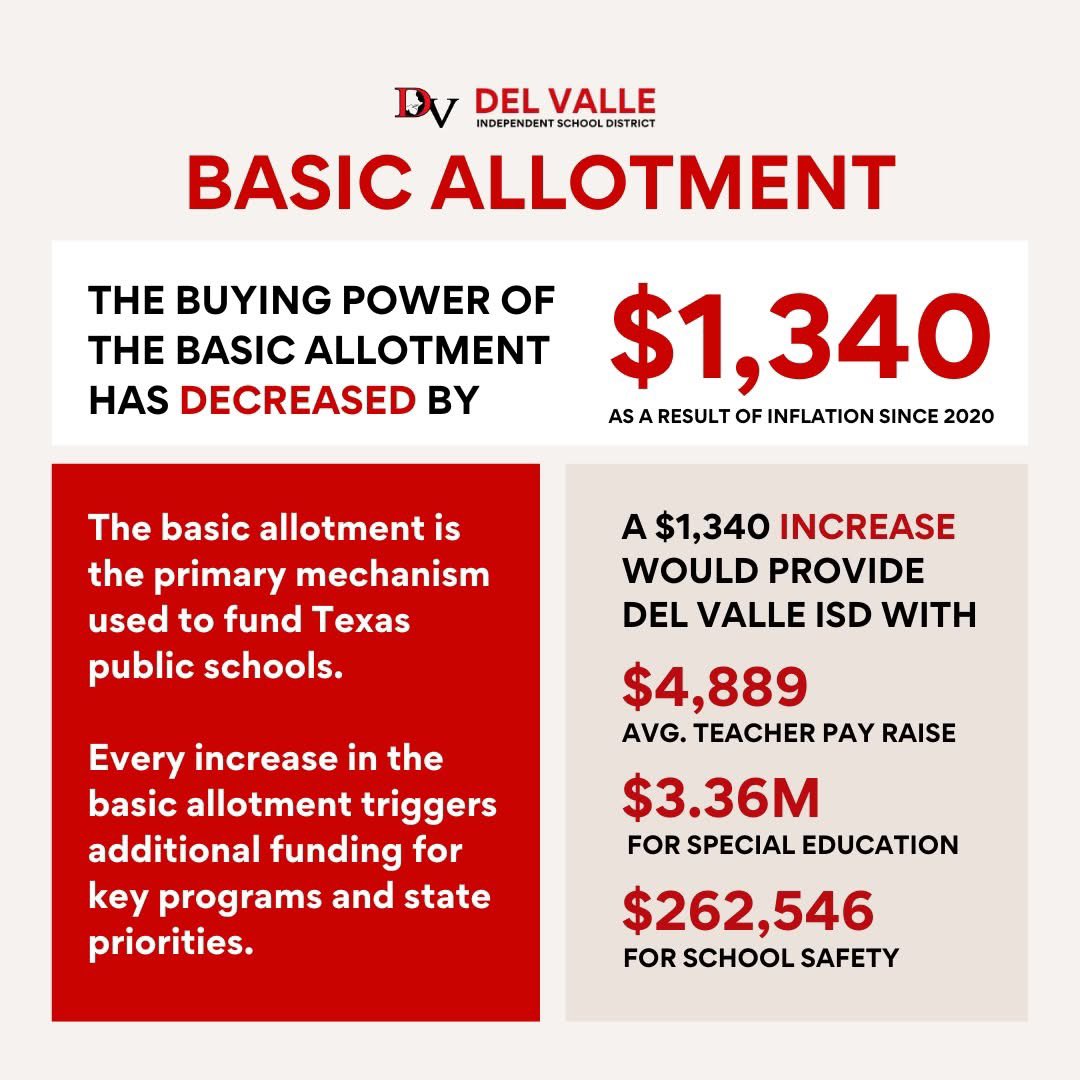
🏫 The state’s Basic Allotment, the amount of per-student funding all schools receive, has not increased since 2019.
❗The impact: At DVISD, this equates to a $1,340 decrease per student when accounting for inflation. During this time, the cost of essential services have increased, and we’ve prioritized teacher salary increases to remain competitive in recruiting the very best teachers.
📉 In addition, in the past few years, the state has added new requirements for safety and security, special education, and more without adequate funding to implement these programs and initiatives.
❗The impact: At DVISD, our costs exceed state funding in these important areas by more than $12 million.
Texas students deserve a fully funded public education. Their future and the future of our state depends on it. #txed #txlege
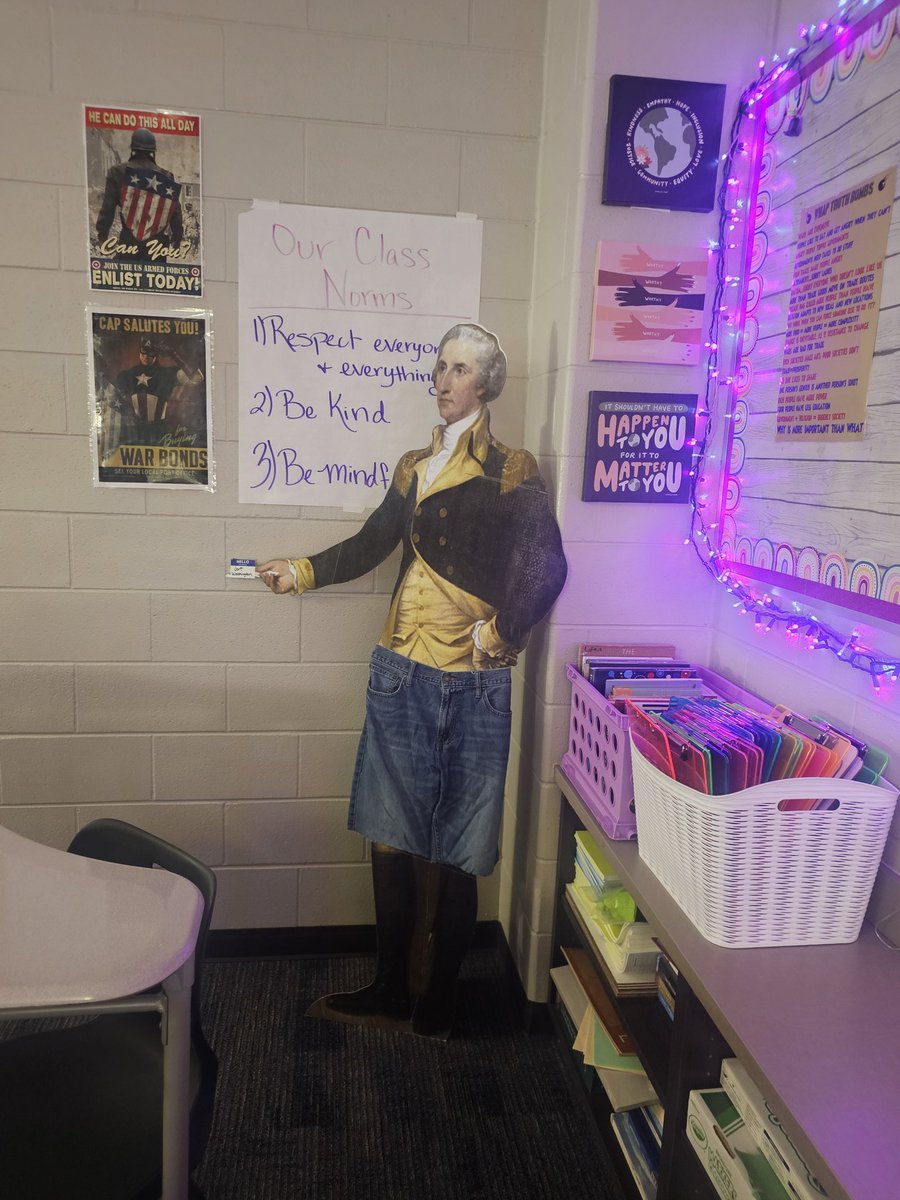
How it started and how it evolved into a pun gone too far. I'm gonna miss this one next year! Geoffrey the Plague Doctor has competition for class mascot now!
#AllDayEveryday#werethatschool
Don’t forget to register for your #APExams by the end of this week. 🗓️ Check with your AP teachers for your school’s specific deadline.
🔗 Learn more: https://t.co/fL63Y0WbBg
I wanted to know how many questions my high school ask on a daily basis, so I counted on a pitch counter. I’m sure I missed a few, but it’s still A LOT🍎😂
I would encourage elementary school teachers to try this, but I don’t think the counter goes that high.👀
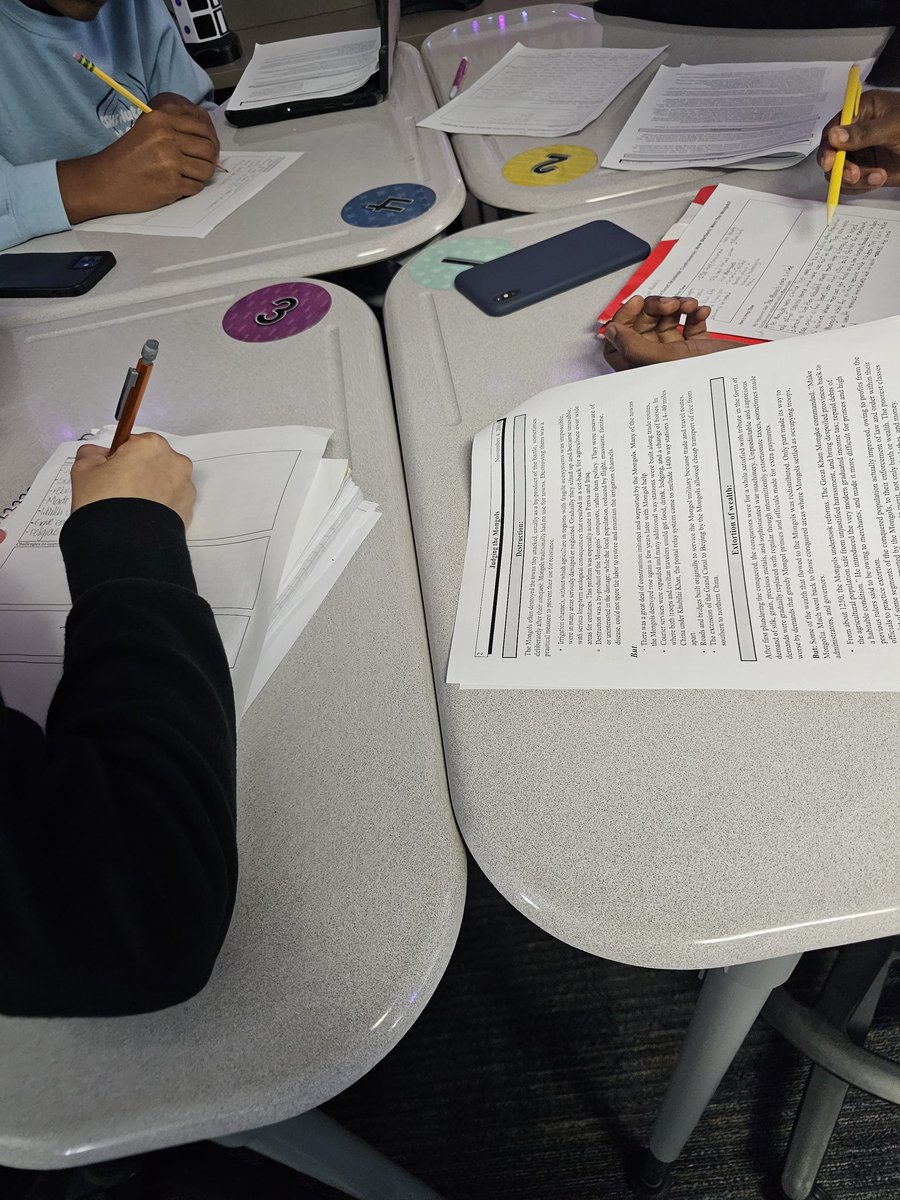
@CySpringsHS#WHAP students engaged in a structured academic controversy to evaluate the extent to which the Mongols could be considered barbaric. Lots of wonderful conversations and practicing our argumentation skills! #AllDayEveryday#werethatschool
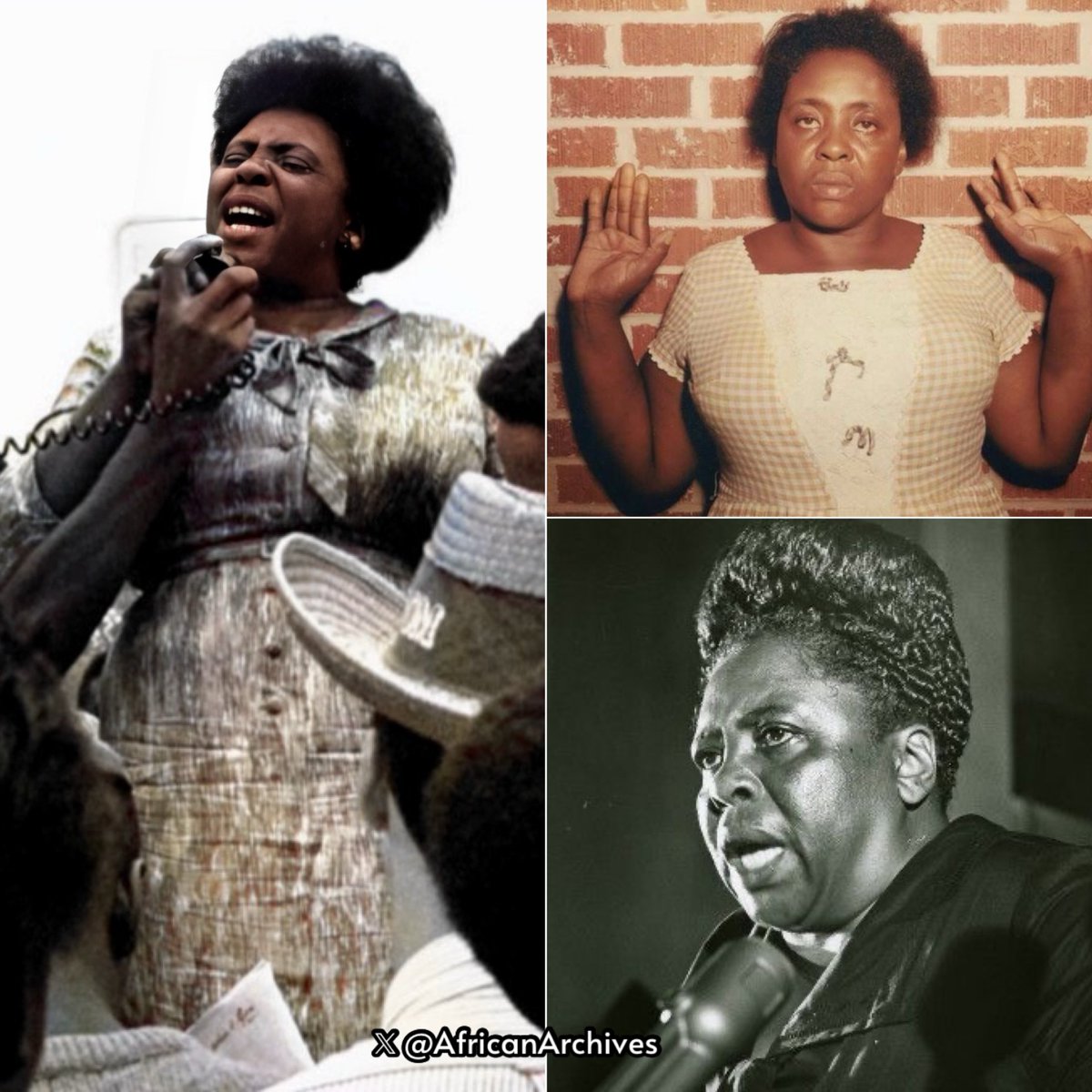
Happy Birthday to the late Great Ms. Fannie Lou Hamer.
“Nobody’s free until everybody’s free”
Fannie Lou Hamer was a voting rights activist and civil rights leader. She was instrumental in organizing Mississippi Freedom Summer
for the Student Nonviolent Coordinating Committee (SNCC).
On June 9, 1963, Hamer was on her way back from Charleston, South Carolina with other activists from a literacy workshop. Stopping in Winona, Mississippi, the group was arrested on a false charge and jailed. Once in jail, Hamer and her colleagues were beaten savagely by the police, almost to the point of death.
Released on June 12, she needed more than a month to recover. Though the incident had profound physical and psychological effects, Hamer returned to Mississippi to organize voter registration drives, including the "Freedom Ballot Campaign", a mock election, in 1963, and the "Freedom Summer" initiative in 1964.
Later she became the Vice-Chair of the Mississippi Freedom Democratic Party, attending the 1964 Democratic National Convention in Atlantic City, New Jersey, in that capacity.
Her plain-spoken manner and fervent belief in the Biblical righteousness of her cause gained her a reputation as an electrifying speaker and constant activist of civil rights.
LEGACY:
✊🏿There is a Fannie Lou Hamer Memorial Garden in Ruleville, Mississippi. It was rededicated by the city on July 12, 2008.
✊🏿The Fannie Lou Hamer Civil Rights Marker (part of the Memorial Garden) was unveiled on May 25, 2011.
✊🏿A statue of Fannie Lou Hamer was unveiled in October 2012 at the Memorial Garden.
✊🏿In 1970 Ruleville Central High School held a "Fannie Lou Hamer Day". In 1976 the City of Ruleville celebrated a "Fannie Lou Hamer Day".
✊🏿Sweet Honey in the Rock, the Washington DC-based African American female a cappella singing group, wrote and recorded a song called "Fannie Lou Hamer."
✊🏿Dark River, an opera about Hamer written by composer and pianist Mary D. Watkins, premiered in November 2009 in Oakland, California.
✊🏿95 South's "All of the Places We've Been" by Gil Scott-Heron with Brian Jackson was a standard at any Gil Scott-Heron show. The song was his tribute to Fannie Lou Hamer, as he stated in his DVD of a 2001 concert, New Morning: The Paris Concert.
✊🏿On Oct. 6, 2012 (the 95th anniversary of Mrs. Hamer's birth), an acclaimed new musical inspired by the life of Fannie Lou Hamer -- titled and written by Felicia Hunter -- had its world premiere in New York City to sold-out audiences. Hunter currently is seeking to take the work to Broadway.
🖋️if you love our content, please consider supporting our page on https://t.co/16fHyPFENu (follow the ko-fi page too for weekly posts roundup)
The secret to getting kids reading is the same thing that worked in the nineties. Reading Rainbow. Free pizzas. Shakespeare rom-coms. A million Jane Austen adaptations. Movies where a guy gifts his beloved an enormous library. Dog who acts out the classics.