“I have seen many storms in my life. Most storms have caught me by surprise, so I had to learn very quickly to look further and understand that I am not capable of controlling the weather, to exercise the art of patience & to respect the fury of nature.”
-Paulo Coelho
16 incarcerated individuals recently graduated from the Northwestern University Prison Education Program — marking the FIRST time a top-ranked U.S. university awarded degrees to students in prison! Incarceration and setbacks didn’t stop them from pursuing their dreams!
Valonia ventricosa is one of the largest known unicellular organisms, if not the largest.
This means that what you see in the image, a sea-algae that can get to 5 cm in diameter, is actually a single living cell.
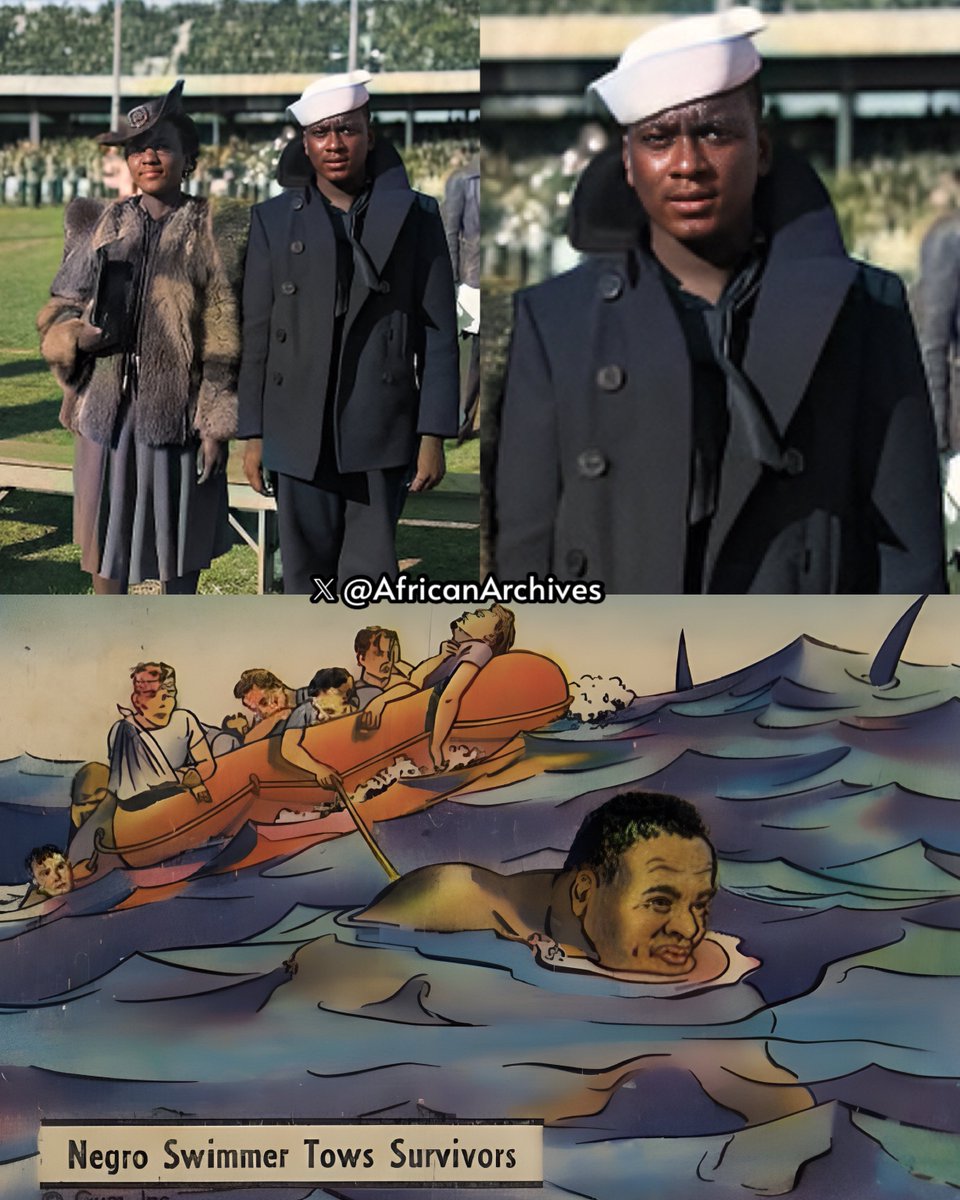
In 1942, US Navy Messman Charles Jackson French successfully swam through the night for 6-8 hours pulling a raft of 15 wounded soldiers w a rope round his waist in shark infested waters. He was the first black swimmer to receive the Navy medal of heroism in 1943.
—On September 5, 1942, United States Navy Messman Charles Jackson French swam through the night for 6 - 8 hours pulling a raft of 15 wounded sailors with a rope around his stomach through shark infested waters. The U.S. Navy Ship the U.S.S. Gregory was hit by Japanese naval fire in the South Pacific. Many were wounded and killed. French successfully brought these men to safety on the shores of The Solomon Islands. French was the first black swimmer to earn the Navy Medal for his heroism in 1943. We remember Charles Jackson French and commemorate his heroism and incredible swimming. Thank you for your service and your valor, Mr. French.
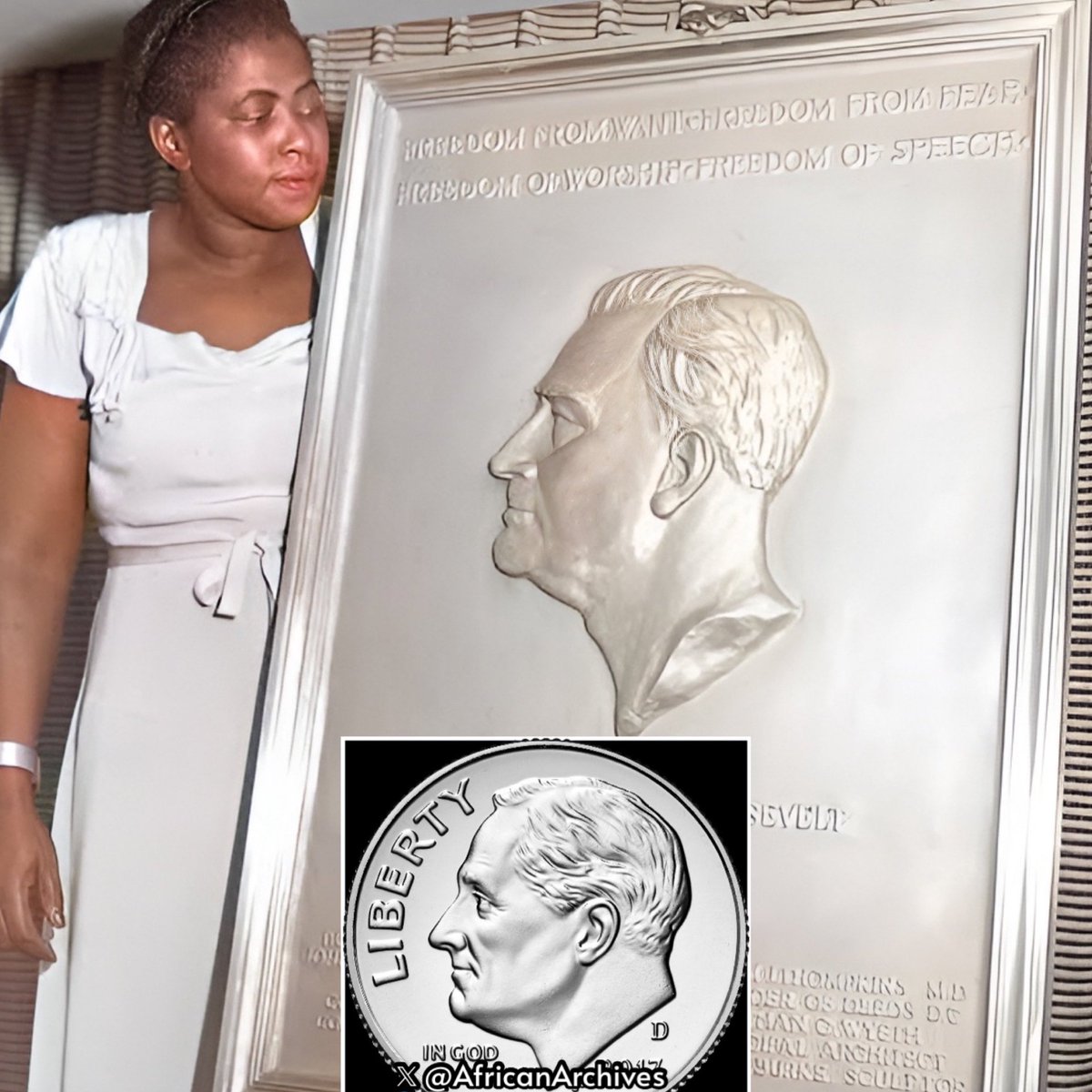
Selma Burke was a sculptor and a member of the Harlem Renaissance movement, best known for a bas relief portrait of President Franklin D. Roosevelt
She never received credit for her portrait of President Franklin D. Roosevelt which was later featured on the US dime.
—In 1943, Franklin D. Roosevelt sat for a portrait by a young African-American artist from Mooresville. That artist was Selma Burke.
However, John R. Sinnock’s signature is on the dime, and he receives credit for the work while Burke’s portrait, which she spent two years working on, is only recognized as an inspiration and model for the final image used on the coin. According to Lisa E. Farrington, author of “Creating Their Own Image, The History of African-American Women Artists,” Sinnock made “barely perceptible alterations.”
HONORS
As well as a sculptor, Burke was also a lifelong student and educator, winning numerous awards and fellowships. She earned her first degree from Winston-Salem State University in North Carolina and eventually graduated with a Master of Fine Arts from Columbia.
She started her first art school in 1940, eventually starting her second in 1946, and opened the Selma Burke Art Center in Pittsburgh, which operated from 1968 to 1981.
Burke is an honorary member of Delta Sigma Theta sorority. She received several honorary doctorate degrees during her lifetime, including one awarded by Livingston College in 1970 and one from Spelman College in 1988.
Milton Shapp, then-governor of Pennsylvania, declared July 29, 1975, Selma Burke Day in recognition of the artist's contributions to art and education. Her papers and archive are in the collection of Spelman College.
Burke was a member of the first group of women – along with Louise Nevelson, Alice Neel, Georgia O'Keefe, and Isabel Bishop – to receive lifetime achievement awards from the Women's Caucus for Art, in 1979. She received the award from President Jimmy Carter in a private ceremony in the Oval Office.
She received a Candace Award from the National Coalition of 100 Black Women in 1983 and the Pearl S. Buck Foundation Women's Award in 1987.
She died in 1995 at the age of 94.
Willis Winn, who told photographer Russell Lee that he was 116 years old when the photograph was taken in 1939, is pictured holding a horn with which plantation owners called slaves to work. Winn said his master told him that his birthday was March 10, 1822
When interviewed by Lee, Willis was living alone in a one-room log house in the rear of the Howard Vestal home on the Powder Mill Road, north of Marshall, and was supported by an $11.00 per month old-age pension. He recalled; “Massa Bob’s house faced the quarters where he could hear us holler when he blowed the big horn for us to git up. All the houses were made of logs and we slept on shuck and grass mattresses what was allus full of chinches. I still sleep on a grass mattress, ’cause I can’t rest on cotton and feather beds.”
Willis’ interview in 1939 showed how little things had changed for many people in the United States decades on from the abolition of slavery.
“They is plenty niggers in Louisiana that is still slaves. A spell back I made a trip to where I was raised, to see my old missy ‘fore she died, and there was niggers in twelve or fourteen miles of that place that they didn’t know they is free. They is plenty niggers round here what is same as slaves, and has worked for white folks twenty and twenty-five years and ain’t drawed a five cent piece, jus’ old clothes and somethin’ to eat. That’s the way we was in slavery.”