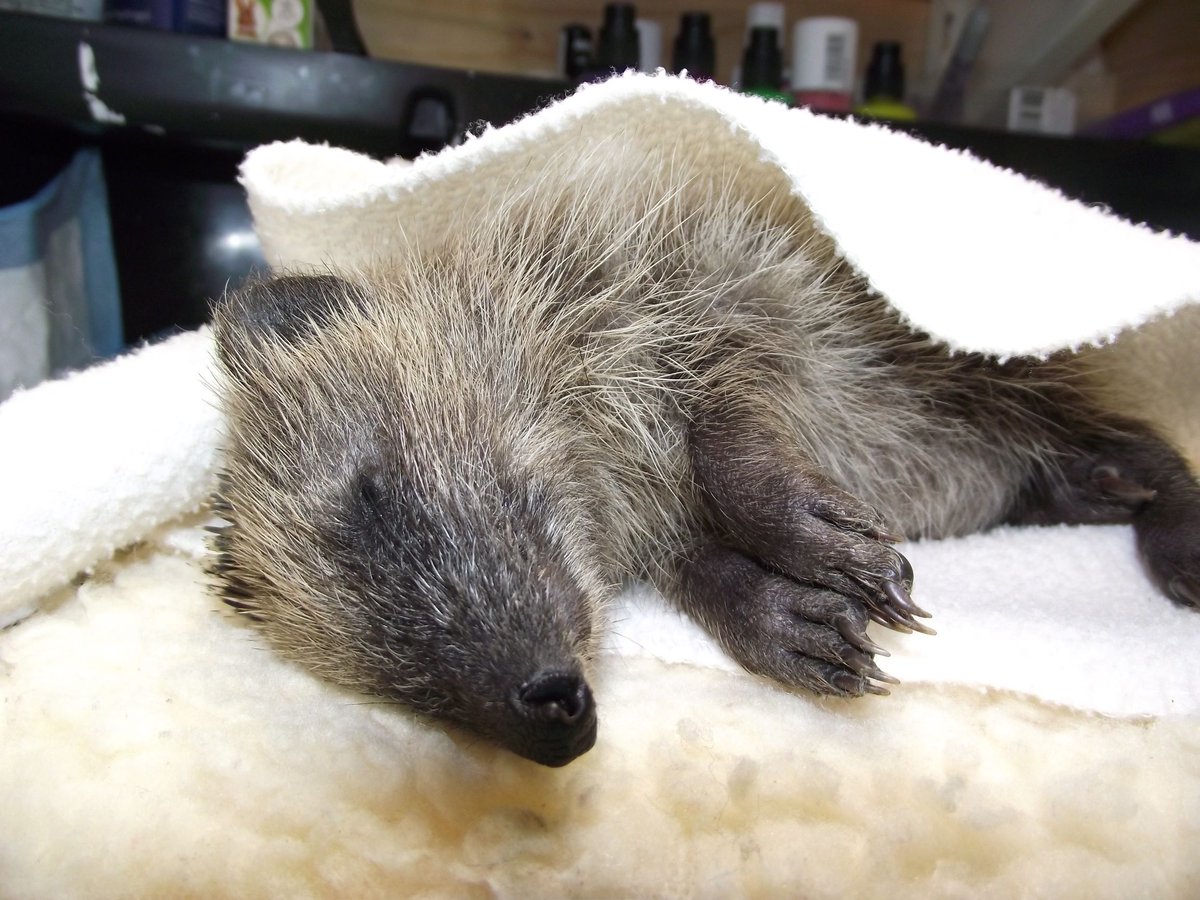
A gardeners best friend, the hedgehog 🦔, is plummeting in numbers and possible extinction 💔 Please help our prickly friends by creating hedgehog highways and wood piles, planting pollinator friendly plants, stop using slug pellets and strimmers. https://t.co/BWpZN6wUlZ
So big up to these pint-sized #bumblebees.
Short-lived and small but mighty!
And oh so vital.
Please pass this on.
#retweet for #bees!
Knowledge is power.
But true power is caring.
Or should be.
Thank you.
Together we impact for good.
🙏🏼🐝
#bees#share#nature
9/9
Please NEVER feed a daytime wildlife casualty.
I know, it's so hard not to.
When we see a suffering animal we feel a strong, innate impulse to help, and a desire to provide immediate tangible comfort; equating food with survival and care.
Feeding feels like a direct, immediate and nurturing action to alleviate suffering.
Yet it is the most catastrophically harmful thing you could ever do.
Especially hedgehogs out in the day, who will be hypothermic.
It takes a lot of energy to digest food, energy these compromised animals just don't have spare.
Every last bit of their energy is being used to maintain vital bodily functions - to keep the heart beating, to oxygenate the organs.
Forcing energy away from these critical functions for something as non-critical as digesting food will be a death sentence.
It won't be immediate, it may take hours, or a couple of days, but eventually, no matter what the experienced rescue you later take them to tries, the animal is already on the unstoppable journey into shock, aspiration, organ failure and death.
So please help in the right way.
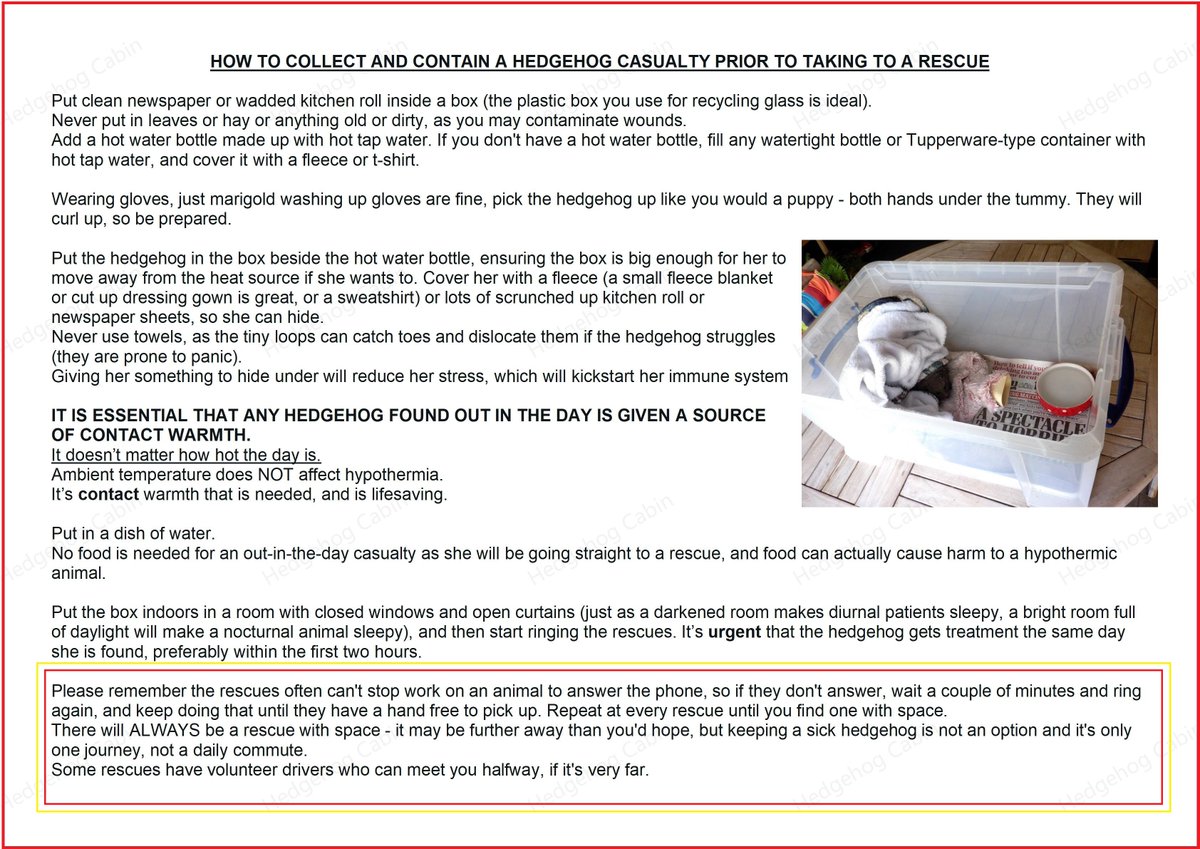
An out in the day hedgehog needs *contact* warmth, a safe indoor space away from flies, and cover to reduce their stress (please see advice below).
They are not going to die of starvation in the couple of hours between you finding them, and getting them to a rescue.😊
And please remember - any website that gives you DIY information on caring for or feeding injured or orphaned wildlife is, by default, wrong.
The ONLY right action is to get them to a good rescue (never a vet) where their complex needs can be met.
Even if you have seen this vital information before and understand it, feeding wildlife casualties is a powerful compulsion because it directly activates human instincts of empathy and compassion, often overriding the scientific advice against it.
So please remember this warning and spread it as far as you can.
Helping a wildlife casualty get to the expert treatment they need is an incredibly kind, altruistic act of great humanity. Just remember to provide them with what they need, not what you need.🥰