stop scrolling for 30 seconds.
if you have stables sitting idle, or you have ever wanted to own gold without buying a bar, this is for you.
i spent time inside @strato_net. here is everything, in one post.
> What is strato
strato is a layer 1 blockchain built for hardfi. trading, borrowing, savings, staking and tokenized real-world assets all in one ecosystem. their team has been building ethereum infrastructure since 2014.
> Why it matters
most apps do one thing. you trade here, you stake there, your gold sits somewhere else. strato puts it together. one wallet, one app, one stablecoin (usdst) for everything.
> What you actually get
• trade $STRATO and many assets with usdst
• goldst 1 token = 1 troy ounce of 99.5% pure gold, backed by audited, insured physical gold, redeemable for real gold
• silvst tokenized silver
• usdst savings 8.7% apy
• hype vault 22.7% apy
• stake $STRATO at 2.21% apy with real validators
• borrow usdst against your collateral at 1% stability fee
• tokenized stocks and etfs like spy, qqq, nvda, tsla
• rewards season 3 running now
> Why i think it is worth a look
your stables do not have to sit idle. your gold does not have to sit in a locker. and you do not need five apps to do five things.
rates change, nothing here is guaranteed. but the idea of one place for all of it is real.
start here,
trade : https://t.co/EcLd7lkfcz
#STRATO #TradingCompetition
which one would you try first trading, staking, or gold?
Tired of switching between DEXTools for charts, another exchange for orders, and yet another app for portfolio.
Tried @perptools everything's in one place, no tab hopping. Self-custody, solid speed on Orderly, high leverage, and transparency.
AI Arena runs agents with just a few settings .Spot is 0% fee. Tap Prediction is quick and low-entry with high multipliers.
Combines discovery, spot, perps, prediction, and AI in one app. Also earning Season 2 points. Worth a look if you're doing juggling tabs.
The board froze at 248 entries. 10 seconds left: entries landing, ranks swapping — then LOCKED. Would you make the top 50?
Made by my AI agent for a $100 bounty on @makefunai: https://t.co/PnKQK1u5qr
makefun-curtain-oasis-maraca
if 300k strangers offered you access to their phones, would you trust them to run your code?
https://t.co/K8UyBfSL4y
there's a part of @Acurast that makes this question interesting
hardware attestation lets developers verify certain security properties of a processor without personally knowing its owner
developers can also specify processor requirements before deploying a job
so they don't have to treat every connected phone as equally suitable
getting strangers to contribute hardware is impressive enough
getting developers to trust hardware they've never physically seen might be the more interesting achievement here
Sanctum Exchange's Telegram channel just went live 🔥
Before joining, let me ask you a question.
Do you know what Sanctum Exchange is all about?
Well, I made the thread and video below for clarity.
I've been looking into the project, and I think what they're building deserves some attention, especially from people who value privacy when trading crypto.
Let's talk about it. 🧵
USDC at 19.78% APY and USDT at 15.49% definitely stand out, especially in this market.
But those rates also make me curious about how much liquidity is actually available in the pools.
These were the figures shared by @rntprotocol in its November 25 RNT Lend update.
The lending market runs on Aave V3 technology, where higher borrowing demand can push supplier APYs up.
The other side?
When more funds are borrowed, less liquidity may be available for immediate withdrawals.
That's why I'd look at utilization and available liquidity alongside the yield itself.
I like seeing stablecoin lending connected to actual borrowing demand in the RWA sector.
Understanding the trade-offs makes it much more interesting to follow.
Rates are variable and DeFi lending carries smart contract, collateral and liquidity risks.
spent some time testing Fensory today.
the interesting part is how easily AI can help with trading strategy setup, analysis, backtesting, and execution.
it supports multiple AI integrations through MCP, including Claude and ChatGPT.
a few things i liked:
custom trading limits
non custodial architecture
agent permissions and risk controls strategy setup and backtesting
support for multiple markets
what stands out to me is the idea of letting AI work within limits that you define @FensoryApp
AI trading still has a lot to prove, but Fensory's approach looks interesting.
worth exploring.
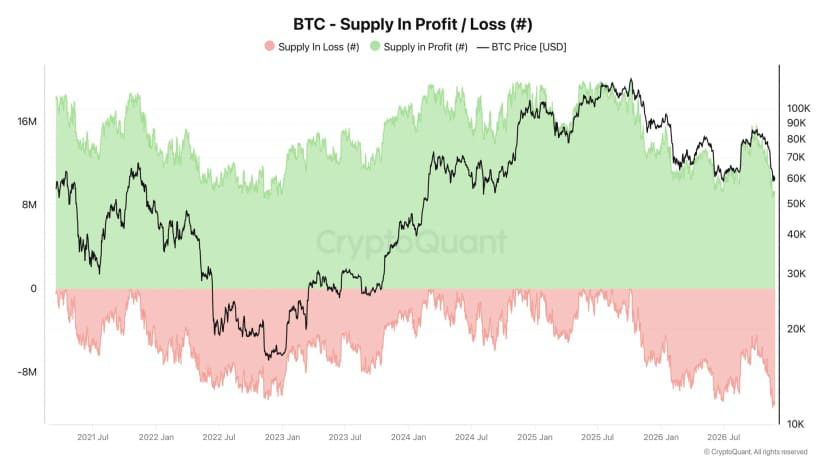
More Bitcoin is underwater than in profit.
» 11.1 million BTC in loss
» 9 million BTC in profit
» Roughly 55% of supply below its on-chain cost basis
@CryptoQuant ’s snapshot shows how widespread the drawdown has become.
Wallet transfers can affect these figures, so 55% of coins underwater doesn’t mean 55% of investors are losing money.
As I see this post, I just know say some girls no really dey think.
1. Hiring an intern na choice, and it depends on your purpose. Me for example, I no get time to dey do posts and all that. I dey grind hard, so I hired one.
2. Nobody dey do am because of peer pressure. Left to me, na you dey under pressure. You calm down go reason am till you come write this post.
3. Not everybody dey broke to the point wey dem no fit hire or even maintain one.
Left to my opinion, this take no make sense at all. I’m really disappointed… why Tina? 🫴
One thing i believe that makes a DeFi lending protocol interesting is how it manages borrowing costs.
@Tangent_fi has been working on its monetary policy, including easing borrowing rates to support borrowers.
Why does this matter?
When borrowing becomes expensive, users may reduce their positions or avoid borrowing altogether.
When rates become more manageable, borrowing can become more attractive and capital can move through the ecosystem more efficiently.
But there's a balance to maintain. Which is rates must work for borrowers while also supporting the health of the lending markets.
That's why monetary policy matters in DeFi. It's not just about offering loans; it's about creating conditions where lending and borrowing can function sustainably.
And that's an important part of what Tangent is building around $USG .
#DeFi #Stablecoins
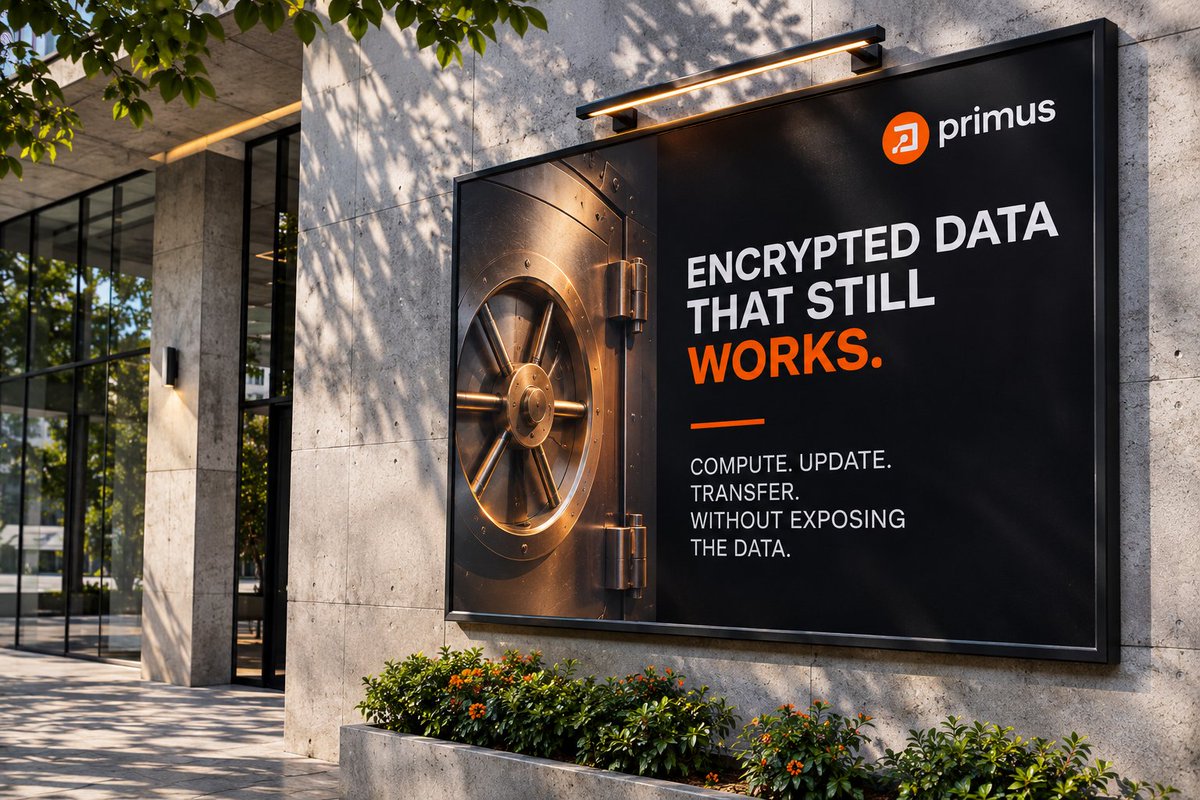
Encrypting information when it is stored is one thing.
Being able to work with that information without exposing it is a much harder problem.
With traditional encryption, data often needs to be decrypted before calculations can be performed, creating a moment when sensitive information is exposed.
FHE changes that by allowing computations to happen directly on encrypted data, so the information can be processed without first revealing its contents.
In its recent technical breakdown, @primus_labs showed how encrypted balances can be updated through calculations performed directly on ciphertexts.
Put simply, a transfer can be processed and balances updated without the system handling the computation seeing the actual amounts.
This matters for businesses and institutions that want to use public blockchains without exposing every detail of their financial activity.
There’s still the question of how well this works at scale and under real financial activity, but the underlying idea is worth understanding.
Data shouldn't have to become visible just to become useful.
Privacy shouldn't mean data becomes unusable.
https://t.co/McEWafHXcZ
A trading strategy needs more than a good entry signal.
The rules behind it matter just as much. Which markets can it trade? What limits should it follow? And how are orders checked before execution?
This is where I think purpose-built trading agents have an advantage over general AI tools. The strategy shouldn't just understand what to do; it needs to operate within the boundaries set by the trader.
@FensoryApp brings this together by running strategies on Hyperliquid markets, with users choosing their markets and order limits. Every order is checked before it goes out.
For me, giving an agent control over a strategy doesn't mean giving it unlimited freedom. The limits and rules need to stay part of the process.
That's an important distinction when moving from a trading idea to an agent that actually executes it.
Trading carries risk and losses are possible.