#UX Strategist passionate about understanding people to create meaningful, usable tech. Ex @SalesforceUX. @UCLIC alum. Boomerang Londoner via San Francisco.
Nice companies have an creative advantage.
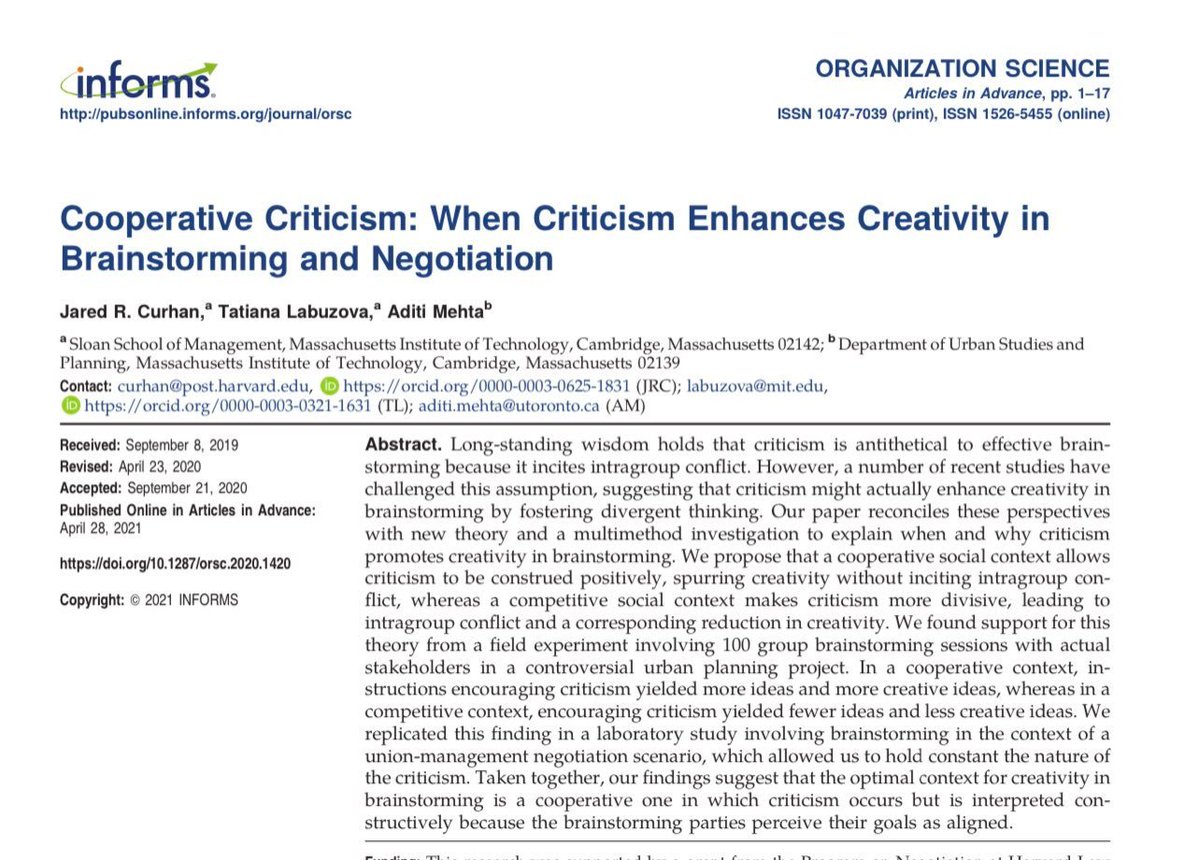
Positive, cooperative company cultures focus everyone on the same goal. As a result, people take criticism well, and it boosts creativity by a significant amount. When an environment is competitive, criticism hurts creative performance.
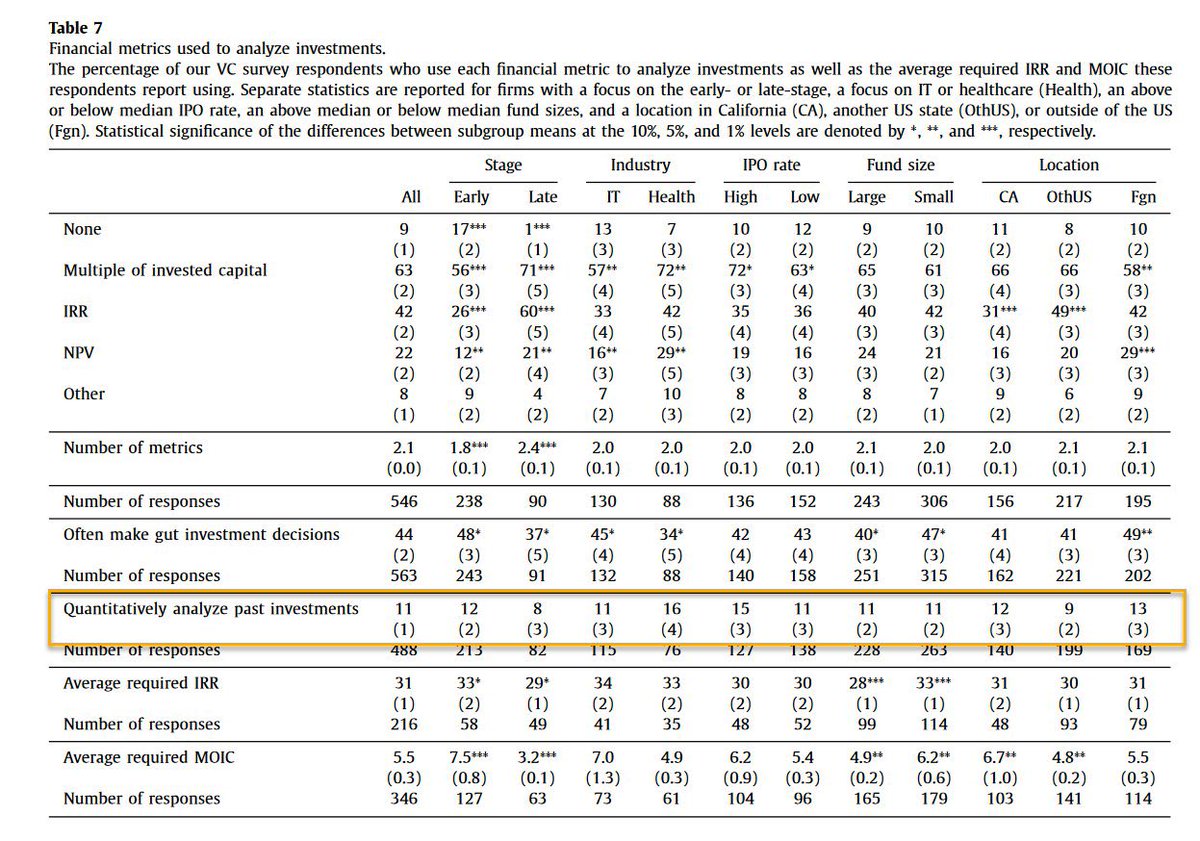
Unlike other investors, venture capital doesn’t use formal analysis to better understand their past mistakes or successes.
Only 11% of VC firms do ANY sort of quantitative analysis of past investments. (From a survey of 885 VCs a couple years ago) https://t.co/bbFFqG9k1y
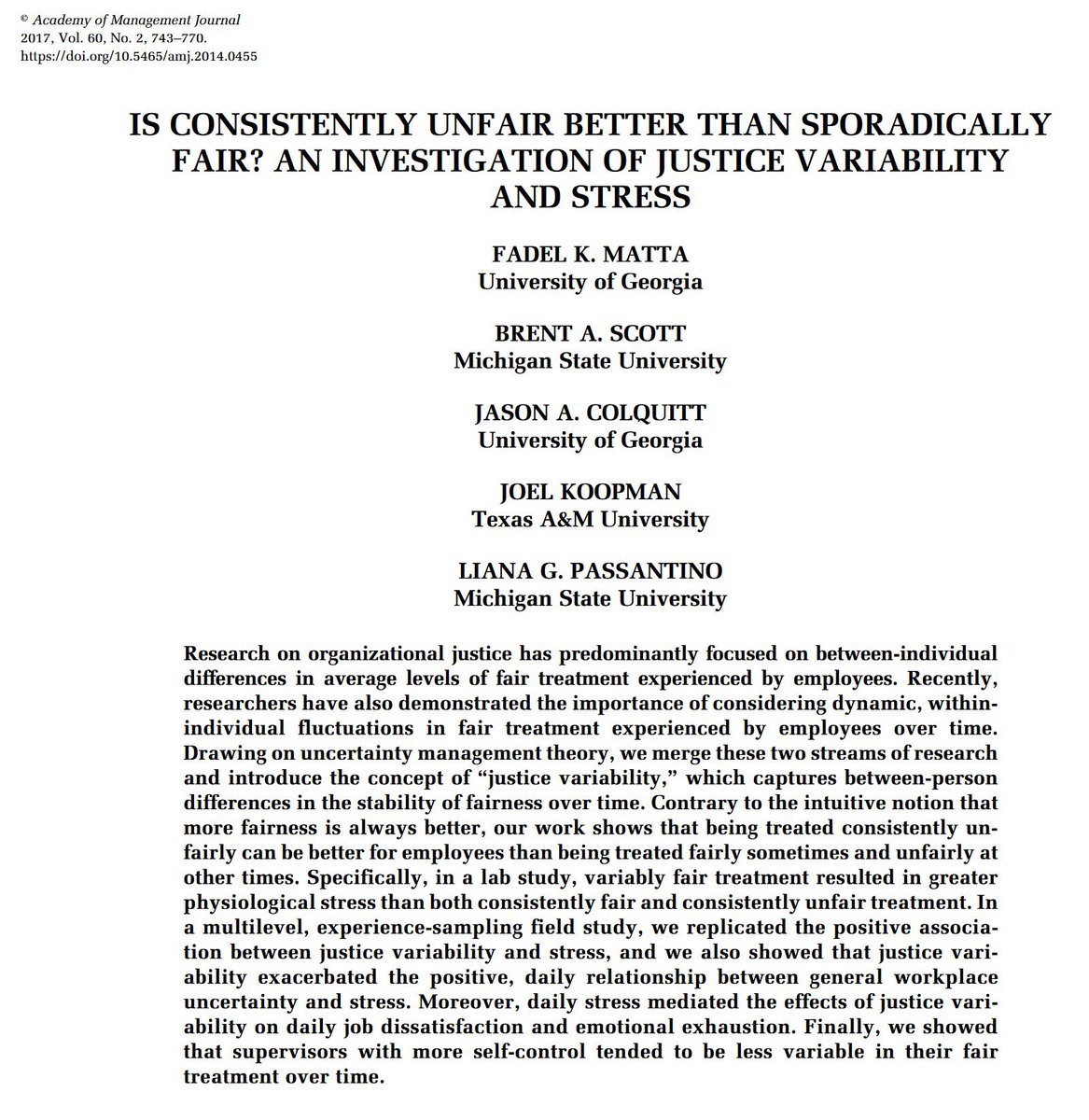
We can get used to anything at work except inconsistency. Bosses that are sometimes fair, but not always, cause us more stress than ones who are always unfair.
Look for good managers "with self-discipline & who think before they act." They are consistent. https://t.co/QeuGm6QGLg
People dabbling in a new field are overconfident about their expertise: confidence increases faster than knowledge.
We start to generate our own theories from the small sample of our experience, but those theories are too simple. As we learn more our confidence actually drops!
The very nature of being an expert makes it hard to teach your expertise clearly to others. Experts combine so much complex intuition & experience into decisions that is hard to share it.
This video is a great (funny) example of why translating expertise into lessons is so hard
On 8th Oct 1952 the worst civilian rail disaster in UK history happened in London. 112 dead. 340 injured.
That accident, and the actions of one woman from Florida have saved THOUSANDS of lives.
Because the disaster helped invent the paramedic
https://t.co/Dh5FSVRUBn
Read on /1
"Britain needs a press that tells the truth & treats everyone fairly. Amid rising division & polarisation within society, the stakes could scarcely be higher."
@BylineTimes@StopFundingHate
'How the UK Newspaper Industry Enables Institutional #racism '
https://t.co/sRf6Wn2sfH
The Milgram Experiment, but for privacy: “we approached a total of 209 participants with a highly intrusive request: to unlock their password-protected smartphones and hand them over to an experimenter to search through while they waited in another room.”
THREAD: Where are we in UK with cases, where are we going and should we care?
TLDR: nowhere good, somewhere worse, absolutely yes.
1/24 (yes, I know, another long one. Still worth a read I hope!)
The power of sleeping on problems.
This paper challenged people to solve a puzzle that could be done by brute force or elegantly. Those that tried the puzzle first & then slept on it were 2x as likely to find the insightful solution afterwards. Sleeping brings insight!
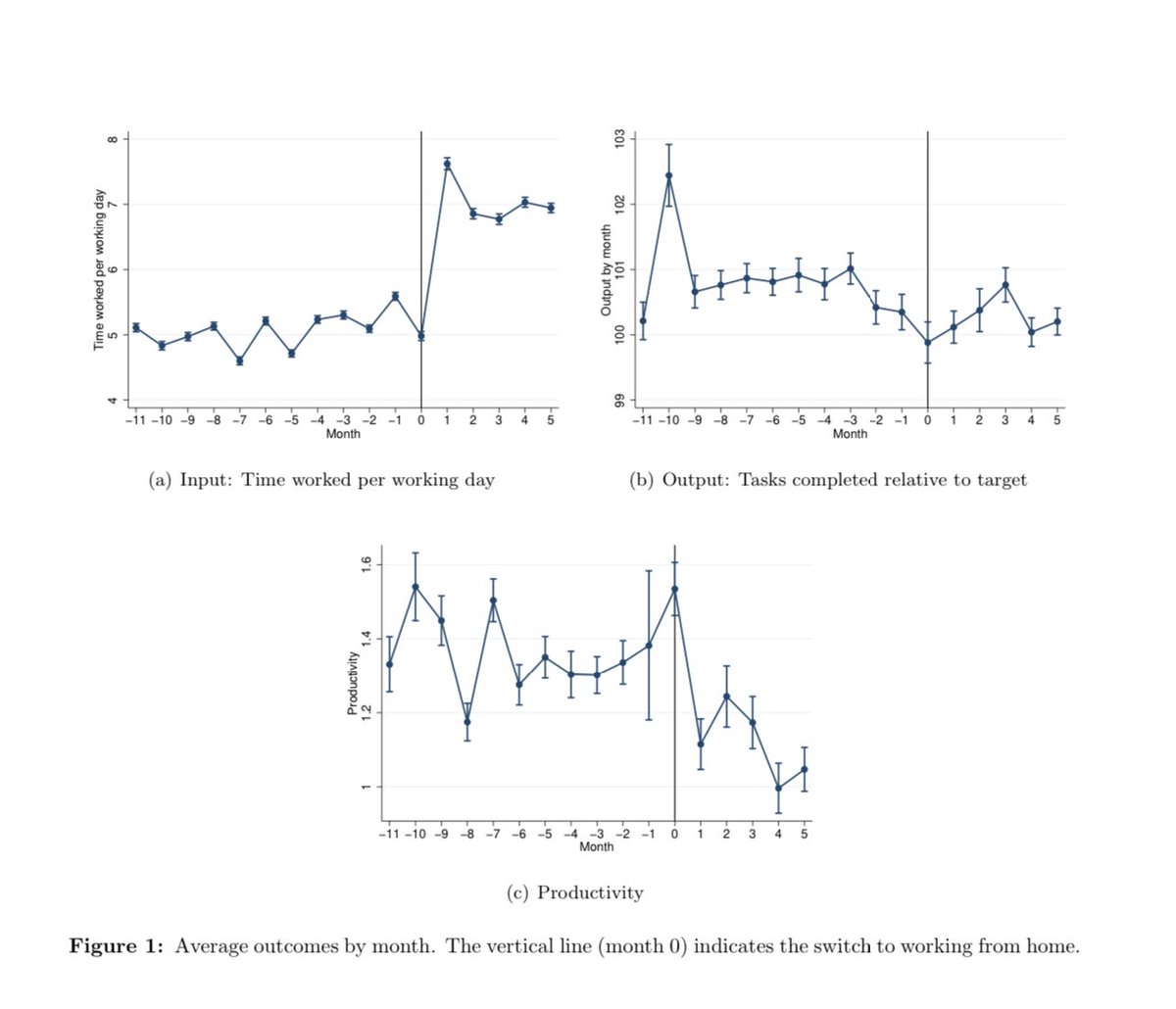
A big study on COVID remote work using objective data on 10k IT professionals finds pretty bad outcomes for all. The charts tell the story: productivity fell 20%, but output was stable because people worked 30% more hours. Also employees got less coaching. https://t.co/pIVvRbNeCN
Very cool paper analyzed Doctor Who episodes to find a way of increasing creativity: regularly shaking up a team by adding new members with new connections. Switching in team members upped creative quality; going against manager’s desire for stable teams. https://t.co/q4Li327SkM
Everyone is worse at multitasking than they think, but the people who are most likely to engage in multitasking are also the worst at it - this study finds the two are negatively correlated! (Also the worst multitaskers are most likely to text & drive) https://t.co/eEDMP09qdX
Looking at a key source of the #MeToo movement, Harvey Weinstein, this paper finds it had an impact. Producers associated with Weinstein were 35% more likely to start working with women writers after, compared to those with no connection. Female producers responded more than men.