@SelkirkHS had a fantastic day at the Borders Celebration of STEM event by @Stemovators. The teams presented brilliantly and confidently #oracy We even came runners up in the STEM challenge.
Turning a slide deck into a Quizizz Lesson isn't terrifying. It's terrific with our Google Slides extension. 🎃
Seamlessly switch between Google Slides and Quizizz. You can even use Quizizz AI to add interactive questions to your lessons in seconds. Now that's scary good. 👻
We’re pleased to be recognised as an Apple Distinguished School for
2024–2027 for inspiring, imagining, and impacting teaching and learning
school wide through continuous innovation!
A busy teacher: "I would use the Labeling question, but I don't have time to make all the labels."
Quizizz AI: "We'll make the labels for you, too." 👍
A busy teacher: "Oh my."
Watch this video and see Labeling AI in action. ⬇️
Excited to share that I just earned the Teacher Essentials certificate with Canva Design School! Learn more at @CanvaEdu#Canva#CanvaEdu#CanvaDesignSchool https://t.co/CyLc4Hv7ZB
Physics teachers, I made this to share with seniors (using @CanvaEdu) in the hopes of getting them reading around the subject and feeling inspired. Feel free to use it. I'm sure I've missed loads of great books!
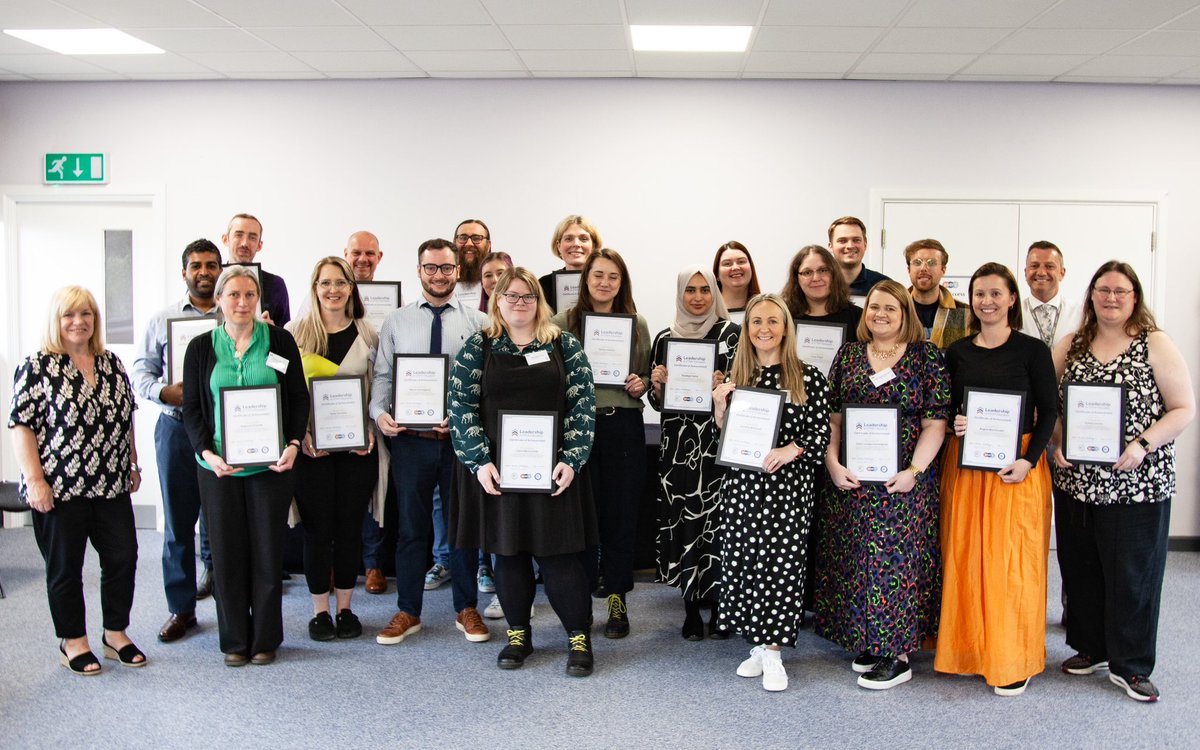
Congratulations to our Physics teacher @MsFarnhamPhys who passed her STEM leadership course with @SSERCSTEM she has been looking at STEM pathways through our cluster and the importance of pictures in Physics practicals
@ValerieDrew1 Thanks to the wonderful @ValerieDrew1 for her skills and expertise, guiding our delegates through their professional enquiry.
Well done everyone!
@SSERCofficial
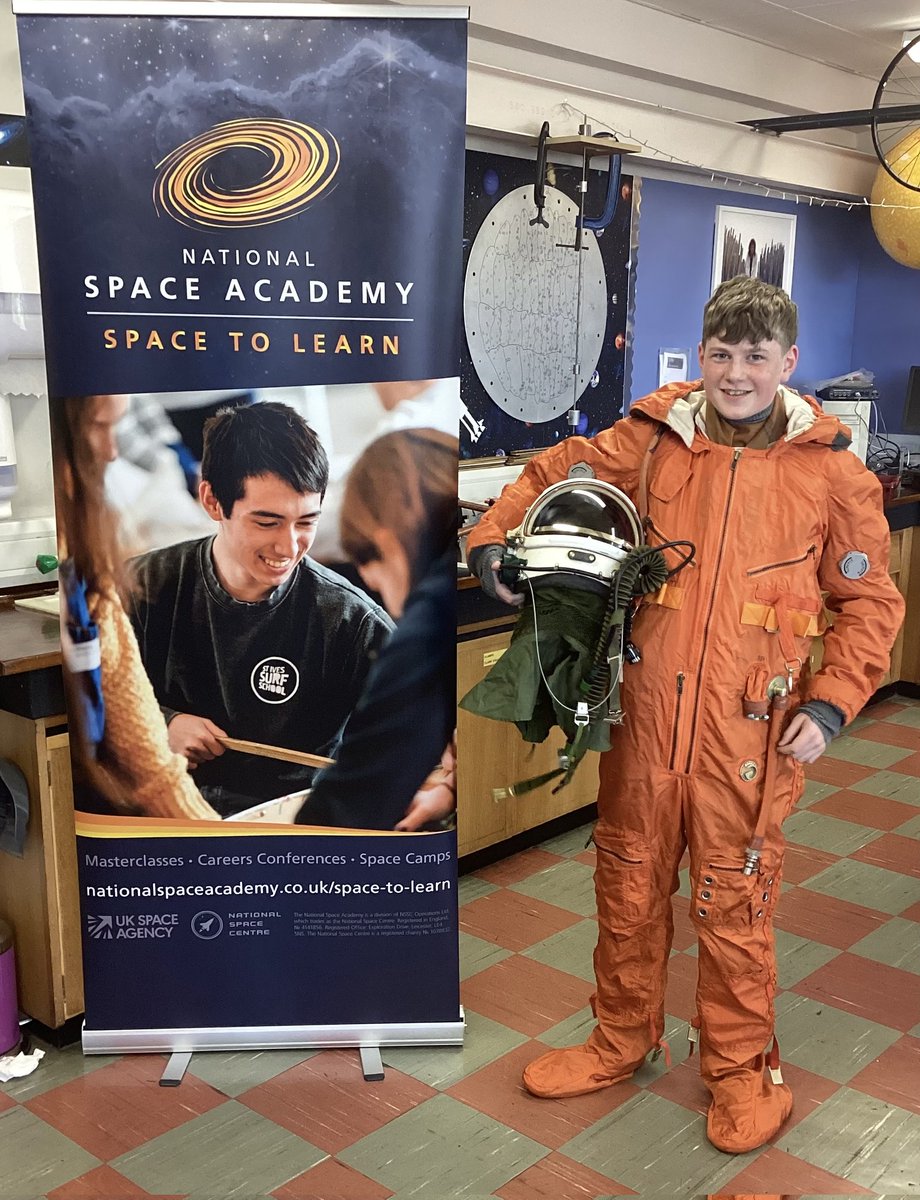
@UKSpaceAcademy thank you for a wonderful day of workshops for S1/2 and S3 at @SelkirkHS we had a brilliant time and learned so much about asteroids, Artemis, rockets and the challenges of space flight. 🚀👩🏻🚀
In 1924, the Indian physicist Satyendra Nath Bose wrote a paper on the quantum statistics of light quanta (now called photons), in which he derived Planck's quantum radiation law without any reference to classical physics. He sent his paper to Albert Einstein, who was impressed by his work and translated it from English to German and submitted it to the Zeitschrift für Physik, a prestigious physics journal.
Einstein then extended Bose's ideas to matter, and predicted that atoms with even spins (called bosons) would coalesce into a single quantum state at very low temperatures, forming a new state of matter that he called Bose-Einstein condensation. However, for decades, no one was able to create a Bose-Einstein condensate (BEC) in a laboratory, because the required temperatures were too low and the interactions between atoms were too strong.
It was not until 1995 that Eric Cornell and Carl Wieman of JILA, a joint institute of the University of Colorado Boulder and the National Institute of Standards and Technology (NIST), achieved the first atomic BEC using rubidium atoms. They cooled the atoms to 1.7 × 10⁻⁷ K above absolute zero, which is about -273.15 °C or -459.67 °F.
Later that year, Wolfgang Ketterle of the Massachusetts Institute of Technology (MIT) produced a BEC using sodium atoms. He also demonstrated that BECs could exhibit superfluidity, which is a phenomenon where fluids flow without friction or viscosity. In 2001, Cornell, Wieman and Ketterle shared the Nobel Prize in Physics for their achievement of Bose-Einstein condensation in dilute gases of alkali atoms, and for their early fundamental studies of the properties of the condensates. Since then, research on BECs has expanded the understanding of quantum physics and has led to the discovery of new physical effects, such as vortices, solitons, quantum interference, atom lasers, and quasiparticle condensates.