This struck me. We’re preparing students for a lot of unknowns, but the foundations remain the same. Focus on big picture skills like problem solving and comprehension! #tlt407#iseckechapter8#backwardsplanning
@JulieFraenkel Great selection - I think another thing teachers need to be aware of is the possibility of other students embarrassing shy students. I know for the student I tutor, a big factor in determining whether or not to raise his hands is the anticipated thoughts of his classmates.
@12ReeceH Yes! It absolutely made me cringe hearing this as a kid. I think a great thing for teachers to do is to give the student positive feedback privately after class - that way, the action is acknowledged without the public recognition factor, which could be overwhelming.
When I was in high school, I was convinced every assignment was busy work and that none of it actually contributed to my learning - UNLESS a teacher explained HOW the assignment was benefitting me. #tlt407#backwardsplanning#thingstoremember
@emily_glueck This is an interesting selection! I think it's great for teachers to ask students questions about their answers or to maybe guide them toward a different answer. I think it goes along with that idea of creating meaning through the process.
The idea of creating a rubric or checklist for assessment has always overwhelmed me. Isecke (2011) suggests asking students to co-construct rubrics so they are both (1) involved in determining what "successful" means & (2) invested in the process itself #tlt407#backwardsplanning
@GoffTeach Great thing to point out! I like that you highlighted the “no gotcha’s” part. Students should be challenged during instruction, but assessments should do what they’re meant to do- assess.
Assessment is a crucial part of learning for students, too! In addition to being clear and continual, feedback should also be specific, according to Dr. Sawyer, who teaches TLT 432. It’s important for teachers to explain the “why” behind the feedback. #TLT407#backwardsplanning
@CathyHa75089200 Such a great thing to highlight - I never thought of the importance of considering misunderstandings and preconceived notions of how the world works before reading this.
@GoffTeach Loved this quote too! I think it's important for teachers to remember that success is measured by progress (or process), not a grade (or end result).
<3 this example of big idea breakdowns for literacy! Isecke (2011) explains the importance of breaking down a lesson's big ideas (based on standards, of course) into more specific understandings & addressing possible misunderstandings. #tlt407#backwardsplanning
Memorization is NOT a helpful tool in real-life application! Teachers should be able to discern between what is useful long-term in real life & what is helpful for a short time in a classroom setting. #qualityoverquantity#tlt407#backwardsplanning#chapter3
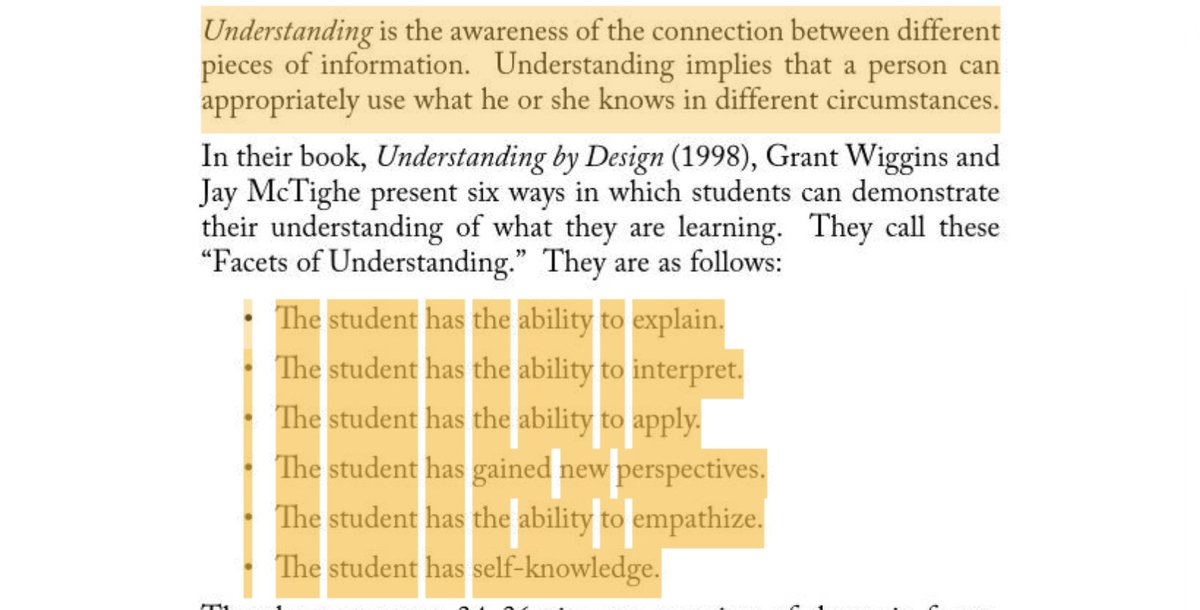
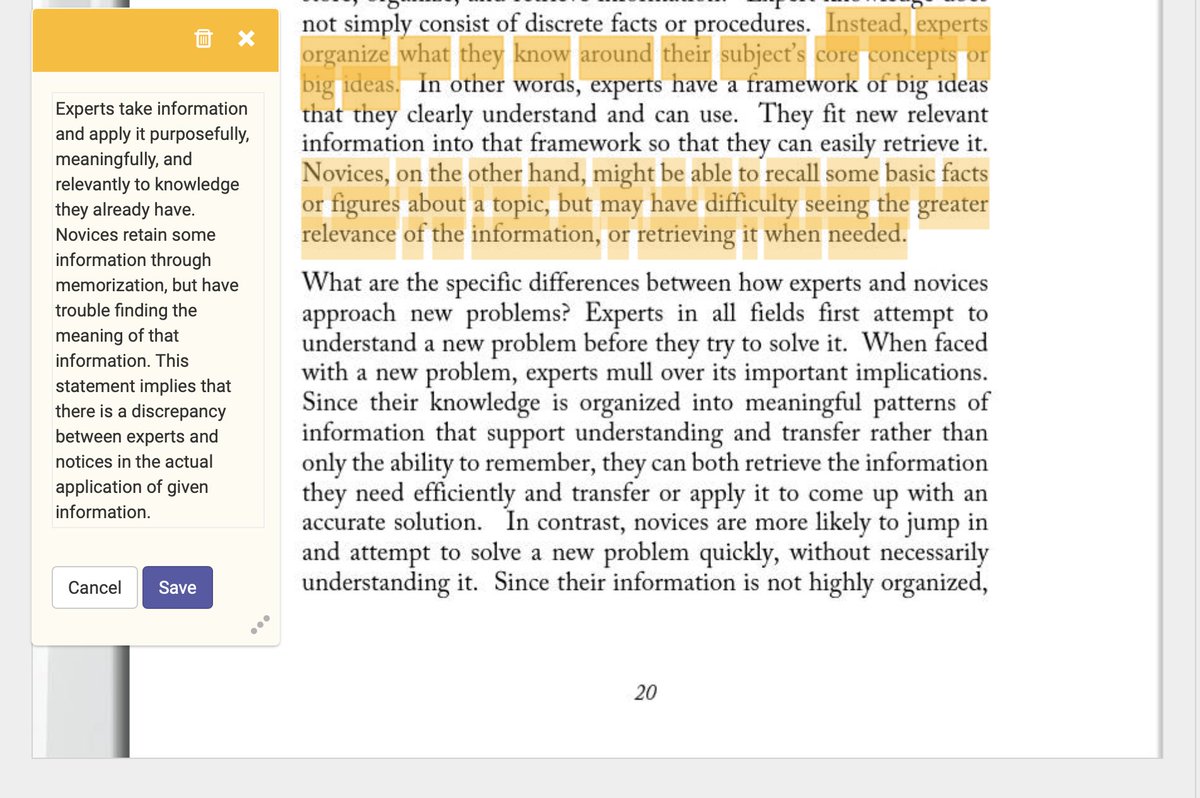
Isecke (2006) emphasized the importance of #studentunderstanding over #studentmemorization. Ch.1- Understanding allows students to become experts rather than notices (pic 1). Ch.2- Isecke outlines ways in which students can demonstrate understanding. #tlt407#backwardsplanning