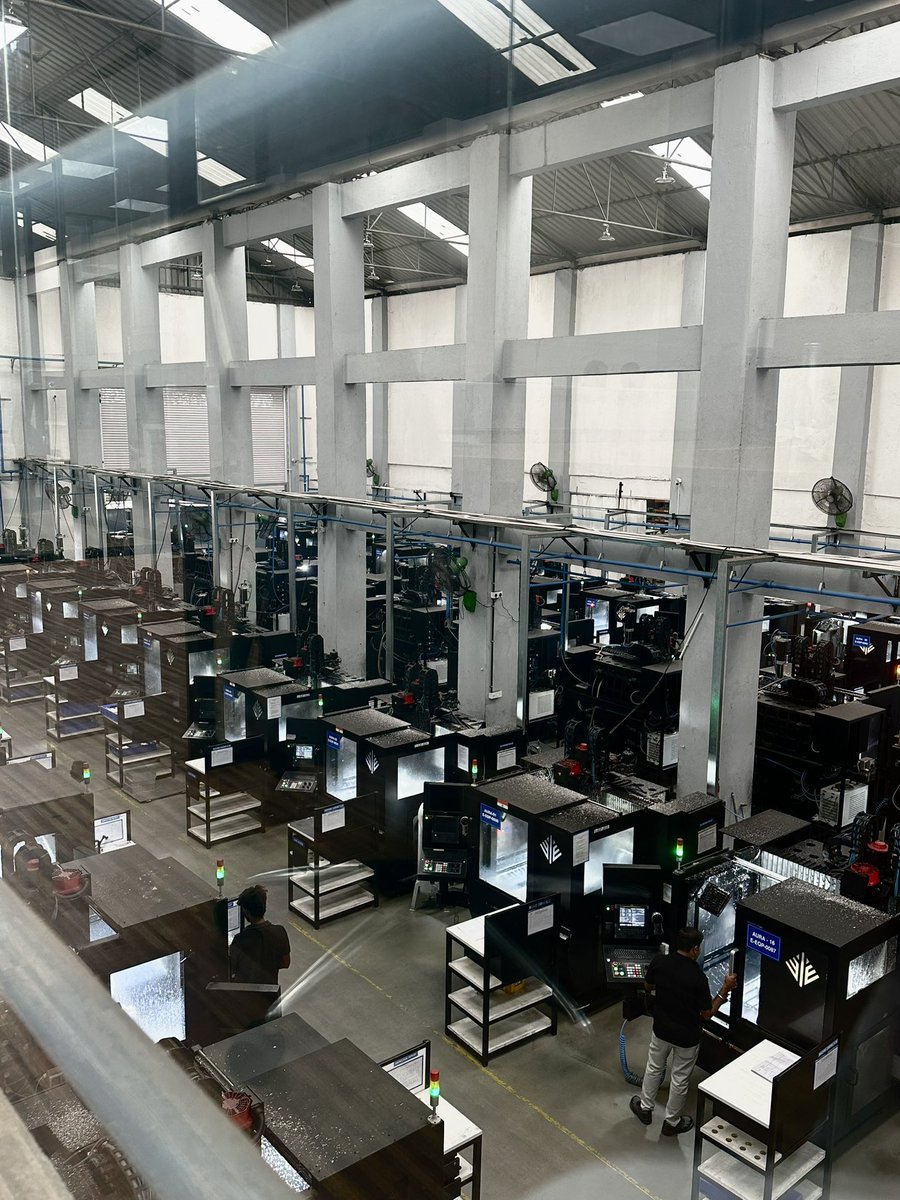
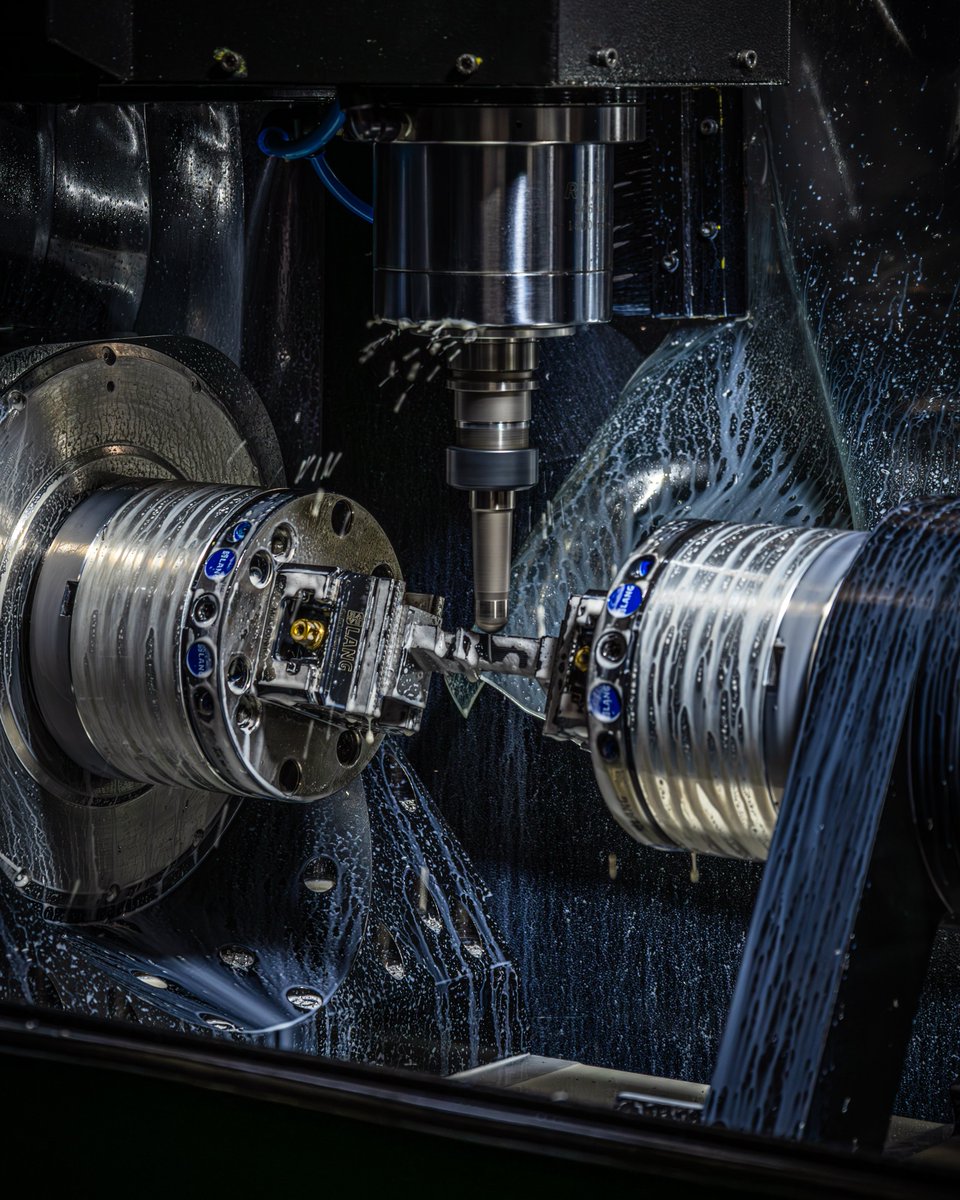
The only co outside China that is replicating the same with proprietary software + hardware.
More rows and factories coming up. Each machine with its own proud 🇮🇳 flag.
@etherealmachine
china isnt ahead because their labor is cheap
china is ahead because they have built incredibly technologically advanced factories
lets build this here
Most people who build machines never see them again. Ours do.
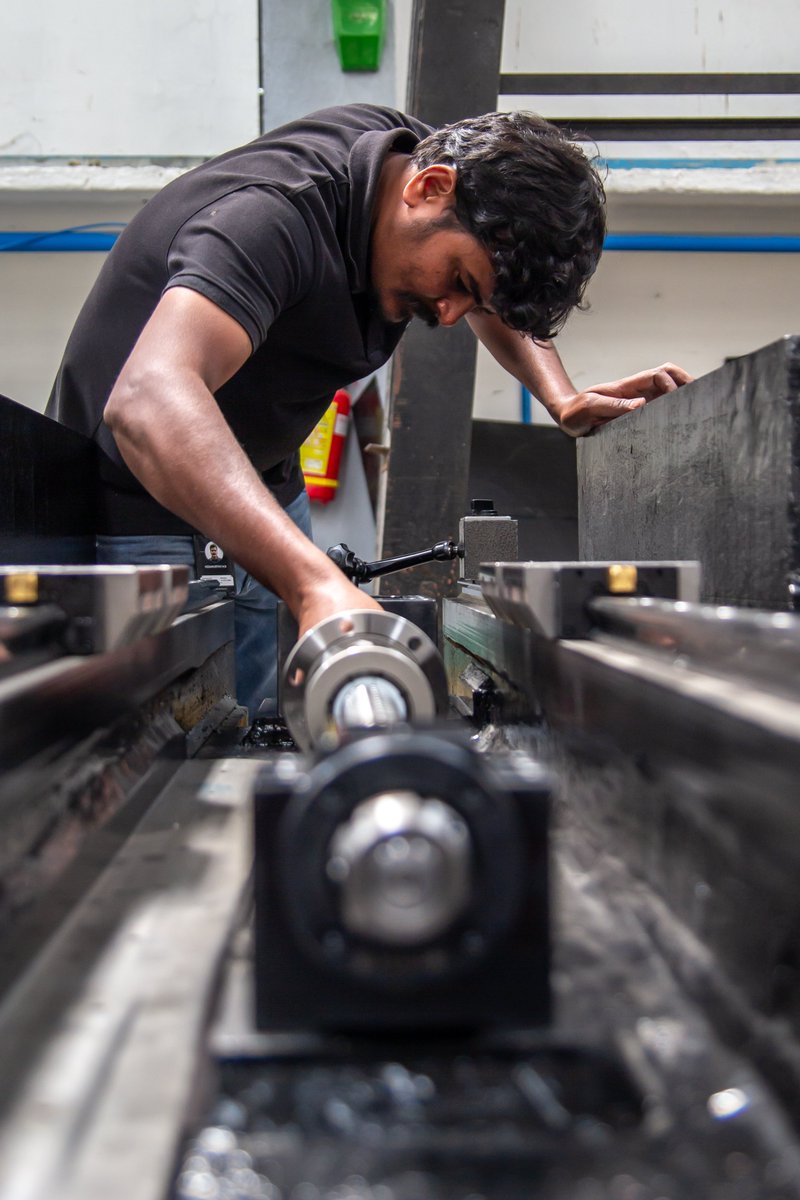
He is setting the geometry of this axis. In two years, he will find out exactly how it held.
The operator walks over and tells him how it behaves after a year of cutting. The maintenance engineer tells him what he would do differently.
What they tell him goes into the next machine. And into every part this one cuts.
#EtherealMachines #MaaS #MadeInIndia #Manufacturing #Engineering #5AxisCNC
A drawing shows the part from every side. The machine only ever sees one at a time.
That gap is where the cost sits. Two dimensions can carry the same tolerance and cost completely different amounts. One is reachable while the part is clamped once. The other is referenced from a face pointing the other way, which means taking the part off, turning it over, and finding the reference again.
Every time a part is unclamped and reset, the features cut after it are never quite as true to the ones cut before.
So the first question on a drawing is not how tight anything is. It is how many times the part has to be put down and found again.
On five axes, it still moves. It just does not get put down.
#EtherealMachines #PrecisionMachining #DFM #DesignForManufacturing #EngineeringDrawings #Tolerances #GDandT #CNCMachining #5AxisCNC #MaaS #BuiltInBengaluru #Manufacturing
Khavda Solar Park Located in the barren Rann of Kutch desert in Gujarat, India, it spans 72,600 hectares (about five times the size of Paris) and is designed to generate 30 gigawatts of clean power
@vadapallichaitu@etherealmachine Yes, we do! A bunch of critical parts in our rotary especially. External supply chain isn’t equipped with complex enough mother CNCs to achieve necessary tolerances. We had a hard time initially, but now it’s vertically integrated saving us time + money.
Left - From China.
Right - In India, from @etherealmachine + Lots more rows to come soon.
Every CNC machine is a bet on industrial capability. Enough of those bets, and you don't just build products. Your nation becomes one to fear.
True Independence is when we don’t ask: Can India build reliable multi-axis CNCs?
Can an Indian startup build precision parts?
Can India build great hardware?
Our floor+machines at @etherealmachine carried the flag, before it was cool to do so.
Happy 80th Independence Day!
The tricolour on our shop floor was not raised today.
Making a thing yourself always takes longer than buying it. That is the trade independence asks for, and we took it.
A flag hung over a working floor is not an ornament. It stands where claims are tested rather than made, which is the difference between stating a capability and holding one.
Nothing here is certified once and then assumed. A machine that held tolerance last month must hold it again this morning; the four hundredth part must measure the same as the first. A standard observed once a year is not a standard.
The flag has not moved. The work beneath it continues to answer for itself.
Raised by a nation. Held by the work.
Happy Independence Day. 🇮🇳
#IndependenceDay #MadeInIndia #manufacturing #PrecisionEngineering #CNCmachining
Speed and tool life are treated as a trade.
The usual response is to pick a side and defend it. The more useful question is where the cutter actually stops being stable, a point that is measured on the floor across a run, not settled in advance.
Held there, neither speed nor tool life is being sacrificed. Both are being read from the same evidence.
#EtherealMachines #PrecisionMachining #CNC #Manufacturing #Tooling
Have mentioned this in private multiple times - It has been our good fortune to work with @aaasandeep and count him as an investor. One of the few VCs in India who understands and supports deep-tech!
Proud to be associated with the leading precision manufacturing company in India. They built their own 5 axis CNC machines since no one was willing to sell them one. World class!
'We need a trillion-dollar investment in manufacturing in the next decade.'
Ashish Dhawan says that's the only way India can create 40-50 million jobs and take exports from $450 billion to $2 trillion.
Speaking to Shereen Bhan on Young Turks Reloaded, the ChrysCapital founder argues that India is finally at a manufacturing inflection point.
'Manufacturing FDI is only $20-$22 billion... that's the number to focus on because that creates jobs, brings new technology and puts factories.'
With stronger infrastructure, improving industrial policy and global supply chains looking beyond China, Dhawan believes 'the enabling conditions are much better' for entrepreneurs to build in India.
@ShereenBhan
Threading: Where Tolerance Is Lost
A thread is where a part can leave tolerance after the feature has already passed its first checks.
A hole can be precisely located, correctly sized, and have clean entry geometry. The moment tapping begins, the control problem changes.
Tool deflection, chip packing, a shifted starting condition- these produce roundness and pitch errors, and a functional gauge and a probe do not ask the same question about them. A thread can measure acceptable and still not accept its mating part.
In high-spec work, the thread is not the afterthought. It is the last place good machining quietly goes wrong.
#EtherealMachines #Manufacturing #QualityControl
1st Vs 400th: What holds on a production run
The difference between part one and part four hundred is rarely visible in a photo. The mounting boss, the flange, and the scallops on every housing align as if nothing changed.
But the reality is quieter: what holds on the first cut is constantly threatened by tool wear, thermal shift, fixture settling, and the slow drift of work offsets across a shift. Precision in the first part proves the setup. Precision across the row proves the process.
A production run is only as strong as the weakest point that can move. The challenge is holding both the geometry and the discipline steady.
#EtherealMachines #PrecisionMachining #5AxisCNC #MaaS #Aluminium
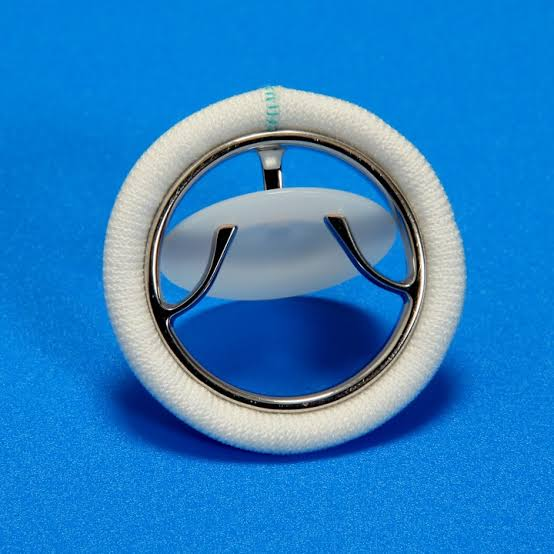
1 machine whistle-boils rice on an Indian stove; the other snaps shut 40M times a year inside a human ribcage to keep blood from flooding the lungs. This is the silent, terrifying origin story of how India’s most famous kitchenware company quietly took over cardiac surgery.
In the 1970s & 80s, Rheumatic Heart Disease (RHD) was a silent killer across India. Strep throat infections in children, if untreated, triggered autoimmune reactions that deformed the mitral & aortic heart valves. By their 20s, young men & women were dying of heart failure simply because their natural valves could no longer open / close properly.
The medical cure existed: replacing the damaged natural valve with a tilting-disc mechanical heart valve.
The economic reality was brutal: imported valves from Western manufacturers cost upwards of ₹55K, equivalent to yrs of salary for an average Indian household.
1000s of patients were left to die simply because of a price tag.
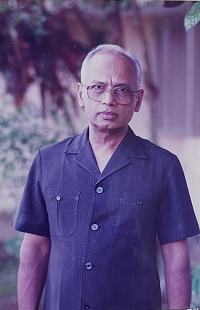
Dr. M.S. Valiathan, a brilliant cardiac surgeon trained at Johns Hopkins & Liverpool comes into the scene. In 1974, he took over as founding director of the Sree Chitra Tirunal Institute for Medical Sciences & Technology (SCTIMST) in Trivandrum. He vowed to build a fully indigenous, world-class mechanical heart valve at a fraction of the cost.
The team built a prototype using a single-crystal sapphire disc held in a metallic cage. During fatigue testing in custom pulsatile flow rigs, the sapphire disc suddenly shattered. If that had happened inside a human body, it would mean instant death. Back to the drawing board.
The team engineered a novel free-floating, plano-convex tilting disc made of Ultra-High-Molecular-Weight Polyethylene (UHMW-PE) housed inside a polished, integrally-machined metallic cage.
Because the disc rotates on its own axis as blood surges through, it continuously distributes wear evenly across its surface, giving it a theoretical lifespan of 50+ yrs (validated over 350M accelerated pulse cycles).
By 1989, the valve had passed extreme hydrodynamic testing, toxicological screening & animal trials in sheep. It was ready for human production.
Dr. Valiathan approached major Indian pharmaceutical & engineering conglomerates to license & manufacture the valve. They all said NO.
The corporate fear was simple: Product liability. If a machine tool / an engine part fails, a company loses money; if an artificial heart valve fails inside a patient's chest, you face catastrophic lawsuits & moral ruin.
That was when the TTK Group stepped forward.
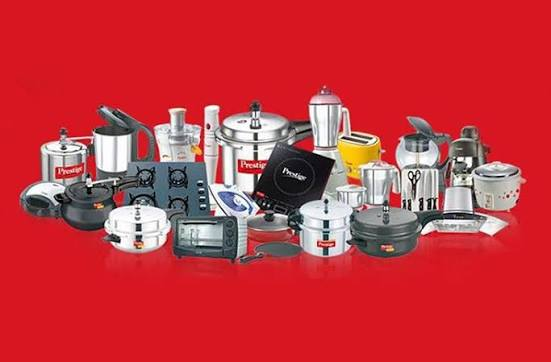
TTK is known for Prestige pressure cookers, Skore products, or Fryums, but their leadership saw Dr. Valiathan's vision not as a high-risk liability, but as a moral duty. Using their expertise in high-precision metallurgy, micro-machining & quality control (originally built around pressure-vessel safety valves & seals), TTK established a dedicated, cleanroom medical manufacturing unit in Trivandrum.
In Dec 1990, at SCTIMST, Dr. Valiathan stood over an open chest in an operating theater. He implanted the very 1st production-grade TTK-Chitra Heart Valve into a human patient.
The patient survived, thrived & lived a healthy life for decades.
The TTK Chitra Heart Valve was brought to market at ₹12-20K, slashing the cost of open-heart valve replacement by 60%+ & putting life-saving surgery within reach of millions.
In 2001, the team won the National Technology Award for successful commercialization of indigenous technology.
To this day, while kitchen timers chime over Prestige pressure cookers across Indian homes, 200K+ TTK Chitra valves are opening & closing inside human hearts at 70 beats per minute, 100000 times a day, w/o missing a single pulse.
Building a machine that India had only ever imported takes longer than any pitch deck admits.
@MuddaKaushik and Navin Jain started Ethereal Machines in 2014 to build multi-axis CNC machines in Bengaluru, the kind that came from Germany and Japan. There was no playbook for it here. Most of that work was quiet, slow and unglamorous.
One night in May 2019 is a fair picture of those years. A power backup was not in the budget, so the work carried on under a car's headlights, in a garage.
On @moneycontrolcom's Rising Bharat Summit panel, Kaushik put the honest version of it. Call it cool if you want; you will still spend years in the garage. The machines running in Bengaluru today were built on exactly those years.
Thanks to moneycontrol for the room. Full panel below.
#MakeInIndia #DeepTech #AdvancedManufacturing #Manufacturing #FounderStory
70% of what we make is exported. The more interesting question is who is buying it now, and why.
On @moneycontrolcom's Rising Bharat Summit panel, our co-founder Kaushik Mudda explains why 'China plus one' stopped being a talking point. Buyers in Italy, the UK, Japan and the US are treating India as a serious place to make precision parts, not just a cheaper one. We saw it firsthand this summer, on the floors at @cogeseurosatory and @FIAFarnborough.
We machine those parts in Bengaluru. Where he thinks this goes next is in the panel below.
Thanks to moneycontrol for the room.
#ChinaPlusOne #AdvancedManufacturing #MakeInIndia #Manufacturing #Exports
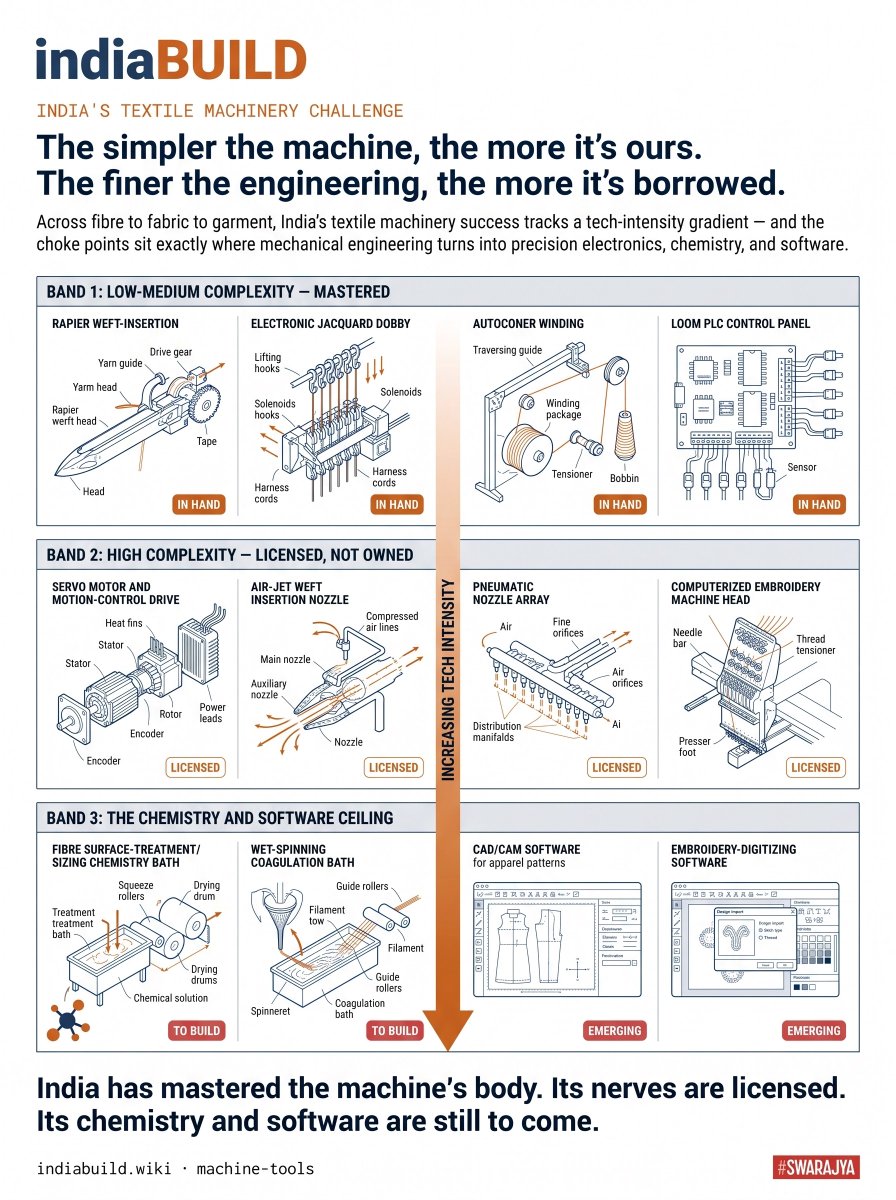
India's textile machinery tells a clean story once you plot it on a tech-intensity gradient rather than asking a flat "does India make this or not."
On the low-to-medium complexity end, India is genuinely strong.
-It builds its own rapier and jacquard weaving mechanisms, dobby systems, PLC loom controllers, sensors and firmware, autoconers, and its own synthetic and viscose/rayon fibre — real mechanical and electromechanical engineering, owned outright, not licensed, not imported.
-This is the base of the pyramid, and it's solid.
The lag shows up cleanly once you move up the gradient into high-complexity territory.
-Servo drives and precision motion-control systems — the components that let a loom run fast and stay tuned to load — are built in India only under foreign licence, not owned technology.
-That's also why India's loom fleet clusters at standard speeds while the high-speed and air-jet/water-jet tier stays imported.
-Push further up the gradient into chemistry and software and the gaps get more basic still: fibre surface-treatment chemistry (dye and coating chemistry) is barely started, wet-spinning process control and draw-texturing are still emerging, and apparel CAD/CAM and embroidery-digitizing software are still maturing.
So the real arc for understanding India's technology sovereignty in textiles isn't fibre vs fabric, or import vs domestic. It's the tech-intensity gradient itself — and the choke points sit exactly where mechanical engineering turns into precision electronics, chemistry, and software. That's where the self-sufficiency question actually gets decided.
IndiaBUILD is a public, evidence-verified map of exactly these gradients — every capability, company, and government scheme sourced and checked, so instead of guessing where a sector's dependence really sits, you can see the choke points, capability by capability, across every industrial sector.
It is a good time to be building deep tech in India, and we do not take that for granted.
Huge credit to the central government for the RDI fund. It is why the harder ideas are getting a real look now.
Our co-founder @MuddaKaushik made that point on Moneycontrol's Rising Bharat Summit panel, and then turned it away from himself. We are beneficiaries of what companies like ideaForge, GreyOrange, and Ather built before us. The founders who come next will attempt braver things than any of us.
The multi-axis CNC machines we make in Bengaluru are part of that line. Grateful to moneycontrol for the room. Full panel below.
#DeepTech #MakeInIndia #AdvancedManufacturing #Manufacturing #CNCMachining
@moneycontrolcom · @ideaforge_tech · @GoGreyOrange · @atherenergy · @PMOIndia · @IndiaDST · @ANRFIndia · @DrJitendraSingh ·
@PiyushGoyal
This photo predates the factory, the funding and the headlines.
We couldn't afford backup power.
So we used my car's headlights and kept building.
Manufacturing isn't built in moments of glory. It's built on nights like these.
Picture from 05/2019. @etherealmachine
If an Indian startup/defense firm wants to build rocket engines/satellite parts/surgical implants/advanced drone components, they need sub-micron precision metal parts made from heavy-duty alloys like Titanium & Inconel.
Historically, the ultra-precise 5-axis CNC machines required to carve these complex 3D parts had to be imported from countries like Germany/Japan/Switzerland at astronomical costs. To make matters worse, foreign suppliers face tight export controls on high-precision machining tech due to its dual-use potential in defense/missiles.
India had the engineering talent to design hardware, but was held back by a reliance on imported tooling & machining infrastructure.
A not so known startup Ethereal Machines is doing genuinely game-changing work for Indian deeptech & manufacturing, operating in a sector that rarely gets flashy headline attention compared to consumer tech.
Founded by Kaushik Mudda & Navin Jain out of RVCE in BLR, they hit on a fundamental bottleneck that was quietly crippling India’s hardware, aerospace & defense ecosystem.
Instead of just buying machines, Ethereal built their own multi-axis CNC machines from the ground up in India including their proprietary hardware, mechanics & complex CNC controller software. 🙏🙏
They built flagship proprietary machines like Halo, Aura & Nimbus that deliver sub 10 micron precision allowing intricate metal geometries to be carved in a single setup w/o manually repositioning the raw block.
Their early breakthrough was combining 3D printing (adding material) & multi-axis CNC milling (carving material away) into a single machine platform.
Instead of just selling machines, they run a massive 50K+ sq ft Smart Factory in Peenya, BLR operating 24/7. Startups in spacetech, drone tech, semiconductor equipment & medical devices can upload CAD designs & get aerospace-grade precision components delivered in days instead of months, cutting customer lead times by ~40%.
They became the 1st Indian company to win a CES "Best of Innovation" Award in Las Vegas for their hybrid manufacturing tech.
By controlling both the hardware & the software behind multi-axis machining, they give India's spacetech & defense ecosystem a local manufacturing fallback that cannot be disrupted by global supply chain shocks/export bans.
Top-tier deeptech investors like Peak XV Partners, Blume Ventures & Avataar Ventures backed them with major Series A & B funding rounds to set up a massive 300K sq. ft. mega-factory outside BLR.
Most people think of "Indian tech" as SaaS apps/fintech/q-com, Ethereal Machines is doing the heavy, unglamorous lifting, building the physical machine tools required to manufacture the rockets, drones, medical implants & chips of tomorrow right inside India. 🙏🙏
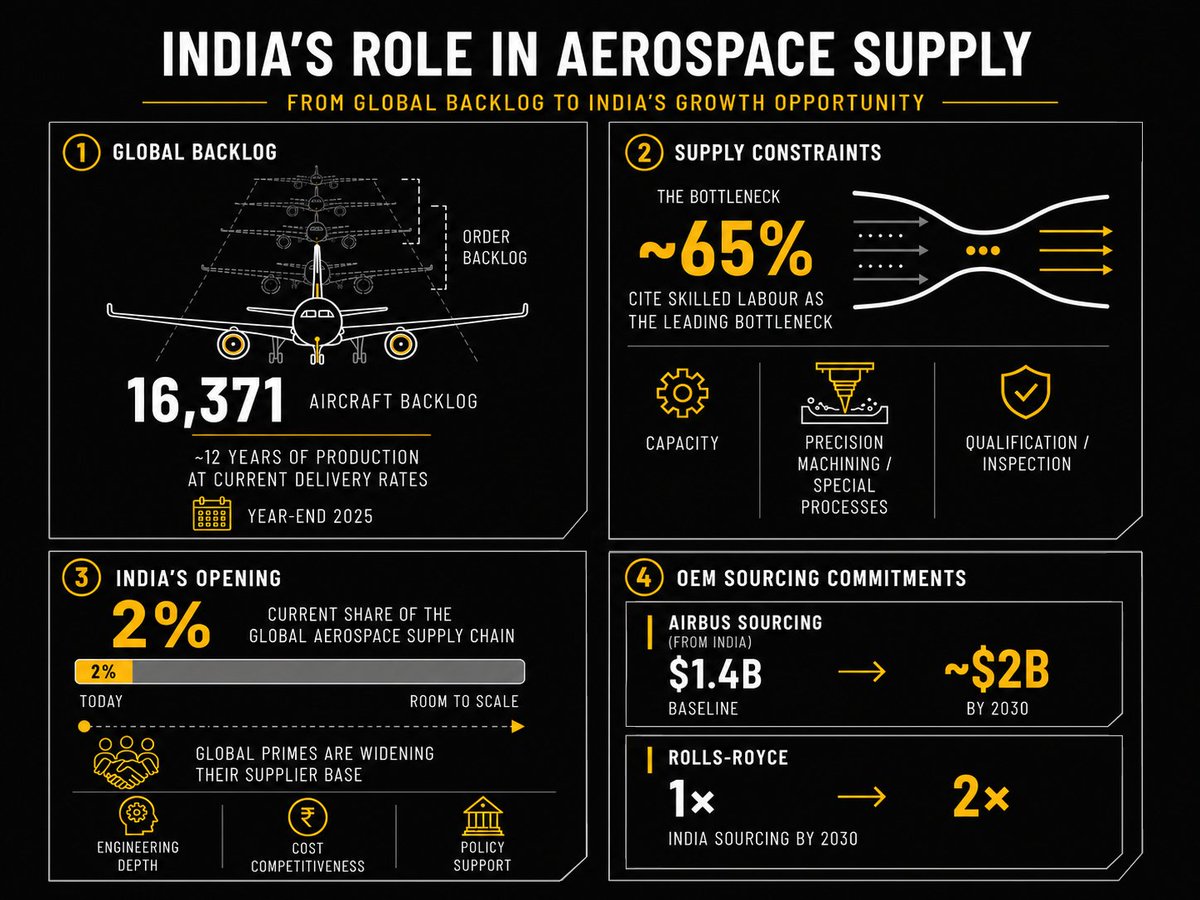
Aerospace doesn't have a demand problem. It has a making problem.
A record order backlog. More than a decade of orders on the books. The constraint now isn't demand. It's who can build the parts to aerospace standard, at rate, and hold that precision across the batch.
Where that leaves the supply base, and India, in the piece. Precision CNC for aerospace, from Bengaluru.
Farnborough this week: Hall 0, Booth 0515.
https://t.co/NrTe2oTfHa
Strip an industrial robot to its bones and you find seven technologies.
India has most of them in hand — the castings, the controller, the software. The one it lacks is a strange gear called the harmonic drive, which lets the arm bend with perfect repeatability, and which a handful of makers — mostly Japanese — supply to the entire planet. That single gap keeps the whole machine imported.
IndiaBUILD, a new Swarajya project, exists to map exactly these gaps — all of them.
WHAT IT IS
A living wiki of the hard technology India imports but could build. 18 sectors. 2,500+ capabilities mapped. 4,000+ sourced claims — growing daily. Every capability graded on an honest six-step ladder, from none to competitive — and built-under-licence sits on a lower rung than owned-design. Every claim tied to a checked source: AI-researched, machine-verified, human-published.
HOW IT THINKS
Products sit on trees of capabilities — a robot arm on seven, a jet on hundreds. Dependencies are drawn as edges: master one part and you unlock many machines (one precision ballscrew feeds CNC tools, robots and chip fabs alike). Builders are tracked with their claimed stage and our assessed stage, side by side. Statuses carry dates, so the map records movement.
ALREADY ON THE MAP
Why every MRI in India runs on 100% imported liquid helium. The three materials that decide chip sovereignty — polishing slurry, substrate film, photoresist — none made here. The Ukrainian plant that supplied Indian train wheels, until the war stopped it in 2022. The solar chain: modules assembled at world scale, every wafer beneath them imported.
You cannot build what you have not named. The map names 2,500. Each name has a page, and each page shows its sources.
Explore the most detailed public map of India's technology gaps ever assembled — https://t.co/HRwsnam7zK