Earthquakes Do Not Kill Equally.
=======
The tragedy unfolding in Venezuela is a painful reminder that earthquakes may be natural events, but disasters are often manufactured by society long before the ground begins to shake. The ground may shake beneath both rich and poor, but unsafe buildings are not distributed equally. The poor are more likely to live, study, trade and sleep in structures where design was compromised, supervision was absent, materials were substandard and approval systems looked away.
That is why earthquake preparedness is not only an engineering question. It is a governance question. Corruption approves inferior designs. Corruption employs incompetent professionals. Corruption allows substandard materials onto the market. Weak institutions fail to inspect buildings properly or enforce construction standards. By the time an earthquake arrives, the disaster has often already been built, one shortcut, one fraudulent approval and one neglected inspection at a time. In such circumstances, the human impact is only dependent on timing. An earthquake during the day may find people outdoors or awake and able to respond quickly, while one at night may strike when families are asleep, trapped inside weak buildings and slower to escape.
President @KagutaMuseveni's decision to reshare his 2023 Executive Order on earthquake preparedness is timely. The images from Venezuela remind every government that seismic risk is real. Earthquake engineering has long established how to design safer buildings. The challenge Uganda faces today is no longer a lack of scientific knowledge or engineering principles. It is translating that knowledge into governance, enforcement, financing and implementation.
Now, about the famous "Magnitude 9" phrase. Magnitude does not describe what a building experiences. It measures the amount of energy released when rocks suddenly rupture along a fault. Saying a building was designed for a "Magnitude 9 earthquake" is a little like saying a bridge was designed for a 200-horsepower tractor. An engineer's first question would be, "How heavy is the tractor? How fast is it moving? How many axles does it have? What load is it carrying?" Horsepower tells us something about the machine, but not the force the bridge actually experiences.
Earthquake magnitude works in much the same way. It tells us how much energy was released at the source, but it does not tell us how violently a particular building will shake. A building in Kampala, Fort Portal or Mbarara does not experience a number called "Magnitude 9." It experiences ground motion, and that depends on many factors: the distance from the earthquake source, the earthquake depth, local geology, soil conditions, whether prolonged heavy rains have saturated the ground and increased the risk of liquefaction or slope failure, and ultimately, the building itself — its structural configuration, shape, detailing and the quality of its construction.
Earthquakes also transmit their energy through different types of seismic waves. P-waves are generally the least destructive because they compress and expand the ground in the direction they travel. S-waves are more damaging because they move the ground sideways and vertically, placing greater stress on buildings. Surface waves, including Love and Rayleigh waves, often produce the strongest and longest-lasting ground motion, making them the most destructive to structures. The important point is that these waves describe how the earthquake's energy travels, not the earthquake's Richter Scale magnitude.
So, engineers do not design buildings for a "Magnitude 9." We do not design buildings by referring to the Richter Scale. The Richter Scale describes the earthquake’s magnitude at source. That's mostly important for geologists. We design buildings for the ground motion expected at a particular site. A distant Magnitude 9 earthquake may produce less shaking in Kampala than a nearby Magnitude 6 event. The headline number belongs to the earthquake. The building only responds to the shaking that reaches its foundation.
There is another public misunderstanding worth correcting. Engineers do not design buildings so that they never crack. In a strong earthquake, concrete may crack, plaster may fall and windows may break. That is not necessarily failure. The real objective is to prevent collapse so that people can evacuate safely. A cracked building can often be repaired. A collapsed building rarely gives its occupants a second chance. In earthquake engineering, success is measured not by crack-free walls but by lives saved.
The 2023 Executive Order therefore points in the right direction. It calls for auditing existing buildings, reviewing standards, strengthening enforcement, involving universities and improving national preparedness. However, directives alone do not build resilience. Directives must be followed by budgets, implementation plans and accountability.
Seismic audits, laboratory investigations, structural modelling, retrofitting, professional training, materials certification, code development and enforcement all require sustained investment. If these activities are expected without providing the necessary financing, even the best directives will struggle to achieve their intended impact. Earthquake preparedness should be treated as a national investment programme rather than simply a regulatory exercise.
The Department of Civil and Environmental Engineering at @MakerereSoEng@MakCEDAT@Makerere is already contributing to this agenda through research on seismic vulnerability assessment and earthquake resilience (https://t.co/ZXXoD3e6CG). Whether these research outputs arose directly from the 2023 Executive Order or from the persistence and self-funded efforts of individual researchers and postgraduate students remains to be established. What is beyond doubt is that deliberate government investment in such research could transform isolated academic studies into a coordinated national knowledge programme that informs policy, standards and practice.
Uganda has an opportunity to become a country that leads with knowledge. We can systematically map vulnerable buildings, strengthen materials testing, improve seismic design standards, retrofit critical infrastructure and build a national evidence base before a major earthquake forces us to do so under crisis conditions.
Earthquakes are acts of nature. Whether they become national disasters is largely a question of governance.
Through Bruno k’s TikTok live, 4/21 of the remaining children of the late Paul kafero who were denied by the DNA results have been given 12 million Ush to go and change their lives, Let’s appreciate Bruno k once again.🙏
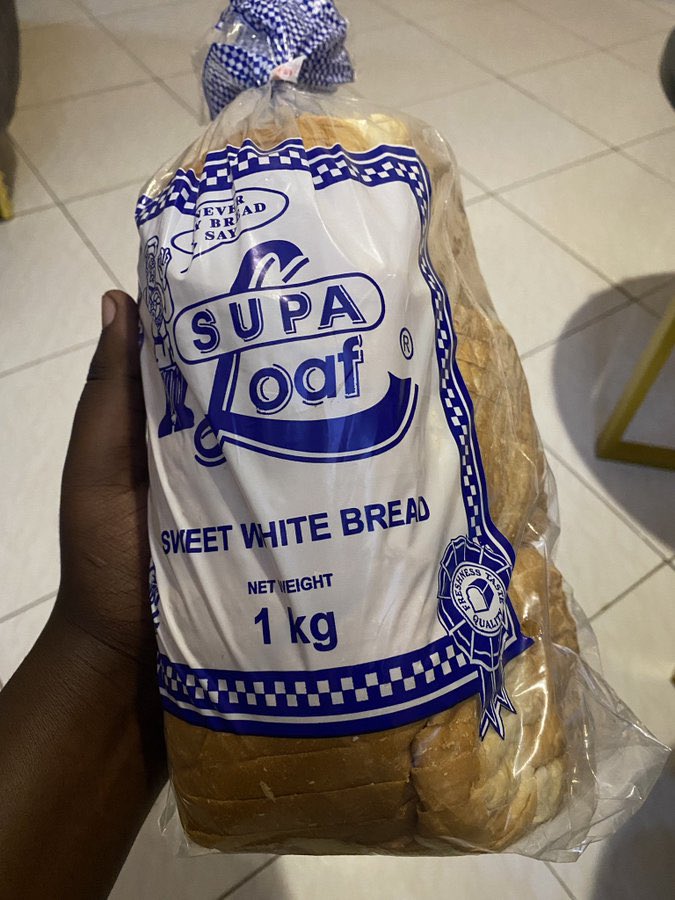
Some thing about superloaf bread 🍞....have tasted all different types of bread, but none comes close ....
Prove me wrong
@SupaloafUGoffcl@SupaLoafOffcl
The real economic crisis isn’t unemployment,it’s people working full-time and still not being able to afford basic life. Kikwaffu ku ground colleagues.
Speaker of Parliament @ObothOboth has appealed to Ugandans to keep him in prayer, revealing that his new office has become the target of individuals he says are using witchcraft and other schemes to undermine his leadership.
@davidochieng87#NBSLiveAt9#NBSUpdates
Eventually the “When you get the chance to leave, don’t come back” will cease to make sense because how am I supposed to feel better in a foreign country when my own country is bleeding helplessly.🤦🏿♀️