Just a normal, regular news bulletin in a totally not-at-all-insane country, casually debating how best to commit crimes against humanity on morning television.
There's a major gap in this otherwise compelling vision.
Lots of interesting signals recently: token budget caps, intelligence sovereignty, increasing competition (Meta/Grok/GLM) that drives the commoditization of intelligence.
All seem to point toward a more benevolent future equilibrium where every organization owns its human-AI learning loop through which knowledge and value accrue locally. @satyanadella, @thinkymachines, @dwarkesh_sp all laid out good arguments for it.
No doubt that is a more desirable future than the oligopolistic path we are on, but no one seems to be asking about the elephant in the room:
Do we actually know how to solve the continual learning problem required to sustain such a local co-learning loop?
Right now, there are roughly three buckets of learning methods being entertained in practice:
1) Non-parametric learning, mostly in some form of memory (skills, RAG, knowledge bases, KV cache, etc)
2) Domain-level post-training (e.g., continual pre-training on proprietary organizational data)
3) Task-level post-training (e.g., RL for specific workflows)
(More research-y ones like new model architectures are omitted here because there's still a long way to go in both research and validation)
Is any of these methods sufficiently general and deep to sustain the desired co-learning loop across all organizations and job functions? The answer is likely negative:
> Non-parametric memory is often shallow and has limited control over agent behavior (talk to OpenClaw/Hermes users who struggle to get their agents to learn and follow the rules)
> Domain-level post-training remains expensive and has yet to demonstrate broad success outside a few exceptional domains (@Cursor's Composer may be an exception but coding is an exceptional domain in itself)
> Task-level RL is engineering-heavy, sample-inefficient, and difficult to apply when success cannot be objectively verified
The human-AI learning loop isn’t inevitable. It still needs to be invented. Solving continual learning may be one of the most important problems for building an AI ecosystem where expertise compounds locally instead of concentrating globally.
Every state in Nigeria is rich in either solid minerals, fossil fuels, fresh water, or agricultural land.
The pyramids of groundnuts and plantations of palm oil, cocoa, and rubber were not built with FAAC.
A governor's job is to provide security and generate wealth. If your governor can't generate wealth to support the State, elect one that will
To each his own.
This is why when faced with Sankara's dilemma of 'water for all or champagne for a few', smart nations always choose water for all.
Because when everyone has a solid baseline, the elite can truly thrive and become exceptional. Their "champagne" can be meaningful.
But when most people are dirt poor, the elite become stupid, mediocre bastards who cannot pave their own roads, organise their own garbage collection, and prevent their own Ikoyi from regular flooding, constant foul odour, and mosquito infestation.
Charterhouse my ass.
As a sidenote, this is a MASSIVE model
You will not be running this on a Mac Mini. In fact, you will need quite a few high end GPUs
But here's the thing: hardware will get better. Models will be made more efficient. This is the worst it will ever be
Within the next few years this will 100% be able to run on widely available consumer hardware. I'd bet ANYTHING on it
The fact that a model who's weights you can download right now is just as good as Opus 4.8 is a feat in its own
The United States Officially Activates AI Warfare
Why was a US-based AI company paying Nigerians for personal data and information from their surroundings?
That is the bigger question behind Kled’s decision to ban Nigeria from its platform over alleged fraud-related activities.
It is not a question about whether or not some users broke the rules. Why was a foreign AI company operating a business model that offered financial incentives in exchange for the personal data and environmental information of Nigerians in the first place?
At a time when U.S. tech companies are becoming increasingly tied to the country’s military and intelligence outfits – if there ever even was a time when they weren’t – Africans must treat data extraction as a serious sovereignty issue. AI platforms cannot be considered neutral tools when they are built inside systems that serve foreign political, economic, and military interests.
Data is power. In the wrong hands, it becomes weaponizable intelligence.
@Big_Mck reports for the Spearhead.
Saturday's botched terrorist coup in Mali had all the hallmarks of a Syria-style, violent foreign-backed regime change operation, and Western media's response to it only made that more obvious.
It just so happens that Mali =\= Syria.
You have removed the subsidy.
You have passed tax reform.
You have stopped deductions from NNPC.
You have increased borrowing.
ALL ARE REVENUE EVENTS.
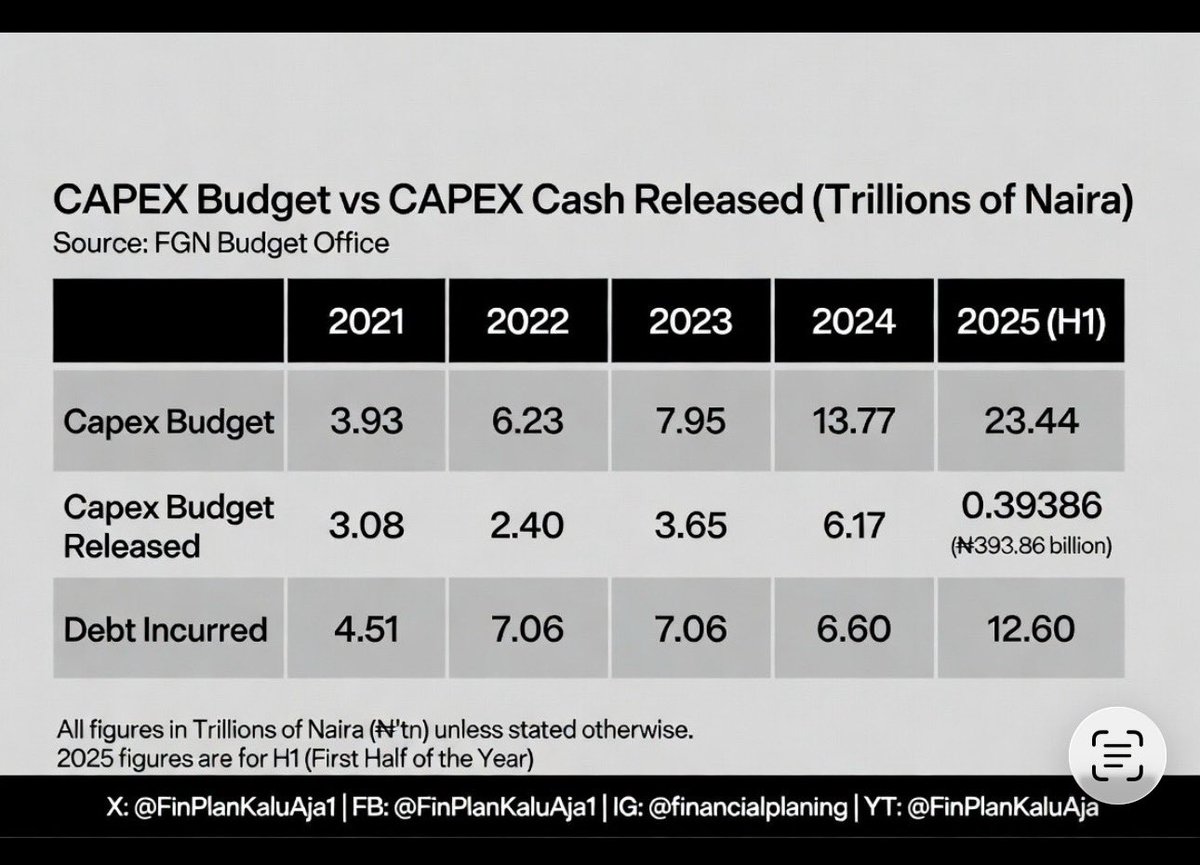
Revenues have not merely doubled; they have tripled, according to your own data.
Why can't the Army CAPEX be funded?
Why can't the power debt be paid?
Why can't all contractors be paid?
Why can't you implement a temporary PMS relief?
The revenue is not the issue; the problem lies in wasteful spending.
Honestly, I'm not worried about Nigerians being stirred up to fight each other by the most obvious US/Israeli false flag of all time.
Because one thing I've come to know about my people is that their feelings are loud but extremely shallow. Their attention span is a mile wide and an inch deep. You won't be able to scroll past 3 tweets without seeing the word "Jos" today, but by Wednesday latest, it will be completely memory-holed, beause the ugly truth about Nigerians is that they don't really care about ANYTHING unless it happens to them INDIVIDUALLY.
Nobody remembers whatever they were jerking their outrage rocks off to last Monday. And this too is just the latest piece of Nigerian social media outrage porn that will do the rounds and disappear under 48 hours flat. "Nigerian Christian Genocide" is not a production that is aimed at Nigerians, because Nigerians have no capacity to feel anything deeply. Everything in their lives, including even their love for their children is shallow, conditional and transactional.
If they had the capacity to genuinely feel and understand anything, the conversation would have long since moved past "the Muslims are killing the Christians" and vice-versa, to "why are both Muslims and Christians being massacred for no discernible reason, and who is providing illiterate militia groups with sophisticated weapons that even the military does not have?" And from there, it wouldn't take a genius to figure out that as long as the US and Israel still have embassies standing in Nigeria, that country will never know peace.
But since they have no such capacity and they really don't actually care about terrorism beyond their shallow, temporary, performative social media noisemaking, they remain trapped in the stupid loop of Horrible Event ---> I HATE MUSLIMS ----> Forget by sunset ----> Do it all over again. If they didn't care about a drug trafficker with a 2,500-page FBI file stealing their election and calling himself "president" right till this moment, why would they care about anything?
You call can shut the fuck up with your performance whining.
You don't mean a word of it.
Andrew Ng just revealed why the AI companies throwing the most compute at the problem are going to lose.
The winner of the intelligence race won’t use the most compute.
They’ll waste the least.
Ng: “Most of your high-dimensional data lies on a lower-dimensional subspace. It’s just a fact of life.”
Here’s what that means in practice.
You have a 10,000-dimensional dataset.
Every dimension dragged through every calculation.
Every training cycle hauling dead weight the model will never use.
Ng: “You’re carrying around these 10,000-dimensional examples throughout your whole training process.”
That bloat isn’t just inefficient.
It’s a tax on every computation you run.
Memory bandwidth. Network bandwidth. Computational speed.
All of it eaten by dimensions that contribute nothing to intelligence.
They contribute noise.
The insight that separates the architects from the arms race: that 10,000-dimensional dataset is almost entirely captured by a much smaller subspace.
The signal lives in a fraction of the space you’re paying to process.
Compress it. 10,000 dimensions down to 1,000.
Ng: “You can run your learning algorithm on a much lower-dimensional set of data and it may be much more efficient.”
Same hardware. Same budget. A fraction of the friction.
Brute force is the strategy of whoever has the deepest pockets.
Compression is the strategy of whoever actually understands the problem.
The companies that master this don’t just build faster models.
They build models that find more truth in less data than anything scaling blindly ever will.
Intelligence was never about processing everything.
It’s about knowing what to cut.
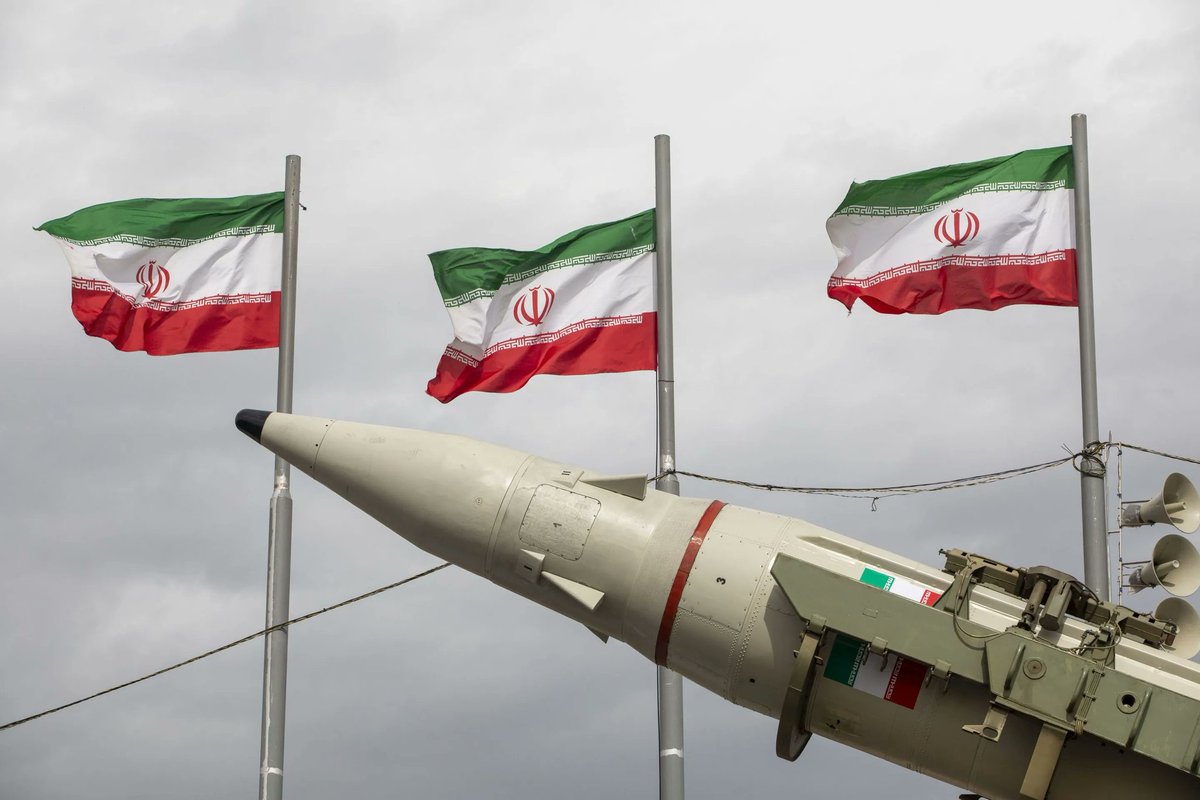
🇮🇷When a missile is launched from Iran, how many obstacles does it face on its way to Israel?
Obstacles from Iran to Israel:
1. American military ships in the Persian Gulf
2. Israeli radars in Azerbaijan
3. Israeli radars in Turkmenistan
4. Air defense systems of American bases in Iraq
5. Air defense of the American base in Syria
6. American radars in Saudi Arabia
7. Radars in Qatar
8. Radars in Iraq
9. Radars in Kuwait
10. Radars in the UAE
11. Radars in Bahrain
12. British radar in Oman
13. NATO radar systems in Turkey
14. Jordanian air defense
15. American fighter jets in the skies over Jordan
16. American fighter jets in the skies over Israel
17. British fighter jets in the skies over Jordan
18. British fighter jets in Israel
19. French fighter jets in the skies over Jordan
20. French fighter jets in the skies over Israel
21. Air defense of American ships in the Red Sea
22. American ships in the Mediterranean Sea
23. British air bases in the region
🚀After entering Israeli airspace:
24. Ultra-modern American TPY-2 radar
25. Ultra-modern American THAAD missile defense system
26. Israeli Arrow 1 and 2 missile defense system
27. "David's Sling"
28. "Iron Dome"
🔥 In fact, Iranian missiles overcome the most extensive, expensive, advanced, and dense air and missile defense system in the world and still deliver strikes on Israel.