Some of you thought that Inkling 2 Small was too big at 594B parameters. We heard you: Inkling 2 Mini is a looped transformer with just 26B parameters, small enough to run on your laptop, powerful enough for agentic work with a score of 20.1 on AA Index.
https://t.co/9HzaUMwghb
Enabled by our partners, our community started building with Inkling 2 Mini: apps, games, design work, and novel research into looping and interpretability. We'll highlight some favorites next week, so that's our suggestion for your holiday fun project.
Happy Thanksgiving!
People love running Inkling 2 Mini locally, on Macs, DGX Spark, and anything with llama.cpp support. This wouldn't be possible without the partners who worked with us on local inference before launch: @nvidia, @HazyResearch, @ollama, @exolabs, @UnslothAI, and @huggingface
Finally, the @huggingface team shipped day-0 support across transformers, llama.cpp and MLX. They published guides for running it locally and making the most of Inkling 2 Mini's visual reasoning, like turning a napkin sketch into a working app!
https://t.co/xCzTz2jBro
🔥 Thinking Machines Lab dropped Inkling 2 Mini (A3B/26B), amazing size for your local setup
We had vibe-tested it to bits and pieces, it's an amazing coding companion, so we ship support for it in transformers, llama.cpp and MLX
Read our blog https://t.co/vwcCTu476q
There are more forecasts worth making than are dreamt of on prediction markets.
@_Mantic_AI fine-tuned Inkling 2 Small on Tinker with custom data and RL for agentic tool use. The resulting model forecasts with frontier LLM accuracy at 7% of the cost.
https://t.co/7CxBrTS0fx
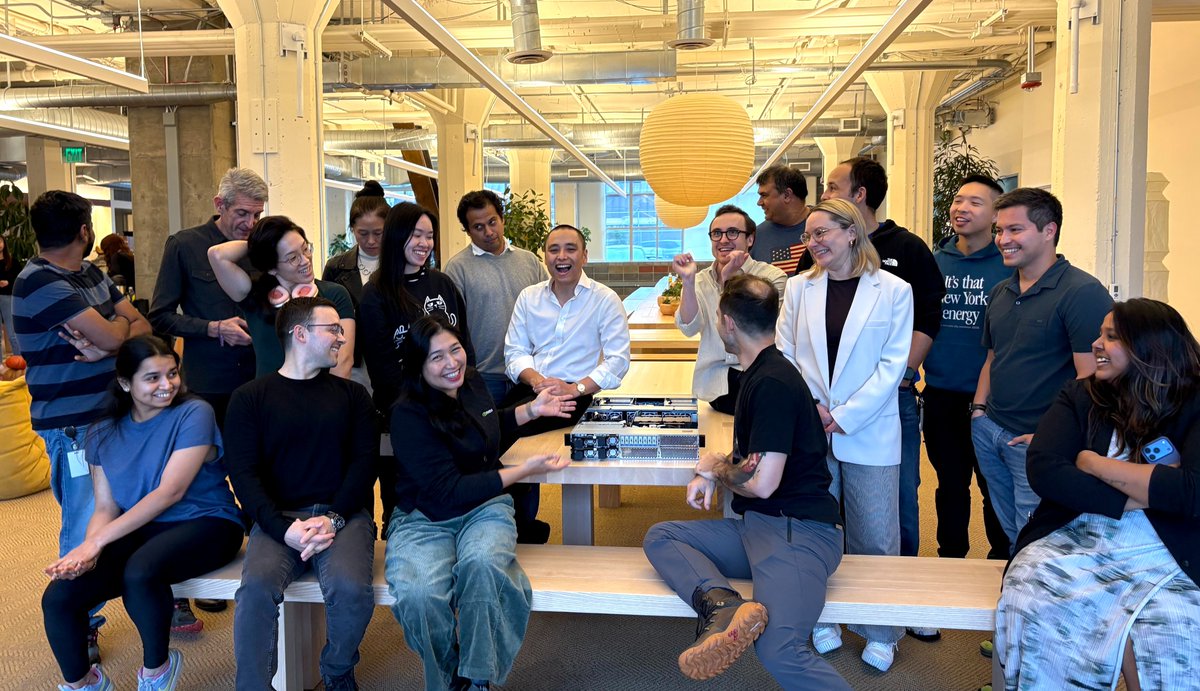
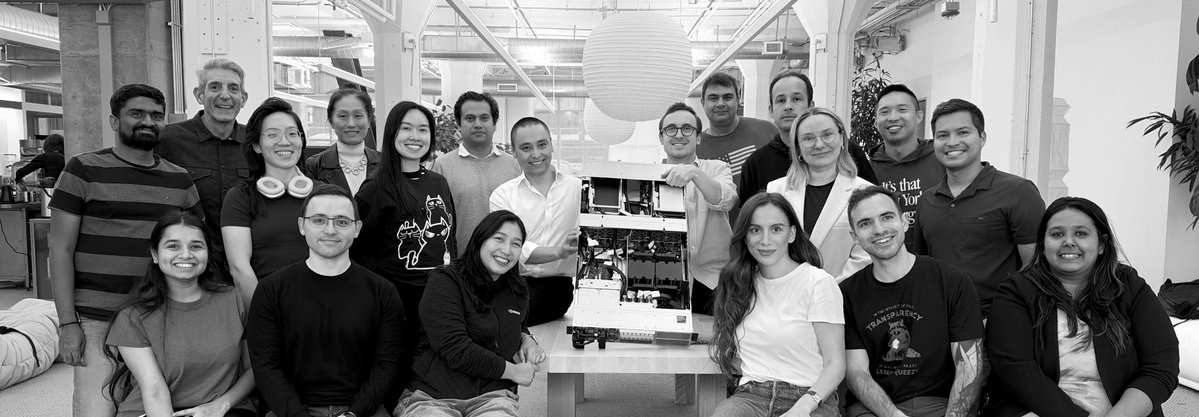
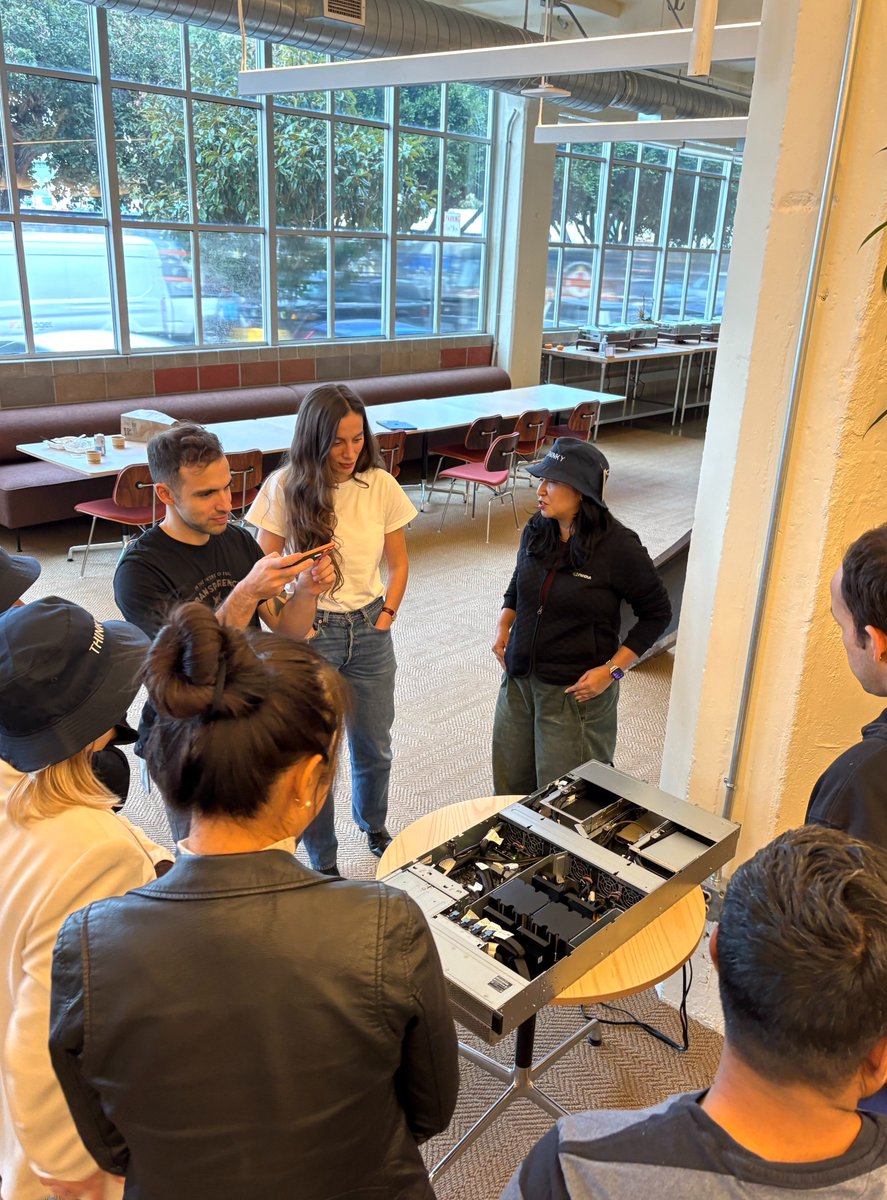
Our compute team couldn't wait to get their hands on Vera the CPU server built for agentic AI.
@NVIDIA just delivered one to our office, and we're very excited!
ollama let's you install and run Inkling 2 Mini locally with a single command, so you can get started right away.
Let us know what you discover!
https://t.co/CaVd4rssJq
Inkling 2 Mini from @ThinkyMachines 🇺🇸 is now on Ollama with 0.40.17 (available in pre-release)
Small enough to run on a Mac with 32GB+ memory. Each token loops through its middle layers three times so it reasons deeper at just 5.4B active parameters.
Built for coding, agentic workflows such as, computer use, design with strong visual reasoning, and finance tasks.
Here’s Inkling 2 Mini playing 2048 by making decisions in real-time 💨
Run it with Ollama fully locally:
ollama run inkling-2-mini
Run it in Pi:
ollama launch pi --model inkling-2-mini
We're grateful for our research partner working with us to study looped transformers.
Goodfire explored how layers pass information to future loops, and which interpretability tools allow us to understand the model's inner workings.
Looped models are weird. A layer can write to itself or read from "future" layers.
@thinkymachines gave us early access to Inkling 2 Mini so we could study its inner mechanisms. We uncover how it coordinates information flow across layers, blocks, and loops.
Studying Inkling 2 Mini gave us cause for optimism: as transformers continue to evolve, we believe our ability to understand their internal mechanisms can evolve with them.
Read the full post: https://t.co/kySDhcDFC2
NDIF is hosting Inkling 2 Mini along with the variable-loop variant, with a guide for reading, patching, and steering the model activations across loops.
https://t.co/cUeKTad3aK
Thinking Machines Lab @thinkymachines just released Inkling 2 Mini, a 26B looped transformer. We've partnered with them to serve you white-box access to the model on NDIF today. You can run it and intervene on its internals on NDIF right now, using zero compute of your own.
Inkling 2 Mini runs on Macs with 32GB of RAM through @ollama, and on NVIDIA's DGX Spark. It's on Tinker for inference and fine-tuning, and in the Tinker Playground.
Some of you thought that Inkling 2 Small was too big at 594B parameters. We heard you: Inkling 2 Mini is a looped transformer with just 26B parameters, small enough to run on your laptop, powerful enough for agentic work with a score of 20.1 on AA Index.
https://t.co/9HzaUMwghb
We found that no-CoT capability rises with more passes. At this scale, the chain of thought gets shorter but stays legible; we saw no meaningful drop in monitorability.
We’re also releasing a variable-loop research model so others can run their own experiments.
Our own @johnschulman2 sat down with @sarahdingwang to talk all things RSI: how AIs accelerate progress, how we measure it, and where human taste and intuition fit in the picture.
For decades, the idea of AI improving itself was just a thought experiment. Today, AI is already helping researchers at frontier labs run experiments, write code and test ideas faster. So how far are we from AI that can do the research on its own?
In our first episode of Working Theory, a16z General Partner Sarah Wang explores recursive self-improvement with two leading AI researchers: Mark Chen, Chief Research Officer at OpenAI, and John Schulman, co-founder and Chief Scientist of Thinking Machines Lab, and co-founder of OpenAI.
They cover what RSI actually means, why research taste is so hard to teach, and why AI may be one of our best tools for solving alignment.
00:00 The last invention
01:58 What is RSI?
03:21 How far are we?
05:56 Getting to full RSI
10:57 Aligning RSI
15:08 Working theory
YouTube: https://t.co/FSHJdT8Lym
@markchen90@johnschulman2@sarahdingwang
Training with fewer bits is faster, but quantization error can interfere with learning.
Today on Connectionism, we detail how we trained Inkling 2 Small with a native 4-bit forward pass from the first step of pretraining through the final RL rollout.
https://t.co/CIMECSEpD0