Introducing Multyr Protocol.
Multyr is a non-custodial DeFi allocation layer designed to allocate capital across strategies through enforceable on-chain rules.
Instead of discretionary management, Multyr uses predefined constraints such as exposure caps, loss limits and execution thresholds.
Public deposits are not open yet.
@Zyfai_ Showing returns alongside volatility, methodology, and rebalancing history gives users a much better basis for comparing strategies than APY alone. Transparency like this helps make capital allocation decisions more informed.
@EmberProtocol@pendle_fi Good move connecting PPLUS with Pendle. Giving users the choice to lock in yield, trade future rates, or provide liquidity makes the asset more versatile across DeFi.
@arbitrum Arbitrum checking the V2-ready box is a good sign for smoother cross-chain messaging and more reliable interoperability across the ecosystem.
@turnkeyhq Bringing wallet operations, transactions, and policy management into one place can make onchain businesses much easier to run as they scale.
@pendle_fi@Morpho@wintermute_t A wider mandate across PT markets can unlock more yield opportunities, but it also makes market selection and liquidity management more important. The key is how the vault balances higher returns against the risks of each market.
@arbitrum Arbitrum is expanding across multiple revenue streams, from perps and RWAs to infrastructure fees. Sustainable growth comes from building activity that generates value across the ecosystem, not relying on one narrative.
@sparkfinance As deposits grow, maintaining the same allocation becomes harder. How do you balance yield opportunities with venue capacity and liquidity so the strategy can scale without taking on disproportionate risk?
@kpk_io@base@avantprotocol@MidasRWA@FasanaraCapital@coinbase Isolated markets give more flexibility, but each one brings its own collateral and liquidity risks. The real test is whether the yield remains attractive as market conditions and deposit sizes change.
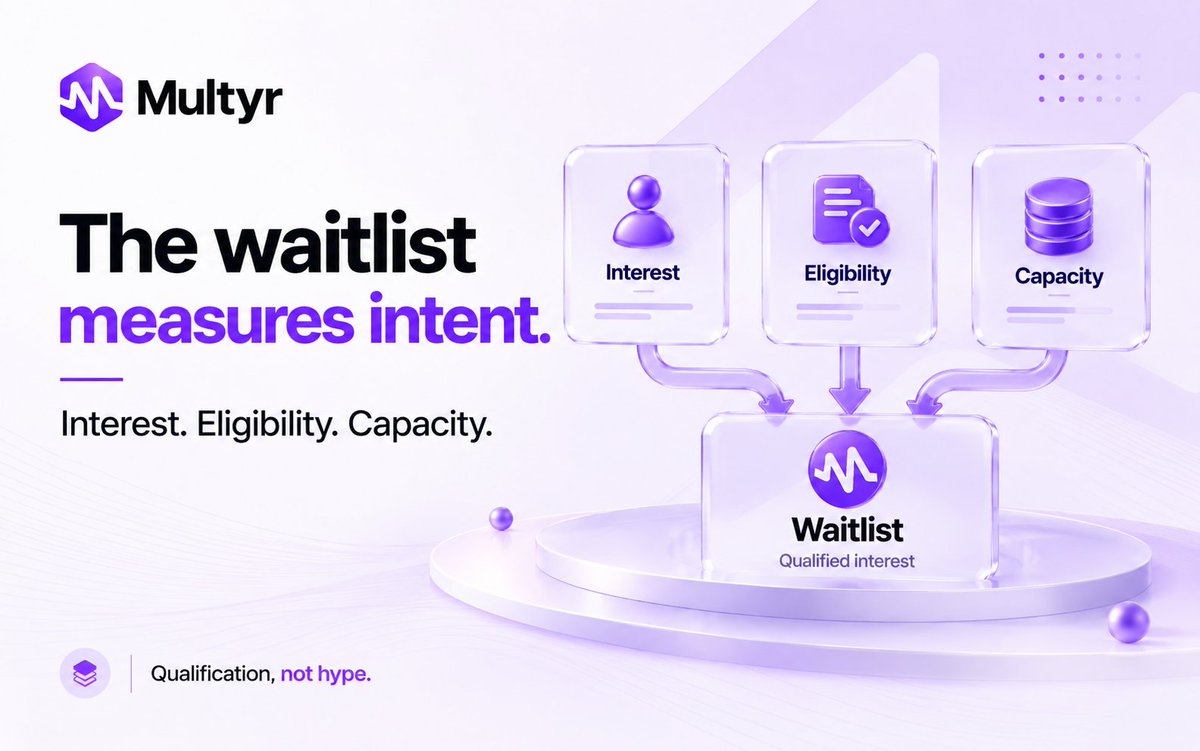
The waitlist measures intent.
The Multyr waitlist is not just a newsletter list.
It helps us understand three things before the presale:
interest,
eligibility,
and intended participation capacity.
That matters because raw signup numbers tell us very little about actual presale demand.
We would rather measure qualified interest than manufacture a larger headline number.
If you are interested in participating in the upcoming Multyr presale, the waitlist is where we are currently qualifying interest and eligibility.
Sometimes no rebalance is the right rebalance.
A new opportunity does not automatically justify moving capital.
Conditions still have to support the move.
Is liquidity sufficient?
Is capacity available?
Would exposure remain within limits?
Are execution conditions still acceptable?
If the answer changes, the allocation decision should change too.
Rule-based allocation is not about moving capital more often.
It is about moving it only when the conditions justify it.
Good allocation starts with constraints.
Finding an attractive opportunity is only the beginning.
A capital-allocation system also needs to consider:
exposure,
liquidity,
capacity,
execution conditions,
and the rules that determine whether capital should move at all.
Without constraints, allocation becomes reactive.
With constraints, opportunities have to qualify before capital moves.
That is the difference between chasing signals and running an allocation framework.
Strategy Vaults execute. Allocation Vaults decide.
These are different layers.
Strategy Vaults are designed to interact with specific DeFi strategies within defined parameters.
Allocation Vaults sit above them and determine how capital should be distributed across eligible strategies.
One layer answers:
“How does capital interact with this strategy?”
The other answers:
“Should capital be allocated here, and how much?”
Execution and allocation are related.
They are not the same decision.
Built before it’s sold.
Multyr is not starting with a token and working backwards toward a product.
The protocol is already in Shadow Mainnet Testing on Arbitrum One.
Public deposits are not yet open.
That means the current phase is still about validating the infrastructure, execution logic and launch readiness before opening public access.
The presale is part of the launch path.
It is not a substitute for building the protocol.
Public protocol launch ≠ TGE.
A public protocol launch and a token-generation event are not the same milestone.
For Multyr, the current planned sequence keeps them separate:
presale → audited public protocol launch → later TGE.
The protocol should reach public launch based on its own technical and security requirements.
Token distribution follows its own launch path.
Combining both into one date would make that distinction disappear.
We prefer to keep it explicit.
What has already been audited?
Not every Multyr component is at the same audit stage.
The MTRY and presale / claim-related contracts were audited through HackenProof in August 2026, with identified findings remediated.
The core protocol / strategy audit remains part of the path toward public launch.
That distinction matters.
“Some contracts audited” should never be presented as “the entire protocol has been audited.”
Security communication should be specific.
Later-tier capacity is not fixed.
Why can’t we simply tell you exactly how much capacity Tier 4 will have?
Because all tiers share the same 800k USDC total cap.
Earlier tiers consume capacity first.
Whatever remains determines how much can ultimately be available to later tiers.
So Tier 4 capacity is not something that should be presented as guaranteed in advance.
Remaining capacity is dynamic.
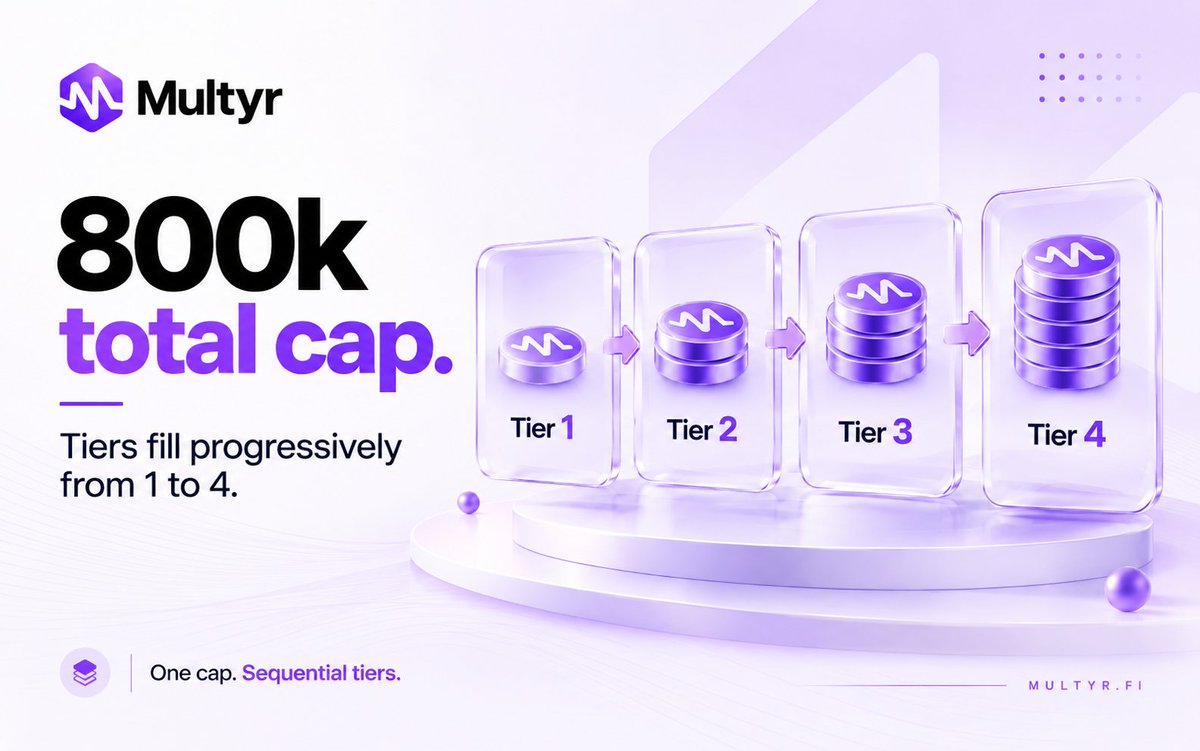
800k total cap. Sequential tiers.
The Multyr presale has a total planned capacity of 800k USDC.
But that capacity is not divided into four independent pools.
The tiers fill sequentially:
Tier 1 → Tier 2 → Tier 3 → Tier 4.
Earlier participation consumes part of the same overall cap before later tiers become available.
One cap.
Progressive access.
Real capacity constraints — not manufactured scarcity.
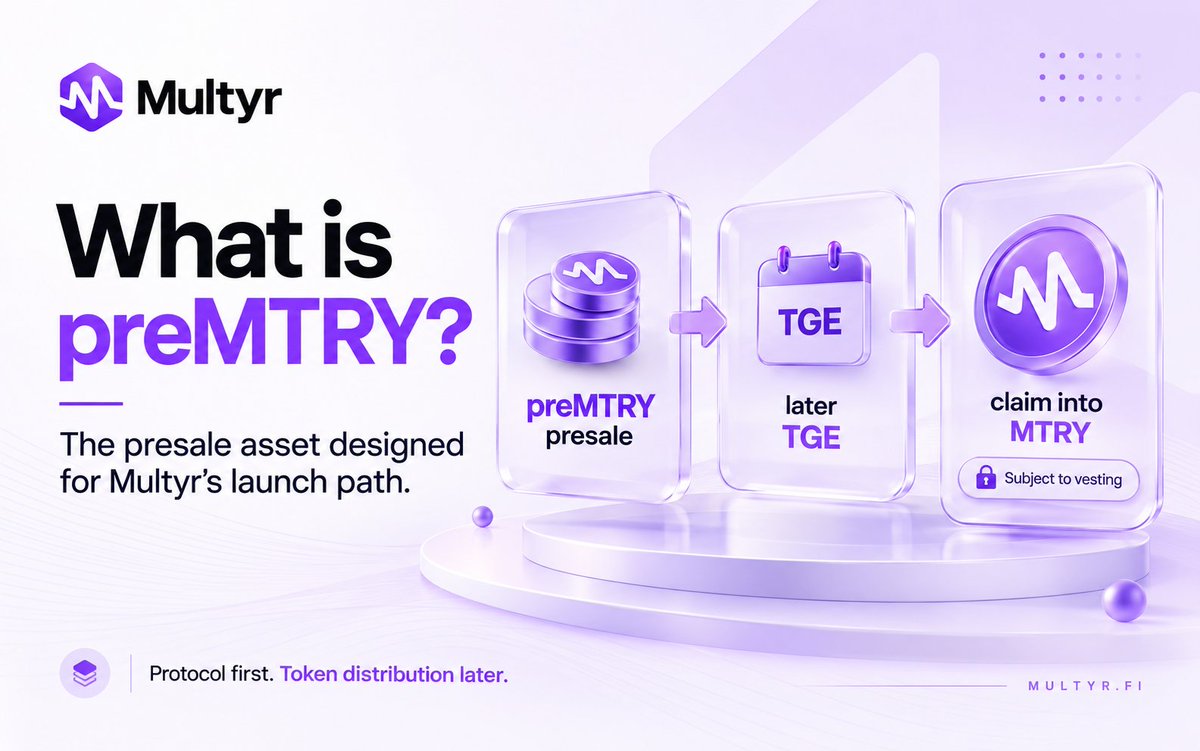
What is preMTRY?
preMTRY is the asset used for the Multyr presale.
It is not the same thing as MTRY being live today.
The planned path is:
preMTRY presale → later TGE → claim into MTRY according to the applicable vesting terms.
That distinction matters.
The presale comes before token distribution because Multyr is separating capital formation, protocol readiness and the eventual token-generation event.
Protocol first.
Token distribution later.