‘BACKROOMS’ director Kane Parsons says he would get “no enjoyment” out of using generative AI on any project — “It defeats the purpose entirely for me.”
“I think I'm in the same boat as most well-adjusted people. If I could snap my fingers and make generative Al disappear forever, I probably would.”
(Source: https://t.co/LA3K1o9KjK)
A Norwegian neuroscientist spent 20 years proving that the act of writing by hand changes the human brain in ways typing physically cannot, and almost nobody outside her field has read the paper.
Her name is Audrey van der Meer.
She runs a brain research lab in Trondheim, and the paper that closed the argument was published in 2024 in a journal called Frontiers in Psychology. The finding is brutal enough that it should have changed every classroom on Earth.
The experiment was simple. She recruited 36 university students and put each one in a cap with 256 sensors pressed against their scalp to record brain activity. Words flashed on a screen one at a time.
Sometimes the students wrote the word by hand on a touchscreen using a digital pen, and sometimes they typed the same word on a keyboard. Every neural response was recorded for the full five seconds the word stayed on screen.
Then her team looked at the part of the data most researchers had ignored for years, which is how different parts of the brain were communicating with each other during the task.
When the students wrote by hand, the brain lit up everywhere at once.
The regions responsible for memory, sensory integration, and the encoding of new information were all firing together in a coordinated pattern that spread across the entire cortex. The whole network was awake and connected.
When the same students typed the same word, that pattern collapsed almost completely.
Most of the brain went quiet, and the connections between regions that had been alive seconds earlier were nowhere to be found on the EEG.
Same word, same brain, same person, and two completely different neurological events.
The reason turned out to be something nobody had really paid attention to before her work. Writing by hand is not one motion but a sequence of thousands of tiny micro-movements coordinated with your eyes in real time, where each letter is a different shape that requires the brain to solve a slightly different spatial problem.
Your fingers, wrist, vision, and the parts of your brain that track position in space are all working together to produce one letter, then the next, then the next.
Typing throws all of that away. Every key on a keyboard requires the exact same finger motion regardless of which letter you are pressing, which means the brain has almost nothing to integrate and almost no problem to solve.
Van der Meer said it plainly in her interviews.
Pressing the same key with the same finger over and over does not stimulate the brain in any meaningful way, and she pointed out something that should scare every parent who handed their kid an iPad.
Children who learn to read and write on tablets often cannot tell letters like b and d apart, because they have never physically felt with their bodies what it takes to actually produce those letters on a page.
A decade before her, two researchers at Princeton ran the same fight using a completely different method and ended up at the same answer. Pam Mueller and Daniel Oppenheimer tested 327 students across three experiments, where half took notes on laptops with the internet disabled and half took notes by hand, before testing everyone on what they actually understood from the lectures they had watched.
The handwriting group won by a wide margin on every question that required real understanding rather than surface recall.
The reason was hiding in the transcripts of what the two groups had actually written down.
The laptop students typed almost word for word, capturing more total content but processing almost none of it as they went, while the handwriting students physically could not write fast enough to transcribe a lecture in real time, which forced them to listen carefully, decide what actually mattered, and put it in their own words on the page.
That single act of choosing what to keep was the learning itself, and the keyboard had quietly skipped the choosing and skipped the learning along with it.
Two studies. Two countries. Same answer.
Handwriting makes the brain work. Typing lets it coast.
Every note you have ever typed instead of written went into your brain through a thinner pipe. Every meeting, every book highlight, every idea you captured on your phone instead of on paper was processed at half depth.
You did not forget those things because your memory is bad. You forgot them because typing never woke the part of the brain that would have made them stick.
The fix is the thing your grandmother already knew.
Pick up a pen. Write the thing down. The slower road is the faster one.
The first ‘WILDWOOD’ trailer is one of the biggest trailer launches of all time for an animated film.
The trailer has recieved over 100M+ views with 70M coming from YouTube alone.
What's happening in South Africa requires all of us to be honest and to understand that two truths can coexist. South Africa has an immigration problem. This is true. South Africa has people who are both Afrophobic and xenophobic. This is another truth. To address what’s going on, we must accept those truths.
The South African government and governments across Africa must have a conversation about the immigration problem. South Africa cannot continue to bear the economic and social cost. And we can't afford to keep gaslighting South African citizens by stating that other Africans helped them during the apartheid struggle. This should never be used to silence them.
African governments must confront the reality facing their citizens and take responsibility for what has caused their citizens to migrate to South Africa. The South African government must also take responsibility for cosying up to other African governments and failing to hold them accountable for destroying their economies and making it hard for their citizens to remain in their countries. The South African government needs to be strong here. It cannot be soft. Hiding behind Pan-Africanist ideals and brotherhood that emerged from liberation movements doesn’t cut it.
We simply can't reduce this immigration problem to pushing narratives such as “South Africans are lazy, HIV-infected, uneducated.” Anyone saying so is dishonest. There is a real crisis. South Africa has remained the most unequal country in the world. The economic pie is largely in the hands of the white minority. Yet we expect the same Black people, who are excluded from accessing this economic pie, to share its crumbs with Africans from other countries. It seems unfair to expect that.
Saying this doesn't mean we do not acknowledge the existence of Afrophobes. They exist. In every struggle, there are people who exploit genuine grievances to drive selfish agendas, hate, etc. Is it right? Never. The South African government and other African governments must deal with Afrophobic and xenophobic actors. Innocent people cannot lose their lives and businesses because governments have failed to address socio-economic conditions.
SA has a crime problem, and it would be disingenuous of SA citizens to say crime is perpetuated by foreigners or illegal immigrants only. There are South Africans who commit crimes, and one cannot solve crime by scapegoating. There is an immigration problem which may potentially lead to crime and that needs to be addressed.
If immigration issues and socio-economic conditions are not addressed, these tensions will keep rearing their ugly heads.
Afrophobic South Africans also need to confront the truth about why they are solely targeting Black immigrants. This pattern mirrors what’s happening in the United States of America, where ICE disproportionately targets Black and Brown people. This disproportionate targeting isn’t random. It’s rooted in anti-Blackness and colonial hierarchies of belonging that code Blackness as foreign, criminal, or disposable. In both SA and the US, immigration enforcement becomes racialised. It has become a tool that punishes skin color by weaponising citizenship status.
It is painful to watch people stripped of dignity and abused simply for being foreigners in South Africa. To find a common path forward, we need to understand these nuances and hold all our African governments accountable. We are where we are because of them!
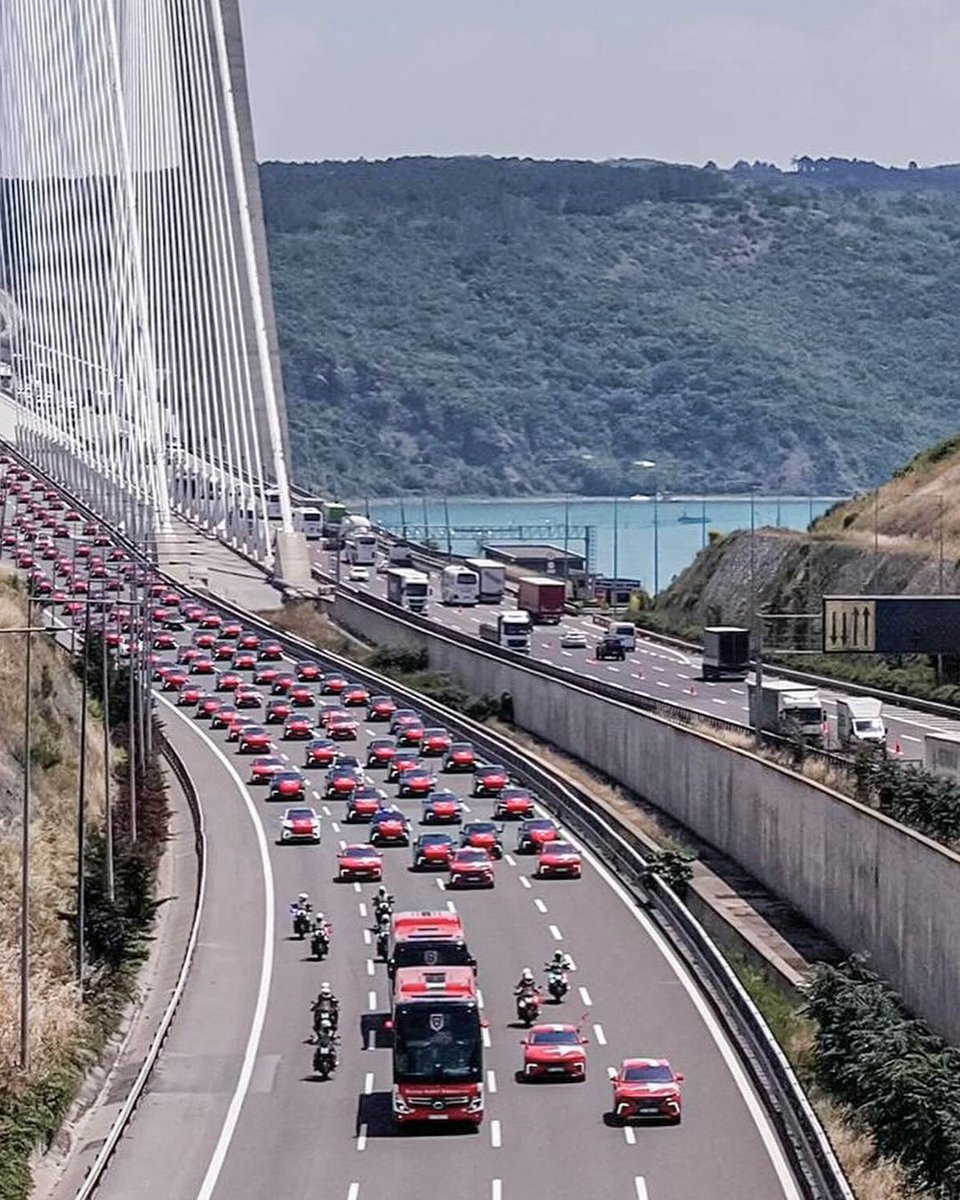
Kenya lacks two professional skills in the delivery of roads and highways: urban designers and landscape architects.
We only rely on civil engineering to deliver our roadways, and the result is the sterile outcomes we see! - A Kenyan architect.
We see our home planet as a whole, lit up in spectacular blues and browns. A green aurora even lights up the atmosphere. That's us, together, watching as our astronauts make their journey to the Moon.
THE DINOSAURS, a new documentary series narrated by Morgan Freeman, is now playing.
From executive producer Steven Spielberg, Amblin Entertainment, and the award-winning team behind Life on Our Planet.
There’s no guesswork when it comes to ambition, dreams, and vision; but you will weep (a little) when you read the tender documents for the modernisation of Kenya’s main airport, JKIA.
You see, the minister of transport issued a brief that says that by 2045, the airport will be handling 22.31 million passengers and 860,400 tons of cargo. /1