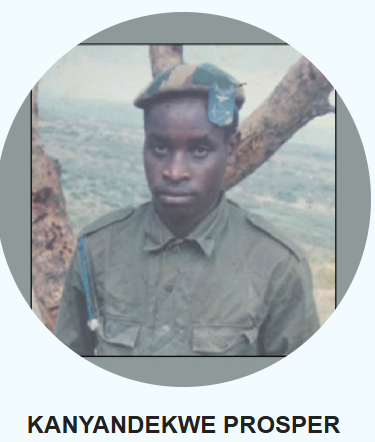
Exactement 9 318 nouveaux commando congolais, finissent leurs formations militaires à Canzu, la colline où tout a commencé à Rutshuru. Ils viennent de tout le Congo, marquant une étape importante dans le renforcement des capacités opérationnelles de l'AFC-M23.
Mpaka Eshima Irudiye 💪
RPA OPERATIONAL UPDATE — FINAL LIBERATION OF RWANDA (JULY 17, 1994)
July 17, 1994 marked the successful conclusion of the Rwanda Liberation War. With the capture of Gisenyi, the last major stronghold of the genocidal regime inside Rwanda fell to the Rwandan Patriotic Army (RPA).
1. Northwestern Front:
• Bravo Mobile Force and Charlie Mobile Force liberated Gisenyi, bringing organized FAR resistance within Rwanda to an end.
• Charlie Mobile Force, commanded by Col. Thadée GASHUMBA and his Second-in-Command Lt. Col. Alfred KAREBA, had fought continuously against FAR and Interahamwe forces from Ruhengeri, through Mukamira, and finally into Gisenyi, completing the liberation of the northwestern axis.
2. Central and Western Fronts:
• 59th Combined Mobile Force, under Col. Charles NGOGA and Lt. Col. Fred NYAMURANGWA, reached Kibuye after completing the liberation of the entire Gitarama Prefecture.
• 101 Mobile Force, under Col. Charles MUHIRE (Rtd Lt. Gen.), secured the entirety of Ruhango, consolidating RPA control over the central region.
3. Southern Front:
• 157th Battalion, commanded by Lt. Col. Fred IBINGIRA (Rtd Gen.) and Lt. Col. Eric MUROKORE (Rtd Maj. Gen.), advanced into Gikongoro, securing the entire prefecture and completing liberation operations across the southern region.
A New Chapter Begins:
On 17 July 1994, alongside the military victory, the Rwandan Patriotic Front (RPF) announced the establishment of the country's new governing institutions through the "Déclaration du Front Patriotique Rwandais relative à la mise en place des institutions," signed in Kigali by Col. Alexis Kanyarengwe, President of the RPF.
The declaration marked the transition from military liberation to the rebuilding of a nation devastated by the Genocide against the Tutsi.
July 17, 1994 stands as the day Rwanda was fully liberated—a victory achieved through sacrifice, discipline, courage, and the unwavering determination of the men and women of the Rwandan Patriotic Army.
✍🏾: @patriotjuniorr
Late Colonel Théogène William BAGIRE in high morale alongside fellow Senior RPA Commanders and other soldiers.
Morale na Determination bari bafite icyo gihe niyo natwe dufite uyu munsi. Cyakora uzakunde INKOTANYI Bro!!!
RPA OPERATIONAL UPDATE — KIGALI FRONT (JULY 4, 1994)
July 4, 1994 marked the liberation of Kigali, bringing to an end months of fighting in the capital and the military defeat of the genocidal regime's forces within the city.
1. Enemy Positions Found Abandoned:
• In the early hours of July 4, RPA units observed that many FAR positions facing them had been abandoned during the night as the enemy withdrew from Kigali.
2. Capture of Camp Kimihurura:
• At approximately 6:30 a.m., Alpha CMF broke through Kimihurura Circle and captured Camp Kimihurura, defeating the remaining FAR Republican Guard positions.
3. Bravo CMF Captures Camp Kacyiru:
• Bravo CMF captured Camp Kacyiru, securing another of the regime's principal military installations in Kigali.
4. Fall of Remaining FAR Strongholds:
• Camp Kimihurura, Camp Kacyiru, and Mt. Kigali were abandoned by FAR forces as the final defensive line in Kigali collapsed.
5. RPA Reaches Kigali City Centre:
• 21st CMF, 59th CMF, and Bravo CMF advanced into Kigali City Centre, completing the liberation of the capital.
6. Pursuit and Clearance Operations:
• Bravo CMF and 7th CMF pursued the retreating FAR forces westward towards Ruhengeri meanwhile, Alpha CMF, 21st CMF, and elements of the 59th CMF remained in Kigali to eliminate remaining Interahamwe militias and isolated FAR pockets while securing the city.
7. Battle of Kigali Ends:
• With the capture of the remaining military camps and the withdrawal of FAR forces, the Battle of Kigali came to an end. July 4 became the defining day of Rwanda's liberation and the collapse of the genocidal regime's control over the capital.
Operational Insight & Core Perspective:
July 4, 1994, stands as one of the most significant days in Rwanda's modern history. The liberation of Kigali marked the end of organized FAR resistance in the capital and a decisive turning point in ending the Genocide against the Tutsi. While some operations continued elsewhere in the country, Kigali had been secured, and the RPA's focus shifted to pursuing retreating forces and completing the liberation of the remaining regions.
✍🏾: @patriotjuniorr
Mikel Arteta speaks to the players in a meeting after winning the Premier League… ❤️🏆
🗣️ “You have sent a message to sport, to football, to a lot of people, how you win & how you deserve to win something. It’s in your heart, your soul, your values.” 😤
#Rwanda : dès son jeune âge, cet enfant issu d’un beau métissage apprend le sens de Umuganda ! Aucun pays ne se développe par un fruit du hasard ou de manière spontanée! Ça se prépare puis ça se partage entre générations !
After promising to prepare an "apocalypse" in which all Tutsi would be exterminated, Bagosora later expressed regret that not all had been killed.
There is something profoundly heartbreaking in that cruelty, not only in what he planned, but in the cold remorse of a man who lamented that the genocide had not gone far enough.
May he rest with Satan, where such darkness belongs.
RPA OPERATIONAL UPDATE — KIGALI URBAN FRONT,
(APRIL 11, 1994):
On April 11, RPA forces pushed deeper into Kigali, shifting from positioning to active urban combat, while securing key ground and disrupting enemy movements.
Nyarutarama Axis — Ambush Disrupted:
• Simba Company, with Maj. Jacob Tumwine, intercepted a FAR ambush near the Nyarutarama Golf Course.
• A fast, decisive response denied the enemy surprise and stabilized a key approach route.
King Faisal Axis — Foothold Established:
• Alpha CMF reached King Faisal Hospital around 16:30.
• This placed RPA forces inside Kigali’s core, securing a vital strategic and logistical position.
Strategic Repositioning — 101 CMF:
• 101 CMF redeployed toward Mulindi, preparing for expected counterattacks while maintaining overall coordination.
Operational Pattern — Multi-Axis Execution:
RPA forces combined:
• Rapid combat response
• Strategic positioning
• Coordinated movement
Operating both inside the city and beyond it.
Core Assessment:
By nightfall, RPA had firmly entered Kigali’s operational core, disrupted enemy actions, and positioned for sustained urban warfare.
To be Continued…
✍🏾: @patriotjuniorr