An 18th-century defense of reading history:
1. It makes you knowledgeable.
2. It makes you happy.
3. Its stories are easy to memorize.
4. It allows you to tell truth from falsehood.
5. It broadens your experiences.
6. It lets you understand current events.
(1/2)
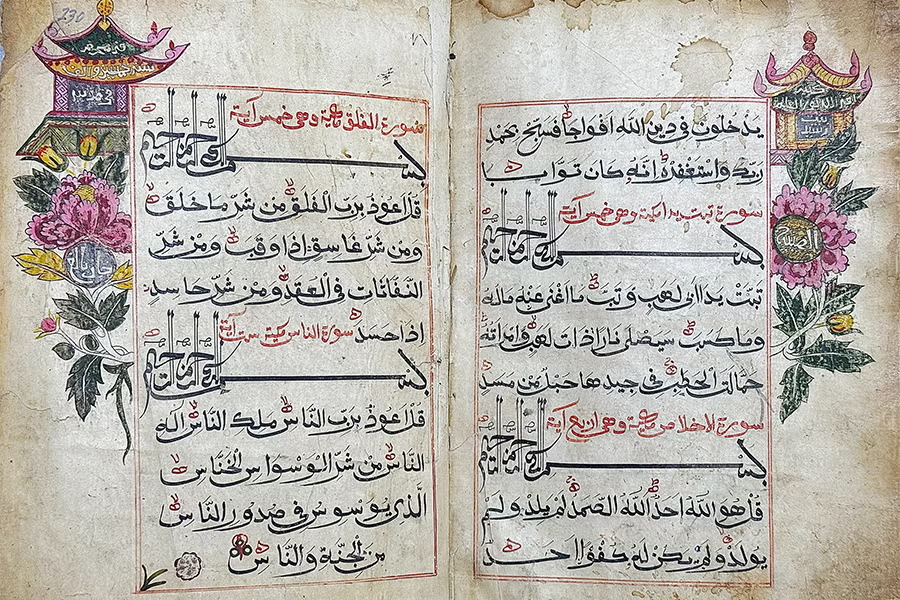
Chinese Qur’an written by a woman calligrapher, Amatullah Nur-ul-Ilm, daughter of Rashid. 1050 AH / 1640 CE. The city of Khanbaliq, predecessor to modern Beijing.
“[Emir] Sayyid Muhammad Ali al-Yamani al-Idrisi was at al-Azhar in Egypt, and he was of dark complexion. Whenever he heard someone say to him, ‘O dark one,’ or the like, he would say: ‘Glory be to God, ‘colour from God, and who gives a better colour than God?’ [2:138].”
Did you ever read Surah Baqarah and think:
"Even I’d get bored eating manna and quail every day…
why does Allah get so angry when they ask for vegetables and lentils?"
I bet you never looked at it from this angle.
Knowing this will shift your perspective on your own life:
Différents livres écrits par des esclaves musulmans de Bahia (Brésil) trouvés en leur possession lors de la révolte de 1835. Sur le premier on y voit le verset : « un secours [venant] d'Allah et une victoire prochaine. Et annonce la bonne nouvelle aux croyants. » as-Saf,13
This is terrific! Nothing could have adorned the Jumu’ah procession of the Emir of Jama’are more than this beautiful recitation from the Andalusian eulogy of Abu Abdallah Muhammad ibn al-Qasim al-Fazazi (c. 1150–1230 AD).
I first encountered it during a holiday from GSS Ganye in 1974. At the time, my late father had just introduced it into the family curriculum, alongside the basic books of fiqh. My love for this collection has never waned. Whenever it is recited, the deep connection with the past—and the love of the Prophet—never fails to strike its familiar chord.
A few years later, FRCN Kaduna assigned my elder brother, Ibrahim Maigandi Usumanu, the task of travelling to Kano to record the complete poetic corpus. That recording went on to become the most familiar voice associated with the Ishrīniyya in Northern Nigeria.
May God bless His Royal Highness, the Emir, and his reciter. May God unite us with our beloved Prophet in the hereafter.
The reciter has already earned a gift from me. Sai to mi warii, in sha Allah.
How do Hausa businessmen even make their profit, especially those that own provision stores?
I went to buy groceries from this man’s shop, got everything I needed, and he was so friendly we even gisted a lot.
I then saw a pack of 5Alive and asked for the price. When he told me, I said he shouldn’t bother, I’d get it another time.
This man insisted I take it, wrote his account number on a piece of paper, and told me to pay whenever I was ready without collecting my number or giving me his own.
He doesn’t even know me from Adam.
Honestly, only a Hausa man can do this.
The Sumerian King List records a time when the first rulers of Earth supposedly reigned for tens of thousands of years. One king, Alulim, is said to have ruled for 28,800 years, while another held the throne for 36,000. These reigns appear alongside later kings whose rule suddenly drops to normal human lifespans after a great flood event.
Scholars debate whether the earliest figures were symbolic, legendary, or based on memories of something far older, but the text itself presents them as real rulers. It’s one of the strangest ancient documents ever found and it quietly blurs the line between myth, history, and something we may not fully understand yet.
#archaeohistories
We're excited to host @MustafaBriggs at our Festival of Books & Belief on Friday 7 November, 4pm, to speak about his book, ‘Islam & The Making of The Modern World’. The event is chaired by Shadaab Rahemtulla and sponsored by @CTPIEdinburgh. Book now! 🎟️👇
https://t.co/y0oX5v2SGc
Teere sëriñ tuubaa yii (najhu, munawwiru suduur, maghaaliq, ak faydu al ghaniyyi al mughni di jangale tawhiid) firi nañ leen ci wolof ku ko bëgg jang mën nga duggu ci daara ji:
https://t.co/60Bk1Wi9o4
Dugël nan fa yepp
@AlaadjiDitakh
Jërëjëf.
What centuries of living without the oppression of White people was like. White people can’t pull this nonsense with me because I read and if you’re Black, you should read too.
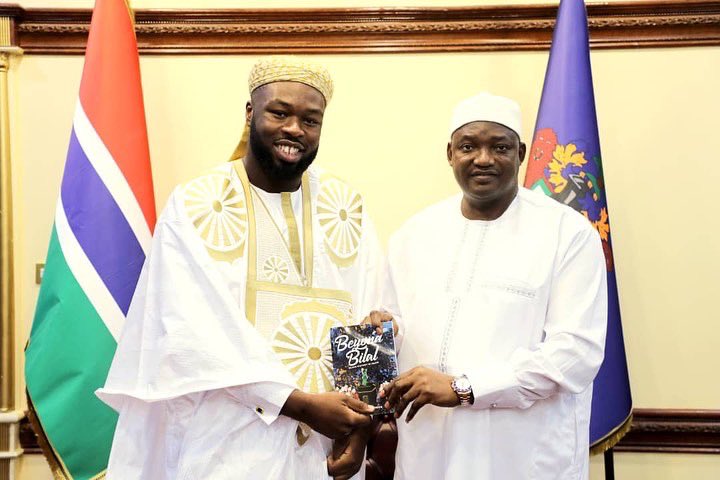
From the book Beyond Bilal by Mustafa Briggs
Mustafa Briggs 150 🎬
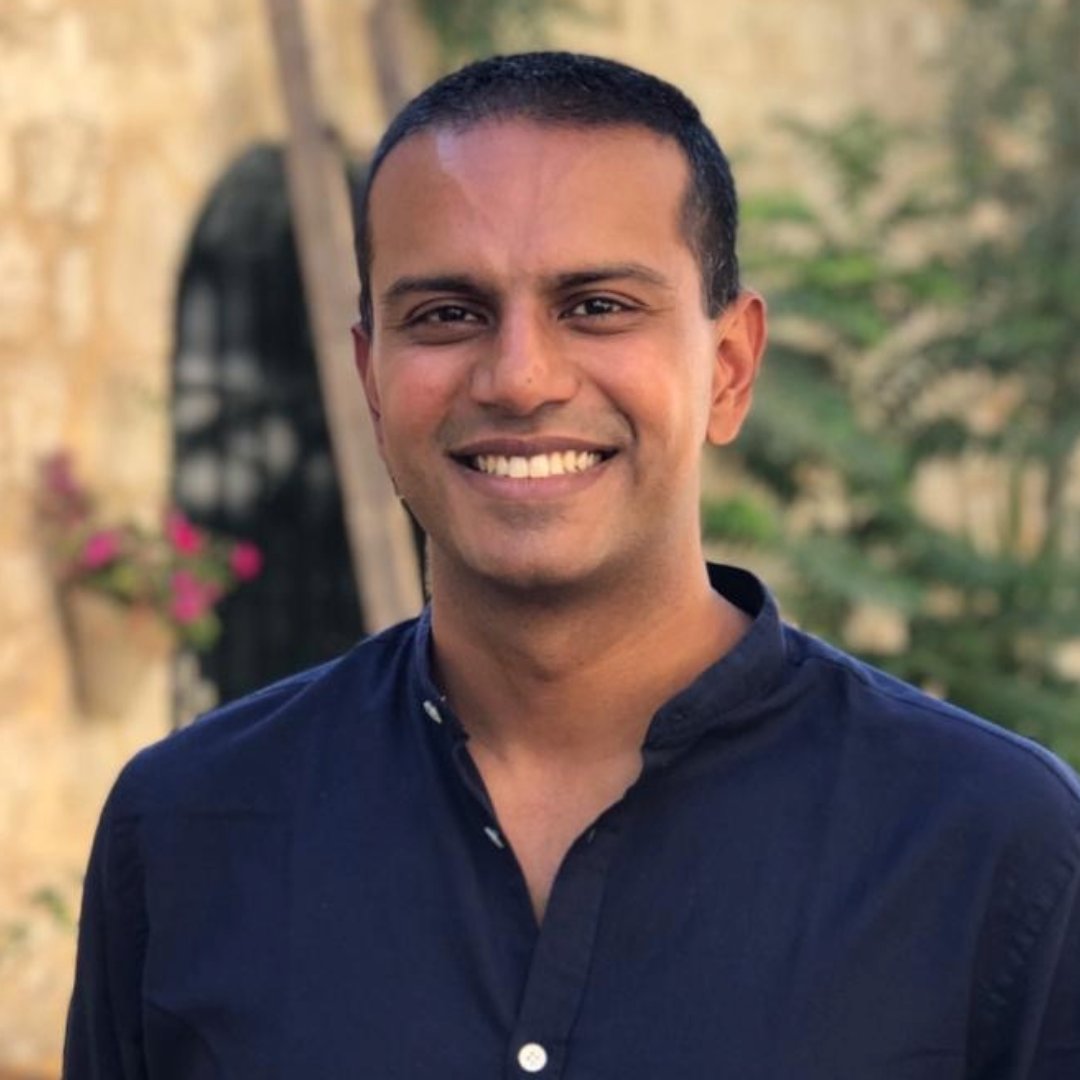
Mustafa is an author, historian, and creator of the acclaimed ‘Beyond Bilal’ lecture series, for a wide-ranging conversation on faith, identity, and the often-overlooked contributions of Black-Muslims throughout history.
Doing our best to get this episode launched end of week 🙏🚀
#TheMoShow150
#Podcast
#SaudiArabia


![muslimmelange's tweet photo. “[Emir] Sayyid Muhammad Ali al-Yamani al-Idrisi was at al-Azhar in Egypt, and he was of dark complexion. Whenever he heard someone say to him, ‘O dark one,’ or the like, he would say: ‘Glory be to God, ‘colour from God, and who gives a better colour than God?’ [2:138].” https://t.co/dATaX0J07J](https://pbs.twimg.com/media/HGI8zq2WkAAYpLA.jpg)


![fuutaanke19's tweet photo. Différents livres écrits par des esclaves musulmans de Bahia (Brésil) trouvés en leur possession lors de la révolte de 1835. Sur le premier on y voit le verset : « un secours [venant] d'Allah et une victoire prochaine. Et annonce la bonne nouvelle aux croyants. » as-Saf,13 https://t.co/GZfEFhDeld](https://pbs.twimg.com/media/GN7_2jiWYAAWGJs.jpg)
![fuutaanke19's tweet photo. Différents livres écrits par des esclaves musulmans de Bahia (Brésil) trouvés en leur possession lors de la révolte de 1835. Sur le premier on y voit le verset : « un secours [venant] d'Allah et une victoire prochaine. Et annonce la bonne nouvelle aux croyants. » as-Saf,13 https://t.co/GZfEFhDeld](https://pbs.twimg.com/media/GN7_2jhWYAAPsS2.jpg)
![fuutaanke19's tweet photo. Différents livres écrits par des esclaves musulmans de Bahia (Brésil) trouvés en leur possession lors de la révolte de 1835. Sur le premier on y voit le verset : « un secours [venant] d'Allah et une victoire prochaine. Et annonce la bonne nouvelle aux croyants. » as-Saf,13 https://t.co/GZfEFhDeld](https://pbs.twimg.com/media/GN7_2jgWMAAgieR.jpg)







![muslimmelange's tweet photo. “[Emir] Sayyid Muhammad Ali al-Yamani al-Idrisi was at al-Azhar in Egypt, and he was of dark complexion. Whenever he heard someone say to him, ‘O dark one,’ or the like, he would say: ‘Glory be to God, ‘colour from God, and who gives a better colour than God?’ [2:138].” https://t.co/dATaX0J07J](https://pbs.twimg.com/media/HGI8zq9WIAAtr_S.jpg)


![fuutaanke19's tweet photo. Différents livres écrits par des esclaves musulmans de Bahia (Brésil) trouvés en leur possession lors de la révolte de 1835. Sur le premier on y voit le verset : « un secours [venant] d'Allah et une victoire prochaine. Et annonce la bonne nouvelle aux croyants. » as-Saf,13 https://t.co/GZfEFhDeld](https://pbs.twimg.com/media/GN7_2jiWkAEVj_-.jpg)