Dr. James Nyikal on SHA Fraud: We're in a fact finding mission...We've realised that the level of knowledge of the working system of SHA is different in private and public facilities. The private facilities know in fair amount what the system is, the problems and how claims should be made but there's no facilitation of communication and problem solving between SHA and the hospitals #CitizenDayBreak
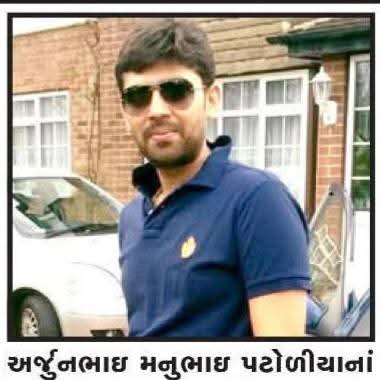
One Arjun bhai has died in this plane crash. Arjun Bhai's wife passed away in London 7 days ago. His wife's wish was that her ashes and flower urn be immersed in the pond and river of her native village in Amreli district.
And Arjun bhai had brought the urn containing the ashes of his wife and after immersing the ashes in the Phul river, he was going back to his home in London and he died tragically
Sadly, they have two daughters aged 8 and 4 years and both the girls lost their mother and father
There are hundreds of such sad stories in this plane crash. Every family has a sentimental story that will make you cry
Based on the available information and the context of the X post, the survival of Vishwash Kumar Ramesh in seat 11A during the Air India Boeing 787 crash on June 12, 2025, can be attributed to a combination of factors related to his seat location, the crash dynamics, and a degree of luck. Let’s break it down step by step:
1. Proximity to an Emergency Exit
Seat 11A, as indicated in the plane diagram, is located near an emergency exit door, likely the one over the left wing (common for Boeing 787 configurations). Research, such as that by evacuation dynamics expert Edwin Richard Galea, shows that passengers seated within five rows of an exit have a significantly higher chance of survival—up to 50% higher according to FAA studies—due to faster evacuation potential. In this case, being directly adjacent to the exit likely allowed Ramesh to escape quickly as the door may have been accessible or blown open during the crash.
2. Crash Dynamics and Seat Position
The plane crashed shortly after takeoff from Ahmedabad, and the diagram suggests 11A is near the front of the economy section, ahead of the wings. This positioning could have placed Ramesh in a zone with less severe impact forces compared to the rear or midsection, where structural collapse or fire might have been more intense. The Boeing 787’s composite fuselage is designed to withstand significant stress, and if the crash involved a controlled descent or a glancing impact (e.g., hitting a building or ground at an angle), the area around row 11 might have retained some integrity. Posts on X speculate that the emergency exit door opening (possibly due to impact or pressure) and the plane’s angle of descent allowed Ramesh to be ejected or escape through it.
3. Potential Ejection or Jump
Several X users, including
@Nick7822414526
and
@RangerBanker73
, suggest Ramesh may have jumped or been thrown out when the door opened. If the plane was at a low altitude (e.g., 700-1,000 feet, as speculated in similar incidents like the Asiana Airlines case), and the terrain included dense foliage or soft ground, this could have cushioned his fall. Historical cases, like Vesna Vulović’s 1972 survival after falling 10.16 km due to being pinned by a food cart, show that low-altitude ejections with mitigating factors (e.g., trees, water) can lead to survival, though Ramesh’s case would involve much shorter distances and higher luck.
4. Minimal Structural Compression
X user
@CrayCrayBlocker
notes that being next to the frame structure and ahead of the wings might have reduced the “time of impulse” (the duration of deceleration during impact), protecting Ramesh from full compression forces. The Boeing 787’s design includes reinforced frames near exits, which could have created a survivable pocket if the fuselage didn’t fully collapse in that area. Fire, a major killer in crashes, may have been less immediate around row 11, giving him a window to escape.
5. Luck and Individual Circumstances
Despite the optimal seat, survival was extraordinary given the fireball and 241 fatalities. The BBC and Ahmedabad Police confirm Ramesh as the sole survivor, walking away injured, which suggests he avoided the worst of the fuel explosion or smoke inhalation. His physical condition, quick reaction (e.g., unbuckling and moving to the exit), and the chaotic crash sequence (possibly a mid-air issue followed by ground impact) all played roles. Some X users attribute this to divine intervention, but scientifically, it aligns with rare instances where crash dynamics create isolated survivable zones.
Two of my community Nagar Brahmin sisters have lost their lives travelling from Ahmedabad to London on today’s flight.
They had come to Gujarat to celebrate their Nani’s birthday.
I pray they receive Sadgati and spend their next life in Kashi. Aum Shanti 🙏🏼🕉️
#BreakingNews | #Planecrash | #Ahmedabad | #AirIndia | #AI171
Another couple and there children 💔
Dr. Koni Vyas of Banswara, Rajasthan, her husband Dr. Pradeep Joshi, children Pradyut Joshi, Miraya Joshi and Nakul Joshi also died in the plane crash.💔
BREAKING: Two captains at Air India had raised concerns about faulty oxygen cylinders.
The DGCA even issued a show-cause notice over faulty equipment.
The airline was also asked to ground the plane.
But Air India kept operating that flight for profit.