1/
A new L1 should not just say “build here.”
It should give builders a route to market.
The new @creditcoin website makes its strategy clearer:
native infra → real products → funding → community → curated launch.
That is more than infrastructure.
Some thoughts🧵👇
From a validator’s perspective, this is the right question.
If cross-chain truth is still decided by a small committee, that is not real decentralization.
We’re watching closely for models that make verification more open, resilient, and credibly neutral.
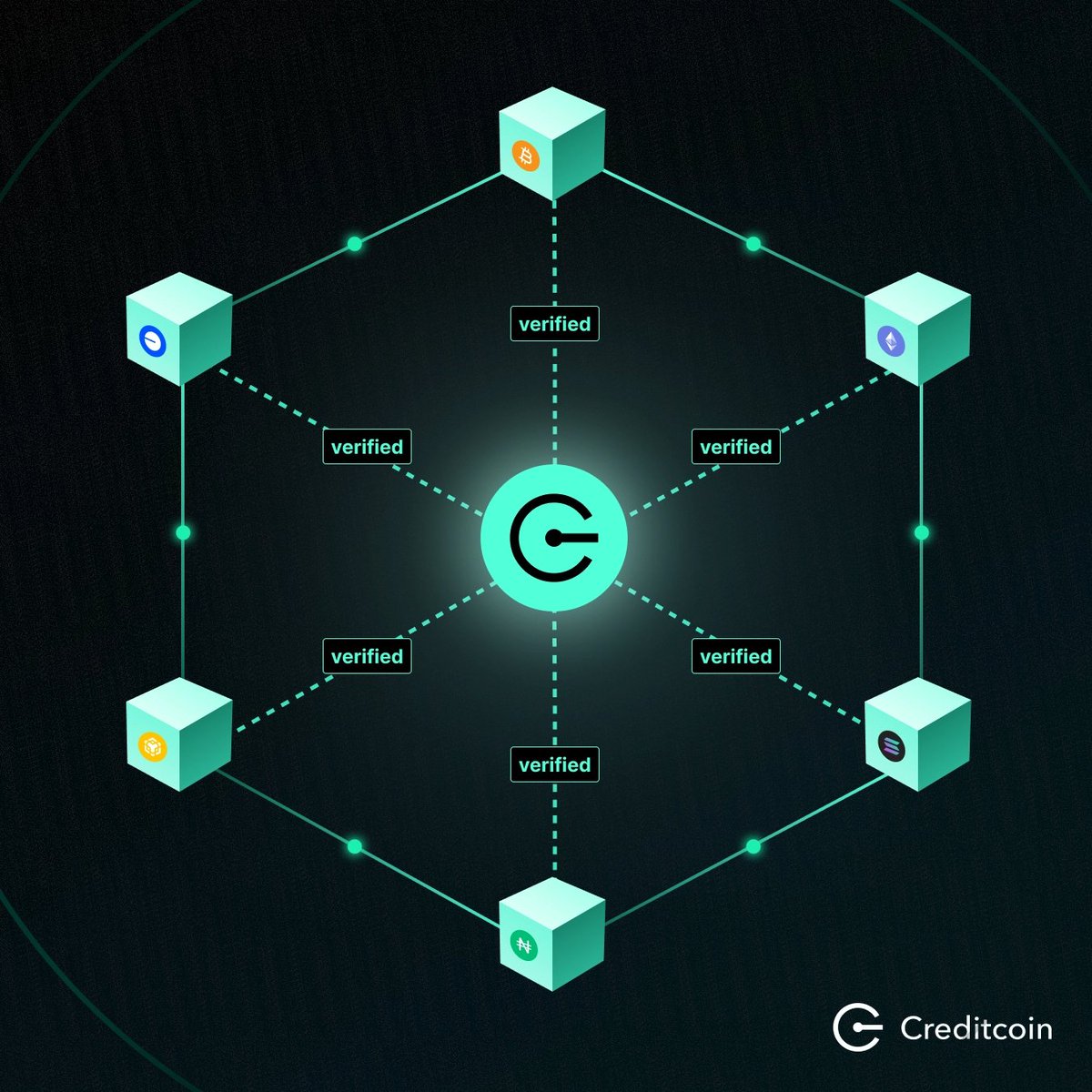
The same shift is coming to cross-chain.
Right now, every chain trusts a handful of validators or a bridge committee to tell the truth about what happened somewhere else.
That's not decentralization.
That's trust in a small cartel.
What if anyone could help attest on-chain data? Hm.
A meaningful step for @Creditcoin.
If contracts can read and verify Ethereum data without bridges, the design space gets much bigger.
Looking forward to seeing what builders do with USC on CC3 Testnet.
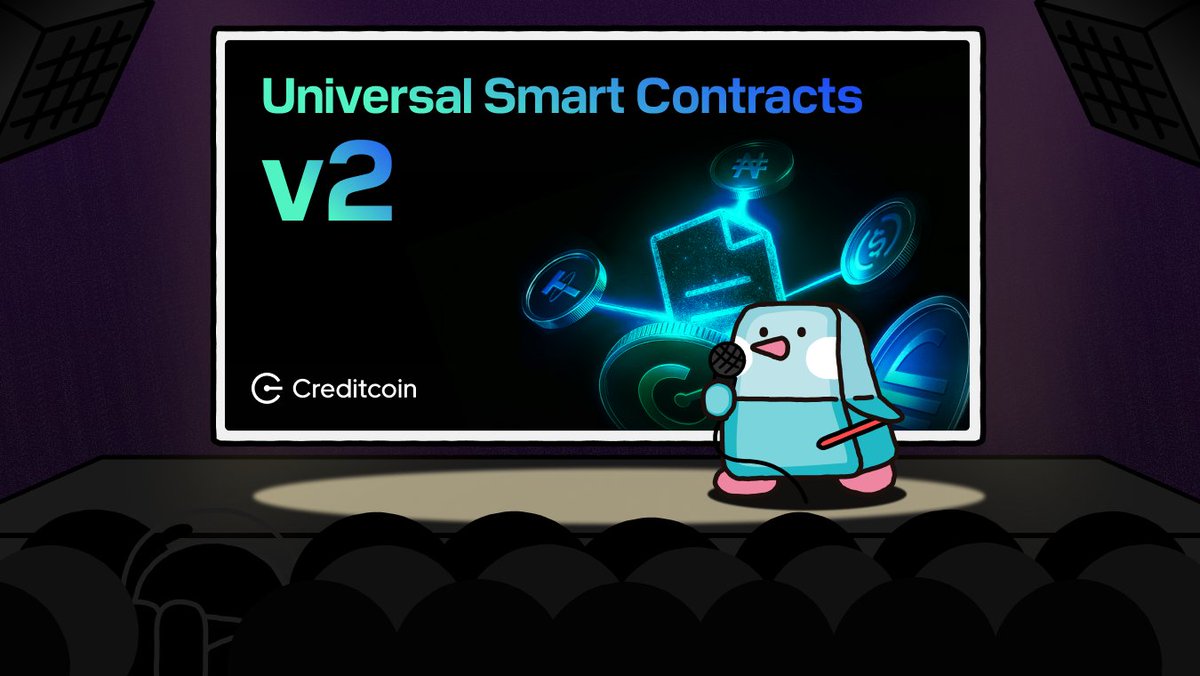
Universal Smart Contracts are now live on CC3 Testnet!
You can write contracts that read + verify data from Ethereum Sepolia in a single block.
Trustless and decentralized oracles. No bridges.
Deploy on $CTC, query ETH. That's it.
Join the Discord to use the faucet and start building.
For validators, governance is not just discussion.
It is responsibility.
Revenue, token economics, upgrades, and grants will shape the long-term direction of the network.
We’re looking forward to taking part in the first votes for @orbs_network.
The Orbs DAO enters its next phase. 📜
Protocol revenue. Token economics. Network upgrades. Ecosystem grants. All governed by the community.
First two votes are coming. This is how it starts.
https://t.co/gi14FMhvVK
This is the kind of infra tool validators actually need.
No extra dashboard.
No manual checking.
Just a ping when something breaks and when it recovers.
Simple, practical, and useful.
Orbs Node Monitor Bot is now live 🤖
Guardians, get instant alerts when your node goes down and when it recovers.
No dashboards. No manual checks. Just a Telegram ping when it matters.
→ https://t.co/W9uXhpcTup
From a validator’s view, this is an important direction.
Securing the network, maintaining uptime, and building verifiable on-chain history should lead to more than rewards alone.
If that history becomes usable credit, DeFi gets much more interesting.
What if your 𝗼𝗻-𝗰𝗵𝗮𝗶𝗻 𝗵𝗶𝘀𝘁𝗼𝗿𝘆 𝗯𝗲𝗰𝗼𝗺𝗲𝘀 𝘆𝗼𝘂𝗿 𝘂𝗻𝗶𝘃𝗲𝗿𝘀𝗮𝗹 𝗰𝗿𝗲𝗱𝗶𝘁 for DeFi earning activities?
Your node uptime will be your collateral.
Your cross-chain reputation will be your loan approval.
Read and verifiable across all L1s and L2s.
The first ecosystem project to use this is closer than you think.
Infrastructure note📝
As systems become more automated, reliability becomes more important than visibility.
What users don’t see is often what matters most.
When agents execute, infrastructure becomes the interface.
No UI, no manual steps — just reliable execution underneath.
Consistency at this layer will define how far this model scales.
Validator note📝
Decentralization isn’t maintained by code alone.
It’s maintained by the operators who keep the network running every day.
Consistency is part of the protocol.
Intent-centric is where DeFi is heading
Users shouldn't need to care about routes, slippage settings, or gas. They just say what they want, and the protocol figures out the best way to execute
Orbs is building the execution layer for exactly this
Thanks for the mention! 💙
Infrastructure is built by people before it’s built by code.
Respect to the teams continuing to build through difficult circumstances.
Wishing safety and strength to everyone affected.
Reality is stronger than any roadmap.
Half our team is in bomb shelters right now. Families, friends, loved ones.
We've been heads down building — V5, DAO Governance, new tokenomics, Perps 2.0, and something big we haven't talked about yet..
But today, what matters most is the people behind it all.
To everyone interacting with $ORBS as a show of support — we see you. On a day like this, it means more than you know.
We'll come out of this winter stronger. The project and the world.
Thank you 🙏
@orbs_network
Infrastructure note📝
In decentralized networks, reliability is cumulative.
Small, consistent actions compound into long-term trust.
Operators don’t control the cycle — they control their discipline.
We’re continuing Orbit I with Proof of Orbit this week.
October 1957.
A simple beep from Sputnik 1 proved humanity had entered space.
That beep changed history. Not because it promised the future, but because it proved it.
This week, we honor that legacy.
We successfully achieved the first ground-to-space transmission from CTC-0 in 2025, coincidentally also in October, marking Proof of Orbit for the decentralized space economy.
Our signal is live.
Our satellites are operational.
Our proof is undeniable.
Infrastructure note📝
Networks don’t grow because of announcements.
They grow when operators stay consistent through every cycle.
Long-term participation is built on predictable systems.
$CTC $ORBS #validator
Reducing complexity for builders is often the fastest path to real adoption.
Lower verification times and simpler flows make coordination easier at scale.
CTC BUIDLERS! USC Testnet v2 just dropped
USC Testnet: v1 → v2
💻 6-20 min verification → <15 sec
💻 Cairo + STARK complexity → Standard Solidity/Rust
💻 Multi-step async flow → Single function call
💻 High compute costs → Runs on standard servers
Same cryptographic guarantees, we just leveled up with zero complexity tax.
If you're building cross-chain, this is the game changer you’ve been looking for.
Start buidling: https://t.co/pf1buEPosF
Institutional-grade products demand predictable infrastructure.
Integrations like this only work when the underlying coordination layer scales reliably.
Institutional grade perps are coming to Sei 👀
@gryps_finance integrates Orbs Perpetual Hub, with phased access rolling out soon. Powered by Orbs & @symm_io
https://t.co/X4w2lTyS4c