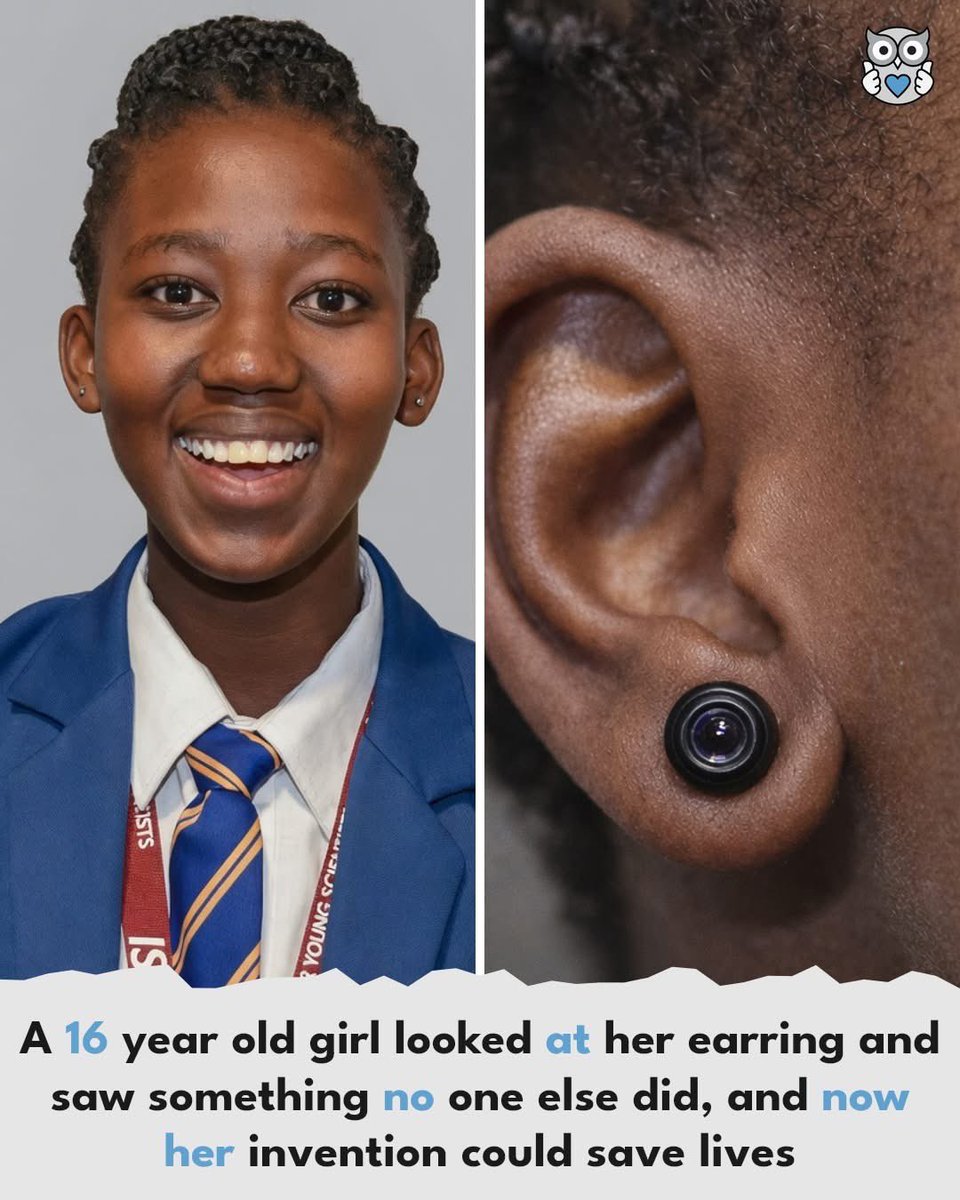
A 16-year-old student (now 22) from Limpopo, South Africa, has received attention for a safety device she designed. Her name is Bohlale Mphahlele. She created the idea for a device called the "Alerting Earpiece." It is a small device shaped like an earring. The goal is to help people in dangerous situations.
She got the idea because of high crime rates and gender-based violence in South Africa. She wanted to design something small, simple, and easy to use.
The design includes a small camera, a GPS tracker, and an alert button. The idea is that the user can press a hidden button. The device would then take a photo of the attacker. It would also send the user's location to trusted contacts and emergency services.
The device is still in development: The prototype has won awards (including bronze at the Eskom Expo) and international attention, but it’s not yet commercially available.
It will hit the market sooner than later show how one idea from one person will eventually effect the lives of many
Stay tuned to stay safe on this
🚨HOW TO RECALL🚨
According to the @WWLTV story - Out of 2,504,416 active voters, organizers must collect at least 500,884 valid signatures by Oct. 31, 2026, according to the Secretary of State’s office.
So here’s what YOU do if you’re an active voter
Step 1: go to https://t.co/atWCBJvzcG
Step 2: click the link “statewide official recall petition form”
Step 3: fill out page 2 with your signature and any others you know who are registered voters
Step 4: Mail form to 2320 Drusilla Lane
Step 5: Celebrate October 31st (optional)
Follow (IG@katii3bug) for the latest information
Black folks ain’t playing with these foreigners anymore ✊🏾
Folks in Houston stood on Business and shut down a gas station run by immigrants after they forced a boy outside to use the bathroom and recorded it.
In September 1946, Albert Einstein called racısm America’s “worst disease.” Earlier that year, he told students and faculty at Lincoln University in Pennsylvania, the oldest Black college in the Western world, that racial segregation was “not a disease of colored people, but a dısease of whıte people, adding, “I will not remain silent about it.”
When Albert Einstein moved to America, he was disappointed to see how Black people were being treated. Even in his new hometown of Princeton, he observed separation of the whıte and bIack societies. Einstein thought of segregation as “unacceptable.”
Albert Einstein rarely accepted honorary doctorates, but he did so for Lincoln University, a small historically Black college in Pennsylvania in 1946. He also gave a lecture before a small group of students who were seen with him in the photo. Also taught Black university students, but the press didn't like to publicise it as the idea of educated equal Black people scared the establishment.