@AlamoHoney1836@KenDBerryMD@AKECassels Unfortunately certified personal trainer and sports nutrition emphasizes carbohydrate as the primary fuel while ignoring ketogenic physiology.
@BiggestComeback I would be cautious of a self fulfilling prophecy. Attributing every plateau or slowdown solely to age can become a convenient excuse that overlooks fixable variables, and it can subtly lower expectations and effort in ways that accelerate the very decline being blamed.
At ninety-eight, Fred Kummerow sued the Food and Drug Administration.
He was a biochemist at the University of Illinois, born in Germany, and he had been trying to get someone to listen for a very long time.
In 1957 he took samples from the arteries of people who had died of heart attacks and identified what was clogging them: trans fat, the artificial kind made by pumping hydrogen through cheap vegetable oil to turn it solid. The margarine and shortening the new dietary advice was busy recommending in place of butter and lard were full of it. He published the finding in Science. He fed the stuff to pigs and watched the lesions form in their arteries too. And he said so, plainly, for decades, while the food pyramid pointed the other way and the money stayed with the cheap solid fat that never went off on a shelf.
The scale of it is worth stating plainly. By the time the ban finally arrived, artificial trans fats were being linked to something on the order of tens of thousands of American deaths a year. Kummerow was heckled by industry men at scientific conferences for daring to say so. Here was one biochemist, armed with a hospital's worth of diseased arteries and a lab full of pigs, up against an entire manufacturing sector whose cheapest and most convenient fat he was trying to condemn, and the sector had the ear of the regulator while he did not.
They did not listen. The oil was profitable and convenient and the story had already been sold. So in 2009, aged ninety-four, he filed a formal petition asking the FDA to act. Three years passed and they did not answer it. So in 2013, a few weeks short of ninety-nine, he took the federal government to court for ignoring him.
Two years later the FDA finally moved to ban artificial trans fats from the American food supply. Kummerow lived to see it. He died in 2017 at the age of a hundred and two, of the arteriosclerosis he had spent sixty years warning the country about.
The fat he identified stayed in the food for another half century after he found it, because taking it out cost money and leaving it in did not.
He was right in 1957. They agreed with him in 2015. Nobody has ever explained the years in between.
@wooddell_jim@BenBikmanPhD Blood ketones reflect what’s available in circulation. As the body/brain adapts and gets better at using them, blood levels can decrease for the same diet - yet tissues are still benefiting more efficiently.
@genxcounselor@newstart_2024 It was about 15 years ago - doctor prescribed diet for my pre-diabetes.
I do high fat carnivore now and I’ve been remission for 12 years.
@joewunda@newstart_2024 She tried paleo with partial benefits, but adding items like greens, olives, or other “safe” foods repeatedly triggered her arthritis flares, joint pain, swelling, and depression.
@whitfieldlewis6@BiggestComeback What’s considered normal? That’s also the issue - reference ranges are based on average population data not on optimal numbers.
I’ve been in remission over the past 10 years and my fasting insulin has between 2.5 and 5.8.
🚨New science DEBATE released on HIGH CARB vs KETO: What the new @ProfTimNoakes vs @LouiseMBurke debate actually shows 👇
American Journal of Clinical Nutrition just released it big debate between two of the biggest names in exercise performance asking one loaded question: does a low-carbohydrate diet impair endurance performance?
On one side is @LouiseMBurke, one of the most influential sports nutrition researchers in the world. Her argument: yes, low carb can impair performance? She is not saying every athlete must eat high-carb all the time. She is saying performance depends on the event, intensity, environment, training status, sex, and the athlete in front of you.
https://t.co/Vcn2wc1PK2
Her biggest physiological point is fuel economy. Near an athlete’s oxidative ceiling (i.e., elite race pace), she argues that carbohydrate produces more usable energy per liter of oxygen than fat. So even if keto adaptation dramatically raises fat oxidation, that does not automatically mean better speed or power.
Now I am skeptical of this point, since we have conducted Randomized Controlled Trails in both runners and ironman competitors and showed that athletes at 86% of their VO2max can utilize fat as the predominant fuel while on a very low carb diet and STILL maintain performance.
https://t.co/fuPcdpvlAk
On the other side, @ProfTimNoakes argues: low carb does not necessarily impair performance when athletes are adapted long enough. He points out that many “keto hurts performance” studies are short, often under four weeks, and that several randomized trials lasting four to six weeks report similar performance between high-carb and low-carb groups.
https://t.co/2nqVuQKYjM
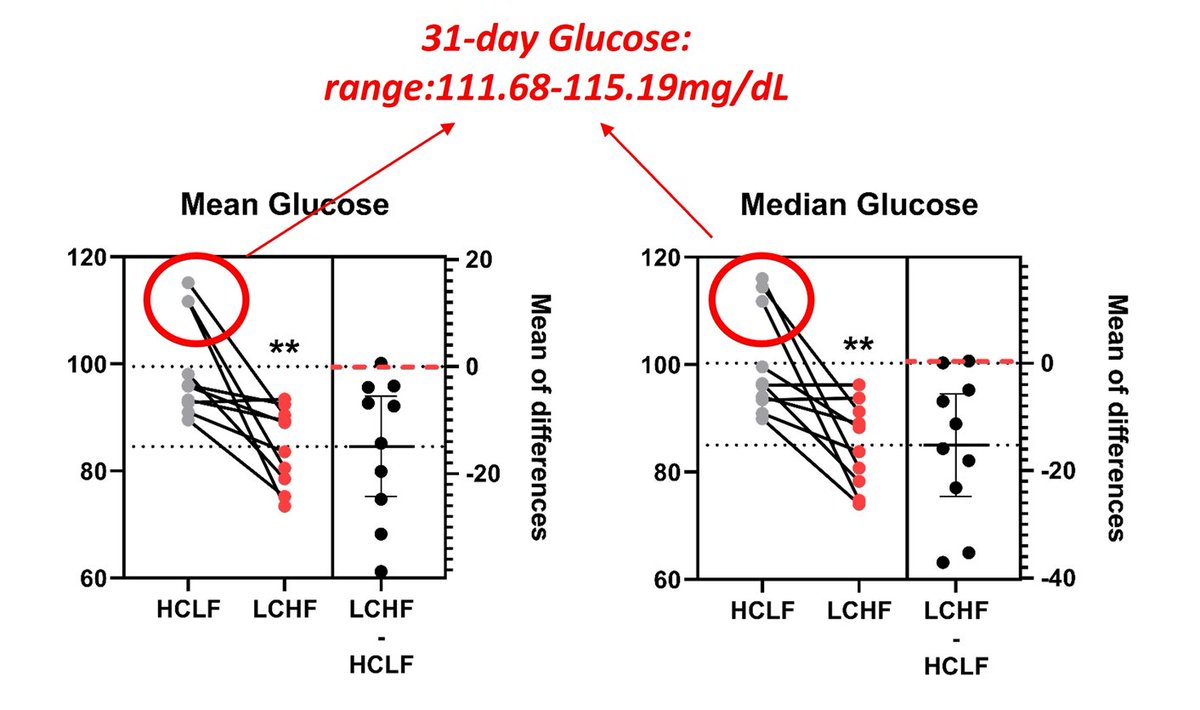
He also reframes fatigue. Instead of saying muscle glycogen is always the main limiter, he argues that during prolonged exercise, maintaining blood glucose, the small glucose pool is the most important. In our trial, 10 grams of carbohydrate per hour improved prolonged cycling performance after both diets.
Noakes and Burke also did something really special: they developed a CONSENSUS article where they explored key points of AGREEMENT and DISAGREEMENT for future research. This is the coolest part and in my opinion was one of the verty unique aspect of these three studies
https://t.co/07UXH4IGf0
My take is this: It is not "team high carb" versus "team keto." The weight of the evidence demonstrates that
1) BOTH high and low carb diets can work, and that
2) Carbohydrates during prolonged exercise are valuable...but
3) How this is applied depends on the individual athlete.
What's your take?
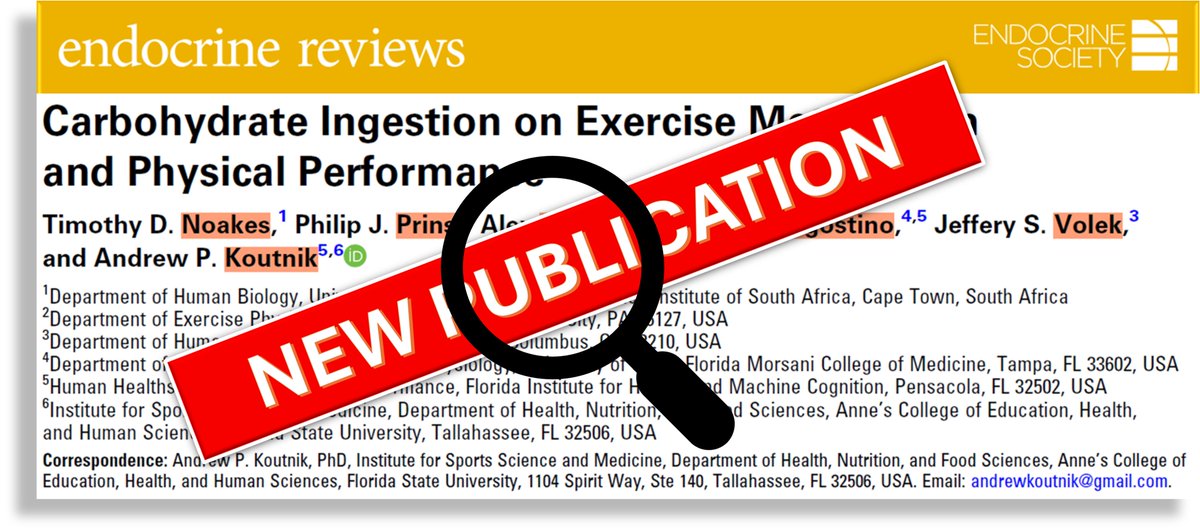
🚨Our Landmark Sport Nutrition Analysis in Endocrine Reviews — spanning 100+ years & ~600 studies🔬— challenges the foundations of the sports nutrition industry & guidelines, exposing potential harm to athletes' health.
This is the most comprehensive pub on nutrition's impact on performance (5+ years in the making). What we found is critical to athletes, coaches, dieticians, and the scientists who write guidelines with FREE study link below:
1) 🍞"Carb-loading" is misguided?
Current sport nutrition guidelines (i.e., @ACSMNews, @IntSocietySN, @Gatorade Sport Science Institute) recommend 5–12 g/kg CHO/day and 60–90 g CHO/hour. What does that mean?
📈This can push some athletes to over 1000 carbohydrates/day. Multiple meta-analyses in the report revealed that sport nutrition guidelines have over-emphasized muscle glycogen and carbohydrate oxidation levels...yet these metrics didn't consistently align with performance... so what metric predicts performance?
See #2. 👇
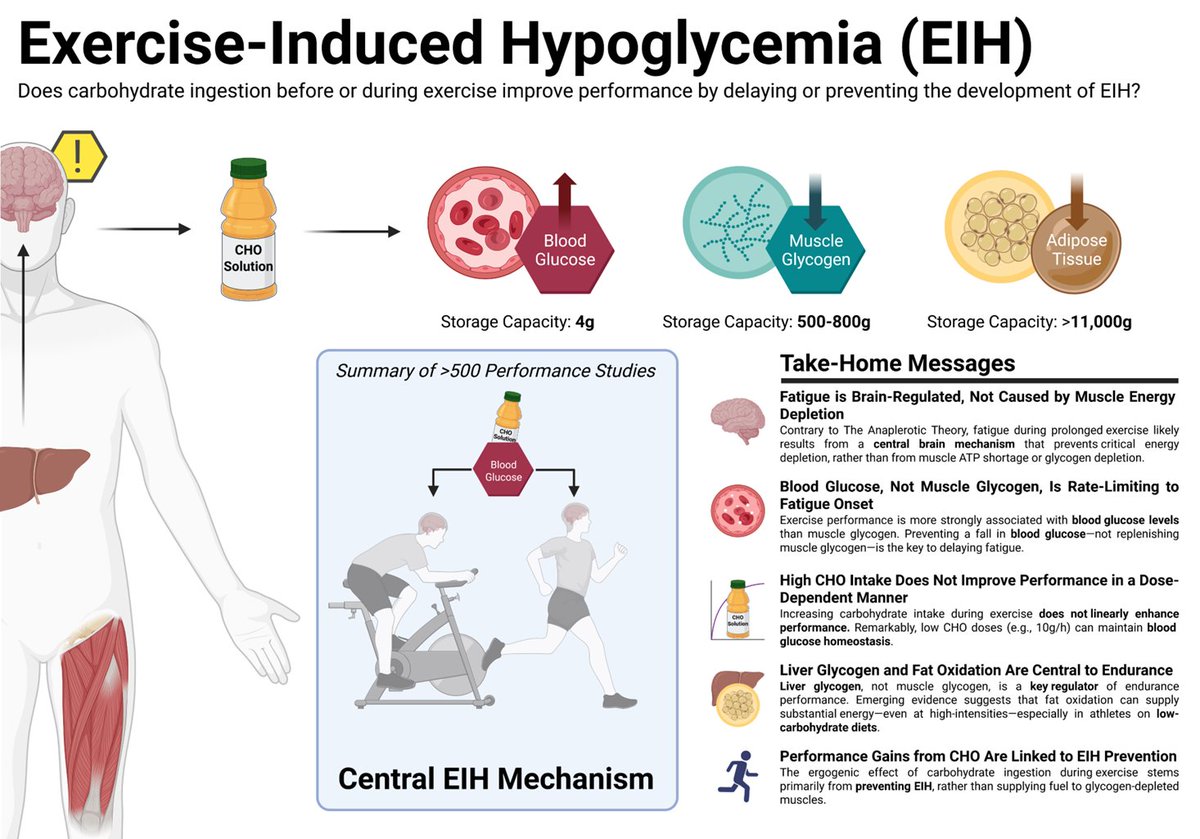
2)🧠Primary performance driver? Sustaining total brain energy (glucose + ketones + lactate)—not muscle glycogen or carb oxidation.
In >160 sports performance studies, 88% showed that carb intake only benefits performance when blood glucose plummeted in the placebo group, triggering early fatigue in non-carb athletes due to brain energy deficit. Carbs maintained blood glucose and brain energy, and this out-predicted every other metric. Yet, the brain's role has been sidelined in sports nutrition, ignoring evidence since the 1920s of its pivotal impact on performance.
3)🔥High carbohydrate intake paradoxically accelerates glycogen breakdown and suppresses fat oxidation during exercise.
This contradicts many of the sports nutrition marketing claims promoting high levels of carbohydrate supplementation (60-120g/hour) to "spare" muscle glycogen AND evidence showing that higher fat oxidation correlates with better performance.
4)🫀Health risks of sports nutrition guidelines? Emergent evidence has demonstrated that high-carbohydrate intake can lead to prediabetes in a percentage of athletes. This analysis also reveals that current sport nutrition guidelines' carbohydrate intake levels create a metabolic environment during exercise analogous to diabetes:
-⬆️circulating insulin
-⬇️fat oxidation
-⬆️glycogen breakdown
-🔒forced reliance on glucose as fuel
This is critical. We show that athletes ARE NOT immune to the metabolic problems driven by the food environment.
5)🥵Ketogenic athletes CAN "bonk" too...but not if they fuel correctly.
Contrary to claims, athletes on ketogenic diets can and do bonk—like on high-carb diets—due to dropping blood glucose. The lack of strategic carbohydrate placement was a mistake many keto-athletes made when trying to reach their peak performance. Small targeted brain-fuel supplements (10g/hour) during exercise boost peak performance without high-carb loads.
After 4-week adaptation, ketogenic performance equals high-carb performance...but BOTH high and low-carb athletes benefit from ~10g/hour carbs to maintain glucose/brain energy for exercise >60 minutes in duration, improving performance 22%. It will be interesting to see how other brain fuels can also assist (ketones and lactate).
🔗FREE Study Link: https://t.co/6GZjOnNmK8
📣CONCLUSIONS: This landmark analysis challenges over half a century of scientific assumptions in sports nutrition—and explains how they became embedded in official guidelines—with implications reaching beyond elite athletes to public health and chronic disease prevention.
Please share this widely with athletes, coaches, dietitians, and scientists to help optimize not just peak performance, but lifelong health. 🤝
@SBakerMD It’s difficult to pinpoint- seems like seed oils in combination with carbohydrates. It’s like a negative synergy.
53 and I’m highly active - strength training, strength endurance, and cardio.
@wooddell_jim@lowcarbGP That would be interesting. I would assume doctors who are not supportive of their keto patients would be at higher risk of a heart attack than their keto patients.
@mtrlcyrus@newstart_2024 I’m carnivore and my wife eats a mixed diet - I eat 2-3 times more calories than the wife and my groceries is about the same or cheaper. I eat cheaper cuts of meat with fat trimmings, lamb leg, ground beef, eggs, occasionally some dairy.