Launch Services Program ✨ Earth's Bridge to Space ✨ NASA’s provider of a commercial launch experience, matching spacecraft to launch vehicles since 1998!
As of today, this account is officially archived. This may be our last post, but it definitely won't be our last launch!
Stay up to date on all the latest news and information about NASA's Launch Services Program at https://t.co/79qRMgoE2c and by following these accounts:
@NASA@NASAKennedy@NASASpaceOps
🫶🚀We may be waving goodbye to this account, but LSP's not going anywhere!
We'll continue to be Earth's Bridge to Space and you can get the latest news and information about NASA's Launch Services Program at https://t.co/79qRMgoE2c and by following these accounts:
@NASA@NASAKennedy@NASASpaceOps
🛰️ Since 1998, LSP has been bringing together those with a payload needing a ride to space with commercial launch vehicle providers.🚀
LSP works to ensure mission success by managing the overall process and assuring the rocket will work correctly to deliver a healthy spacecraft to the target orbit or destination. LSP provides support throughout the entire journey, from pre-mission planning to post-launch.
LSP has facilities on Cape Canaveral Space Force Station in Florida and Vandenberg Space Force Base in California that provide real-time telemetry, video, voice, and data for spacecraft checkout and launch operations. They can be configured to support any of the launch vehicles in operation today!
📅🍁The calendar may say summer, but LSP is counting down for our next two missions this fall!
We are excited to add IMAP (KSC) and Sentinel-6B (VSFB) to our LSP list!
From October 1998 through today, we have managed the launch service for:
🚀55 missions from CCSFS, FL
🚀43 missions from VSFB, CA
🚀4 missions from KSC, FL
🚀3 missions from Kwajalein Atoll, Marshall Islands
🚀1 mission from Kodiak Launch Complex, AK
These missions wouldn’t be possible without all of our LSP team members – past and present. We are grateful for all of your hard work and commitment to our LSP team!
📢 Important update: This X account will soon be archived.
You can find all the latest news and information about NASA's Launch Services Program by following these accounts:
@NASA@NASAKennedy@NASASpaceOps
Leaf peeping from afar 🍂
Our Plankton, Aerosol, Cloud, ocean Ecosystem (PACE) satellite has tracked leaf color changes from space for a full year—giving us a new look at plant health and Earth's ecosystems. https://t.co/R6ByFneGMc
NASA's IMAP (Interstellar Mapping and Acceleration Probe) has moved to its new workspace! ☀️✨
On May 29th, technicians unboxed IMAP and placed it into a pristine clean room. Learn more as preparations to chart the boundaries of the heliosphere continue!👇
Not all waves crash on beaches. Some travel down rivers and can cause flooding in nearby towns. For the first time, scientists used data from the SWOT mission to track river waves. This can help better protect vulnerable communities.
More: https://t.co/kiB89FVqUk
🚀 #ICYMI: PREFIRE celebrated its one year launch-iversary yesterday!
The PREFIRE (Polar Radiant Energy in the Far-InfraRed Experiment) mission launched its first CubeSat on May 25, 2024 and the second less than 2 weeks later from New Zealand aboard a @RocketLab Electron rocket!
Small features, big science! 🌊
Data from the SWOT satellite reveals how small ocean features, some just a mile across, may have larger impacts on the movement of nutrients and heat than previously thought.
Learn more: https://t.co/KMg3mNlwDV
🚀Happy launch-iversary month, TROPICS!
In May 2023, NASA and @RocketLab successfully launched twice from New Zealand, placing four CubeSats into orbit. Together, they form the TROPICS constellation – designed to monitor tropical cyclones with speed and precision.
🦅 @NASAKennedy consists of approximately 140,000 acres of land and lagoon waters and is home to more than sixty federal and state-listed endangered and threatened animal and plant species. These include the Bald Eagle & Florida Sandhill Crane!
NASA’s Astrophysics Pioneer Aspera has a ride to space!
The SmallSat will launch on a @RocketLab Electron rocket as a part of the agency’s VADR launch services contract and will study how galaxies form, evolve, and the hot gasses between them.
https://t.co/N4Om5YVaA2
Flyby Photo Drop! 🛰️✨
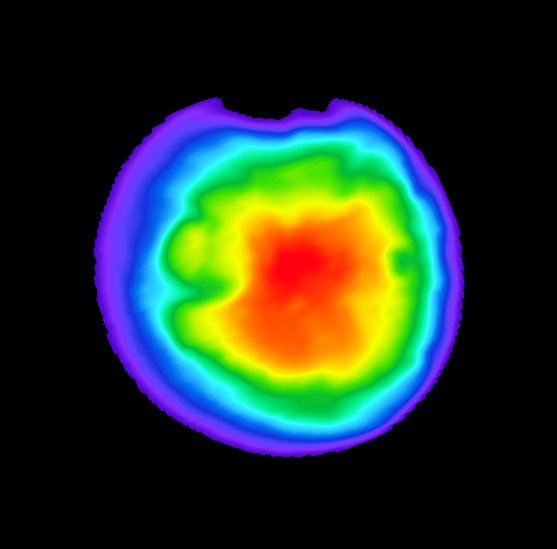
Europa Clipper took this epic thermal image during a flyby of Mars! After launching on Oct. 14, 2024, the spacecraft headed to Mars for a gravity assist to speed it on to Jupiter, where it will study Europa to see if it has the conditions to support life.
Practice run: During our spacecraft's recent high-speed pass by Mars for a gravity assist, we tested our thermal imager. Calibrating the instrument will help us get ready to use it to delve into the secrets of Europa's ice shell and what lies beneath. https://t.co/Wipcoqu1LJ
Who knew dust could be so pretty! 😍
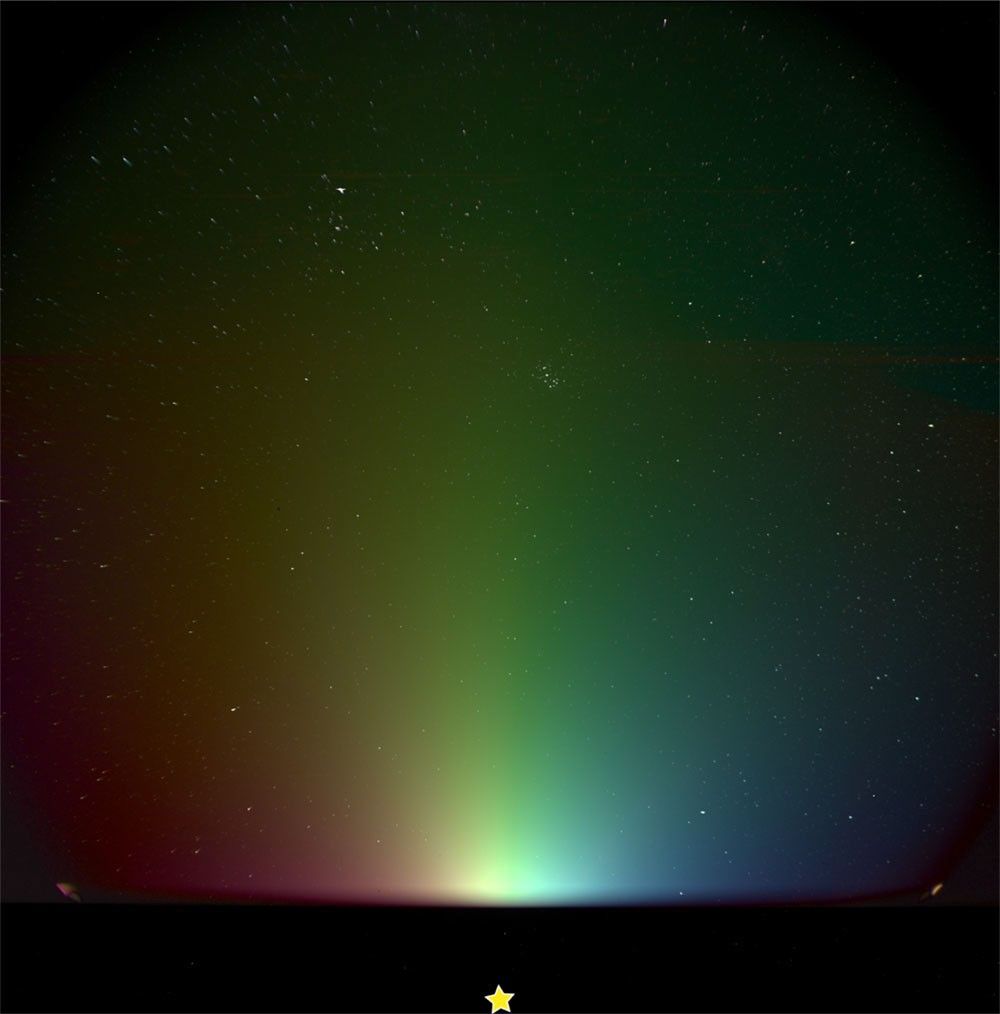
New images from NASA’s recently launched PUNCH (Polarimeter to Unify the Corona and Heliosphere) mission show the beauty of zodiacal light, the faint glow of sunlight reflecting off dust surrounding our Sun.
At left, a combined image from one of PUNCH's three Wide Field Imagers (WFIs) shows the zodiacal light. The light has been colorized based on its angle, or polarization. The Sun's position is marked by the star icon.
At right, an image from PUNCH’s Narrow Field Imager (NFI) shows a new Moon against a blocked SUn. A new Moon would normally appear completely dark against the bright light of the Sun, but PUNCH’s NFI instrument has an occulter (the dark circle covering the Sun) that blocks the Sun’s disk to image the Sun’s faint surroundings. In this much dimmer setting, mere Earthshine (sunlight reflected off of Earth) is enough to illuminate the Moon.
View these images and more: https://t.co/MpfuPE4MDM
🛰🚛IMAP has arrived in Florida!
NASA's Interstellar Mapping and Acceleration Probe (IMAP) arrived at Astrotech after traveling from @NASA_Marshall. IMAP will study the heliosphere and is targeting liftoff no earlier than Sept. 2025 on a SpaceX Falcon 9.
https://t.co/H80v47Y2L2