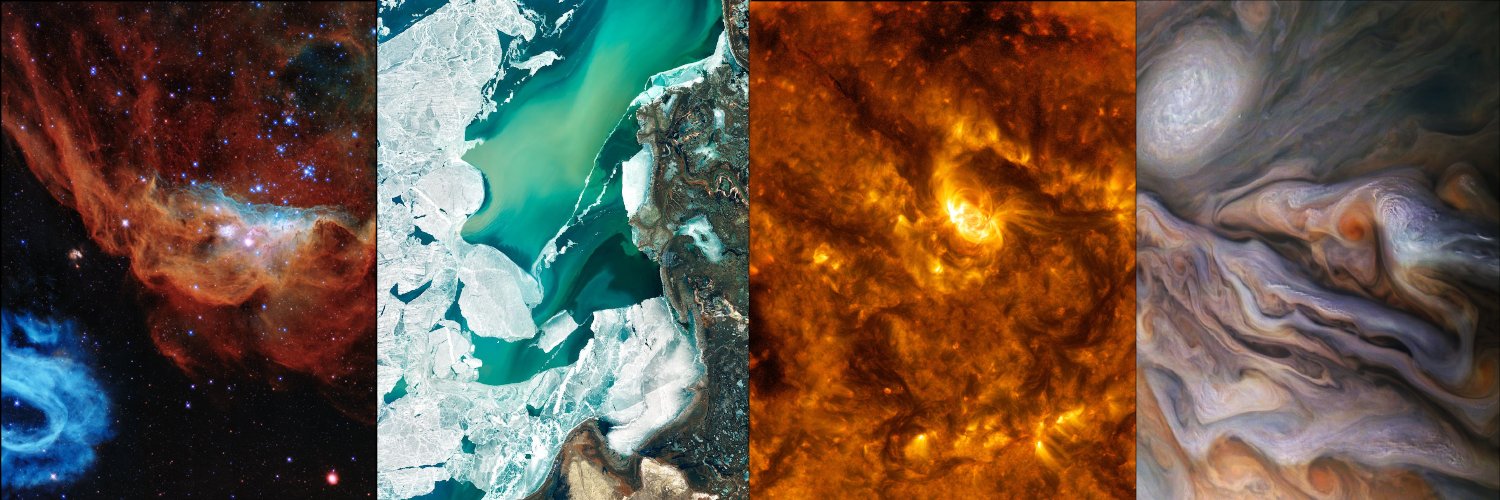
What’s under the Greenland Ice Sheet? 🧊
This new map from @NASA scientists and others shows the land beneath the ice, linking hundreds of valleys that previous maps missed or left fragmented.
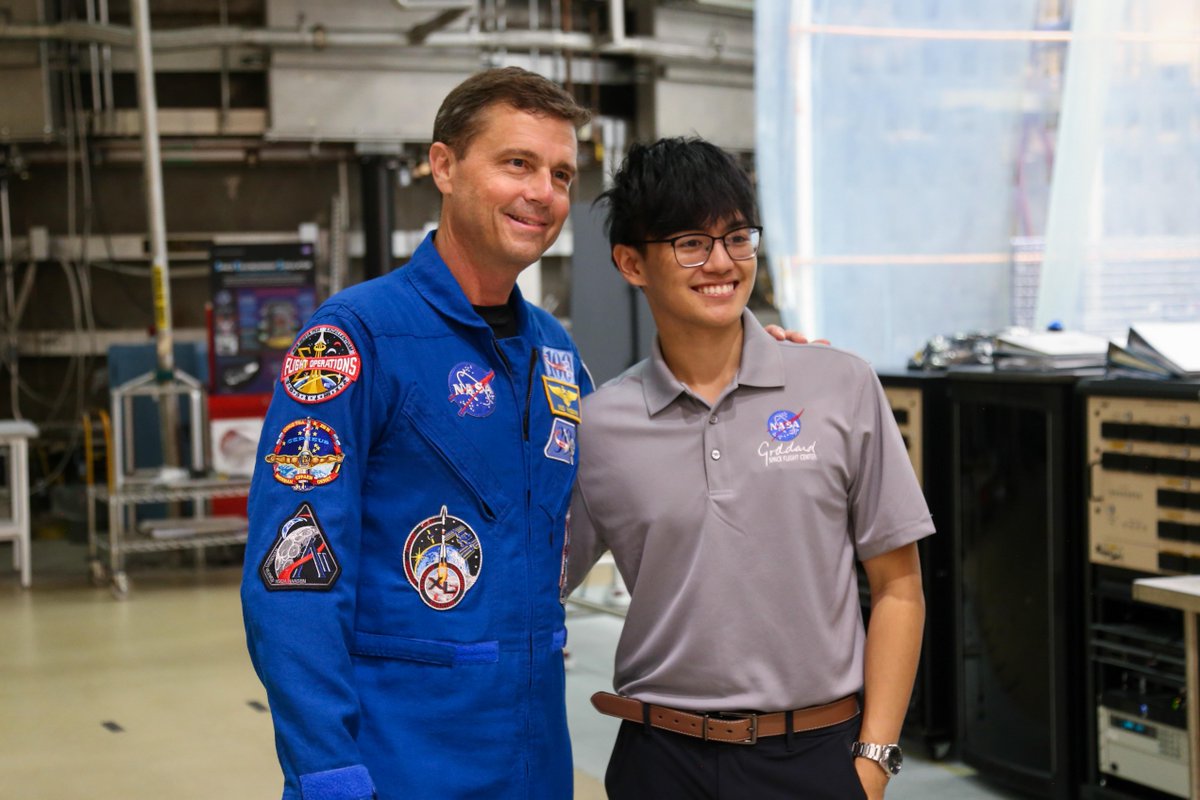
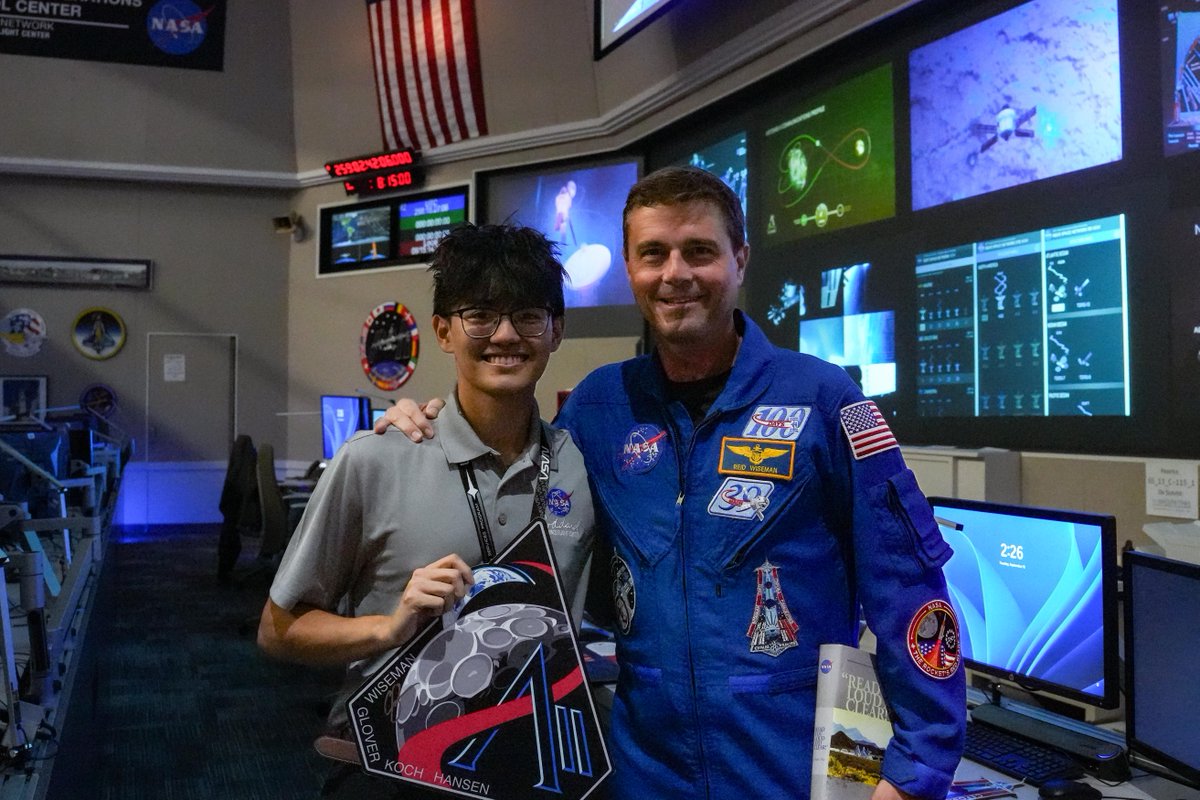
This fall, James supported emeritus astronaut and Artemis II Commander Reid Wiseman’s visit to Goddard as part of the event's photography team, capturing moments that were later shared and credited across NASA communications and social media.
Sometimes bringing NASA’s missions to the public means you get closer to the mission than expected!
James Tran is a Public Affairs Intern in our Office of Communications. He’s gaining experience in public speaking, photography & communications that help people connect to NASA.
@NASAWebb The cocoon of gas on the right borders much younger protostars. As these baby stars grow, they eject superheated material that shocks nearby matter creating the fluffy appearance. In the top left, another protostar causes a similar ruckus.
Pick a side: https://t.co/VDdhqAilfI
Jedi vibes on the left, Sith energy on the right ⚔️
@NASAWebb captured the duality seen in nebula NGC 7129. Separating the left & right gas cavities lies a star 5-8x the mass of our Sun. When it was younger it ejected hot outflows that carved the molecular cloud on the left.
@NASAHubble Scientists expect supernova Athena — found by @NASAWebb last year — to reappear behind MACS J0417 by March 2027 & hope to better understand why the universe is expanding as fast as it is.
Read more: https://t.co/0dJzBSQJos
1.7 million observations later 📸🎉
In September, @NASAHubble completed its 200,000th orbit around Earth and observed MACS J0417, a cluster of galaxies. After 36 years, this observation marks a historic achievement for our friend with its eyes in the sky.
The Nancy Grace Roman Space Telescope has been named one of TIME's Best Inventions of 2026.
Roman continues its journey in space to its final orbit, completing critical milestones along the way. We expect first images by early 2027.
https://t.co/oy9o44u0cU
When solar storms reach Earth, they can disrupt satellites, power grids, and GPS. Better forecasts can help mitigate storm impacts.
PUNCH here for more: https://t.co/vAj4gjuX8C
Here comes (a storm from) the Sun 🎶☀️
NASA’s PUNCH mission is sharpening forecasts with four satellites that monitor the Sun’s surface in 3D. Its first test predicted a storm’s arrival within 30 minutes, which is 10 times better than current methods.
@NASAWebb Scientists even think that a Mars‑sized object called Theia struck young Earth, ejecting material that later formed the Moon, showing that our own home was also shaped through cosmic collision.
For a crash course visit: https://t.co/qt4MVW5WoY
💥From pebbles to planets 💥
@NASAWebb helped confirm details of a rare type of warm gas and dust-filled disk swirling around young stars. These disks can contain Moon-sized objects to Mars-sized worlds that can smash together in violent collisions altering the environment.
The Artemis II Preliminary Science Report dropped last week, with hundreds of gigabytes of crew observations. From shadows at the edge of the terminator to a solar eclipse from the far side of the Moon, the science report is full of details to explore.
https://t.co/csEih8pAtJ
Let's step into the light and explore the terminator.
It's the line between day and night. As the NASA Artemis II crew flew over the Moon's terminator, they saw lunar craters and ridges cast dramatic shadows, the kind future explorers might see at the Moon's South Pole.
DAVINCI aims to determine whether Venus was ever wet and habitable like its sibling planet, Earth. The probe will study the chemical makeup of Venus by taking samples of blistering gas, all while keeping its science instruments from overheating.
DAVINCI proves it can stand the heat 🔥
To prepare for its descent through Venus’ scorching atmosphere, a model of the DAVINCI probe was heated to 869 degrees Fahrenheit (465 degrees Celsius) six different times. It passed every test unscathed.
@NASAArtemis All 814 gigabytes of data are now available for the public to explore, investigate further, or just enjoy. Whether you have a scientific inquiry to pursue or just want to relive the mission, the report is all yours. Dive in!
https://t.co/a8jqKobrko
Human eyes and brains 🤝 Satellite sensors
🌑🌏☀️🌌
We just dropped the Artemis II Preliminary Lunar Science Report, full of hundreds of new photos and hours of audio from @NASAArtemis II, featuring the Moon up close, our home planet, and so much more.
https://t.co/a8jqKobrko
@NASAArtemis The science team, led by Goddard's Kelsey Young, has been hard at work comparing crew observations to data from satellites like LRO, SOHO, & DSCOVR. Satellite data helps identify the sources of things the crew saw, like impact flashes on the Moon's surface and solar streamers.
A huge library of Artemis II data just dropped! Science is a relay race, and today marks the latest in a long series of handoffs. 814 GB of observations. 996 new images. 521 min of never-before-released crew audio.
Dig in: https://t.co/VTUbJMrjIa