Our June issue is live with a focus on RNA chemical biology
https://t.co/XnR4xoRqal
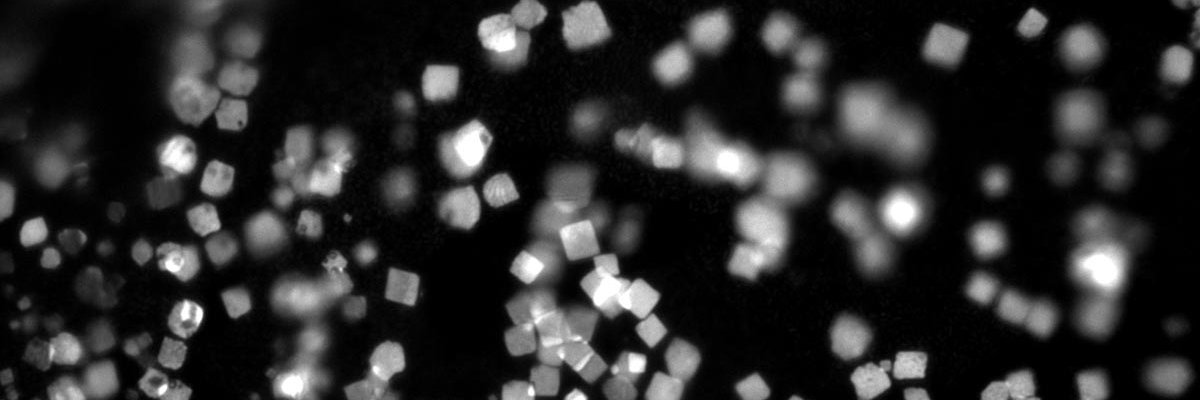
The cover image depicts the ribozyme SAMURI, which catalyzes transfer of alkyl groups from SAM to a specific adenosine in target RNA, represented as igniting a chemical spark
Oxygen-dependent and photoreactive APEX2-based proximity labeling using a chemically evolved biotin probe for applications in living cells and in vivo
https://t.co/HHi4Nn31yV
The editorial highlights RNA breakthroughs in this issue
https://t.co/w2uCdipqYw
and a Q&A with Maria Duca, Samie Jaffrey, and Ling-Ling Chen discusses challenges and opportunities in RNA-centered therapeutics
https://t.co/PzOz5W3sWJ
Our June issue is live with a focus on RNA chemical biology
https://t.co/XnR4xoRqal
The cover image depicts the ribozyme SAMURI, which catalyzes transfer of alkyl groups from SAM to a specific adenosine in target RNA, represented as igniting a chemical spark
Our collaborative work with @IrenemGhobrial on targeting transcription factor IRF4 is now online @nchembio. It is so exciting that we discovered an IRF4 binder & a selective IRF4 degrader that can interrupt MM cell growth. Congrats @10mM_Mike & all authors https://t.co/RJFu6wqJsU
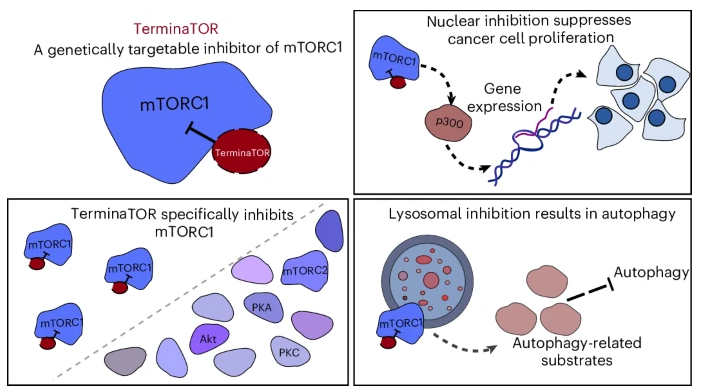
A genetically encoded peptide inhibitor of mTORC1 is developed and reveals that nuclear mTORC1 regulates a specific set of genes and promotes cancer cell proliferation
https://t.co/QeQEkolstR
The potency of a class of RAF kinase inhibitors is found to depend on cancer cell signaling activity, and MEK inhibitors can be reengineered to sensitize RAF kinases to inhibitors for synergistic RAF-MEK inhibitor combinations
https://t.co/1m5SMPWP0C
A new series of covalent, monovalent glue degraders can co-opt two E3 ligases, DCAF16 and FBBXO22, in a parallel fashion to degrade SMARCA2/4 with chemically and genetically tunable ligase preference
https://t.co/azG0RCPFTt
A new platform screens for and enables the design of peptide biosensors of dysregulated proteolytic activity in tumors for tumor detection and therapeutic development
https://t.co/Ob7CGEcX3w
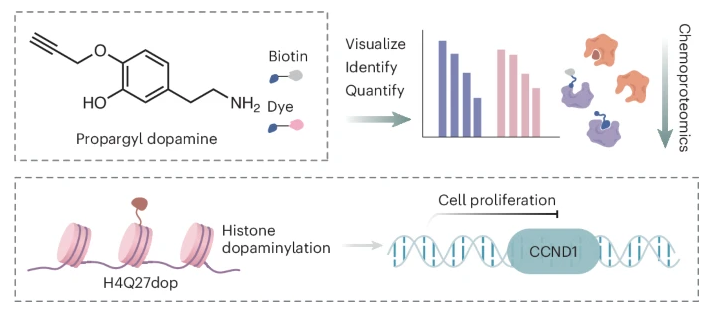
A bioorthogonal, clickable dopamine probe enables chemoproteomic mapping of dopaminylated proteins, revealing a role for histone H4 dopaminylation in cell growth
https://t.co/RC4W6noLFf
Happy to share the final version of this work is now out in @nchembio. Lots of additional exciting data! Congrats to all the authors!
https://t.co/r61jFJjJq4
Our May issue is live!
https://t.co/i8r9ZUPpXi
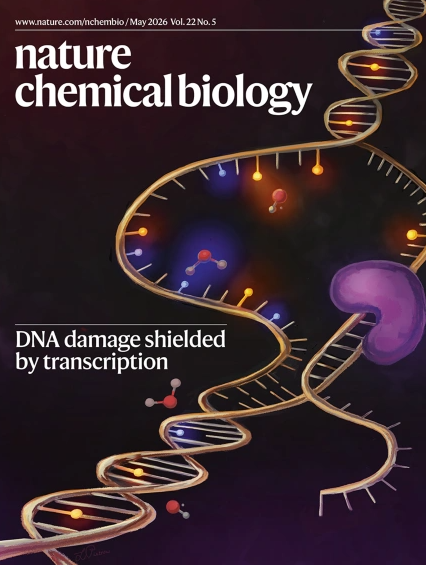
The cover image depicts the vulnerability of the non-transcribed strand of genes to oxidized guanines and abasic sites
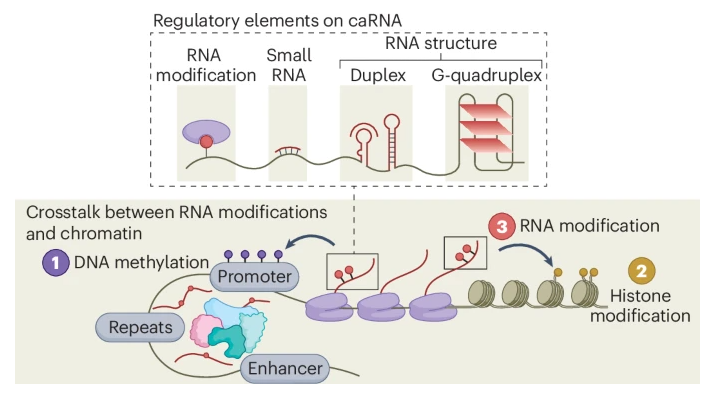
A new Perspective discusses recent developments in RNA modifications on chromatin-associated RNAs, how they modulate chromatin states, and future direction for studying RNA regulatory elements to control gene expression
https://t.co/a2tMAH02ra
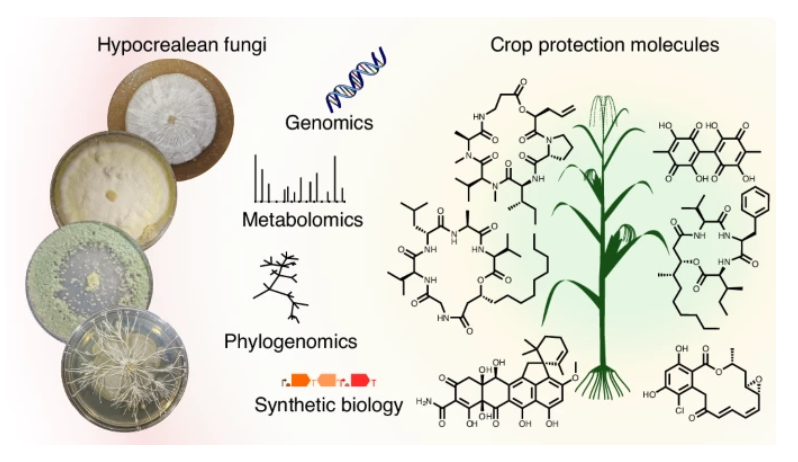
Hypocrealean fungi form symbiotic relationships with plants while antagonizing pests. A survey of 5221 of their biosynthetic gene clusters reveals that ~80% encode unknown products, which could have potential for pest control
https://t.co/NSKjU6voy4
A tubulin isotype-modulated allosteric network governs paclitaxel-binding affinities and affects paclitaxel efficacy against cancer cells
https://t.co/DknfC05Ujj
CenSpark is a dual-ligand fluorescent probe simultaneously binding inner and outer microtubule sites – a configuration unique to doublet and triplet microtubules, enabling selective live imaging of centrioles and cilia across species
https://t.co/ncTWrxELeY