Any Challenge To The Status Quo is Always Thought To Be Madness. But Can A Country, A Society, A System Be Able To Experience Any Positive Growth With No Change?!
Man,Just Worry About #GettingBetter & #LevelingUp!!Coz If U Are That Good At Whatever It Is That U Do,Nobody’s Gone Stand In Ur Way.I Mean,Some Will Try Hard To Block Ur #Light Inevitably,But Eventually,If U’re Consistent,U’ll Turn Out To Be The Worst-Kept Secret On The Planet😅.
Ce mémorial en hommage aux victimes du génocide perpétré contre les Tutsi au Rwanda est un lieu vivant. Il cultive la mémoire et projette vers l'avenir la relation entre le Rwanda et la France.
À nous de transmettre avec rigueur, dignité, vérité et justice.
Twibuke Twiyubaka.
To Put It Bluntly,#VerticalIntegration Is The Ultimate Move For Lowering OpEx &CapEx Costs,Allowing U To Offer Highly Competitive Prices,&Thus,Creating A Massive Buffer To Absorb Market #PricingShocks While Letting U Scale Ur Production Faster&Cheaper Compared To Ur #Competition.
3rd,U Manufacture The Machinery Required To Process Ur Locally Manufactured #RawMaterials Into Ur Final Retail Products.Thus,U Control Pricing For Ur #RetailProduct,Ur #Machinery,&Ur #RawMaterials.Plus,U Could Also Sell Ur Machinery &Raw Materials On The Side For Extra Revenue🧞♂️.
#VerticalIntegration In Manufacturing Is The Only Way To Gain Control On Ur Product Pricing &BulletProof Ur Supply Chain Against Global Shocks.U First Manufacture The #Machinery Required To Make All Ur #IndustrialMachineries, &All This At A Cheaper Cost(60% Less Vs Importation).
2nd,U Manufacture The Machines Required To Make Ur Product’s Raw Materials;&Given The Fact That Any Locally Made #IndustrialTech May Be More Than 60% Less Expensive Compared To #ImportedTech,Ur Raw Materials Local Manufacturing Operation Will Be Cheaper To Establish & Scale.
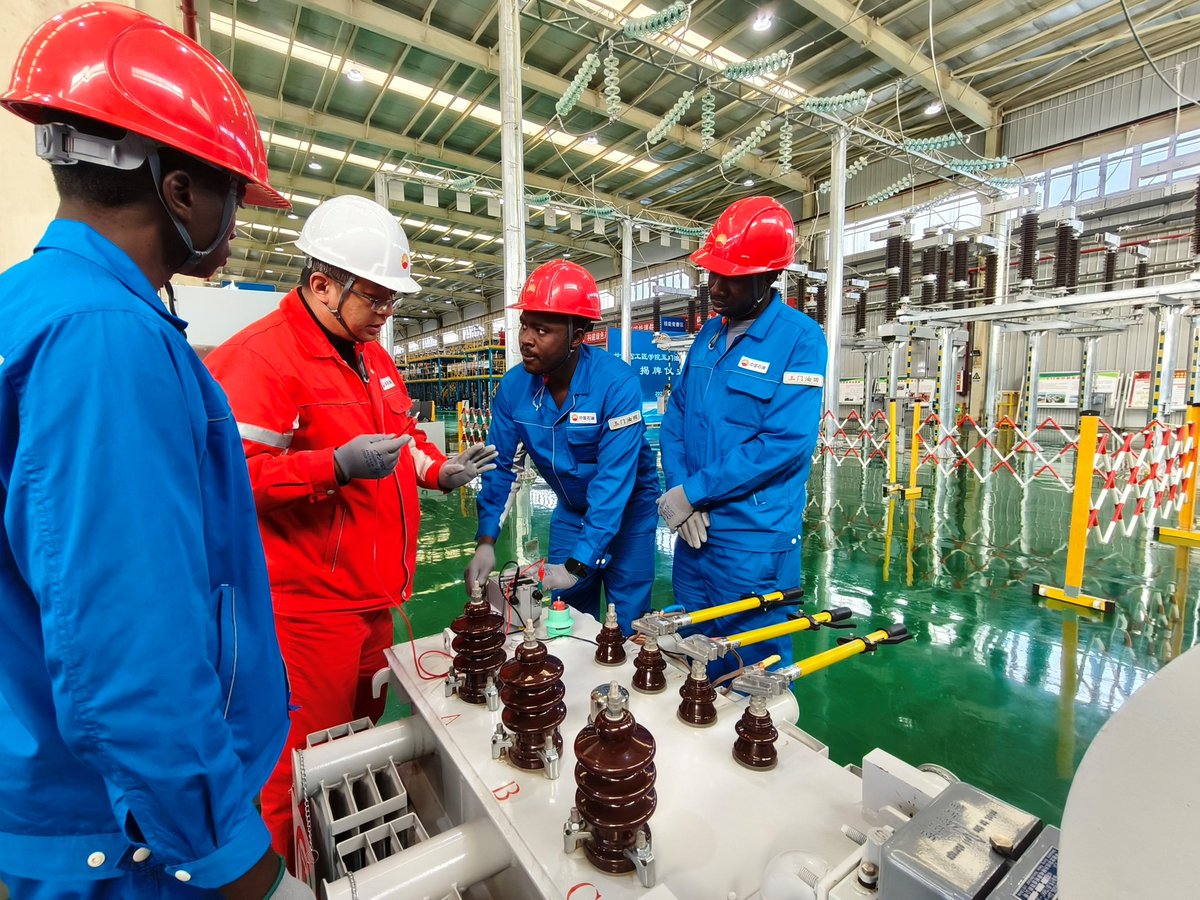
Quarante-neuf collaborateurs tchadiens de la Société de Raffinage de N’Djamena (NRC) suivent actuellement un programme de formation structuré sur le site de Yumen de CNPC, en Chine, portant sur le management et les compétences opérationnelles.
⚙️Conçue en fonction des besoins réels de la raffinerie, cette formation s’appuie également sur des installations de simulation spécialement mises en place par le centre de formation de Yumen, afin de reproduire au plus près les conditions réelles de production.
À ce jour, CNPC a déjà permis à plus de 200 techniciens tchadiens de suivre des formations en Chine et organisé plusieurs sessions de formation sur site au Tchad, et poursuit ainsi son engagement en faveur du développement des compétences et du renforcement des capacités dans le secteur énergétique tchadien.
So We Can’t Expect That Moving #FeedProduction Closer To Farmers Would Result In Cheaper #LivestockFeed Prices.&Also,The Increased Market Share Competition Would Further Put A Strain On The Already Existing Low Stock Of Raw Materials,Which Would Result In Debt-Servicing Failures.
Sometimes I Be Baffled By The Moves &Initiatives Championed By Some Of Our #PolicyMakers Within Our #Government. Like Honestly,By Decentralizing #LivestockFeed Production Into Every Province In Rwanda,We Would Only Be Trading CapEx,OpEx&Debt-Servicing Costs For Logistics Savings.
So Really,This Initiative Would Only Be Justifiable If The Present Value Of Long-Term Transport Savings From The Already Available Localized Manufacturing Distribution Far Exceed The Cumulative CapEx,OpEx,&Debt-Servicing Costs Of The New Facilities Over Their Financing Lifecycle.
Why are we producing less milk than we need ?
After reading a recent @NewTimesRwanda article discussing milk prices and dairy production in Rwanda, I felt it was important to share a few reflections on why the country continues to face challenges in increasing milk production despite significant investments in the livestock sector over the years. One question that immediately comes to mind is this: Why is milk in Rwanda still relatively affordable compared to some countries in the region, yet dairy farmers continue to struggle?
Today, many farmers sell milk at between Rwf 450 and Rwf 550 per litre. On paper, those figures may appear attractive. However, once farmers pay for animal feed, veterinary services, workers, water, transport, breeding services, electricity, and routine farm maintenance, dairy farming quickly becomes a very expensive business. For many livestock keepers, the actual profit margin is much smaller than most people imagine.
One of the biggest challenges is the cost and availability of animal feed. In districts such as Nyagatare, Gatsibo, Kayonza, Gicumbi and parts of Bugesera, farmers regularly face shortages of pasture during dry seasons. Commercial animal feeds have also become more expensive over time. When farmers cannot access quality feed at affordable prices, milk production naturally declines.
Climate change has further complicated the situation. In recent years, prolonged dry spells have affected many livestock-producing areas, particularly in the Eastern Province. Less rainfall means less pasture and reduced water availability for livestock. The result is lower milk production and higher production costs.
Another issue is profitability. Dairy farming requires significant investment and patience. While many farmers remain committed to the sector, rising costs have discouraged some from expanding their herds or investing in improved dairy production systems. For younger people entering the labor market, dairy farming often competes with opportunities in transport, trade, technology, and other sectors that appear to generate quicker returns.
Access to veterinary and breeding services also remains a challenge. While Rwanda has made tremendous progress through artificial insemination programs and livestock extension services, gaps still exist. A healthy cow with strong genetics can produce significantly more milk than one that lacks proper veterinary care or breeding support. Strengthening these services would directly contribute to increased milk production.
At the same time, demand for milk continues to grow. Rwanda's population is increasing, urbanization is expanding, and programs such as One Cup of Milk per Child have successfully encouraged milk consumption. Hotels, restaurants, schools, and milk processors all require increasing quantities of milk. In many cases, demand is growing faster than supply.
There is another factor that deserves attention. Between 2007 and 2016, Rwanda invested heavily in mobilizing citizens around livestock development. The Girinka Program became more than a social protection initiative; it became a national movement. Radio stations, local leaders, extension officers, and community meetings consistently promoted livestock farming as a pathway to improved nutrition, household income, and poverty reduction. During those years, discussions about cattle farming, fodder production, animal health, and dairy management were common across the country. Today, while the program continues, the level of public sensitization appears less visible than it was then. Revitalizing awareness campaigns could encourage more households, especially young people, to view dairy farming as a viable economic opportunity.
Interestingly, I recently read an article in IGIHE quoting a report from the National Institute of Statistics of Rwanda (NISR), indicating that Rwanda produces approximately 2 million litres of milk per day. While this is undoubtedly a significant achievement, it also raises important questions about how efficiently we are utilizing our dairy infrastructure and whether there are opportunities to expand milk collection and processing.
For example, Rwanda has invested heavily in dairy processing facilities such as the milk powder plant in Nyagatare. The plant reportedly has the capacity to receive around 600,000 litres of milk per day, yet it is currently receiving only about 250,000 litres. If these figures are accurate, it means a substantial portion of the plant's capacity remains underutilized.
This opens an interesting policy discussion. Could Rwanda leverage regional economic integration to maximize the use of such strategic investments? Western Uganda is one of East Africa's major milk-producing regions and shares close proximity with Rwanda. Allowing processors in Rwanda to source additional milk from neighboring regions when local supply is insufficient could help maximize factory utilization, create economies of scale, and strengthen regional trade.
Such an approach would not replace efforts to increase domestic production. Rather, it would complement them while advancing the objectives of regional integration under the East African Community. In fact, it could become one of the most practical examples of the free movement of goods within the region. Consumers would benefit from improved supply, processors would operate more efficiently, and farmers across borders would gain access to larger markets.
I suspect policymakers are already examining some of these possibilities as they seek long-term solutions for the dairy sector.
Ultimately, Rwanda's milk production challenge is not caused by a single factor. It is the result of multiple interconnected issues including feed shortages, rising production costs, climate pressures, veterinary service gaps, growing demand, underutilized processing capacity, and the need for renewed farmer mobilization.
If Rwanda is to significantly increase milk production and strengthen the dairy value chain, the solution must be equally comprehensive. Supporting farmers with affordable feed, investing in water infrastructure, strengthening veterinary services, improving breeding programs, maximizing processing capacity, and deepening regional economic integration could all play an important role.
The future of Rwanda's dairy sector will depend not simply on increasing the number of cows, but on creating an ecosystem where dairy farming remains productive, profitable, competitive, and sustainable for generations to come. https://t.co/LQcMqj42gp
We Africans Be Frustrated Coz We Can’t Defy The Laws Of #PoliticalGravity;But Fr,Leaving The #Cage Gives U Space To Stretch,Not #Wings!See,Independence Was Just A Cleared Runway,Not The Flight Itself. So To Really Escape The Pull,We Gone Have To First #Engineer Our Own Aircrafts.
Ultimately, What Everybody Really Want Is To #Love And Be #Loved. Coz Man, Nothing In This World Feels Right Like Having People U Care About Counting On U, And U On Them. Even All The Money & Power Out There Won’t Give U That.
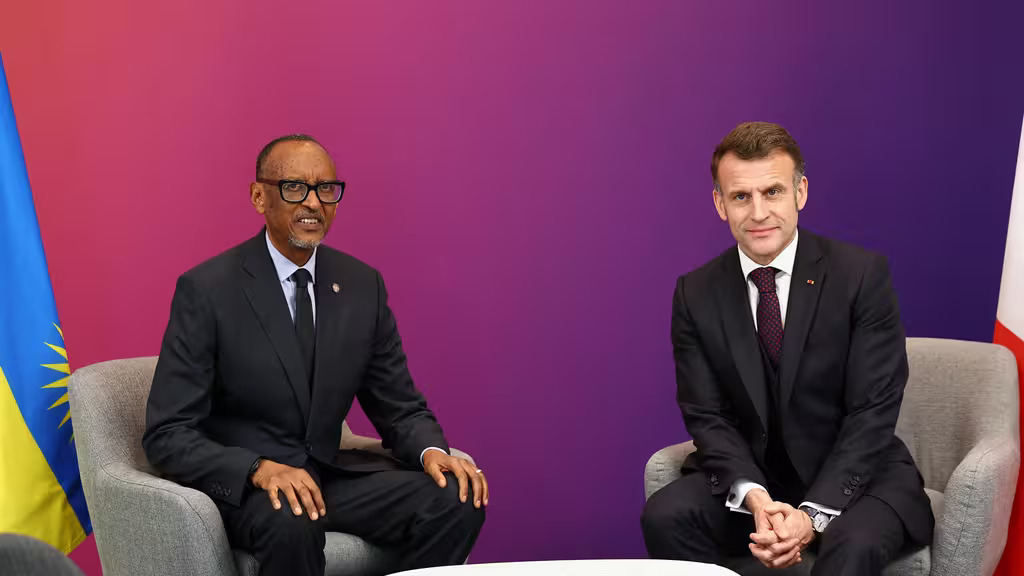
Perezida wa Repubulika y’u Rwanda, Paul Kagame na mugenzi we w’u Bufaransa, Emmanuel Macron, bazafungura ku mugaragaro Ikimenyetso cy’Urwibutso rwa Jenoside yakorewe Abatutsi mu Mujyi wa Paris, kuri uyu wa Kabiri.
Urwo rwibutso rwatekerejweho nk’ahantu ho kwibukira no kuzirikana abazize Jenoside ndetse no kwigisha amateka yayo hagati y’ibisekuru bitandukanye nk’uko byatangajwe na Perezidansi y’u Bufaransa. #RBAAmakuru
CALL FOR APPLICATIONS - Essentials on Phase Change Materials (PCMs)
*⃣ PCMs are transforming energy storage and temperature control across modern cooling systems.
*⃣ Are you an HVAC technician, refrigeration professional, environmental officer, or cold-chain entrepreneur?
🤝Join this in-person workshop to explore thermal energy storage and practical PCM applications.
🗓️22 – 23 June 2026 (2-day workshop)
📍ACES Rubirizi Campus, Kigali
📝Apply by email to [email protected] before 9th June 2026
🔗 Course details: https://t.co/PP2tv5tFr6
#ACES #PhaseChangeMaterials #ColdChain #ThermalStorage #CleanCooling #Rwanda
They Are People In This World That Kill Monsters So U Won’t Have To.They Hold The Gates Shut With Their Bare Hands!They’re Intelligent,They’re Dangerous;&When U Say That They Are The Monsters,They’ll Show U What This World Looks Like When The Gates Are Wide Open.#JackRyanGhostWar
🎙️ 𝐓𝐡𝐞 𝐍𝐁𝐑 𝐏𝐨𝐝𝐜𝐚𝐬𝐭-𝐄𝐩𝐢𝐬𝐨𝐝𝐞 𝟐𝟐 𝐢𝐬 𝐥𝐢𝐯𝐞!
Why did the National Bank of #Rwanda raise the Central Bank Rate to 8.25%? What does this mean for inflation, businesses, and your everyday spending?
In today’s episode, Dr. Thierry Kalisa, Chief Economist at the National Bank of Rwanda helps us unpack the latest Central Bank Rate Decision, and what it signals for Rwanda’s economic outlook.
🎥Watch the full episode: https://t.co/bJsmAt0rdx
🎧 Listen on the go:
Apple Podcasts: https://t.co/yM4cAwhev6
Spotify: https://t.co/X3MNFN2TbP
#TheNBRPodcast
#BNREngage
#KnowYourCentralBank
Here’s is my full quote on Rwanda’s nuclear energy agenda, it was unfortunately chopped up to fit the writer’s storyline:
“Rwanda is working with a variety of global partners to develop our civil nuclear capabilities. In addition to Russian company Rosatom, a world leader in construction of nuclear power plants, last week at the Nuclear Energy Innovation Summit in Kigali, Rwanda signed an MoUs with the US Government, to advance civil nuclear cooperation between the two countries, as well as other agreements between Rwanda’s Atomic Energy Board and companies from the United States, South Africa and Austria.
In Rwanda, feasibility studies for both the construction of a facility using SMR technology and establishing the Centre for Nuclear Science and Technology are ongoing. Historically, these kinds of projects have been financed by governments, but more recently multilateral development banks have started discussions around financing frameworks to expand access for emerging economies embarking on nuclear energy development.”
Sad But,Developing Countries Like Rwanda Have To Pay The #IdiotTax For Growing Their Economies,Simply Because Of A Systemic #LackOfIngenuity That Leads To Overly High-Priced Execution,Planning,&Maintenance Costs For Big Projects,Thus Inflating Our Already Limited National Budget.