NEAH offers cutting-edge research, innovative training programs and business-games, and ecosystem development to support your energy transition journey.
🛠️ “The Innovation Fund is a deployment instrument — not an R&D grant.”
Continuing a special financing block on #WattsUpWithStartups, Emin Askerov (@askcarbonranger) and Akul Raizada (@AkulRaizada) take a close look at how EU funding decisions are actually made — using the latest Innovation Fund results as a concrete case.
The discussion focuses on what the outcomes reveal in practice:
💠 why large-scale manufacturing dominated the battery call
💠 how readiness outweighed technological novelty
💠 what the selected projects say about EU risk appetite
💠 and how changes in the ongoing 2025 call reshape options for battery and clean-tech players
Akul Raizada is a Policy & Funding Consultant focused on clean energy financing and industrial decarbonisation. He works with corporates, investors, and public institutions to translate EU policy instruments into bankable projects. Based in Paris and active across Europe, MENA, and India, Akul brings a practitioner’s perspective on what it actually takes to move from policy ambition to executable investment decisions.
A grounded conversation for founders and scale-ups trying to position themselves realistically — before committing months of time and resources.
🎧 Listen now: https://t.co/uuF7gPd5jX
#EUFunding #InnovationFund #CleanTech #Batteries #FOAK #IndustrialDecarbonisation #EnergyTransition
⏰ The hardest part of a FOAK project often starts after the grant is awarded.
What actually makes clean-tech projects stumble when they move from pilot to first-of-a-kind scale?
In a special block focused on clean-energy financing, Emin Askerov (@askcarbonranger) speaks with Akul Raizada (@AkulRaizada) about what it really takes to turn EU policy ambition into executable investment decisions.
The conversation goes beyond theory and grant headlines, touching on issues that consistently surface in FOAK projects:
💠 why risk multiplies beyond the technical layer
💠 why costs and resources rarely scale linearly
💠 why EU funding is often misunderstood as “free money”
💠 and how milestone-based funding can quietly stall projects
Akul Raizada is a Policy & Funding Consultant focused on clean energy financing and industrial decarbonisation. He works with corporates, investors, and public institutions to translate EU policy instruments into bankable projects. Based in Paris and active across Europe, MENA, and India, Akul brings a practitioner’s perspective on what it actually takes to move from policy ambition to executable investment decisions.
This episode will resonate with founders, scale-ups, and industrial players working across hydrogen, batteries, grids, and other capital-intensive clean-tech pathways.
🎧 Listen it now: https://t.co/wxL65mujzS
#CleanTech #EnergyTransition #EUFunding #FOAK #IndustrialDecarbonisation #Startups #VentureCapital #PolicyToPractice
🌬️ Why offshore wind stalled in the #USA — and why it matters beyond one country
The US offshore wind pipeline didn’t just slow down – planned capacity fell from 39 GW to 6 GW in a few years. And the reasons are economic, not technological.
Most US offshore wind projects secured long-term power contracts in the late 2010s and early 2020s, when interest rates were low and financing conditions were favourable. As borrowing costs rose sharply and construction inputs became more expensive, several developers stated that previously agreed contract prices no longer covered project costs. This led to the cancellation of some projects and attempts to renegotiate contract terms in others.
Delays made it worse. Offshore wind in federal waters undergoes a multi-year permitting process, with coordination among agencies and stakeholders. When timelines extend, projects remain exposed to changing costs and financing conditions for longer.
Developers didn’t walk away from offshore wind as a technology. They paused or reshaped near-term exposure where frameworks proved too fragile to absorb shocks.
That pattern isn’t unique to the US. Similar stress points are emerging elsewhere as offshore wind scales: long permitting timelines, infrastructure lag, and economics that depend on institutions moving in sync.
Offshore wind hasn’t failed. But the US case shows how quickly large-scale clean energy can stall when financing, permitting, and infrastructure fall out of alignment.
#EnergyTransition #OffshoreWind #Renewables #EnergySystems #GridInfrastructure #Permitting #CleanEnergy #NEAH #EnergyPolicy #Infrastructure
🌍 How much will climate adaptation actually cost?
A new @McKinsey report puts a price tag on something we often discuss in abstract terms: adapting to a warmer, more volatile climate — from heatwaves and floods to droughts and coastal risks.
🔹 Today, the world spends around $190 billion per year protecting people and assets from extreme weather.
🔹 Even maintaining today’s level of protection becomes far more expensive as temperatures rise. At 2°C, costs could be 2.5 times higher than today, and much higher if countries aim for developed-economy protection standards – 6.2 times!
🔹 Closing today’s “resilience gap” — especially in low-income regions — would require hundreds of billions more annually, even before accounting for future warming.
🔹 The burden is deeply uneven: lower-income countries face the highest exposure to heat, floods, and droughts, yet have the least capacity to invest in protection.
🔹 Adaptation is not just about megaprojects. Many measures already exist — cooling, drainage, flood barriers, mangroves — but scaling them requires planning, governance, and steady funding over decades.
Perhaps the most uncomfortable takeaway: adaptation is unavoidable, but it’s not a one-off bill. It’s a long-term commitment that grows with every fraction of a degree — and one that competes directly with other development priorities.
#Mitigation may shape the future climate.
#Adaptation determines how much damage we live with along the way.
#ClimateAdaptation #ClimateRisk #Infrastructure #Resilience #ClimateFinance #EnergyTransition
Read the full report here: https://t.co/6HAhrWfZqz
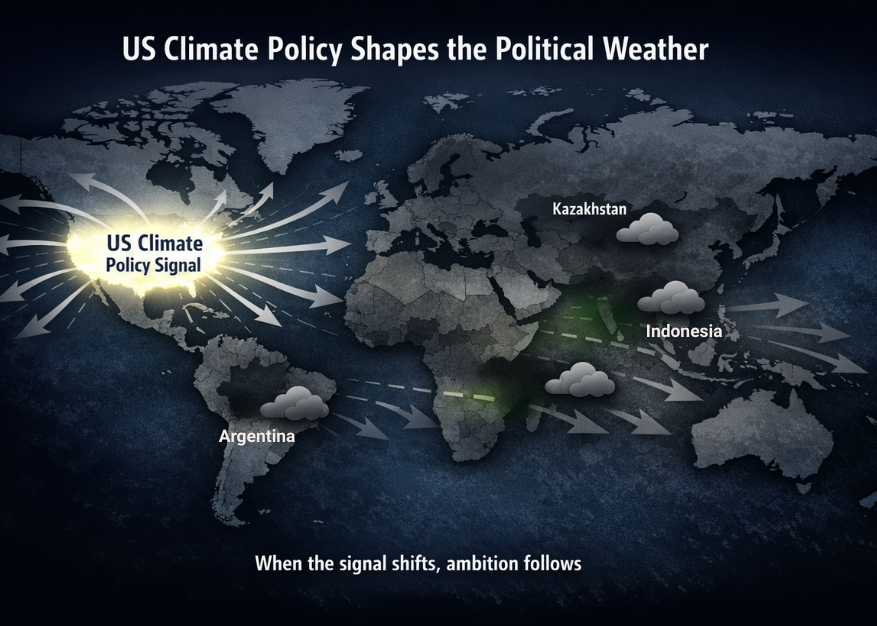
🇺🇸 🌍 Why does US climate policy matter far beyond US borders?
Because it doesn’t just shape emissions pathways — it sets the global permission structure for climate action.
Over the past few years, a recurring pattern has become hard to ignore: when US climate policy signals commitment, climate ambition elsewhere becomes politically safer. When that signal weakens, climate rhetoric in many countries shifts just as quickly.
This isn’t about climate science suddenly changing. It’s about political risk management.
🇰🇿 Take #Kazakhstan as one example.
In 2021, President Tokayev publicly endorsed the country’s long-term climate ambition, pledging that Kazakhstan aims to become carbon neutral by 2060. In 2025, Tokayev’s tone had shifted markedly — with climate agendas increasingly questioned and coal re-emphasised as an economically rational choice. The timing of this rhetorical pivot aligns closely with broader shifts in the global political climate.
But Kazakhstan is not unique.
🇮🇩 #Indonesia provides a clear illustration of gradual realignment.
Throughout the early 2020s, the country positioned itself as a pragmatic supporter of the energy transition, committing to net-zero by 2060 and engaging actively in international climate frameworks. By 2025, however, official rhetoric had become more openly conditional — questioning the fairness and relevance of global climate commitments as major economies reassessed their own obligations, while coal retained a central role in energy planning. This recalibration followed closely on the weakening of US climate leadership signals.
🇦🇷 #Argentina reflects a sharper and more explicit pivot.
In the early 2020s, climate commitments were framed as part of Argentina’s international alignment, including net-zero pledges and participation in multilateral climate agreements. After Javier Milei was elected, climate policy was openly deprioritised, with environmental regulation scaled back and international climate commitments publicly questioned — including discussions of a potential withdrawal from the Paris Agreement. This shift coincided with a broader re-emergence of climate-sceptical narratives in US political leadership.
What these cases show is not uniform rollback, but signal sensitivity.
For some countries, shifts in US climate policy act as a political vane. For others, they provide cover for recalibrations already underway. In both cases, US climate positioning matters — not as a template, but as a signal of what is politically safe.
👀 That’s why US climate policy is worth watching.
Not because it determines outcomes everywhere — but because it shapes the space in which many countries decide how far, and how openly, they are willing to go.
#ClimatePolicy #ClimateGovernance #EnergyTransition #Geopolitics #USPolitics #NetZero #EnergySecurity #ClimateAction #GlobalPolicy #NEAH #Argentina #Indonesia #Kazakhstan
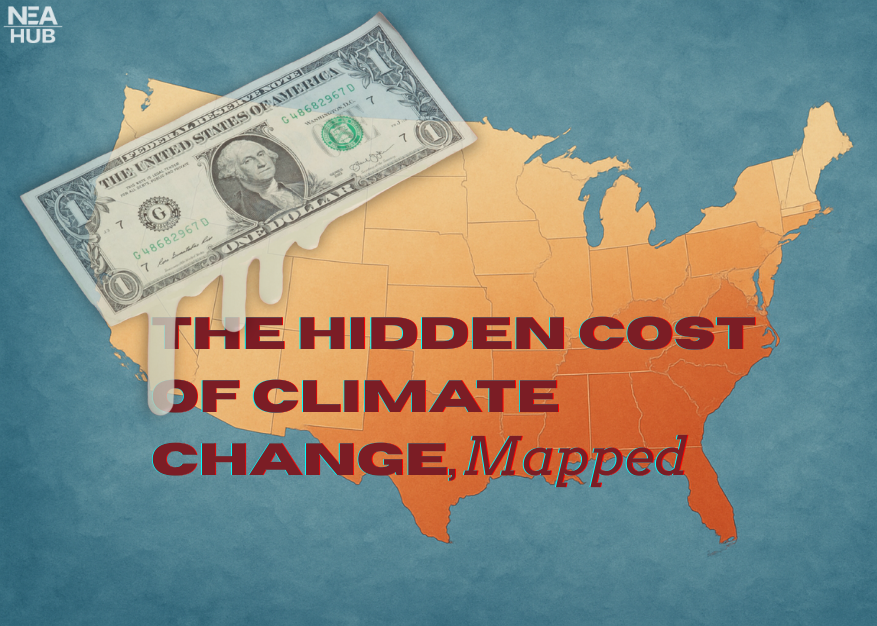
💵𝗖𝗹𝗶𝗺𝗮𝘁𝗲 𝗰𝗵𝗮𝗻𝗴𝗲 𝗶𝘀 𝗮𝗹𝗿𝗲𝗮𝗱𝘆 𝗶𝗻 𝘆𝗼𝘂𝗿 𝗯𝗶𝗹𝗹𝘀.
A new analysis by the National Bureau of Economic Research (@nberpubs) shows that climate change is quietly costing US families $400–$900 each year — and in 10% of counties, the burden exceeds $1,300 per household. These aren’t hypothetical future scenarios but costs from recent decades.
Where does the money go?
💸 Rising home insurance premiums and claims
🥵 Higher cooling bills
⚠️ Health impacts and increased mortality linked to heat and disasters
And the highest costs fall on households least able to absorb them.
The geography is just as unequal: western states, the Gulf Coast, and Florida are already paying the highest price for extreme weather and climate-driven disasters. According to the paper, natural disasters — not gradual warming — account for the majority of the burden so far.
So when some politicians argue the US should step back from climate commitments or dismiss the urgency of action, the reality is this:
America isn’t avoiding costs by ignoring climate change. It’s already paying them — through higher bills, higher risks, and higher losses.
And the truth is universal: no country gets a discount on climate inaction. Only the scale varies.
#ClimateEconomics #ExtremeWeather #ClimateRisk #EnergyTransition #Resilience #USPolicy #NEAH
Read the full study here: https://t.co/6Elyd0bZnb
🚚⚡𝗜𝗳 𝘁𝗵𝗲𝗿𝗲’𝘀 𝗼𝗻𝗲 𝘀𝗲𝗴𝗺𝗲𝗻𝘁 𝘁𝗵𝗮𝘁 𝗵𝗮𝘀 𝗿𝗲𝗽𝗲𝗮𝘁𝗲𝗱𝗹𝘆 𝗵𝘂𝗺𝗯𝗹𝗲𝗱 𝗘𝗩 𝗶𝗻𝗻𝗼𝘃𝗮𝘁𝗼𝗿𝘀, 𝗶𝘁’𝘀 𝗺𝗲𝗱𝗶𝘂𝗺-𝗱𝘂𝘁𝘆 𝘁𝗿𝘂𝗰𝗸𝘀.
For years, startups promised to electrify the workhorses of urban logistics — 𝙙𝙚𝙡𝙞𝙫𝙚𝙧𝙮 𝙫𝙖𝙣𝙨, 𝙪𝙩𝙞𝙡𝙞𝙩𝙮 𝙩𝙧𝙪𝙘𝙠𝙨, 𝙨𝙚𝙧𝙫𝙞𝙘𝙚 𝙫𝙚𝙝𝙞𝙘𝙡𝙚𝙨. And for years, many of them hit the same wall.
@arrival tried to reinvent manufacturing before proving basic economics.
@LordstownMotors couldn’t scale production or secure stable fleet demand.
@nikolamotor collapsed under governance and credibility issues.
ELMS: Electric Last Mile Solutions went bankrupt within a year of going public.
@canoo pivoted so many times it never built a coherent path to market.
Different stories, but a common pattern: this segment is brutally difficult. The payloads are heavy. The duty cycles are long. Margins are razor-thin. Fleet operators demand reliability, predictable costs, and vehicles that “just work” — every single day.
Amid that landscape, Harbinger stands out not because it has solved the problem, but because it’s approaching it with unusual realism.
𝘼 𝙥𝙪𝙧𝙥𝙤𝙨𝙚-𝙗𝙪𝙞𝙡𝙩 𝙚𝙡𝙚𝙘𝙩𝙧𝙞𝙘 𝙘𝙝𝙖𝙨𝙨𝙞𝙨. Modular battery packs sized for known routes. Early traction with fleet customers. And, unusually, a willingness to acknowledge how many others have failed before them.
It’s not a breakthrough yet — far from it. The structural challenges that crushed previous players haven’t disappeared. But a grounded, engineering-first approach may be exactly what this segment has been missing.
Medium-duty electrification won’t grab headlines like luxury EVs or hypertrucks. But if someone gets it right, the impact on urban emissions, air quality, and operating costs could be enormous.
💬 Do you think a chassis-first strategy gives companies like Harbinger a real shot — or is this segment still one of the toughest problems in the EV transition?
#EVs #ElectricTrucks #CleanTech #EnergyTransition #Logistics #Innovation #NEAH
Read more about Harbinger:
https://t.co/c2UZokZBa2
https://t.co/1ZW3crm9uK
https://t.co/mcgqR9KPdc
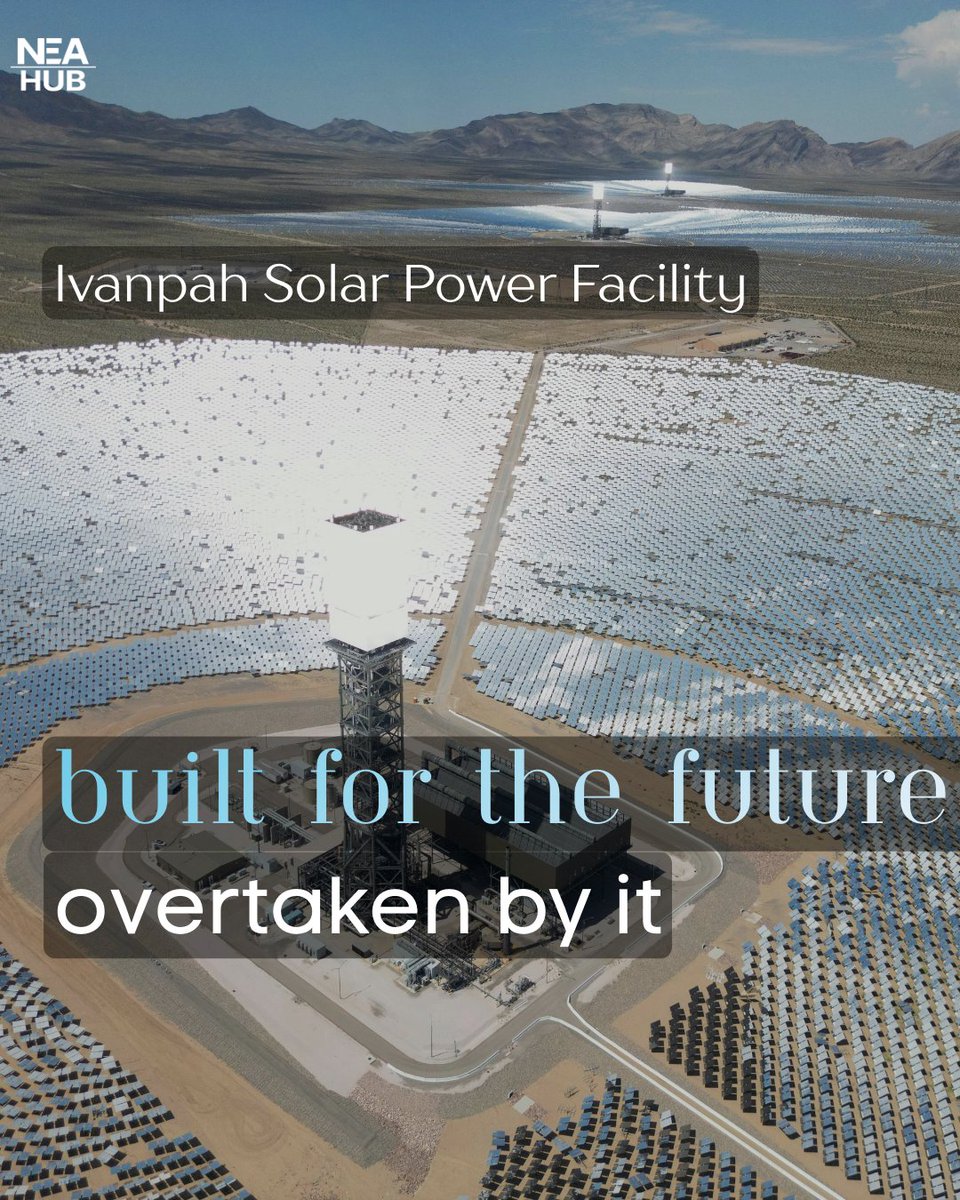
🔥 𝗔 𝗳𝗹𝗮𝗴𝘀𝗵𝗶𝗽 𝗨𝗦 𝘀𝗼𝗹𝗮𝗿 𝗽𝗿𝗼𝗷𝗲𝗰𝘁 𝗶𝘀 𝘀𝗵𝘂𝘁𝘁𝗶𝗻𝗴 𝗱𝗼𝘄𝗻 𝗮𝗳𝘁𝗲𝗿 𝟭𝟬 𝘆𝗲𝗮𝗿𝘀, 𝗼𝘃𝗲𝗿𝘁𝗮𝗸𝗲𝗻 𝗯𝘆 𝗮 𝗰𝗵𝗮𝗻𝗴𝗶𝗻𝗴 𝗲𝗻𝗲𝗿𝗴𝘆 𝗺𝗮𝗿𝗸𝗲𝘁.
The Ivanpah Solar Power Facility in California’s Mojave Desert, a $2.2-billion concentrated solar power (#CSP) flagship launched during the post-2008 green-stimulus era, is now preparing for closure after just a decade of operation.
Built to power 140,000 homes with 300,000 heliostats and three solar towers, Ivanpah was meant to prove that large-scale CSP could anchor America’s clean-energy future. Instead, it became a case study in how quickly technology, markets, and politics can shift beneath even the boldest projects.
Between 2010 and 2014 — while Ivanpah was still being built — the world changed:
☀️ PV module prices collapsed by ~80%.
⚡ Gas prices plunged with the shale boom.
🔋 Storage economics shifted toward batteries, not thermal systems.
🏜️ And Ivanpah faced real-world challenges: lower-than-expected output, high O&M costs, habitat concerns, and more gas use than planned.
By the time it came online, its business case was already outdated.
What’s driving the shutdown now isn’t a technical failure — it’s economics. Long-term power purchase agreements with utility companies Pacific Gas & Electric @PGE4Me and Southern California Edison @SCE are set to expire soon, and renewing them would mean Ivanpah would cost ratepayers more than replacing it with cheaper PV and storage.
Yet Ivanpah wasn’t pointless. The engineering lessons — from high-precision heliostat control to managing heat flux at scale — fed directly into today’s next-generation CSP projects. Progress often comes through expensive prototypes that show what works, what doesn’t, and what should come next.
Ivanpah’s story isn’t about the limits of renewables. It’s about how brutally fast energy innovation moves, and how even visionary infrastructure can become obsolete within a decade.
❔ What other technologies might face the same problem in the 2030s?
#EnergyTransition #SolarEnergy #Renewables #CSP #CleanTech #EnergyStorage #Infrastructure #Sustainability #NEAH #EnergyMarkets
Further reading:
Article in @IntEngineering: ttps://interestingengineering.com/energy/americas-biggest-solar-thermal-project or YouTube video: https://t.co/pnmhaxAWrY
Article in @FactorThisMedia: https://t.co/bausc3Th5O
⚡ 𝗪𝗵𝗮𝘁 𝘄𝗼𝘂𝗹𝗱 𝘁𝗵𝗲 𝘄𝗼𝗿𝗹𝗱 𝗹𝗼𝗼𝗸 𝗹𝗶𝗸𝗲 𝗶𝗳 𝗲𝗻𝗲𝗿𝗴𝘆 𝘀𝘁𝗼𝗽𝗽𝗲𝗱 𝗯𝗲𝗶𝗻𝗴 𝘁𝗵𝗲 𝗹𝗶𝗺𝗶𝘁𝗶𝗻𝗴 𝗳𝗮𝗰𝘁𝗼𝗿 𝗯𝗲𝗵𝗶𝗻𝗱 𝗮𝗹𝗺𝗼𝘀𝘁 𝗲𝘃𝗲𝗿𝘆𝘁𝗵𝗶𝗻𝗴 𝘄𝗲 𝗱𝗼?
Every now and then, it’s helpful to take a concept to an extreme — not because it will happen, but because it reveals how much of our current world is shaped by energy scarcity. A new @voxdotcom article imagines a future where clean energy is so cheap and abundant that many of today’s complex problems suddenly become solvable. And the thought experiment is revealing.
➕ With essentially unlimited energy, desalination could scale without draining ecosystems.
➕ Vertical farming could produce food year-round with minimal land.
➕ Industrial heat, fertilizers, synthetic fuels, and large-scale recycling become dramatically easier and cleaner.
➕ Carbon removal — currently limited by cost — becomes widely deployable.
But the article also shows the other side: abundance does not guarantee equality or better choices.
➖ Cheaper energy could fuel higher consumption, bigger homes, longer commutes, and more waste.
➖ Regions that lack access today might not benefit at all without deliberate policies.
The scenario may be unrealistic, but the thought exercise is useful. It highlights how deeply food, water, materials, and climate systems depend on the cost of energy — and how many solutions remain technically possible but economically out of reach because energy still isn’t “free.”
❔ How would your family’s or your company’s life change if energy were truly abundant?
#EnergyTransition #CleanEnergy #FutureOfEnergy #Sustainability #EnergySystems #ClimateTech #Innovation #EnvironmentalPolicy #GlobalEnergy
Read the article here: https://t.co/yS1XERr8Jt
3️⃣0️⃣ 𝗧𝗵𝗲 #COP30 𝗳𝗶𝗻𝗮𝗹 𝗱𝗲𝗰𝗶𝘀𝗶𝗼𝗻 𝘁𝗲𝘅𝘁 𝗺𝗮𝘆 𝘀𝗼𝗳𝘁𝗲𝗻 𝗶𝘁𝘀 𝗳𝗼𝘀𝘀𝗶𝗹-𝗳𝘂𝗲𝗹 𝗹𝗮𝗻𝗴𝘂𝗮𝗴𝗲 𝗮𝗴𝗮𝗶𝗻 — 𝗯𝘂𝘁 𝗽𝗵𝘆𝘀𝗶𝗰𝘀 𝘄𝗼𝗻’𝘁.
It’s tempting to read another diluted statement as a sign that little will change. But outside the negotiating rooms, the world doesn’t wait for consensus.
Temperatures keep rising. Extreme weather keeps breaking records. Water stress, crop losses, and supply-chain disruption keep eroding economic stability. None of that slows down because diplomats couldn’t agree on a sentence.
That’s why markets will react — not to the final text, but to the widening gap between global ambition and physical reality. When political signals weaken, transition risks don’t disappear. They get priced in differently: through insurance, sovereign risk, commodity volatility, and the cost of building resilience into everything from grids to factories.
✍️ And this is the real message companies should take from COP30: a lack of strong language doesn’t reduce risk — it shifts more responsibility onto national policy, corporate strategy, and the ability to plan for a world where climate impacts are no longer abstract.
Diplomacy may move slowly, but climate risks are accelerating. And the energy transition, with all its frictions, costs, and uncertainties, remains the only path that reduces those risks over time.
A weak COP text doesn’t make that less true. It only makes it more urgent to read the signals coming from the real world, not the diplomatic one.
❔ How should companies prepare when political consensus thins but physical risks keep rising?
#EnergyTransition #ClimateRisk #Sustainability #ClimatePolicy #COP30 #Decarbonisation #CleanEnergy #RiskManagement #NetZero #EnergyMarkets
🌆 𝗖𝗶𝘁𝗶𝗲𝘀 𝗮𝗿𝗲 𝘀𝘁𝗲𝗽𝗽𝗶𝗻𝗴 𝗶𝗻𝘁𝗼 𝘁𝗵𝗲 𝗔𝗜 𝗱𝗲𝗯𝗮𝘁𝗲 — 𝗯𝗲𝗰𝗮𝘂𝘀𝗲 𝘁𝗵𝗲𝘆’𝗿𝗲 𝘁𝗵𝗲 𝗳𝗶𝗿𝘀𝘁 𝘁𝗼 𝗳𝗲𝗲𝗹 𝘁𝗵𝗲 𝘀𝘁𝗿𝗮𝗶𝗻 𝗼𝗻 𝗴𝗿𝗶𝗱𝘀, 𝘄𝗮𝘁𝗲𝗿, 𝗮𝗻𝗱 𝗹𝗮𝗻𝗱 𝘂𝘀𝗲.
🌍 Last week, mayors from Paris, Phoenix, and several other global cities announced a joint push to make AI infrastructure more sustainable. This is not for a flashy geopolitical gesture, but because data centres now shape local grids, water systems, and land use more than almost any other new industry.
Their proposal is simple: lower-carbon operations, smarter cooling, better site planning, and real engagement with the communities that host these facilities.
⏩ What’s notable is not the document itself, but the shift behind it: AI is no longer just a tech-sector issue. It’s becoming a municipal-level infrastructure challenge — and part of the energy transition, whether cities are ready or not.
❔ How prepared is your city — or your company — for an AI infrastructure boom that uses as much energy and water as a small country?
Further Reading: https://t.co/wIVFkL6An5
#AIInfrastructure #EnergyTransition #SmartCities #Sustainability #DataCentres #UrbanEnergy #CleanTech #ClimateResilience #DigitalEconomy #GridModernisation
🇪🇸 A lesson from #Spain: generation may be easy — integration is not.
Spain is often cited as a renewable leader — and the numbers support that reputation.
In 2024, wind supplied ~22% of electricity, nuclear and solar PV each provided ~19%, natural gas contributed ~18%, and hydropower added ~14%.
Few large economies have such an evenly balanced generation mix — and coal is essentially gone.
But as always, the closer you look, the more complex the story becomes.
🔋 A renewable success built over decades
Spain’s wind industry dates back to the 1990s, and today wind remains the backbone of the electricity mix. Solar PV, which lagged after the infamous subsidy cuts in 2010–2013, staged a spectacular comeback after 2018 thanks to the repeal of the “sun tax” and falling costs. Coal generation has nearly disappeared, and emissions from the power sector have fallen sharply.
⚡ The hardest part is no longer generation — it’s the grid
Spain is now confronting the same issue that other high-renewables systems face: transmission capacity and permitting. In a country with excellent solar conditions, the bottleneck isn’t technology but where and how to connect new capacity. Regional disparities are significant — solar-rich areas (Extremadura, Andalucía) produce more than they can locally use, while industrial regions face congestion and delays.
🔌 Interconnection: the quiet geopolitical challenge
Spain remains one of Europe’s least-interconnected electricity markets. Limited links through the Pyrenees make it hard to export surplus renewable power — a challenge both for Spain and for the EU’s broader decarbonisation strategy. Upcoming France–Spain interconnectors are intended to change this, but timelines remain long and political resistance has been persistent.
⛽ And then there is gas
Spain is one of Europe’s largest #LNG importers and maintains vast regasification capacity. Unlike many countries, it built a diversified gas system long before the global spotlight shifted to LNG. This makes Spain both an energy-security buffer for Europe and a country navigating its own reliance on flexible gas capacity as renewables expand.
🔎 Spain shows what a mature energy transition looks like: not a clean sweep of renewables, but a system where grids, interconnections, flexibility, and industrial policy determine the next phase of progress.
For all the talk about solar and wind, Spain’s transition is increasingly defined by the less visible parts of the system — exactly where many countries will find themselves in the coming years.
#EnergyTransitionAroundTheWorld #EnergyTransition #CleanEnergy #Renewables #SolarEnergy #WindEnergy #EnergySystems #ElectricityMarkets #GridInfrastructure #LNG #Decarbonisation #NetZero #Sustainability
🎲 You think you’re doing great… until the next decision flips everything.
That’s the experience most people have the first time they play the Energy Trilemma Game.
You start with a clear plan: boost sustainability, keep the lights on, maintain equity. And for a few moves, it works.
Then an unexpected dilemma lands — a technology setback, a market shock, a policy choice that benefits one score but drags another down. Suddenly, your neat strategy doesn’t look so neat anymore.
〰️That’s the point of the game: energy systems don’t move in straight lines.
The game offers four difficulty levels, and each lets you clearly see which parts of the trilemma need improvement. But actually improving them is not that easy: your path depends less on a “perfect” plan and more on how you adapt when the next surprise hits your scores.
If you want to see how quickly an energy transition can shift, break, recover, or take an entirely new path, give it a try.
👉 Play the Energy Trilemma Game here: https://t.co/AlyBIIu3ol
How many moves will your transition take?
#EnergyTrilemmaGame #EnergyTransition #EnergyTrilemma #EnergyPolicy #Sustainability #CleanEnergy #ClimateAction #GamifiedLearning
🇨🇳 China’s emissions flatlined over the past 18 months — what’s happening?
China’s CO₂ emissions have now been flat or falling for roughly 18 months, according to a new analysis by @laurimyllyvirta (@CREACleanAir) published by @CarbonBrief . That’s a significant datapoint in light of China’s recent pledge to peak emissions before 2030 and cut them further by 2035.
➖ The analysis finds that fossil-fuel and cement emissions have not risen since early 2024. In the third quarter of 2025, power-sector emissions were essentially flat even as electricity demand grew by more than 6%, reflecting rapid solar and wind expansion this year.
📈 At the same time, not all sectors are moving in the same direction — emissions in chemicals and plastics have grown — and the overall picture still depends heavily on the fourth quarter.
🏛️ One important caveat: the analysis is based primarily on official Chinese statistics, which are not immune to gaps or inconsistencies. While methodologies like those used by CREA and Carbon Brief help cross-check trends, small changes in monthly data can be within the margin of uncertainty.
Still, taken together, this 18-month plateau is a notable development. Whether it marks the start of a longer structural shift — or simply a pause driven by sectoral dynamics — remains to be seen.
🤔 Have you been following China’s emissions trajectory? What signals are you watching most closely?
Read the full analysis here: https://t.co/hj3WnadHDU
China’s recent pledge: https://t.co/vl0dyz9Gpu
#China #Emissions #CO2 #ClimateData #EnergyTransition #CleanEnergy #Decarbonisation #NetZero #CarbonBrief #CREA #ClimatePolicy #EnergySystems #Sustainability
🇬🇾 𝗚𝘂𝘆𝗮𝗻𝗮 𝗶𝘀 𝗴𝗲𝘁𝘁𝗶𝗻𝗴 𝗿𝗶𝗰𝗵 𝗼𝗻 𝗼𝗶𝗹 — 𝗮𝗻𝗱 𝗰𝗮𝗹𝗹𝗶𝗻𝗴 𝗶𝘁 𝗴𝗿𝗲𝗲𝗻.
Once one of South America’s poorest nations, Guyana is now the world’s fastest-growing economy, fuelled by vast offshore oil discoveries led by @exxonmobil. 𝐆𝐃𝐏 𝐡𝐚𝐬 𝐬𝐮𝐫𝐠𝐞𝐝 𝐛𝐲 47% between 2022 and 2024, and per-capita income has quadrupled in just five years.
💰 Between 1969 and 2024, The World Bank provided Guyana with about $1.8 billion in support — most of it loans that must be repaid. In just five years of oil production, however, Exxon’s operations have brought in over $6 billion for the country. That contrast shows how quickly oil has reshaped Guyana’s finances — and how deeply its future now depends on petroleum revenue.
⚖️ Yet this new prosperity comes with a contradiction. 𝐆𝐮𝐲𝐚𝐧𝐚 𝐦𝐚𝐫𝐤𝐞𝐭𝐬 𝐢𝐭𝐬𝐞𝐥𝐟 𝐚𝐬 𝐚 “𝐧𝐞𝐭-𝐳𝐞𝐫𝐨” 𝐜𝐨𝐮𝐧𝐭𝐫𝐲, claiming its rainforests absorb more CO₂ than the nation emits. That’s true, but at the same time, it’s also opening new oil fields that could produce over 1 million barrels per day by 2027.
💰 Oil revenues are transforming public finances. The government says the windfall will fund infrastructure and social programs. But dependence on a single volatile export, coupled with rapid spending, raises concerns about Dutch disease and fiscal sustainability.
🌳 Guyana’s 𝐋𝐨𝐰 𝐂𝐚𝐫𝐛𝐨𝐧 𝐃𝐞𝐯𝐞𝐥𝐨𝐩𝐦𝐞𝐧𝐭 𝐒𝐭𝐫𝐚𝐭𝐞𝐠𝐲 (𝐋𝐂𝐃𝐒) aims to channel oil proceeds into renewable energy and forest protection, including a 165 𝐌𝐖 𝐆𝐚𝐬-𝐭𝐨-𝐄𝐧𝐞𝐫𝐠𝐲 𝐩𝐫𝐨𝐣𝐞𝐜𝐭 to cut power costs by 50%. But that same project could lock in gas dependence and crowd out investment in renewables, which still make up under 7% of electricity generation.
🌍 Guyana’s challenge is not whether to drill — that decision has already been made — but 𝒘𝒉𝒆𝒕𝒉𝒆𝒓 𝒊𝒕 𝒄𝒂𝒏 𝒕𝒖𝒓𝒏 𝒂 𝒄𝒂𝒓𝒃𝒐𝒏 𝒃𝒐𝒐𝒎 𝒊𝒏𝒕𝒐 𝒂 𝒄𝒓𝒆𝒅𝒊𝒃𝒍𝒆 𝒕𝒓𝒂𝒏𝒔𝒊𝒕𝒊𝒐𝒏. For now, the country remains both a carbon sink and a rising oil power — a paradox at the heart of today’s global energy transition.
#EnergyTransitionAroundTheWorld #Guyana #OilAndGas #EnergyTransition #ClimateFinance #CarbonSink #Renewables #Decarbonisation #CCUS
🛢️ 𝗜𝘀 𝗕𝗶𝗴 𝗢𝗶𝗹 𝗿𝗲𝗮𝗹𝗹𝘆 𝘁𝘂𝗿𝗻𝗶𝗻𝗴 𝗴𝗿𝗲𝗲𝗻 — 𝗼𝗿 𝗷𝘂𝘀𝘁 𝗱𝗶𝘃𝗲𝗿𝘀𝗶𝗳𝘆𝗶𝗻𝗴?
For years, the world’s largest oil companies have described themselves as “energy firms in transition.” But what does that look like in numbers?
🔎 A new Nature Sustainability (@SpringerNature) study found that, between 2010 and 2023, renewables accounted for only around 2–3% of the total capital expenditure of @bp_plc , @Shell , @TotalEnergies , @exxonmobil , and @Chevron — a modest fraction of overall spending.
Even the most active players are still far from a real transition. TotalEnergies, which leads the group with about 14.6 GW of installed renewable capacity, generates only 1.6% of its total primary energy from renewables. @eni , BP, @TAQA , and Shell follow at around 4 GW each.
❕ That doesn’t make these efforts meaningless: some of the world's largest wind, solar, and biofuel projects exist thanks to oil-industry engineering, logistics, and financing capacity. But the data suggest that this is a diversification, not a transformation — at least for now.
And perhaps that’s the real question:
How fast can an industry that still supplies around 85% of the world’s energy reinvent itself — without shaking the system it keeps running?
#EnergyTransition #OilAndGas #Renewables #Decarbonisation #EnergyMarkets #ClimateStrategy #Sustainability
Further Reading:
Article in Nature Sustainability: https://t.co/LTjMGzx65Z
Summary by CleanTechnica: https://t.co/7WTfcZ8LZ1
Summary by https://t.co/EDwCmHY3qK: https://t.co/obXXuARt7K
💨 𝗖𝗮𝗻 𝗰𝗮𝗿𝗯𝗼𝗻 𝗰𝗮𝗽𝘁𝘂𝗿𝗲 𝗳𝗶𝗻𝗮𝗹𝗹𝘆 𝗺𝗼𝘃𝗲 𝗳𝗿𝗼𝗺 𝗰𝗹𝗶𝗺𝗮𝘁𝗲 𝘁𝗵𝗲𝗼𝗿𝘆 𝘁𝗼 𝗯𝘂𝘀𝗶𝗻𝗲𝘀𝘀 𝗿𝗲𝗮𝗹𝗶𝘁𝘆?
When tech giants like @Google start investing in carbon capture, the message is clear: #CCUS has officially gone mainstream.
But beneath the headlines, the numbers still raise hard questions — about cost, scalability, and credibility.
For years, CCUS was dismissed as too expensive, too small, or too slow. Now, with hundreds of projects in development worldwide and policy incentives stacking up, the question is no longer if CCUS will grow — but how fast, and how far.
⚖️ Can it actually make a dent in industrial and power-sector emissions before 2030?
💰 Are we creating a viable market or just another subsidy-driven experiment?
🌍 And if companies like Google, ExxonMobil, and Aramco are all betting on capture — are they chasing climate leadership, compliance, or a new carbon economy?
Join us for Power & Purpose LIVE jointly with the Worshipful Company of Fuellers @WCoFuellers: CCUS — Between the Headlines, the Hopes and the Hard Numbers
🗓️ November 13, 16:00 CET
🎙️ with Ashutosh Shastri (Worshipful Company of Fuellers/ EnerStrat Consulting) and Mohamed Hassan (@Carbon_Direct), hosted by Tatiana Mitrova @mitrovat and Kruthika A. Bala (Worshipful Company of Fuellers)
🔗Secure your spot - https://t.co/xDZ8Wd2hlg
Together, we’ll separate the optimism from the evidence — and explore whether CCUS can become not just a decarbonization tool but a cornerstone of the next energy economy.
#NEAH_Events #PowerAndPurpose #CCUS #CarbonCapture #EnergyTransition #CleanTech #Decarbonization #ClimateAction #CarbonManagement #GasInTransition
🇸🇦 Saudi Arabia wants to lead the low-carbon era — without leaving the high-carbon one.
The world’s largest oil exporter has pledged to reach net zero by 2060 and generate half of its electricity from renewables by 2030. Yet the kingdom is not decarbonising its economy — it’s repositioning it.
1️⃣ Renewables still contribute less than 1% of total generation, with solar projects like Sakaka and Sudair representing early steps rather than a systemic shift. The country’s focus remains on hydrogen and carbon capture — technologies designed to extend the life of hydrocarbons by lowering their carbon footprint.
Through the Jafurah gas field, @aramco 's #CCUS initiatives, and the @NEOM plant project, Saudi Arabia aims to become an exporter of “clean molecules” such as blue and green hydrogen. Yet much of this effort targets export markets, not domestic decarbonisation. The goal is to preserve market relevance in a low-carbon world, not to phase out oil.
At home, energy efficiency and subsidy reforms are progressing slowly, while demand from industry and a growing population continues to rise. Renewables and grid modernisation lag far behind consumption growth.
Internationally, Riyadh’s “circular carbon economy” reframes oil as part of the solution — a narrative that keeps producers at the centre of global climate discussions.
🌍 Saudi Arabia’s approach is best understood not as an energy transition, but as an energy repositioning — a bid to adapt global perceptions faster than domestic systems.
#EnergyTransitionAroundTheWorld #EnergyTransition #SaudiArabia #Hydrogen #CCUS #CleanEnergy #OilAndGas #Decarbonisation #Vision2030 #MiddleEastEnergy