My friend and I (we’re from Northeast) despite dressing modestly and going early to avoid crowd (6 AM), were brazenly filmed and photographed inappropriately by these two men, including slowmotion videos of our chests and behinds!
#tajmahal@agrapolice@myogiadityanath
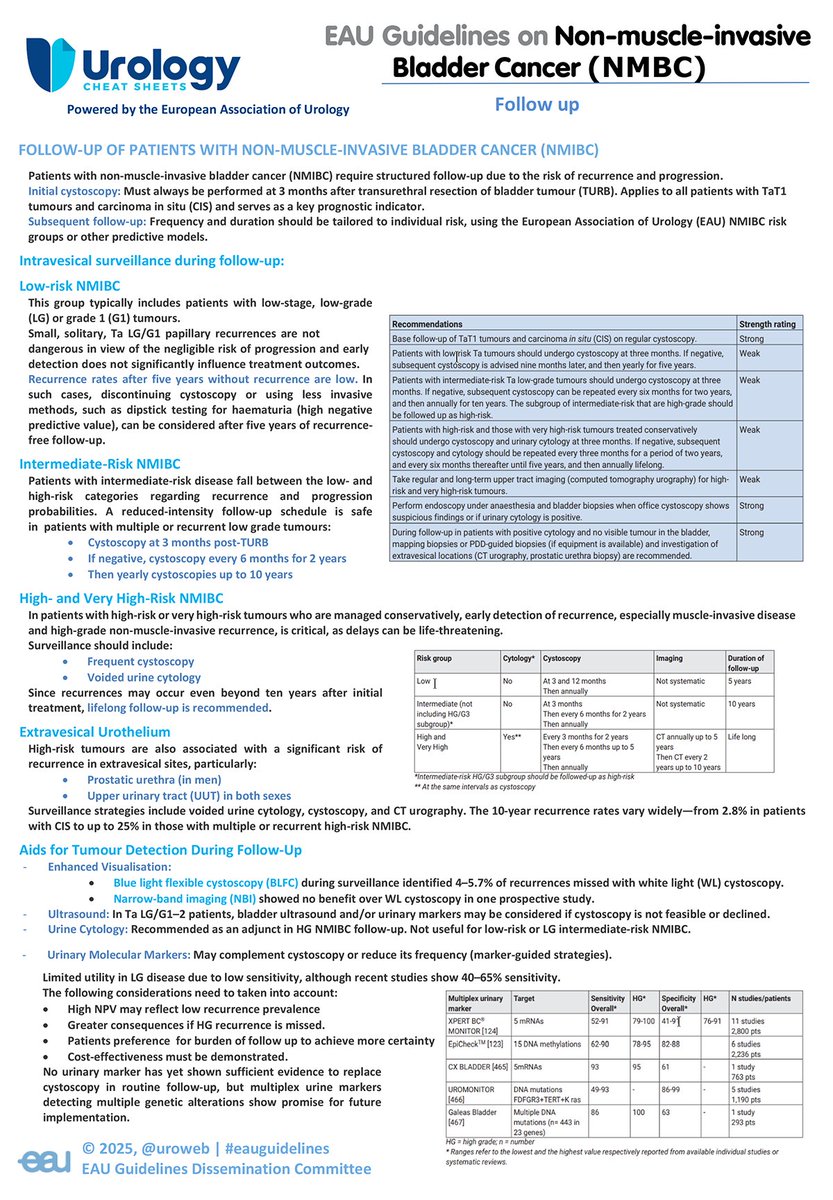
🧾 Cheat Sheet on Follow-up for NMIBC
🔹 Risk-based surveillance
🔹 Lifelong follow-up for high-risk patients
🔹 Role of cytology & markers
🔍 No substitute for cystoscopy
Download Cheat Sheet:
https://t.co/M7etsv1fhi
#BladderCancer#NMIBC#EAUguidelines
Most Indians think protein is daal or sattu.
But the fittest guys in the country don’t eat like that.
Virat Kohli. Sunil Shetty. Neeraj Chopra.
They eat high-protein meals every single day.
Here’s how you can do it too (with Indian food): 🧵
Bladder cancer care is evolving fast!
🧬Molecular subtyping = better personalization
🩸Liquid biopsy = non-invasive precision
💉Immunotherapy & ADCs = reshaping 1L & 2L treatment
A future of more tailored, less toxic care is coming, hopefully!
@bmj_latest@OncoAlert@WorldBladderCan
https://t.co/2Oal5BUXau
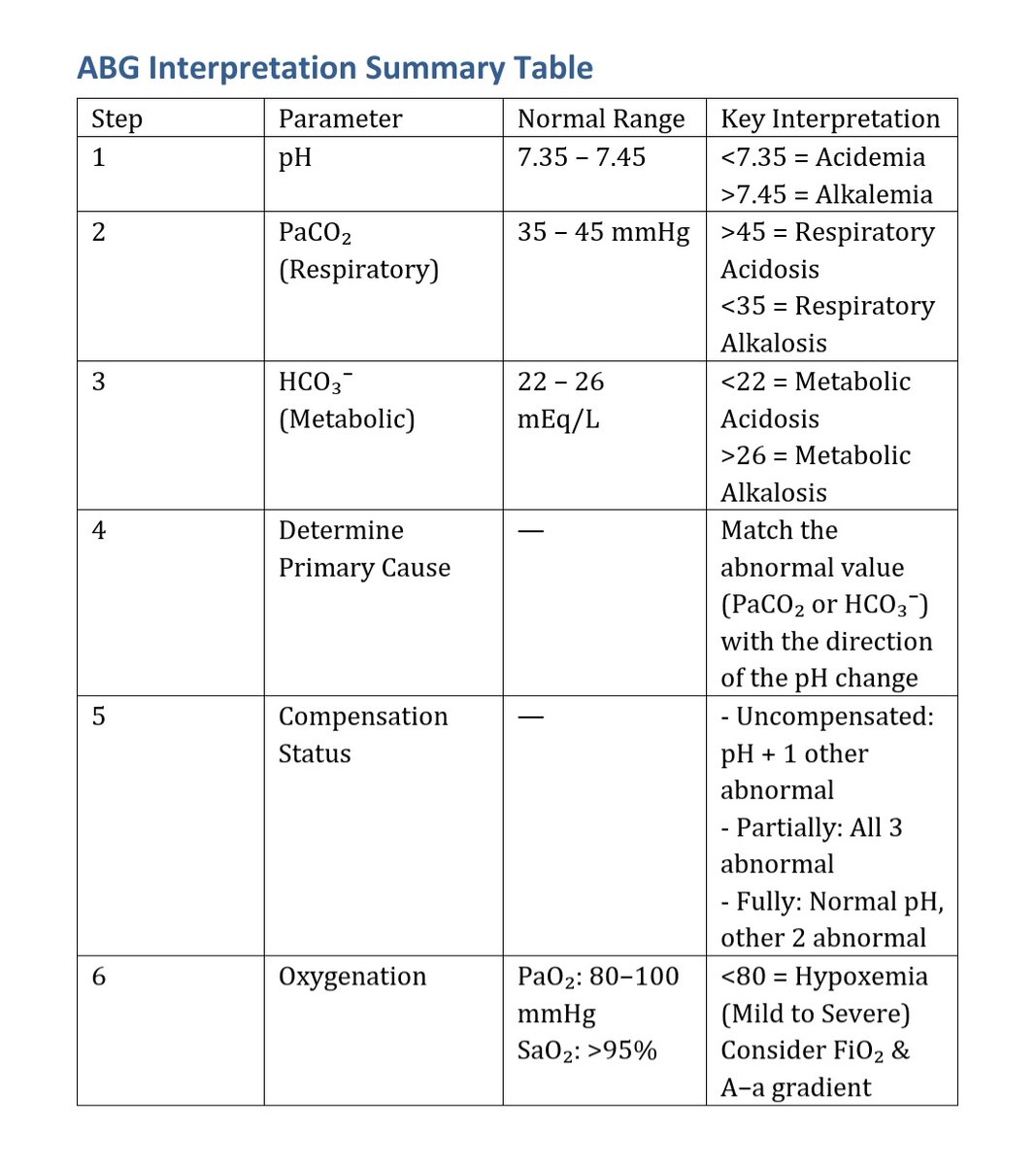
Steps of ABG (Arterial Blood Gas) interpretation:
Step 1: Check the pH
< 7.35 = Acidemia
> 7.45 = Alkalemia
Step 2: Determine Primary Cause (Respiratory or Metabolic)
Respiratory component = PaCO₂
Metabolic component = HCO₃⁻
If pH is low:
High PaCO₂ = Respiratory acidosis
Low HCO₃⁻ = Metabolic acidosis
If pH is high:
Low PaCO₂ = Respiratory alkalosis
High HCO₃⁻ = Metabolic alkalosis
Step 3: Check for Compensation
Uncompensated: 2 values are abnormal: pH + primary cause. (e.g., low pH and high PaCO₂) & Compensation HCO₃⁻ (3rd value) is still normal.
Partially compensated: All three (pH, PaCO₂, HCO₃⁻) are abnormal
Fully compensated: pH is normal but PaCO₂ and HCO₃⁻ are abnormal
Step 4: Evaluate Oxygenation (PaO₂ and SaO₂)
PaO₂ (Partial pressure of oxygen)
Normal: 80–100 mmHg (on room air at sea level)
Mild hypoxemia: 60–79 mmHg
Moderate: 40–59 mmHg
Severe: <40 mmHg
SaO₂ (Oxygen saturation)
Normal: >95%
<90% usually indicates significant hypoxemia
Example
ABG:
pH = 7.30
PaCO₂ = 50 mmHg
HCO₃⁻ = 24 mEq/L
pH is low → Acidemia
PaCO₂ is high → Respiratory cause
HCO₃⁻ is normal → No metabolic compensation
Interpretation: Uncompensated respiratory acidosis.
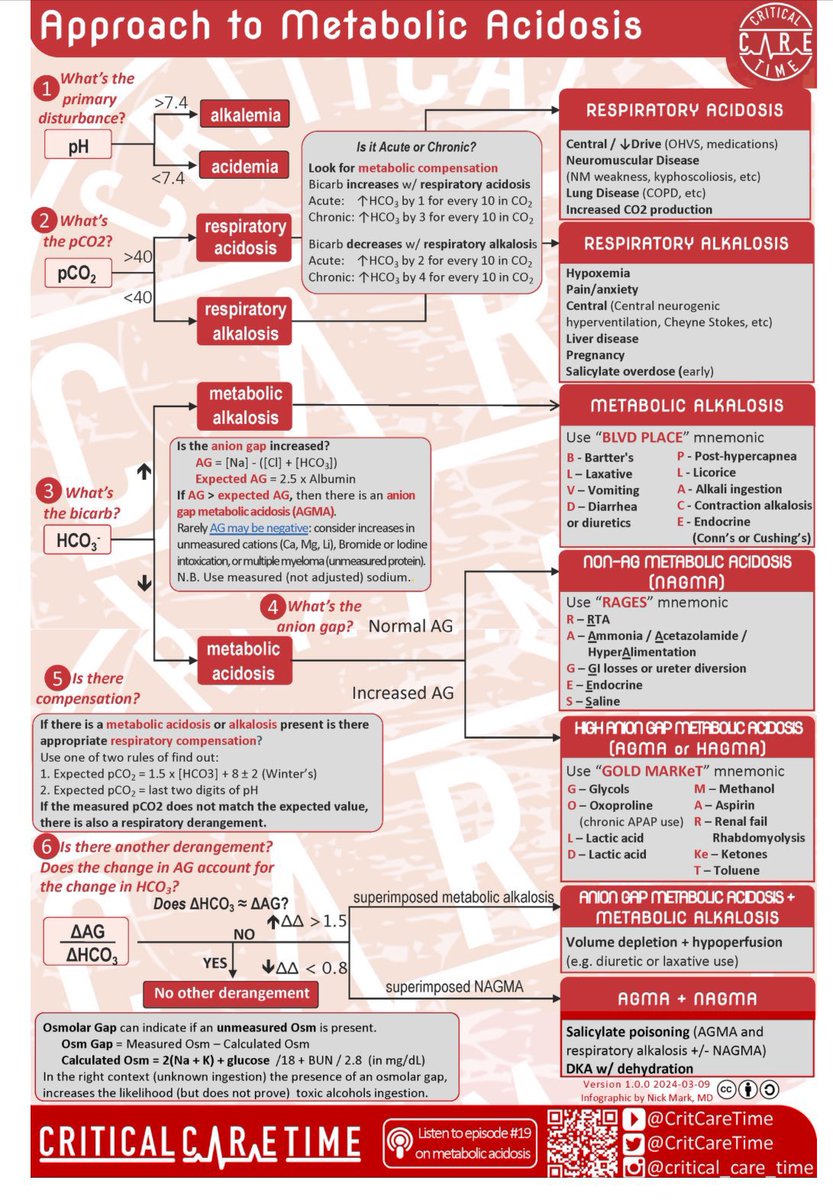
How to assess if the change in the third value is the expected compensation or it's mixed disorder? 🤔 Check my previous post.
Interesting case of idiopathic renal papillary necrosis. 45 years old male with previous open surgery for stones. Laser disintegration with FANS retrieval of sloughed papillae.
🚨 🧠📌 Confused about Antiplatelets in Stroke ?
🤯 Which one?
When to start?
How long?
Let's simplify it together! 2025 Update 🧠💊
Meet Mr. X , a cheerful 62-year-old who just had a minor stroke. Thankfully, symptoms are mild (NIHSS ≤3)—he can still crack jokes, but he's worried about a recurrence (and so is his loving family!).
So, Single or Double Antiplatelets? 🤔
Let's simplify:
In suspected iron deficiency anemia, a normal MCV and normocytic normochromic PS do not rule out IDA, as the patient may be in the pre-latent or latent stage.
Further diagnostic workup is warranted:
- S.Iron
- S.Ferritin(Earliest marker of IDA but Less Sn)
- TIBC
- PSAT
#MedTwitter
I had once posted about rabies from my old profile @AdiG1993 --> sadly I lost it when my profile was hacked.
This post will shed some light on the neurology of rabies!
The typical symptom of encephalitic rabies is hydrophobia.
The rabies virus is very intelligent.
It knows that gastric HCl will destroy it.
So the moment it enters the brainstem --> it hijacks the nucleus ambiguus whoch controls the pharyngeal musculature.
This leads to hyperactive pharyngeal reflexes.
At the slightest attempt to eat or drink anything --> these hyperactive reflexes cause the pharyngeal muscles to spasm --> patient cannot take anything per oral
This allows the virus to travel down the cranial nerves and reach the salivary glands --> enter the saliva
The virus is transmitted to another host when the original host (dogs and bats usually) bite another!
Why hydrophobia?
Because the patient is in extremis and most cultures use water in these circumstances.
The same thing can happen with drafts of air --> aerophobia!
We must respect the rabies virus.
It is a damnably clever little pathogen.
Wily, cunning and utterly ruthless!
I have attached a clinical desription by one of the greats of clinical neurology - Sir William Gowers - for reference.
#MedTwitter
#NeuroTwitter
#Rabies
#Hydrophobia
#Aerophobia