Kept writing the same glue around vercel's emulate for every alchemy project, so i packaged it. @potion.run/emulate. same emulators, just as effect layers now, plus an @alchemy_run resource that binds the url into a worker
https://t.co/dxAB3hIBYY
Introducing PayKit
A billing and entitlement library built with Effect and @alchemy_run. You declare your features, plans and prices in one your code and paykit will handle the rest for you
• Usage-based billing
• Plans, features and entitlements
• Stripe and Polar providers
• Event-sourced billing ledger
• BYO Database
• Optional admin panel built with @foldkit
repo link below 👇
I've always wanted to build something from scratch and take it all the way to the end, with a good UX. After a lot of procrastination, it's finally ready and I'm excited to share it
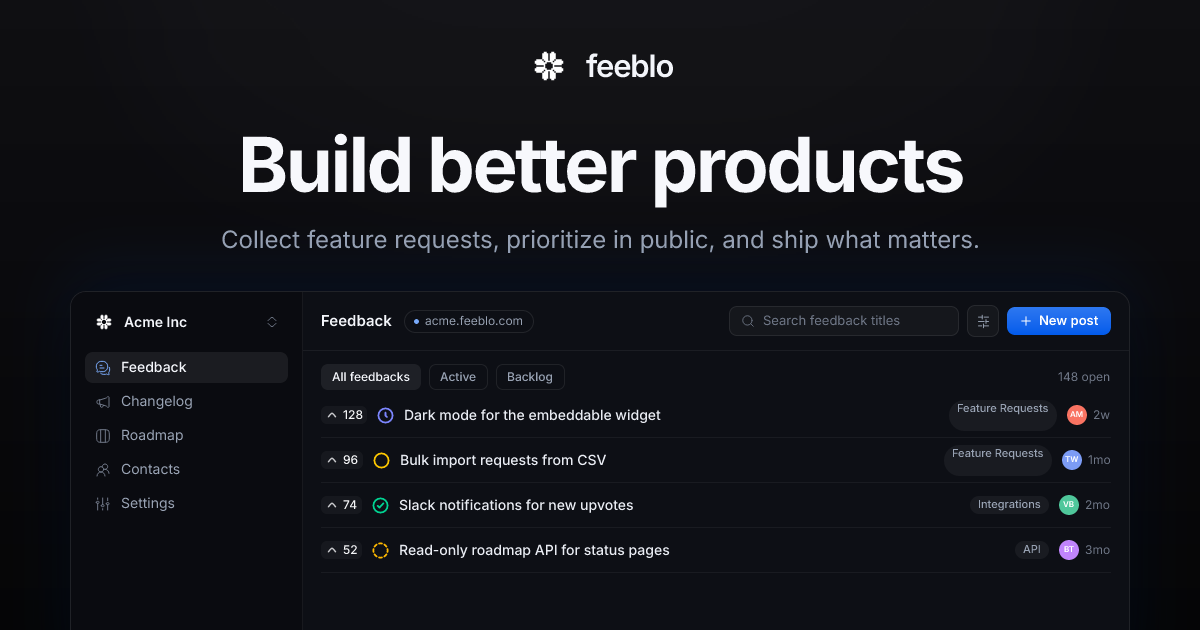
Meet https://t.co/lSfXocEnEz 👋
An open-source, self-hosted alternative to Canny that helps you collect feedback, let users vote on ideas, and share your roadmap.
built with @tanstack db and @EffectTS_
If you like it, drop a ⭐ on GitHub, it helps a ton 🙏
nah i switched over to blacksmith ages ago, but i just spent the entire day working with AI and optimizing it. i also spent a lot of time refactoring parts of the codebase.
here's a massive list of what we did if you'd like to throw your agent at it :)
---
Running less
A pull request runs only the tests and jobs its change reaches.
Test files whose inputs already passed are skipped.
A change to CI's own files runs only the jobs it touches.
The service builds and tests only when its Rust inputs change.
A pull request reuses the service checks main already passed.
Merges record a pass instead of running CI again.
Merges check types only, with no pack or tests.
A PR packs only when it changes what gets packed.
The heavy checks run once a day, in the sweep before the release.
The deep property tests run only in the daily sweep.
Recording workflows and lint-only changes no longer run every test.
Each review no longer starts a full CI run.
Running faster
Test shards are sized by measured time, not file count.
Shards that finish early take files from the busy ones.
The slowest test files were split.
Long waits in tests were cut short.
Workers in server tests start in half the time.
Dependencies and the Rust toolchain load from a cached disk.
Vitest's cache is kept between shards.
Jobs that wait on each other were shortened.
Setup now runs in parallel with the work it waits for.
Format, lint and types got their own job and a bigger runner.
A duplicate debug Rust test step was removed.
The machine proof waits for real events, not fixed sleeps.
Machine sizes
Small runs moved to cheaper machines, and heavy ones to bigger machines where that bills less.
Flakes
CI files an issue for each flaky test and closes it once measured fixed.
A batch of flaky tests was fixed.
Watching cost
Each job has a time budget, and a daily health report flags overruns.
A spend watcher stops CI at the monthly cap.
The docs agents load have a size budget.
Local runs out
Pip's checks moved to CI and the local runs were deleted.
The checks run as test people moved to CI.
Recording lanes use the released CLI.
Releases and deploys
Production deploys only from a checked release.
The release gate now really blocks.
Still going: splitting the model-check tests into smaller files