I think a potential end state is every company's state represented as an append-only event log. An actor is the compute primitive that describe the actions that happen based on events that get appended to the log. An agent is a specific type of actor that uses inference over state.
You don't need a separate concept of an inbox when the log acts as an event bus. Actor model gives you isolation and identify out of the box, using which you define company specific permission boundaries.
@alchemy_run's DDD primitives seem to be along this direction. Tardigrade (https://t.co/RQnKITQaK9) is also based around this idea, with ergonomic primitives for state management using atoms that reduce and react to an event log.
Kept writing the same glue around vercel's emulate for every alchemy project, so i packaged it. @potion.run/emulate. same emulators, just as effect layers now, plus an @alchemy_run resource that binds the url into a worker
https://t.co/dxAB3hIBYY
Wanted to try @foldkit so I've been messing with a local-first gmail client that I can drive with my keyboard.
Demo uses fake data, but I have it deployed to Cloudflare with @alchemy_run and hooked up to my Gmail account. Still rough around the edges, especially the initial sync with gmail's rate limits, but it's been fun.
Outside of new model releases, @EffectTS_, @alchemy_run, and @paper have had the biggest impact on how I work over the last 6 months.
@dillon_mulroy's better-result was definitely the gateway drug. Still using it in prod, but everything new starts with Effect.
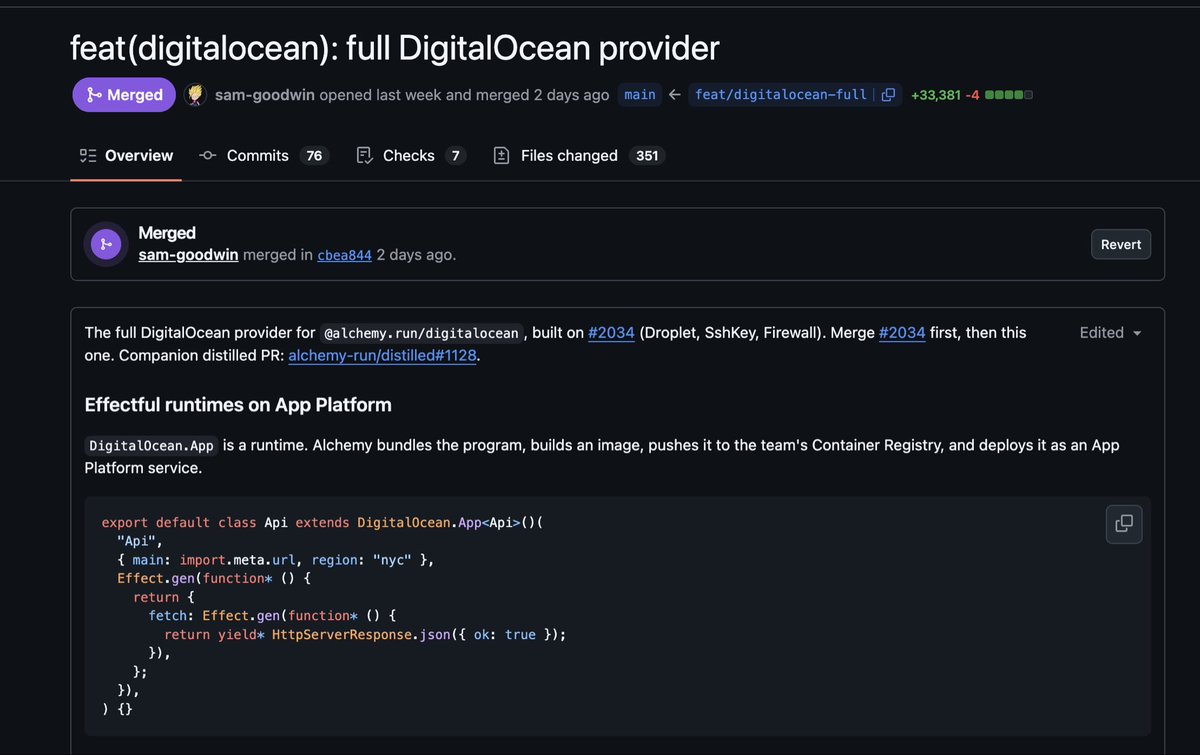
[email protected] is now out, bringing Rivet, Effect Cluster, Archil, Boat, Daytona, E2B, Modal and AWS Nitro Sandboxes on ECS. All supported in Alchemy Domain.
https://t.co/FC2fwebaa9
What’s it gonna take for @mattpocockuk to find and try @alchemy_run?
A course is one thing. A framework that codifies and streamlines the entire DX is another.
[email protected] is out and brings Effect 4.1 support, event replay to Alchemy Domain, improved GCP Cloud Run support, OIDC for AWS<->GCP, and over 95 bug fixes and small features.
https://t.co/qtUlTAhk6U
Had a lot of fun building this with @foldkit and @alchemy_run. Building an app and deploying it has never been easier. Shout out to the @EffectTS_ for their years of building a beautiful library.
It's all open source as well!
https://t.co/MegXnGo2Jp
Introducing 𝚍𝚞𝚛𝚊𝚋𝚕𝚎-𝚘𝚋𝚓𝚎𝚌𝚝-𝚖𝚒𝚐𝚛𝚊𝚝𝚘𝚛
Cloudflare wouldn't do it, so we did
Migrate DOs with no downtime to:
- Postgres
- Rivet Actors
- SQLite
- Anything else (PRs welcome!)
Includes library, prompt, & @alchemy_run support
we pointed an agent at distilled and told it to optimize; our @EffectTS_ sdks for cloud providers are now much more performant!
33% smaller bundles; 79% less latency per call; 74% less memory on import
here's how: https://t.co/6Z3TWesTVE
I love small changes like this that have huge impact.
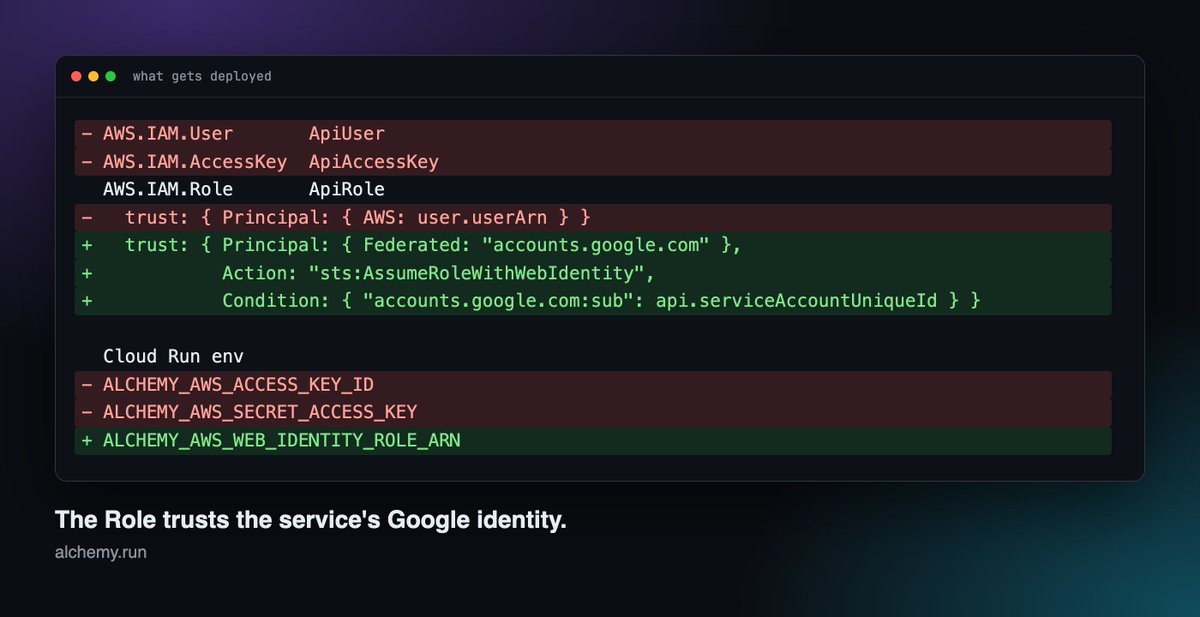
All AWS <-> GCP bindings in @alchemy_run now use Identity Federation (OIDC) for cross-cloud auth without long-lived API keys.
Upgrading will make all alchemy users more secure with no effort on their part.
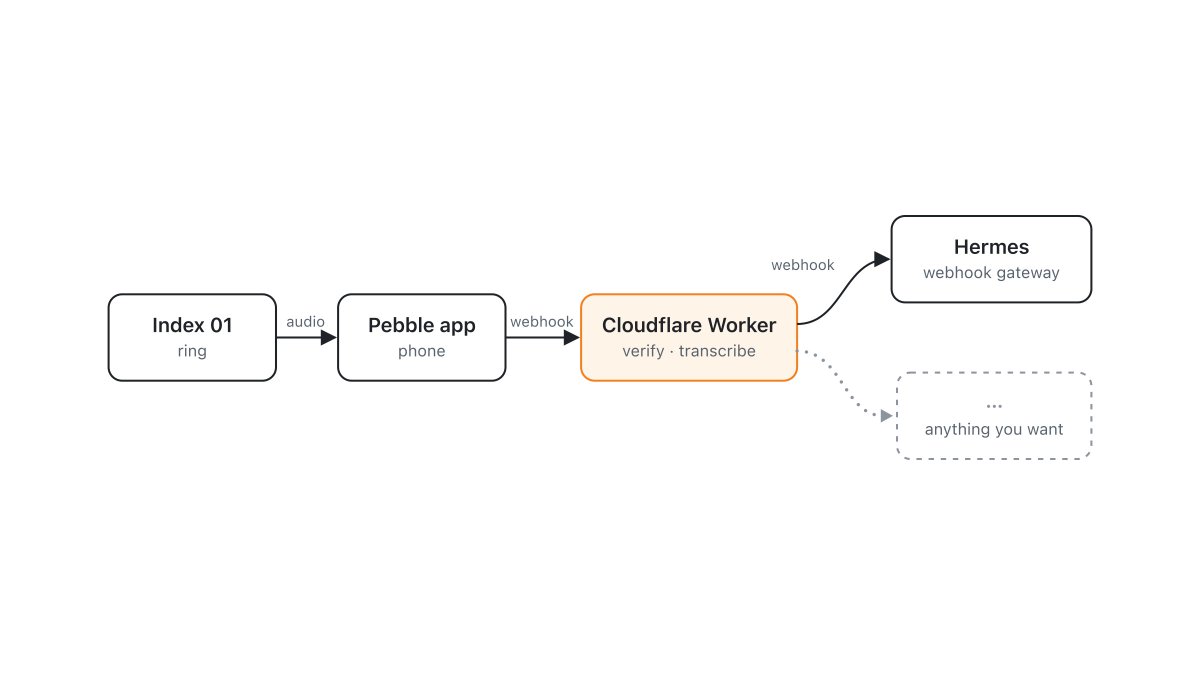
if you'd like to speak to @NousResearch Hermes with your @Pebble Index01, you can use the webhook features of each + a little glue
(repo in reply, just ask your agent to hook it all up for you)
built with @alchemy_run@Cloudflare and @EffectTS_
[email protected] is out.
The alchemy package is now split into one package per provider, cross-cloud bindings are universal, effect workflows, distilled heap/bundle optimized and much more!
https://t.co/s1NCGzWODP