The Political Sociology of States
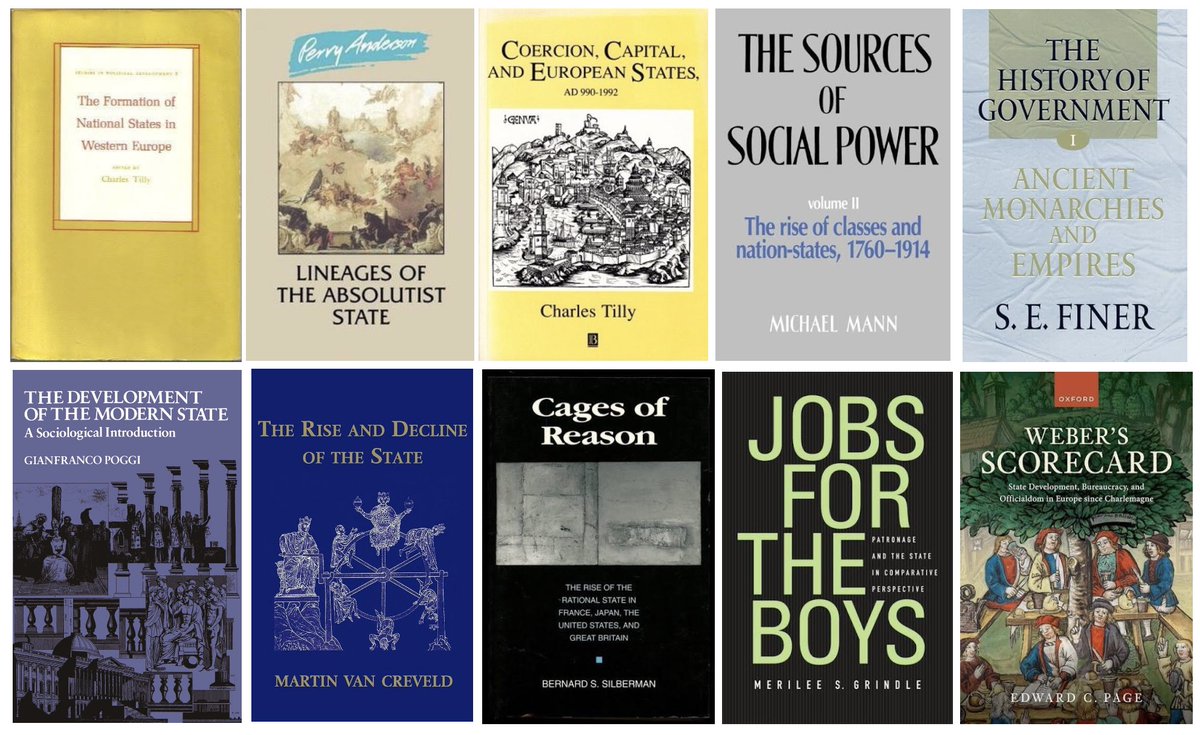
Starting with Tilly’s 1975 landmark volume, The Formation of National States, these are some great works on the origins & evolution of modern states
I could add many more, especially about regions outside Europe. But these are all worth reading
In the final 48 hours of diplomacy that led to the deal. For months, the assumption was that military pressure would force Iran into a weaker position and make it surrender, as Trump said many times. This @nytimes story suggests something different: Tehran kept negotiating from a position of leverage/power, resisted last-minute pressure after Israel’s Beirut strike, secured major economic concessions, and ultimately got a deal that even some of Trump’s allies now say gave away too much. https://t.co/4fKBpymSqH
The Mideast is once again teetering on the brink as Trump appears poised to reignite war with Iran.
While Trump's threats of war may be theatre designed to force Tehran into submission, Tehran expects the US to attack it within the next 48 hours.
We should recognize that restarting the war amounts to an admission that Trump’s previous escalatory gambit — the blockade of the blockade — has failed. That, in turn, was itself an admission that the war had failed. Which was an admission that the threats of war in January had failed. As I have argued before, this relentless search for an escalatory silver bullet capable of bringing Iran to its knees is not unique to Trump; it has become a defining pathology of American Iran policy for decades.
And as Washington has come to realize that the blockade is backfiring, a new and dangerous dynamic has emerged: both sides now believe another round of fighting will strengthen their hand in the negotiations that follow.
As I argued in January, Trump dramatically underestimated Iran’s strength, while hard-liners in Tehran believed war would strengthen Iran’s leverage by exposing the illusion of Iranian weakness. In their view, the outcome of the conflict vindicated that assessment, leaving them increasingly confident — even emboldened — about what a second round of war could yield.
Moreover, just as Tehran believes Trump intends to prosecute the next war with far greater ferocity, Iranian planners are preparing a far more expansive and punishing retaliatory campaign, complete with new strategic objectives and targets.
First, they see it as an opportunity to inflict maximum strategic damage on the UAE, citing Abu Dhabi’s active role in the previous conflict and its role in urging Trump to resume hostilities.
Tehran is likely to target American data centers in the UAE, a move that serves multiple purposes. Iran sees these firms as participants in the conflict. At the same time, Tehran sees an opportunity to cripple the UAE’s ambitions to become a global artificial intelligence hub — and, in doing so, potentially undermine Washington’s AI competition with China.
Read the rest of the analysis on my Substack: https://t.co/YH9VTGqd0W
"Even the more skeptical members of Mr. Trump’s war cabinet — with the stark exception of Mr. Vance, the figure inside the White House most opposed to a full-scale war — deferred to the president’s instincts, including his abundant confidence that the war would be quick and decisive." https://t.co/ZWAyAVdDLK
Pretty shocking that people are leaking DIRECT QUOTES to @maggieNYT and @jonathanvswan about the most sensitive situation room meeting imaginable as the war is still happening...but Trump and Netanyahu's teams are full of irresponsible assholes, so here we are.
Make no mistake: destroying world-class universities, like the US just did with Sharif University of Technology in Tehran, isn't just an attack on Iran but it's literally an attack on all of us, on all of humanity.
It's not Iran that "won" when Maryam Mirzakhani made her discoveries that won her a Fields Medal: it's all of mathematics, and everything mathematics is used for. Human progress won, technology won, we all won.
It's the same type of stuff the Mongols did during the sack of Baghdad and their destruction of the House of Wisdom: we ALL lost something irreplaceable back then, entire fields of human knowledge set back.
That's what bombing a university does. It doesn't just destroy buildings. It destroys us, all of us.
In these days of war, when Tehran is mostly empty, this lady goes out every day to feed all the cats in the neighborhood.
These are the people that the US-Israel is bombing.
French President Emmanuel Macron says the war on Iran does not provide a "lasting solution to the nuclear issue," and a military operation to 'liberate' the Strait of Hormuz is 'unrealistic.'
🔴LIVE updates: https://t.co/A85fq3iUdo
Ben Gvir is posting videos showing off the execution chamber where he will exterminate thousands of Palestinian hostages.
Imagine if Hitler broadcast videos of his gas chambers to gloat like this.
A few thoughts nearly a month into this war. It’s most likely not ending any time soon and we’re headed for more escalation.
1. Despite all the talk of diplomacy, we are nowhere near a deal with Iran. The gap between the two sides remains enormous – very much in line with what we saw during previous Trump negotiations with Iran in both the first and second terms, all of which ultimately failed. There’s very little evidence that anything meaningful has changed. At its core, the U.S. position still looks less like a negotiating framework and more like a surrender document for Iran: no nuclear program, no ballistic missiles, no regional proxy activity. Iran’s position is equally maximalist in the opposite direction – essentially demanding a full U.S. military withdrawal from the Gulf. That’s not a starting point for diplomacy; it’s a recipe for stalemate.
2. But the much more important story right now isn’t diplomacy – it’s the thousands of U.S. troops being mobilized and moving toward the Middle East. That movement strongly suggests preparation for further escalation, with Kharg Island emerging as the most likely target. For any objective observer, the likely Iranian response to a U.S. move on Kharg is obvious: escalation, not capitulation. Tehran would almost certainly respond by expanding attacks on energy infrastructure across the Gulf rather than “crying uncle.”
3. Which is why it’s so striking – and frankly baffling – to see oil prices trending downward. Markets appear either deeply complacent or willfully ignoring the reality of what we are facing: the very real possibility of months more of this disruption to energy markets and increasingly complex knock on effects for energy production and distribution.
4. The Gulf states, for their part, are in a rough spot. They did not want this war, but now that it is underway, they are increasingly convinced it must end in a way that weakens Iran’s ability to threaten regional energy infrastructure and maritime routes. The problem is that even as they articulate that goal, there is no clear or realistic pathway to achieving it. And when this war eventually ends unsatisfactorily and with Iran still able to threaten Gulf energy infrastructure there is likely to be significant frustration and anger in the Gulf directed at the United States. That has the potential to shape the long-term trajectory of U.S.--Gulf relations.
5. Meanwhile, support for the war remains very high inside Israel. That shouldn’t be surprising. Israeli society is still profoundly shaped by the trauma of October 7, and that trauma continues to drive both public opinion and policy choices. It’s worth remembering that in the United States, it took years after 9/11 for public opinion to shift on Iraq and the Global War on Terror. Israelis are only about two and a half years removed from October 7. We are still very much in the early phase of that cycle, where security concerns and a sense of existential threat dominate decision-making.
6. I’d also watch out for Lebanon. There is a real possibility of a large-scale Israeli ground invasion into southern Lebanon. History suggests that such operations do not produce lasting strategic success, but that has not prevented them from being attempted repeatedly. Israel’s 20-year occupation of southern Lebanon in the 80s and 90s, along with multiple subsequent wars, underscores the limits of military solutions in that arena. And yet, under current conditions, this Israeli government is driving towards another large-scale ground operation. While the war with Iran is what’s driving global economic and strategic consequences, a major ground war in Lebanon could generate far greater human suffering.
7. Another major, and often underappreciated, consequence of this conflict is the long-term impact on the U.S.–Israel relationship. The fight over the JCPOA during the Obama administration created a lasting fissure within the Democratic Party that has since expanded. This might do the same in the Republican Party. Right now, you can see the beginnings of elite-level debate and division among conservative foreign policy voices and influencers, even if that hasn’t yet translated into a shift among Republican voters. History suggests that elite debate often precedes broader public realignment. A decade from now, it is entirely plausible that Republicans could be as internally divided over Israel policy as Democrats are today. That would represent a profound shift in American politics—and in the bilateral relationship.
8. Meanwhile, in the United States public support for the war is already showing signs of erosion. Initial polling was weak, in large part because the administration did little to prepare the American public for the scale and risks of the conflict. There was a brief uptick as partisan consolidation kicked in and Republicans rallied behind the president. But as the conflict drags on and the costs become clearer, those numbers are starting to decline again. We’ve already likely hit peak support for the war and that was still less than 50%.
9. So what is the most realistic path out of this? At the moment, it is not a negotiated diplomatic breakthrough. The positions are simply too far apart, and the conflict dynamics are moving in the opposite direction. The most plausible off-ramp involves the president declaring that U.S. objectives have been achieved, announcing an end to U.S. military involvement, promising to restraint Israel and making clear we will stop if Iran ceases attacks on regional neighbors and does not resume it’s nuclear program. Iran would likely continue limited attacks for a short period, but it would also face significant international pressure to de-escalate. Over time, that pressure could help bring the conflict to a close, even if the outcome falls far short of a comprehensive or satisfying resolution. This is not an ideal outcome. It does not resolve the underlying issues, and it leaves many risks unaddressed. But in the current environment, it may be the only realistic option available. Better to accept this likely outcome today rather than six months from now.
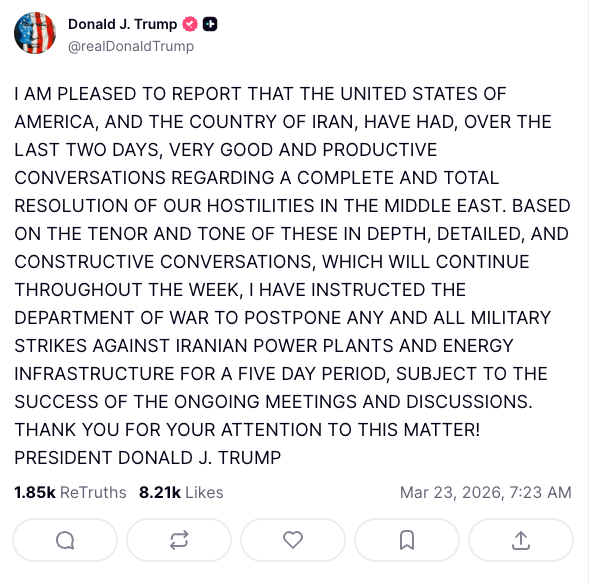
Trump’s decision to delay strikes on Iranian power plants should not be read as de-escalation. It may serve to stabilize markets and contain oil shocks but also to buy time for military positioning.
Delays in war are often preparations!
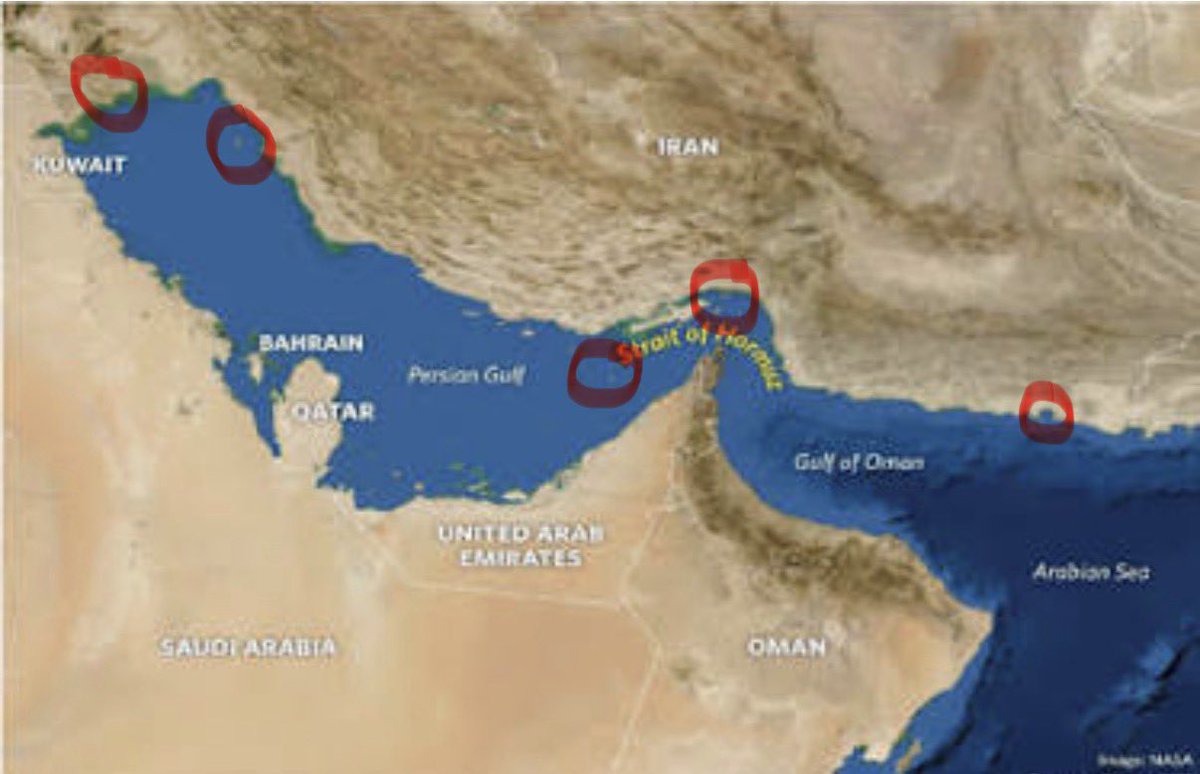
If escalation resumes, attention should turn to four potential axes: #Kharg Island, the three Iranian islands (Abu Musa, Greater & Lesser Tunbs), the Strait of #Hormuz and the #Chabahar -Konarak.
Recent reports also point to a potential U.S. ground operation targeting #Khorramshahr and #Abadan via Kuwait and the Al-Faw Peninsula.
Let's review what happened:
- Trump threatened to blow up Iran's power stations if it didn't open up the Starits.
- Tehran responded that it would blow up all power stations in the region if attacked, refusing to open the straits without sanctions relief
- Trump backed down.