A man spends 50 years teaching at MIT.
He knows his time is running out.
So he records one last lecture — everything he knows, distilled into a single hour.
He died 5 months later.
This is that lecture.
The most important hour you'll watch this week. 👇
Bookmark it for later
IVERMECTIN AND FENBENDAZOL END CANCER
🎯CONFIRMED: Epidemiologist Nicolas Hulscher states that complete remissions of stage IV cancers using antiparasitic drugs are already documented in peer-reviewed scientific literature.
According to him, hundreds of studies show that ivermectin and fenbendazole activate more than 12 different anticancer mechanisms and act against more than a dozen types of cancer.
Among the most impactful works cited by Hulscher is a case report published in Case Reports in Oncology.
There, three patients with metastatic stage IV cancer are described who achieved complete remission documented by imaging and tumor markers:
📌An 83-year-old woman with breast cancer that had metastasized to the liver, lungs, and bones. After treatment, the PET scan showed complete remission, and she has shown no recurrence in nearly three years.
📌A 75-year-old man with metastatic bone prostate cancer. His PSA dropped to undetectable levels, and the metastases disappeared completely.
📌A 63-year-old man with highly advanced BRAFV600+ melanoma. His circulating tumor DNA went from 123 to 0 in less than two months, with confirmed remission.
Additionally, a recent systematic review analyzed 26 studies with 36 real patients treated with ivermectin. No serious adverse effects were reported, and clinical improvements were observed even in cases of leukemias and lymphomas, many of them while continuing to receive conventional chemotherapy.
Alternative scientists explain that these drugs attack cancer in multiple ways: they destabilize microtubules, induce programmed apoptosis, block the mTOR pathway, cut off the glucose supply to tumor cells, inhibit the formation of new blood vessels, and eliminate cancer stem cells.
All this with medications that cost pennies and have been used in humans and animals for decades.
While conventional medicine invests billions in high-cost therapies, on social media thousands of patients are already sharing personal testimonials: tumors that shrink or disappear, markers that normalize, and surgeries that end up being canceled.
The question sweeping the world is whether this represents the greatest medical suppression in history or the most important discovery of the 21st century. The dissenting scientific community demands controlled clinical trials with urgency. For many terminal cancer patients, time has simply run out.
What do you think? Give it an RT and share this information before it disappears, as it could save many lives. Your friends or family fighting cancer need to read this today.
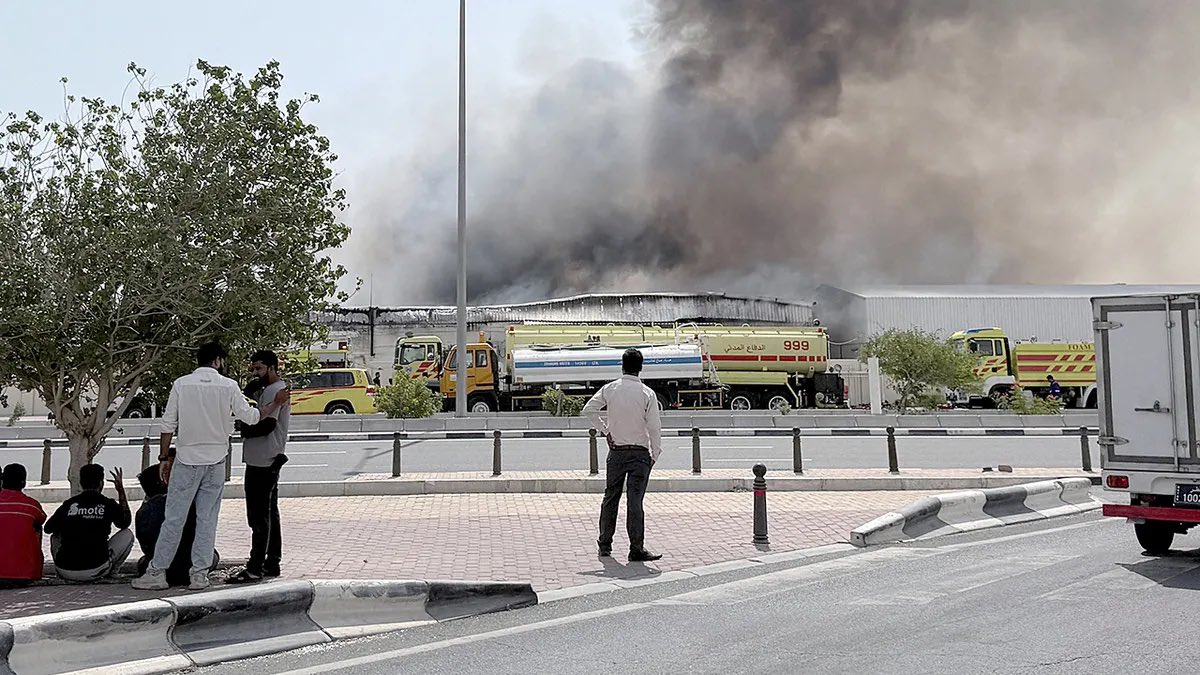
BREAKING: Everyone is watching the Strait of Hormuz for oil and fertilizer. Almost nobody has noticed that it is also shutting down MRI machines, semiconductor fabs, and the global aerospace supply chain.
Helium. The second lightest element in the universe. No substitute exists for it. You cannot synthesize it. You cannot replace it. And roughly one-third of the world’s supply just went offline.
Qatar produces 30 to 33 percent of global helium as a byproduct of LNG processing at Ras Laffan, home to the largest helium production facilities on Earth. When the Hormuz blockade triggered LNG force majeure declarations and attacks hit Qatari infrastructure, the helium stopped flowing with it. Prices have doubled in spot markets. And helium has a property that makes this crisis structurally different from oil, fertilizer, or any other commodity caught behind the strait.
It evaporates. Continuously. Even in sealed containers, helium boils off. The global supply chain operates on roughly 45 days of buffer before existing inventory simply ceases to exist. You cannot stockpile helium the way you stockpile crude oil in salt caverns or grain in silos. If the supply stops for six weeks, the buffer is gone. Not depleted. Gone. Returned to the atmosphere where it is too diffuse to economically recapture.
This is why the industries that depend on helium are facing a crisis that no financial instrument can solve.
Semiconductor manufacturing requires ultra-pure helium for wafer cooling in lithography and for leak detection in sub-5-nanometre chip fabrication. TSMC, Samsung, and Intel cannot produce advanced processors without it. Every AI chip, every smartphone processor, every data centre GPU in the current generation traces its manufacturing lineage through a helium-cooled process. If fabs run dry, the production lines stop. Not slow. Stop.
MRI machines require liquid helium to cool superconducting magnets to near absolute zero. Hospitals cannot substitute another gas. When helium supply tightens, MRI availability falls. During previous shortages, hospitals rationed scans. A sustained one-third supply cut puts diagnostic imaging capacity at risk across every healthcare system that depends on magnetic resonance.
Aerospace depends on helium for purging rocket fuel systems, pressurising tanks, and testing for leaks in systems where failure means explosion. NASA, SpaceX, ULA, and every launch provider in the Western world runs on helium. Fibre optic cable manufacturing requires helium atmospheres. Quantum computing research requires helium-3 isotopes for cryogenic cooling.
The US is the world’s largest helium producer and has some buffer capacity. Algeria and Russia produce meaningful volumes. Overland rerouting from Qatar through Oman and Saudi Arabia is theoretically possible but logistically slow and capacity-limited. None of these alternatives can replace one-third of global supply within the 45-day evaporation window that defines the crisis timeline.
The same 21-mile strait that is starving the food system is now threatening the technological infrastructure of modern civilization. The fertilizer trapped behind Hormuz determines whether four billion people eat. The helium trapped behind Hormuz determines whether the chips powering the AI revolution get manufactured, whether cancer patients receive diagnostic scans, and whether rockets carrying communications satellites reach orbit.
One chokepoint. Two invisible supply chains. Both irreplaceable. Both operating on biological or physical deadlines that no ceasefire retroactively extends.
The world built petroleum reserves. It never built fertilizer reserves. It never built helium reserves either.
The pattern keeps repeating. The lesson keeps being ignored.
Full analysis:
https://t.co/iFmUcarGdV
🚨 BREAKING: Google Gemini can now analyze any stock like a Wall Street analyst (for free).
Here are 10 insane Gemini prompts that replace $4,000/month Bloomberg terminals:
Save for later🔖
BREAKING: MIT just analyzed 300 AI deployments worth $40 billion & the results are devastating.
Turns out, 95% of enterprise AI projects deliver zero measurable business impact.
Here's what the data revealed:
(hint: the pattern matches every major technology bubble we've seen)
ELON MUSK: "You could go from LA to Sydney in less than half an hour, LA to Tokyo in less than half an hour, New York to Singapore in half an hour. Across the Atlantic in 10 minutes. You're going 25 times the speed of sound, 30 times faster than than a commercial aircraft."
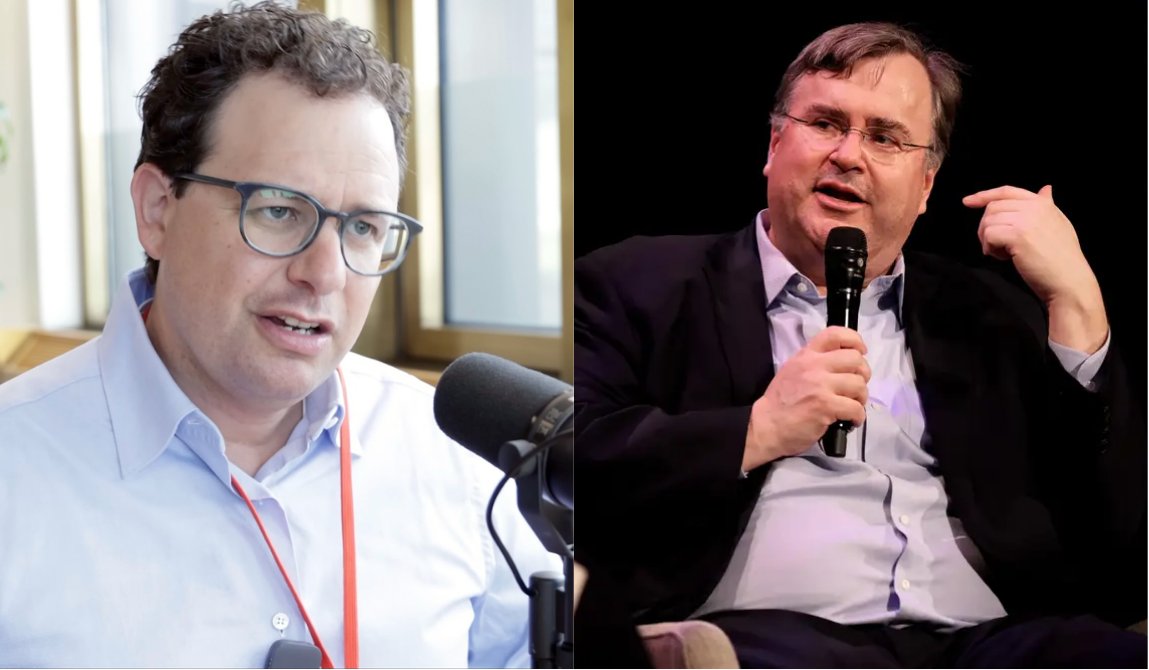
AI's biggest names just made horrifying statements:
• Anthropic CEO: "...everyone will lose their jobs."
• LinkedIn founder: "People still underestimate AI's impact."
Only one gave a roadmap to survive—and profit—from it.
Here's his advice: ⬇️
1/3 #THORIUM#MINERAL AVAILABLE : Christian Bernard Magnongui has in his possession of a thorium mineral sample. The location of the thorium mineral deposit remains unknown at this time. I discovered it in one of the 14 African countries I visited in 2023.
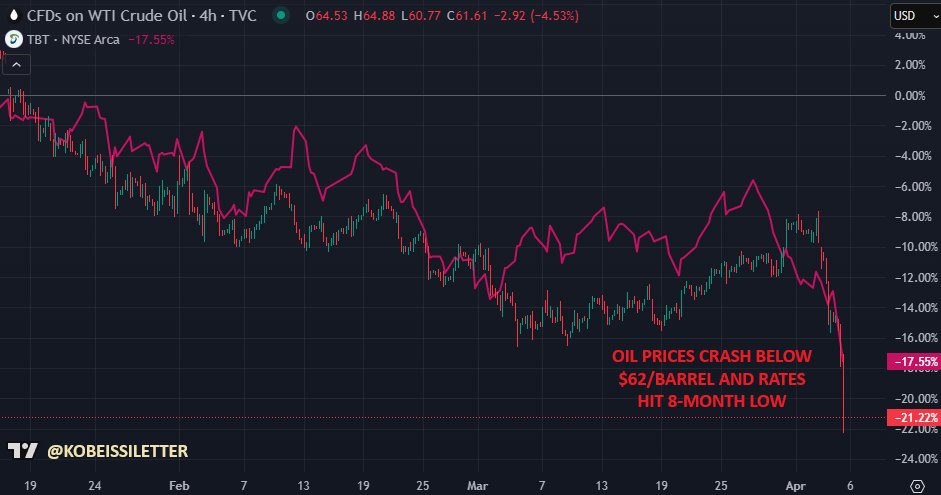
The real plan all along was to lower interest rates and lower oil prices as soon as possible.
The 10-year note yield is down -90 bps and oil prices are down -25%.
The tariffs are "working" as planned.
3.95%
I’m actually surprised more people don’t realize this: when the 10-year yield falls, it’s because people are buying U.S. government debt, not selling it. Increased demand drives prices up, which sends the yield down.
When the 10-year yield drops, borrowing costs across the economy go down — from mortgages to business loans — which will ease pressure on everything from housing to credit markets.