I learned to enjoy my free time from a friend who suffered divorce only 2 years into marriage . Never re-married. Met him in a gallery. I asked, do you not get lonely? He said, I do alone everything I would be doing with a woman. Women only complement. They do not complete.
Our bus almost overturned today, and I didn't scream like everybody did. I simply sat there unmoved, in the silent assurance that the bus would not overturn. And it did not. But now that I am home unscathed, I wonder if such sangfroid is evidence of faith or a broken man.
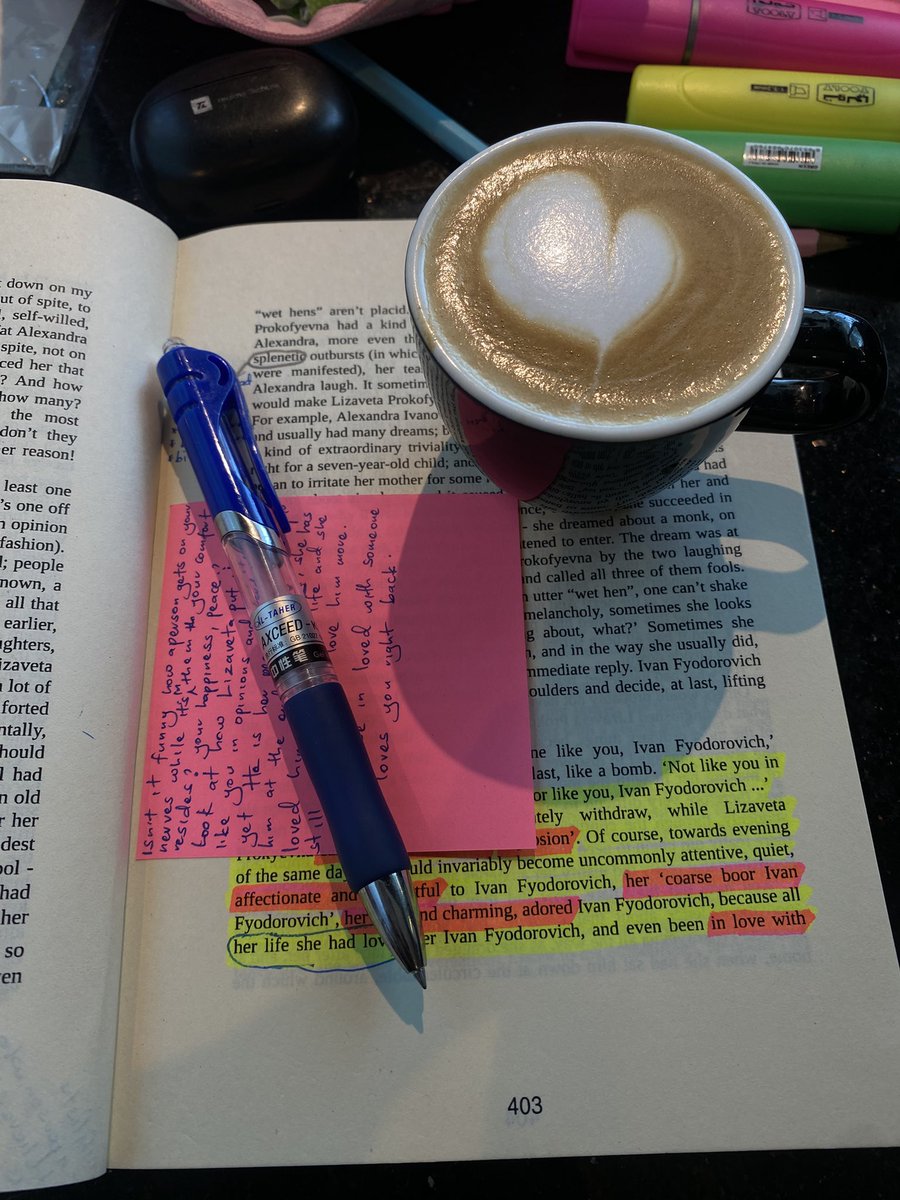
To those who keep bashing individuals reading novels in matatus: readers don't read them for, or against, you. Your inferiority complex is self-imposed. If your attention span is TikTok & Obare's BNN material, stick to that. A book should not scare you that much.
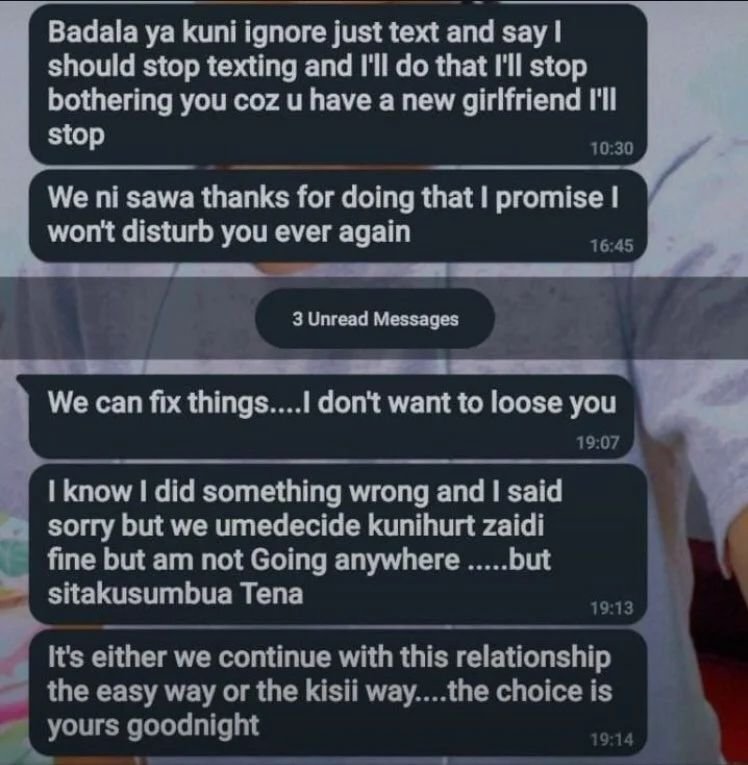
4 TEXTS THAT FEEL POWERFUL WITHOUT CHASING AN AVOIDANT.
Not "I miss you."
Not "Can we talk?"
Those often come from panic, not clarity.
These communicate self-respect instead: 1/7
The easiest person to take for granted in a relationship is an introverted man who overthinks everything, loves quietly, gives endlessly, and asks for almost nothing in return. He won't demand attention, start arguments, or make you feel guilty for neglecting him. Instead, he'll convince himself you're busy, excuse your behavior, and keep pouring into the relationship while expecting only honesty, consistency, and a little reassurance. But every unanswered effort, every broken promise, and every moment of feeling unseen gets stored away. By the time he finally becomes distant, it isn't because he stopped loving you, it's because he spent too long loving someone who never realized how much he was silently giving.
@RamzZy_ 😂It's a joke. The dude probably picked on so I played along for the fun of it. In fact, I followed him for it. It was ingenious.
Actually, I am still on the wedding committee as we speak and we are doing chicken pizza now. They haven't asked a thing yet. So far, so good.
On your way to Arusha, right after Longido, you'll find an old Maasai woman by the roadside. You'll come to a halt & shout, "yeyo, takwenya". She'll say, "iko" & rush to you, bananas in hand. Buy them. She'll say "Ashenale" & spit on the ground. She is blessing the road for you.
We have the perception that there exists an endless catalog, which has completely shifted how we evaluate, nurture and abandon relationships. When you believe choices are infinite, commitment feels like a penalty instead of a decision.
One of the realest conversations I have encountered online: on how economic standing influences men's perception of romantic relationships, and their (un)willingness to participate in the institution of marriage.
A buddy said something profound the other day: That when we are old, we may be accused of failing if we don't realize our dreams, we could be faulted for poverty if we aren't rich; but we should never be accused of not having tried. And we should have evidence for it.
I met a guy in Ruaka who, as soon as we sat down, started telling me about the regrets of his life.
In 2004, he told me, he had moved to Ruaka with his childhood friend from Meru. They did manual labour to survive. They helped new tenants move into their houses, mjengo work, errands, and whatever else came up.
After two years of that, when they were around twenty-one, his friend's aunt approached them with an opportunity. She had two slots for them to join the Kenyan Army. She knew them well; they were from the same village back in Meru. His friend had approached his Auntie and requested her to help them join the army.
He was excited. He went home and told his father the great news.
His father did not share the excitement. He was enraged. Two decades earlier, the man's grandfather had died in battle as an army officer. A decade after that, an uncle, his father's only brother, had died in battle too, also in the army.
The losses had left his father with a wound that never healed, and he had vowed that no one else in his family would join the army while he was still alive to stop it.
He did not go against his father's wish. He respectfully declined that opportunity, which was passed on to another man from his village. His friend did.
That friend has spent the last two decades in uniform, rising steadily through the ranks. He now owns a four-bedroom bungalow on the outskirts of Nairobi. His children attend good schools. He drives his own car.
My host, meanwhile, ended up in Githongoro slums, where he now sells cereals and charcoal.
He was quick to tell me their friendship never died. They still meet often to catch up. In fact, that same day, his friend had visited and left him a bag of clothes and shoes he no longer needed.
"When his mattress thins an inch, he brings it to me and gets a new one. All my clothes once belonged to him. He dumps everything in my house. In truth, I need them. Most times I do. But this has left me bitter in ways I can't explain."
He added that, more than anything, it is this that angers him. Not the poverty at home, but the shoes, the clothes, and everything. He regrets, deeply, obeying his father.
He believes that a single decision that was made to appease someone else's grief was the one that has ruined the rest of his life.
"My uncle and grandfather died in uniform, but they died rich. I am going to die poor."
What do you wake up to? Because I wake up to whistling trees. And a beautiful sunrise. I wake up to a blue sky: Omnipresent & majestic. I wake up to the dawn chorus. Birds singing their little hearts out. I wake up to earth. But I also wake up to heaven.