WARNING: Longer post (but worth reading or bookmarking for later).
Your life has seasons.
Each one is unique. Characterized by its own distinct desires, struggles, opportunities, and identity.
But one reflection I've had recently is just how easy it is to completely disassociate with the present season.
To give all your time and energy toward a longing for some nostalgic memory of a prior season or an anticipation for some beautiful state of a future season.
You look back at the past and all you see is sunshine. Because it all worked out. You forget (or glaze over) the struggle you endured. You're here today. You made it. You're alive. You're doing fine.
You look forward at the future and dream on what could be. You'll have so much more. More freedom. More purpose. More health. More deep connection. More everything.
The past is beautiful and the future feels limitless. So, logically, you slowly start to treat everything about the present as the bridge. A dash connecting your past and your future. A gap to be crossed as quickly as possible.
Everything you do today is in anticipation of some eventual end state.
I'm doing this now, so that I can have that later.
Unfortunately, the danger of that dissociation with the present is significant. You may spend your entire life living for a future that has a decidedly mirage-like property. You inch closer, but when it's right in front of you, it disappears and reappears on the horizon.
You may spend your entire life skipping through the present, deferring your presence, your joy, and your very humanity to a future that never comes.
In a classic French fable, a young boy is gifted with a magic ball of golden thread. He's told that if he simply pulls on the thread, time will leap forward. The catch, of course, is that once it's pulled, it can never be put back.
The young boy takes advantage of the newfound powers. Each time he's faced with a boring day at school, a frustrating set of chores, or a scolding from his parents, he pulls the thread, skipping through to the good parts.
As an adult, he continues, leaping through mundane struggles in his marriage, the friction of having a newborn, and the boredom at work. He finds himself pulling on the thread more and more, avoiding even the most minor inconveniences of his life.
But when he wakes up one day and sees an old man looking back at him in the mirror, he's filled with regret. He realizes in that moment that as he chose to skip through the boredom, struggles, and friction, so too did he miss the real texture of being alive.
How often do we all do the same? How easily do we default into this disassociation? Disconnecting from the present in anticipation of some future.
A mentor recently asked me this:
"Where are you going and why are you in such a rush?"
It hit me hard.
And to be honest, I haven't stopped replaying those words since he said them.
Why are you in such a rush?
The world wants you to rush into everything. Rushed decisions. Rushed conversations. Rushed relationships. Rushed timelines.
In doing so, you slowly relinquish your agency. You give up your claim on your own life. Surrender authorship to a pen that was never even yours.
In a world that wants you to rush, the ultimate act of rebellion is presence.
Be in the season you're in. Don't romanticize the past, don't fantasize the future. Be here. Be now. Be in this. All of its texture, depth, and struggle. All of its joy, tension, and pain. Sit with the uncertainty. Become friends with it. Fall in love with it.
Because every single thing you do today is something your younger self dreamed of and something your older self will wish they could go back and do.
The good old days are happening, right now.
And the next time you find yourself skipping through the present, remember these words:
Where are you going and why are you in such a rush?
The older I get the more I realize a calm nervous system is the most powerful thing a person can have. When you are calm, something shifts. Every action becomes intentional. Nothing is rushed. Nothing is forced. Nothing is performed for anyone. No anxiety. No stress. No thinking about "what’s next". You flow with this unhurried certainty that what needs to get done will get done. And when you create from that state, work from that place, love from that place... it has no match.
Spurs led by 29 with 21:27 left.
Spurs led by 20 with 9:17 left.
Spurs led by 14 with 7:04 left.
Spurs led by 11 with 6:09 left.
Spurs led by 9 with 5:21 left.
Spurs led by 7 with 3:08 left.
Spurs led by 4 with 2:22 left.
Spurs led by 1 with 1.3 seconds left.
Knicks won.
@SufiSartaaj Wah!!
May I add - And when we learn to accept struggle gracefully, peace/Khushi shall enter our life.
ਖ਼ੁਸ਼ ਬੰਦਿਆਂ ਨੂੰ ਹਾਲੇ ਤੂੰ ਤਾਂ ਮਿਲ਼ਿਆ ਈ ਨਹੀਂਜਿਹੜੇ ਮਿਲ਼ੇ ਨੇ ਬੇਚਾਰੇ ਬੱਸ ਕਾਮਯਾਬ ਨੇ
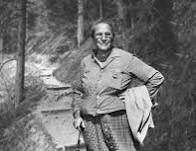
In the spring of 1955, a 67-year-old grandmother from Ohio told her children she was going for a walk.
She didn’t say how far. She didn’t say why. She simply kissed them goodbye, packed a cloth bag with the barest essentials, and vanished into the Georgia wilderness.
Her name was Emma Rowena Gatewood — and she was about to do something no woman had ever done before.
For three decades, Emma had endured unspeakable violence in her Ohio farmhouse. Beatings that broke her ribs, blackened her eyes, and nearly broke her spirit. She had raised eleven children on that farm. She had finally escaped her husband in 1941, but the invisible scars ran deeper than any wound.
Then one quiet afternoon, she read an article in National Geographic about the Appalachian Trail — more than 2,000 miles of rugged paths stretching from Georgia to Maine. The writer made it sound peaceful. Achievable. Beautiful.
Emma thought: If men can walk it, so can I.
But she knew what would happen if she told anyone. Her children would worry. Friends would call her foolish. A grandmother, alone in the wilderness? Impossible. Dangerous. So she kept her plan silent as a prayer.
She sewed a simple denim bag and filled it with the absolute basics: a blanket, a plastic shower curtain, a first-aid kit, bouillon cubes. No tent. No sleeping bag. No proper hiking boots — just a pair of Keds sneakers and a cotton dress.
On May 3, 1955, she boarded a bus to Georgia and began walking north from Mount Oglethorpe. Alone.
The trail was nothing like the magazine promised. It was merciless. Roots caught her feet. Rocks sliced through her thin shoes. Rain turned the path to mud. Insects swarmed relentlessly. At night, she slept on bare ground in abandoned shelters, sometimes shivering too violently to rest.
She got lost. She fell, twisting her ankle so severely she could barely stand. Sitting on that rock, pain shooting through her leg, she wondered if this was where her journey would end. But after catching her breath, she wrapped her ankle tight and kept moving. Always moving.
Hikers who passed her didn’t know what to make of the small, gray-haired woman in a dress and sneakers, carrying a homemade sack. Some thought she was lost. Others assumed she was crazy. A few offered food or shelter. She thanked them graciously, then continued on.
When strangers asked why she was walking, she’d smile softly and say she wanted to see the country. But anyone who looked into her eyes could see something deeper burning there. This wasn’t recreation. This was reclamation. Every mile was a mile farther from the life that had tried to destroy her. Every step was proof she was still here, still strong, still capable of extraordinary things.
Weeks became months. Her feet bled. Her back ached. The sun burned her skin raw. But she never stopped.
On September 25, 1955, Emma Gatewood stood on the summit of Mount Katahdin in Maine. She had walked 2,168 miles in 146 days. She was the first woman to hike the entire Appalachian Trail alone in a single season.
When word spread, reporters flooded in. Newspapers nationwide ran her story. Overnight, she became “Grandma Gatewood,” a household name. Everyone wanted to know how a 67-year-old woman with no training and minimal gear had accomplished what seasoned hikers failed to do.
Emma smiled and said it wasn’t that complicated. She mentioned the trail needed better maintenance — too many rocks, not enough signs. She spoke as casually as if discussing her garden, not surviving one of America’s most grueling challenges.
But she wasn’t finished. In 1957, she walked the trail again. Then in 1964, at 76 years old, she became the first person ever — man or woman — to complete the Appalachian Trail three times. Each journey with almost nothing. Each journey proving that true strength doesn’t come from equipment or training. It comes from refusing to surrender.
I’m in love with this sentence:
“The degree to which a person can grow is directly proportional to the amount of truth he can accept about himself without running away.”
When you read, when you start going to the gym, when you take long walks, when you begin living an intentional, slow but deeply rich life, you create evidence for your brain that you love yourself and your life. And it starts reflecting in everything you do.
I’m in love with this sentence:
“The degree to which a person can grow is directly proportional to the amount of truth he can accept about himself without running away.”
Kurt Metzger brought up a point to me today, he said the Epstein Files are a test of compliancy, if there is a bit of outrage but overall it simmers down and is accepted without major consequences, if humanity allows this, then permission for the next phase is given.
Lo de Carlos Alcaraz es una locura ganando todos los Grand Slam con 22 años.
Pero aprovechemos para recordar a Steffi Graf, que en 1988 ganó los cuatro Grand Slam y el Oro Olímpico a sus 19 años. Algo HISTÓRICO.
No se repetirá lo de Graf. Es única.