I’m so pleased to see this BISA working group which I confounded around 16 years ago, going from strength to strength with 11 panels at this year’s Brighton conference 😊
This year we organised 11 panels at #BISA2026: https://t.co/72fG8wLlrD
Day one:
- Beyond post-Soviet transition: the political economy of Central Asia
- Foreign Policy Strategies in Eurasia
- Pillars of Authoritarianism in Eurasia
- Soft Power and Discursive Competition
Join this week's 30-min briefing: "Putin’s visit to China and the limits of the Sino-Russian partnership."
@NKuhrt joins @JohnLough to discuss what the visit revealed about the current state of Sino-Russian relations.
21 May | 16:00 CET | 10:00 ET
Register: https://t.co/QnN75nnJZS
@otter_ai I signed up for a free 7 day trial I don’t want to subscribe but nowhere can I find out how to cancel this and stop it renewing automatically . There is no information. Please cancel my trial and stop it renewing or explain to me exactly where to go to do it.
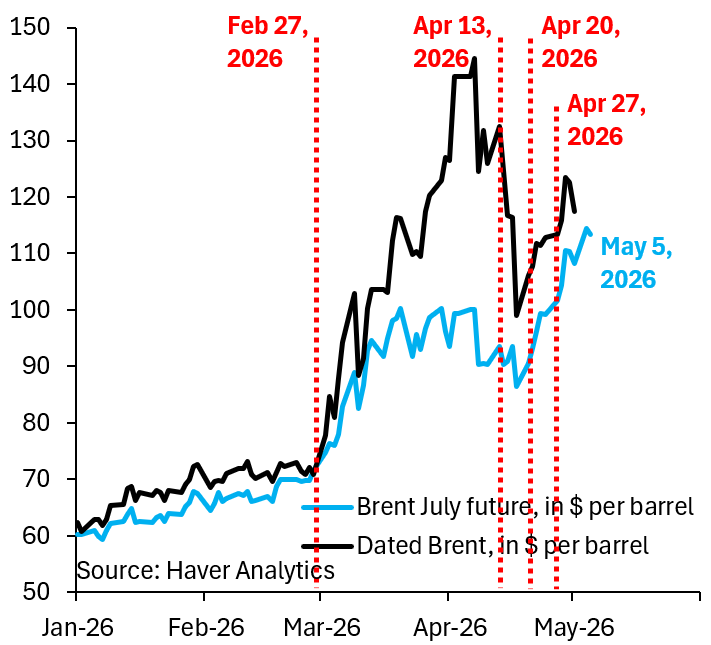
What's happening in the Strait of Hormuz this week is very significant. Iran is blockaded, while at the same time the US is trying to open up the Strait to Western ships. All this is an existential threat to Iran and explains why it's getting more erratic.
https://t.co/fzIPYBSXcp
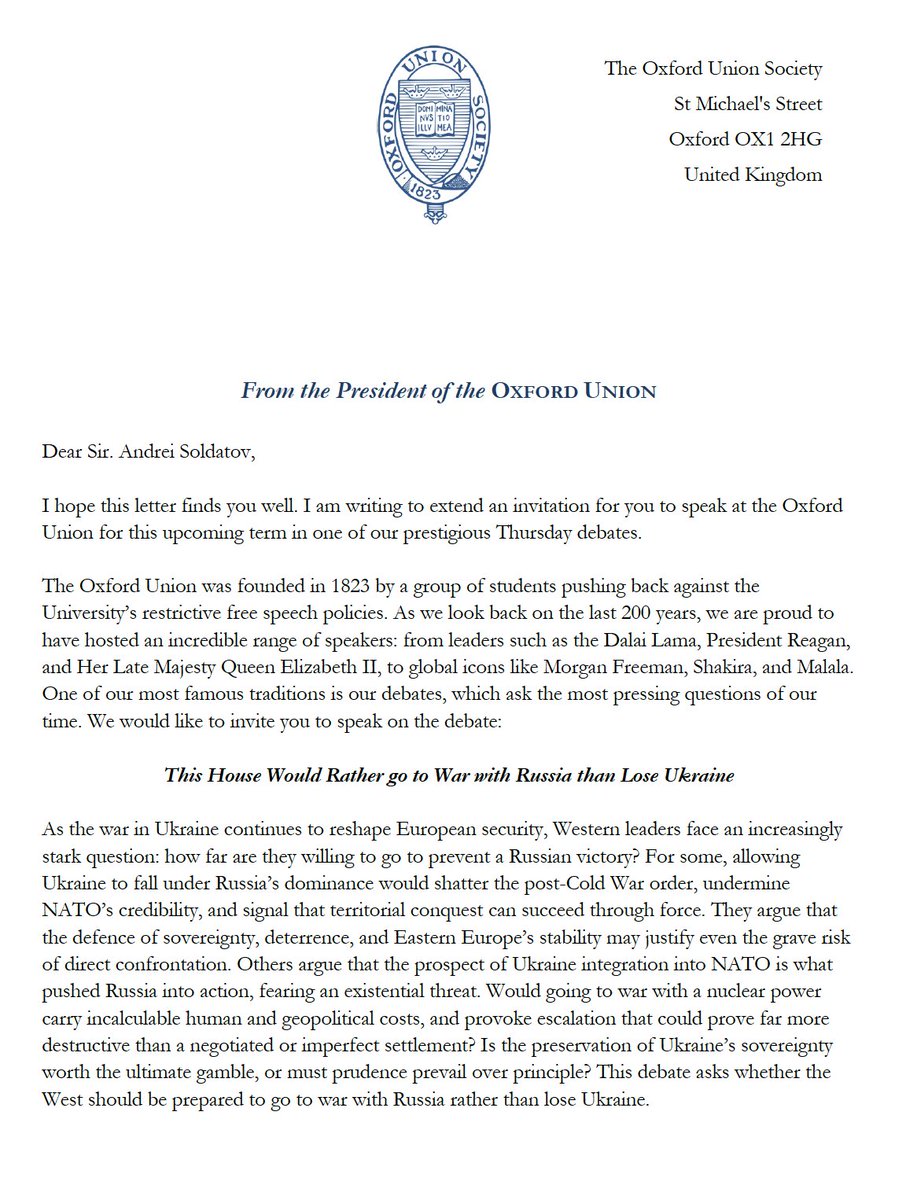
I was invited to speak at a debate at @OxfordUnion on the motion:
“This House Would Rather go to War with Russia than Lose Ukraine.”
I accepted and was due to speak for the motion.
THREAD 1/4
China hardly needs a 2+2 dialogue format for Central Asia - its channels across the region are extensive and have pretty deep roots. Incidentally, the trend line is not toward 2+2 but toward 3+3 with internal security, policing, and surveillance as a big part of the Chinese package. See China-Vietnam as case #1 and a model.
Yes. We need more books to make this crucial point-- the West's fundamental mistake of the 1990s-2000s-2010s was coddling Russia rather than alienating, let alone threatening it. Some still want to return to coddling it asap.
Monday morning re-up. A superpower? (No) A great power? (No) A civilisation-state? (What?) I argue Russia is best thought of as a significant "middle power" - and would be a great deal happier if it could come to terms with this
In some Western defense circles, there is still a dismissive view of the threat that FPVs and other cheap UAS pose to NATO militaries. Russian and Ukrainian UAS crews are far more experienced and capable than Hezbollah's, who seem to be posing a serious challenge for the IDF.
I’m excited to share the news about our new initiative at Carnegie, The Future of Russian Power. Join us online for our inaugural event this Wednesday, 15 April with @amenka@KofmanMichael@eugene_rumer as we discuss upcoming economic, military, and foreign policy developments.
The Middle East war just dropped an unexpected financial gift on Moscow — but the real drama is unfolding inside Russia.
R.Politik Bulletin No. 6 (180) is out.
IN FOCUS
A major oil supply shock from the Iran conflict has narrowed Urals discounts and given the Kremlin short-term breathing room, helped by the temporary US waiver. Putin is treating it as temporary. The budget crisis isn’t.
Yet the domestic stories are even more striking:
• Moscow hit by sudden selective mobile blackouts where even the official whitelists failed to work, paralysing businesses, officials and daily life while testing new digital control tools.
• A prominent investor suddenly faces extremism charges and asset seizure after a bitter family dispute — a case with surprising reach into the highest levels of the hierarchy.
• The Defence Ministry is quietly recruiting university students into specialised units, creating growing tensions across the education system.
• Siberian farmers — traditionally a loyal base — are protesting serious administrative failures in veterinary services against the backdrop of sanctions, raising uncomfortable questions about political responsibility that could backfire later.
• And the most intriguing of all: well-known state propagandist Ilya Remeslo publicly turns against Putin, sparking feverish speculation about an elite split and powerful figures behind him… before quickly ending up in a psychiatric clinic.
These reports reveal the internal tensions, quiet experiments and elite dynamics you won’t see anywhere else.
The full bulletin is essential reading.
https://t.co/kAO9IYZWTO
It appears that the U.S. is responding quickly, perhaps even preemptively, to Iranian mining attempts by striking high-speed boats and other vessels that can carry naval mines and block the Strait of Hormuz. This will likely be the focus of many air strikes for days.
Russian President Vladimir Putin has signed a decree that indefinitely extends the ease of obtaining Russian citizenship in the occupied territories, a move that experts say is a sign that Russia is consolidating its occupation by pursuing mass passportization. https://t.co/CK8kKlqDCl
Interesting report from CSIS on the expansion of Russia’s UAV factory that manufactures Geran drones (Shahed) over time. Noting some of the site protection mechanisms as well.
Thoroughly researched @RiddleRussia piece Russia's National Guard - Rosgvardiya evolving into an infantry-heavy light paramilitary force tasked with keeping domestic security firmly under Vladimir Putin’s control.
https://t.co/gSXHNVkHvu
It is deeply alarming, though not entirely surprising, that @DavidLammy on @BBCRadio4#r4today repeatedly refused to make clear that the British government categorically opposes the idea that Donald Trump should be "involved" Venezuela style in the choice of the next Iranian leader.
Asked again and again, he reeled off the PR lines to the effect that the British government's position is that this for the Iranian people to decide, but when asked whether that means Trump should not have a role in this, he would not clarify that this should have nothing to do with Trump.
While reinforcing the important of the US-UK special relationship, his stance was clear: he was unable to offer any meaningful criticism of the Trump-Netanyahu war escalation leaving the impression that Britain would ultimately capitulate to whatever the US and Israel decide they want to do.
Military and strategic analysts on both sides of the Atlantic are fully aware that the current escalation will not result in a 'victory', but in prolonged regional destabilisation that drives protracted civil war, increases the risks of nuclear proliferation, hikes up Islamist militancy and cements global oil and gas shortages which could trigger a global financial crisis.
Any government that cares about the national interests of its people should work toward raising awareness of these catastrophic risks and build a coalition that aims to restore sanity. Yet capitulation in the name of a "national security" alliance that is actually about to fatally degrade British national interests and security is the option dominating the current policy and media discourse.
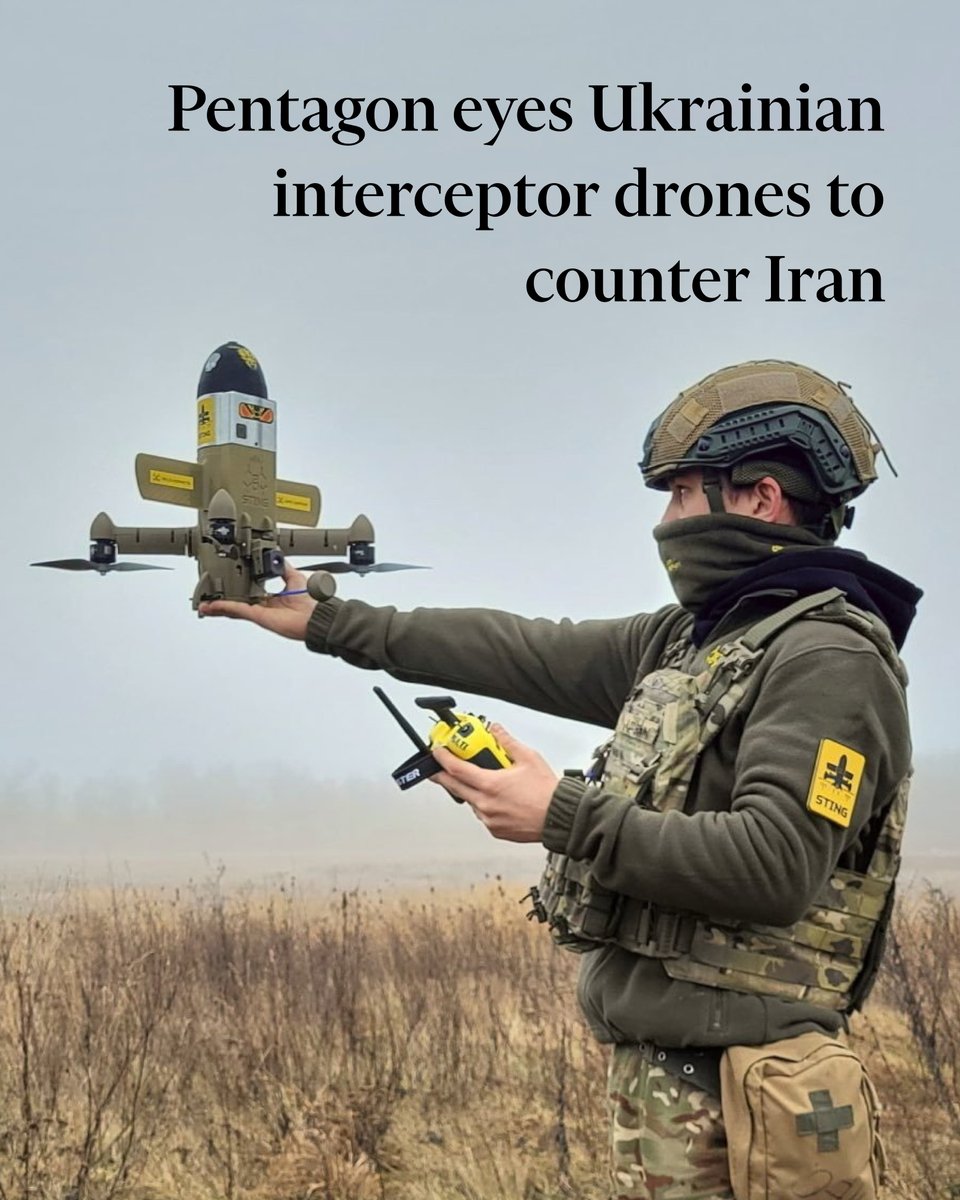
Gulf states had been using expensive Patriot missiles to defend themselves from Iranian Shahed drones. But their stocks are declining, and they are looking to Kyiv’s experience for cheaper defence. https://t.co/y5sCa0AcTB