We're looking for a Conservator (maternity cover). You will be involved in the treatment of our collections and will provide conservation advice and guidance for staff across the Library. The post is fixed-term for 11 months at a salary of £33,665. Apply > https://t.co/4JRNcGjt3N
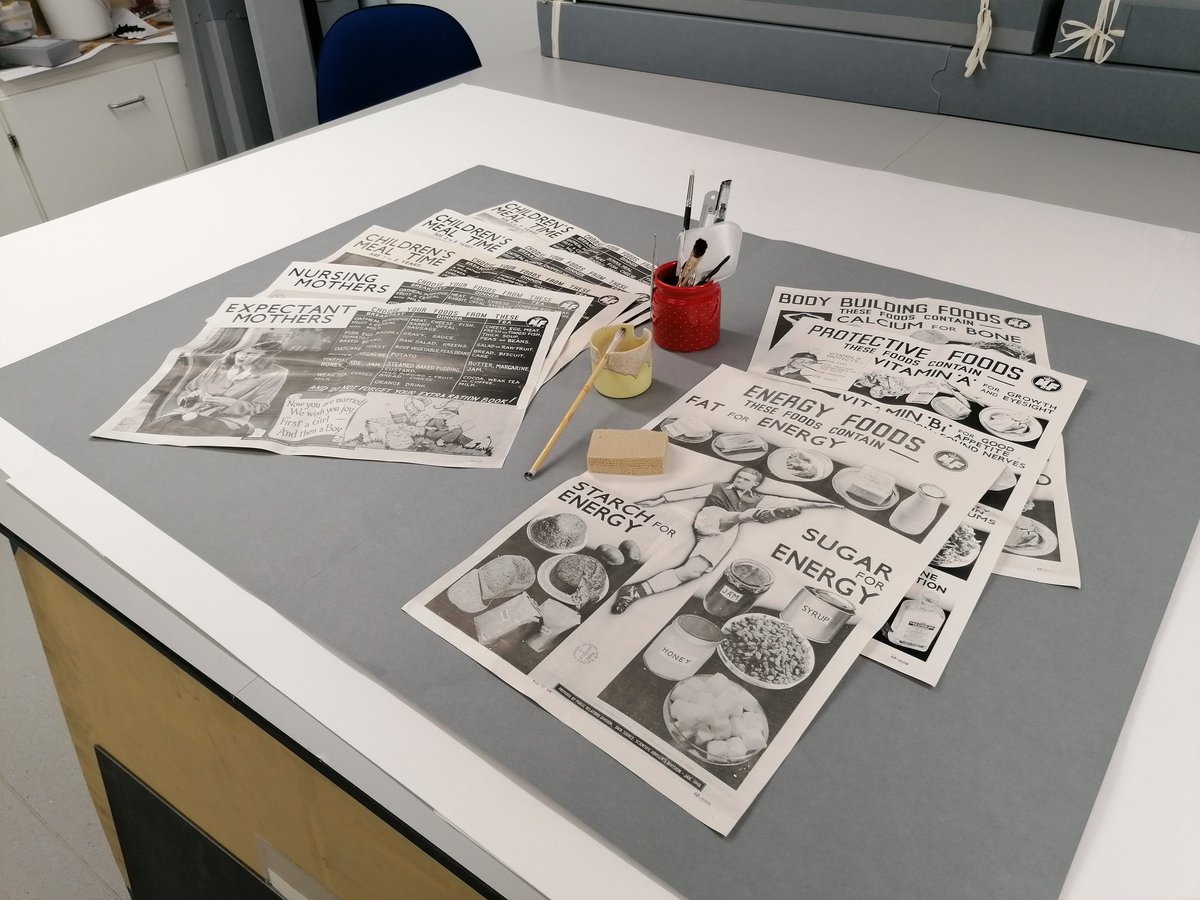
@nlsmodern@natlibscot@Arsenal Our mystery footballer is about to undergo some 'physio' in the conservation workshop! Alongside are his 'team mates', a selection of posters from the Ministry of Food, published c1948. Treatment will include surface cleaning, tear repair, crease reduction & rehousing.
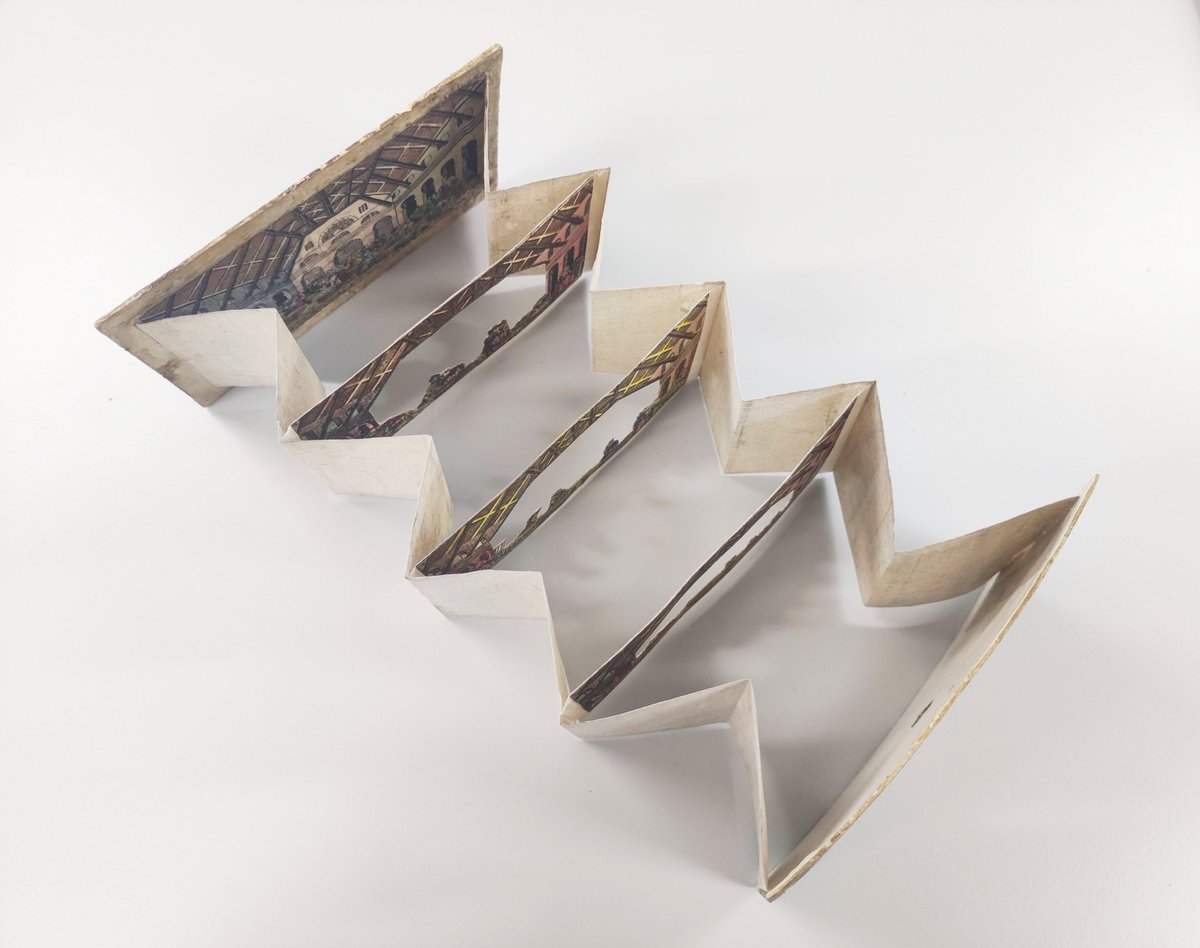
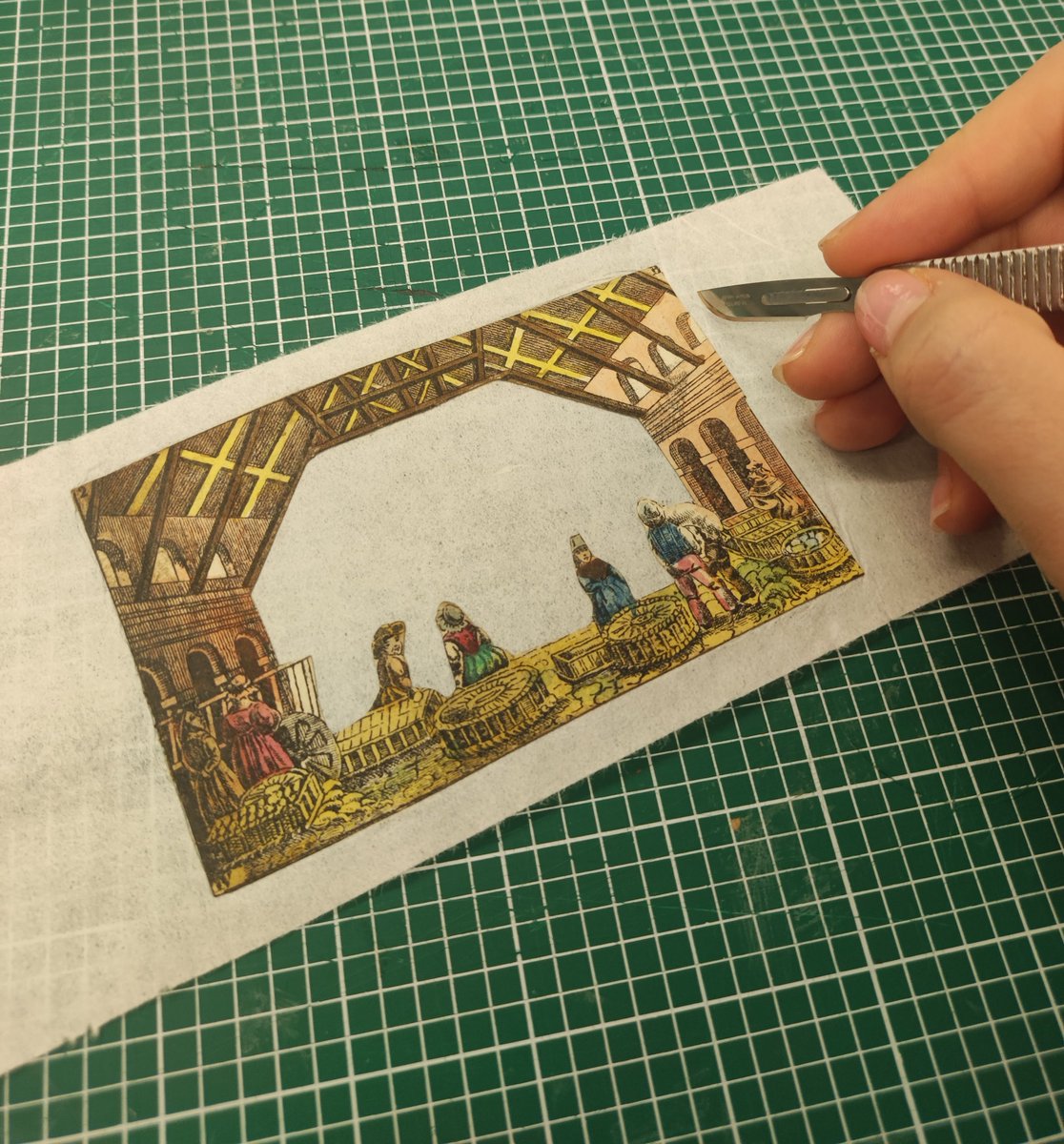
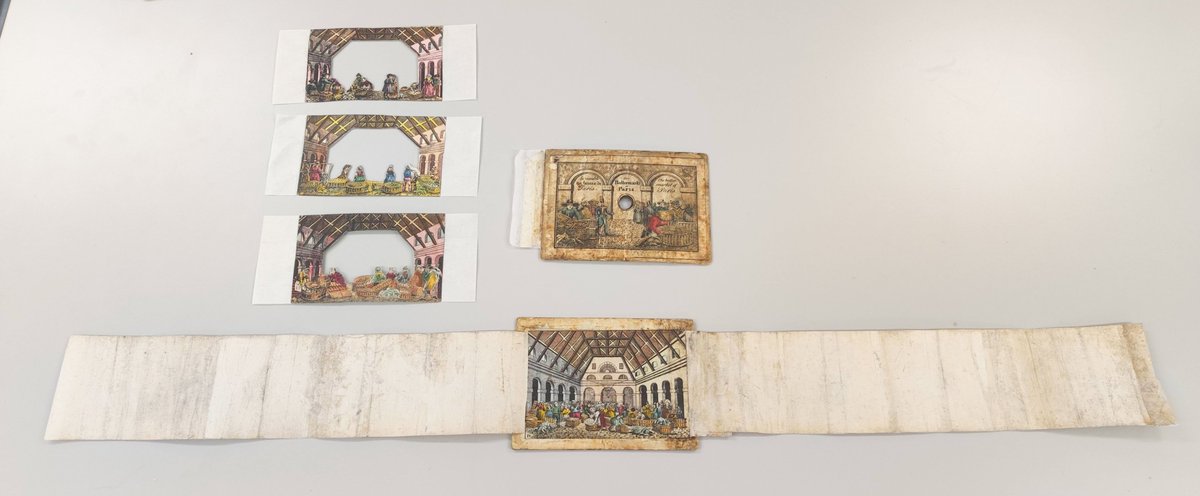
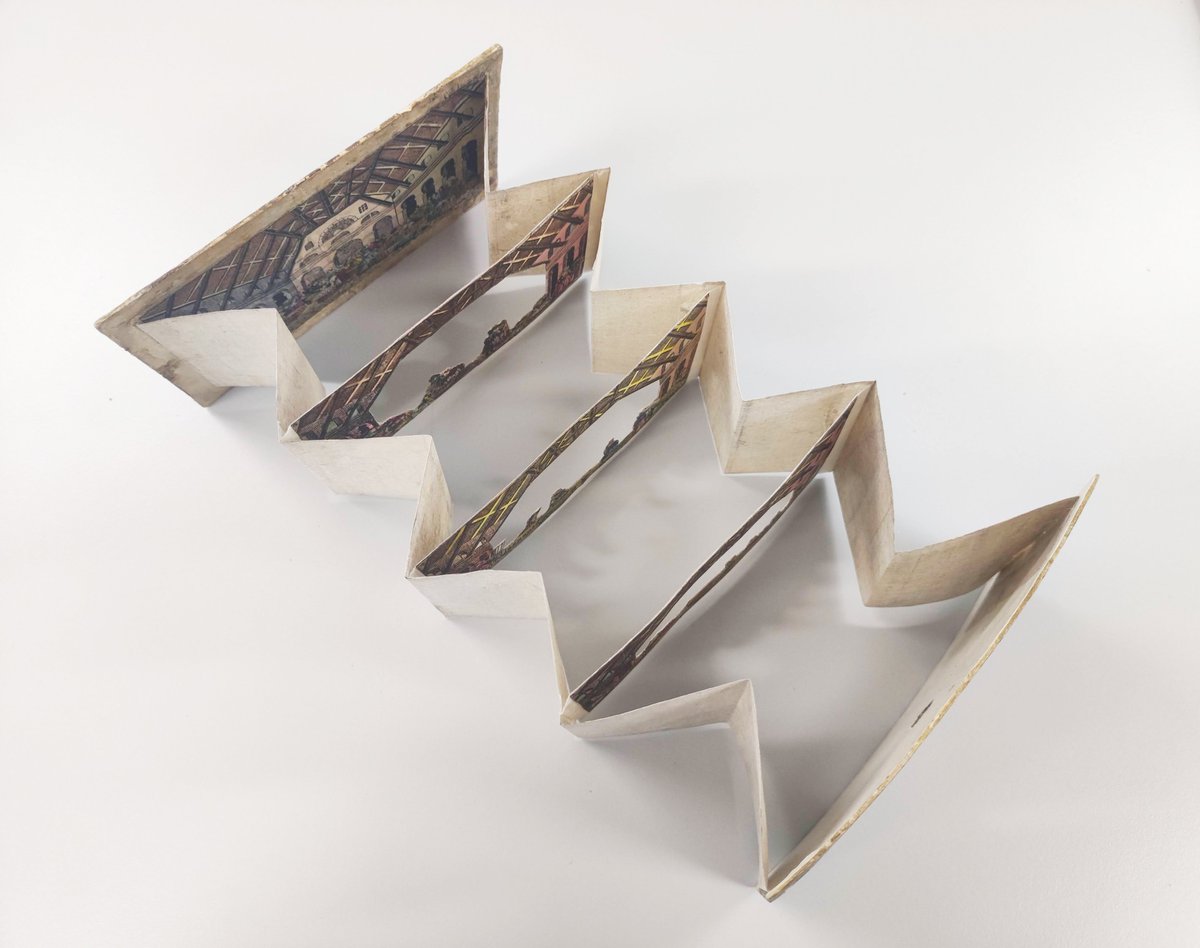
When we put it back together, the peepshow had regained its original shape and structural integrity. Now future generations can enjoy the view.
#Noncreepypeepy
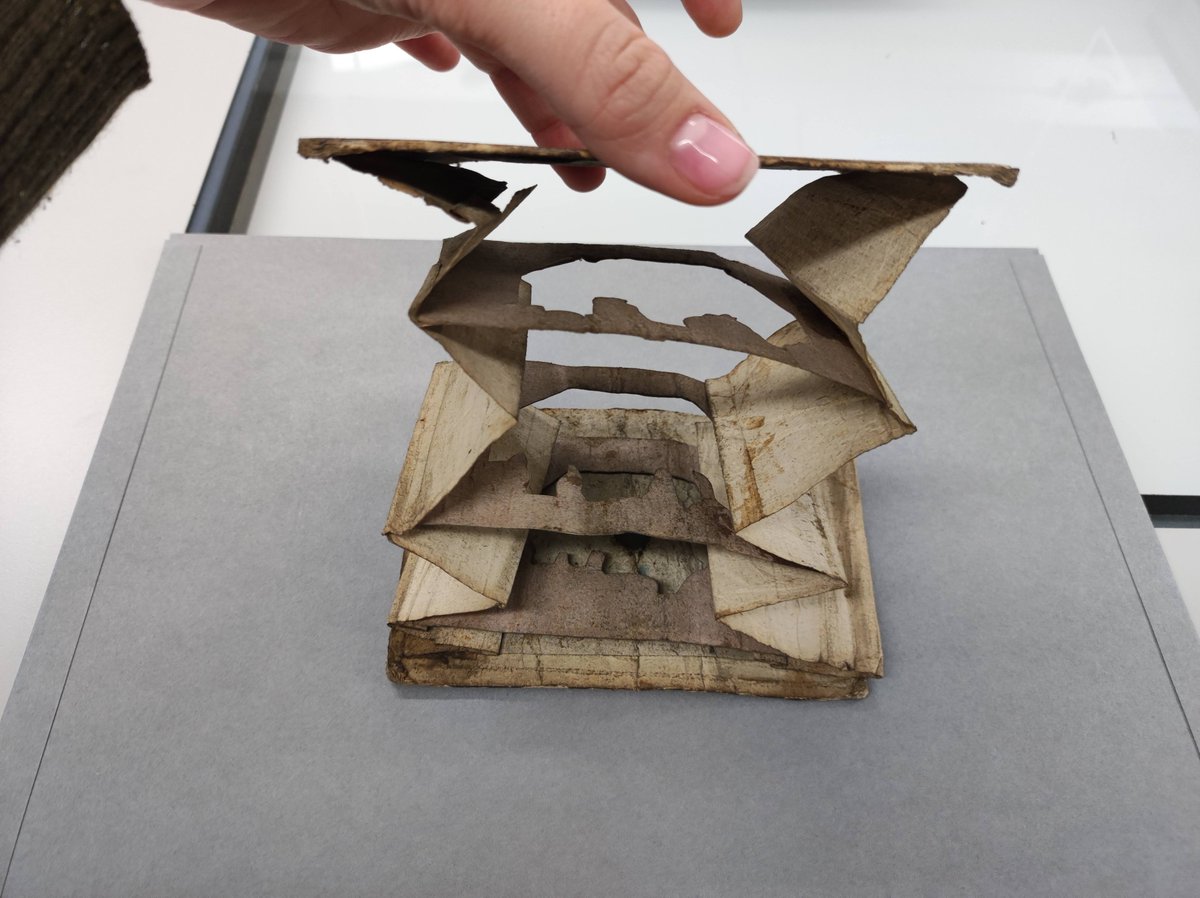
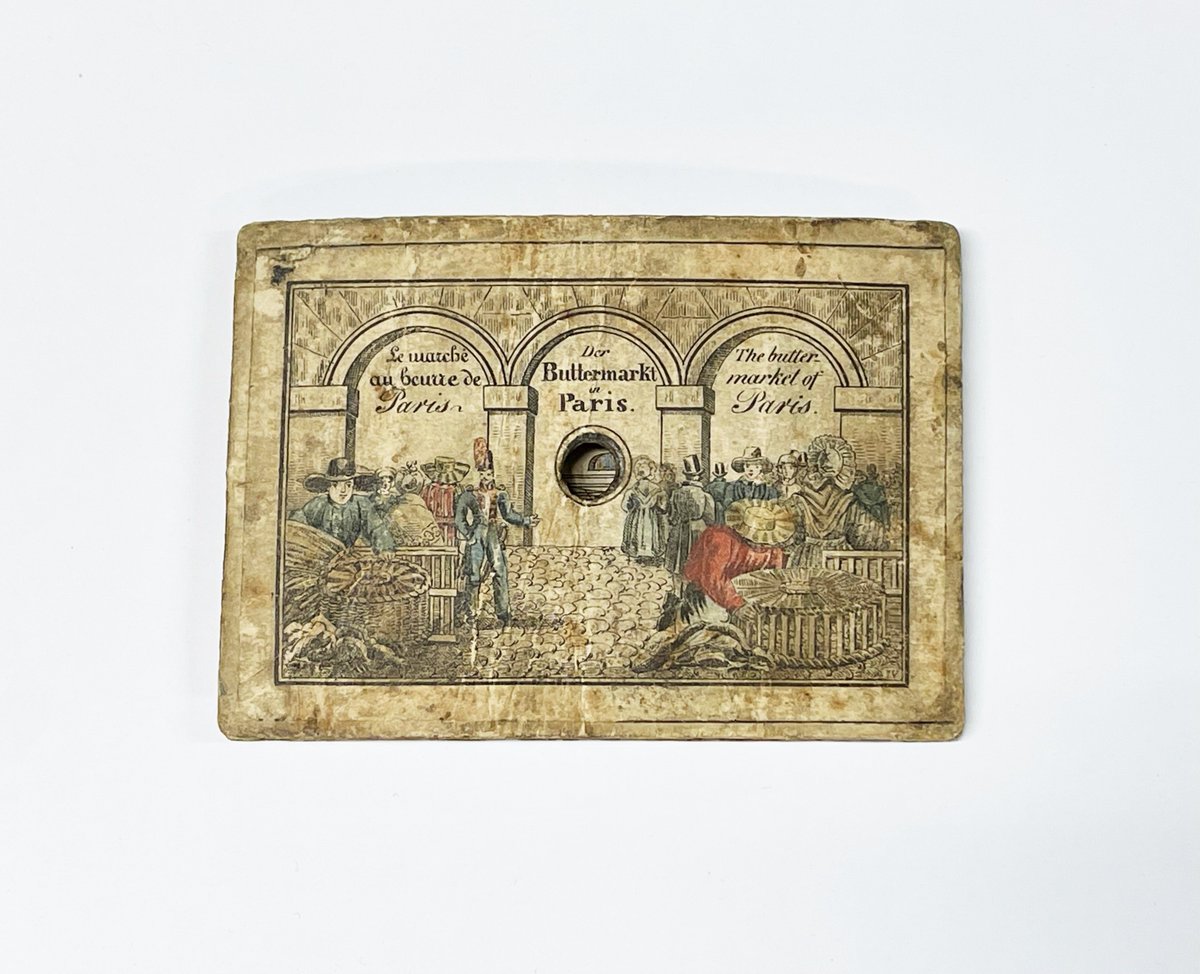
This particular peepshow came to the Library c.1969 as part of a bequest and was in a poor condition, as you can see here. When it arrived at the conservation studio it was very dirty, and the structure could not hold itself.
#Noncreepypeepy
Paper peepshows were extremely popular in the 19th century, but from the 1850s onward there was strong competition from mass-produced stereoscopic photographs and viewers (as well as magic lanterns) and by the early 20th century they'd declined in popularity.
#Noncreepypeepy
The cheap and simple construction meant that the design was quickly copied and soon peepshows were being mass-produced across the world, giving people in an era before mass tourism a chance to visit famous places or events.
#Noncreepypeepy
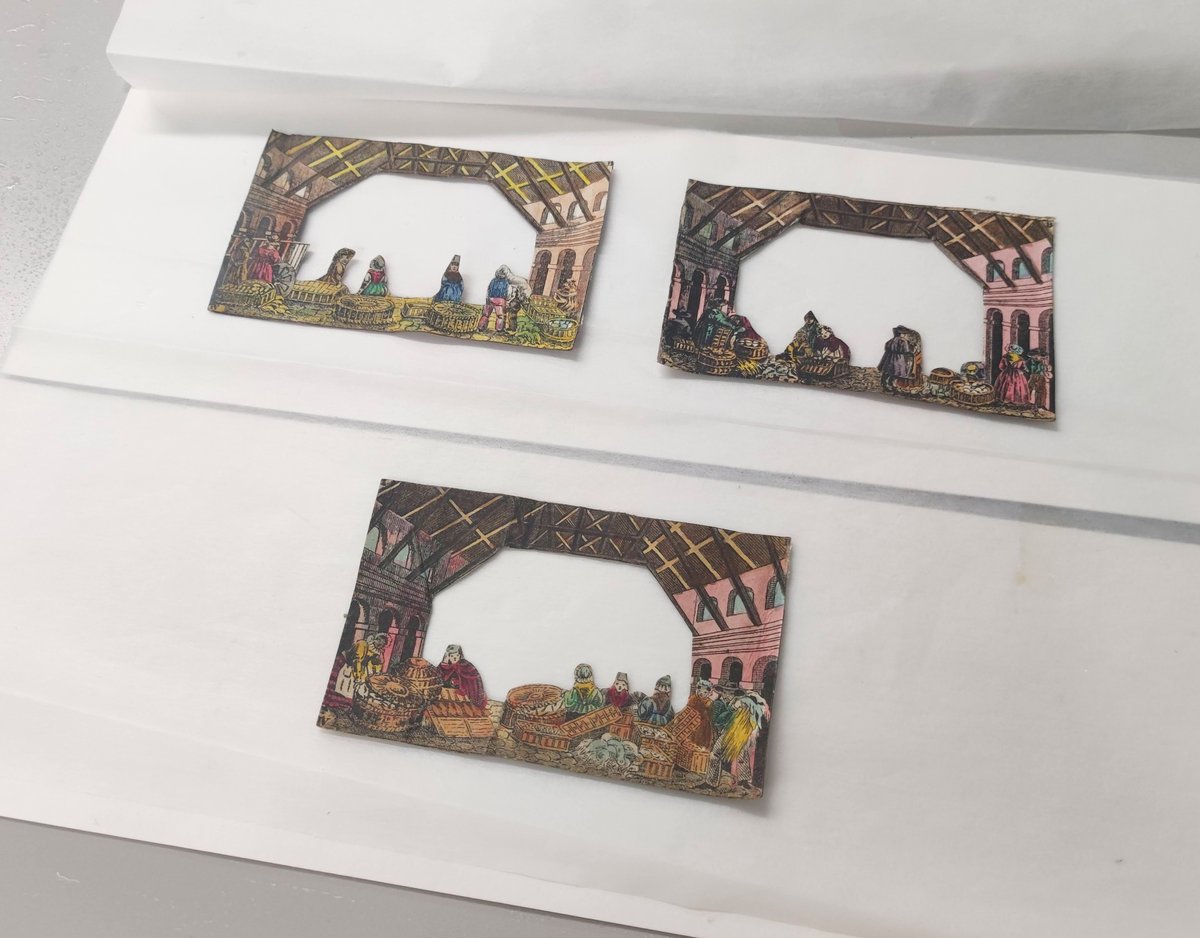
They used paper panels which were connected at the sides, like bellows. The diminishing paper panels created an effect of receding perspective, which led the viewer’s gaze towards the back scene, in much the same way as a conventional theatre set.
#Noncreepypeepy
Paper peepshows (or teleoramas) were first published in Germany and Austria in the 1820s. Unlike earlier 18th-century versions which were made of wooden boxes and were cumbersome to use, these new peepshows were small, light and simple to operate.
#Noncreepypeepy
This particular peepshow dates from the 1830s and shows the Paris butter market (Marché au beure, aux oeufs, et au fromage, St. Germain), which was constructed in 1822.
#Noncreepypeepy