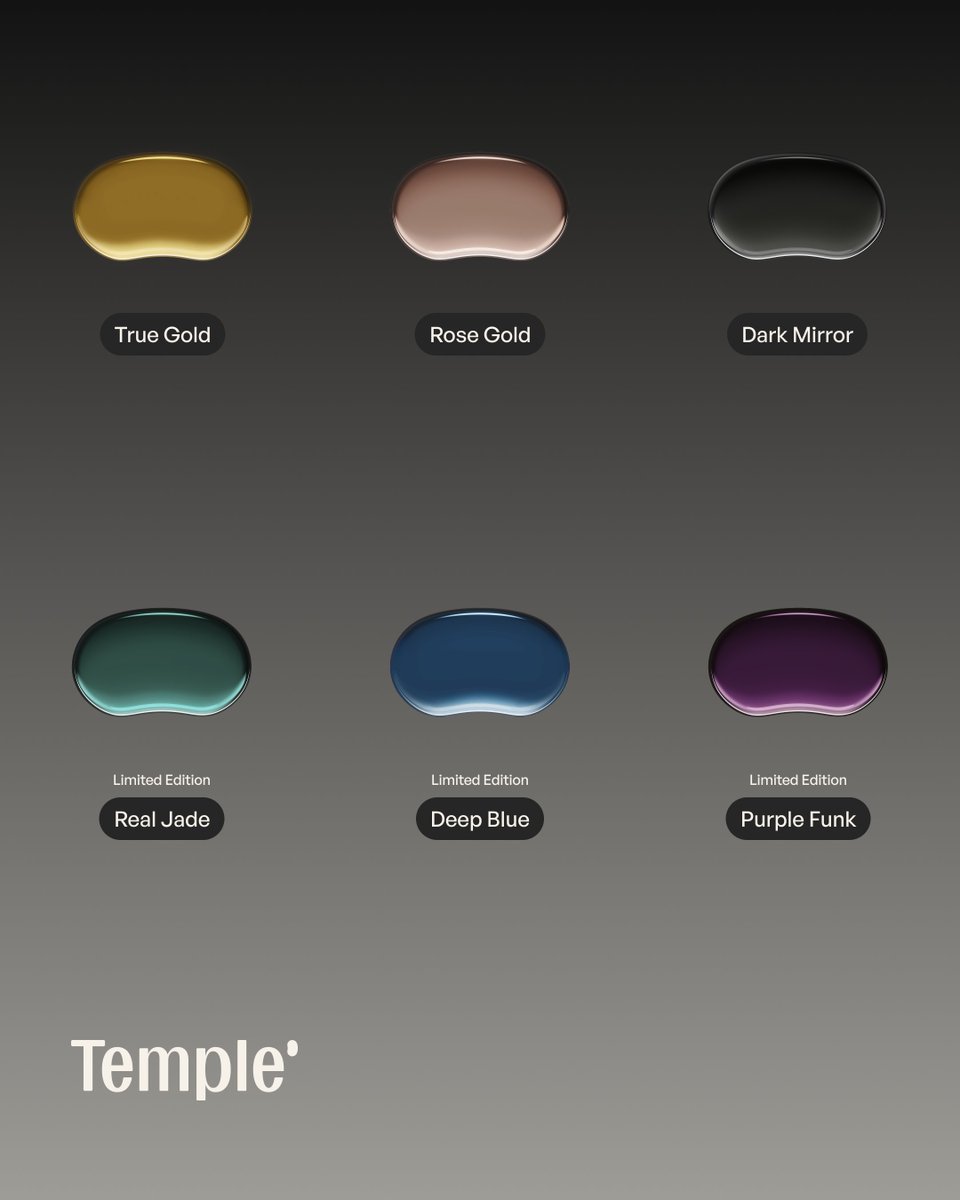
Six colors for the launch edition of @temple
Pre-orders open soon - hopefully next week; just need certainty on a couple more items.
Folks on early access waitlist get priority access. Join the waitlist at https://t.co/XxGR9Hpq58
Can’t wait to get this 𝗂̶𝗇̶ ̶𝗒̶𝗈̶𝗎̶𝗋̶ ̶𝗁̶𝖺̶𝗇̶𝖽̶𝗌̶ on your temple 😄
Introducing Claude Sonnet 5.5, the second model in the Claude 5.5 family.
It’s a clear upgrade over Sonnet 5, runs more than 30% faster, and costs up to 30% less for most work.
India has always idolised actors and cricketers. The last few years, entrepreneurs and founders have also gotten mobbed at the airports. How I wish we started celebrating scientists as much as we celebrate actors, cricketers, and founders.
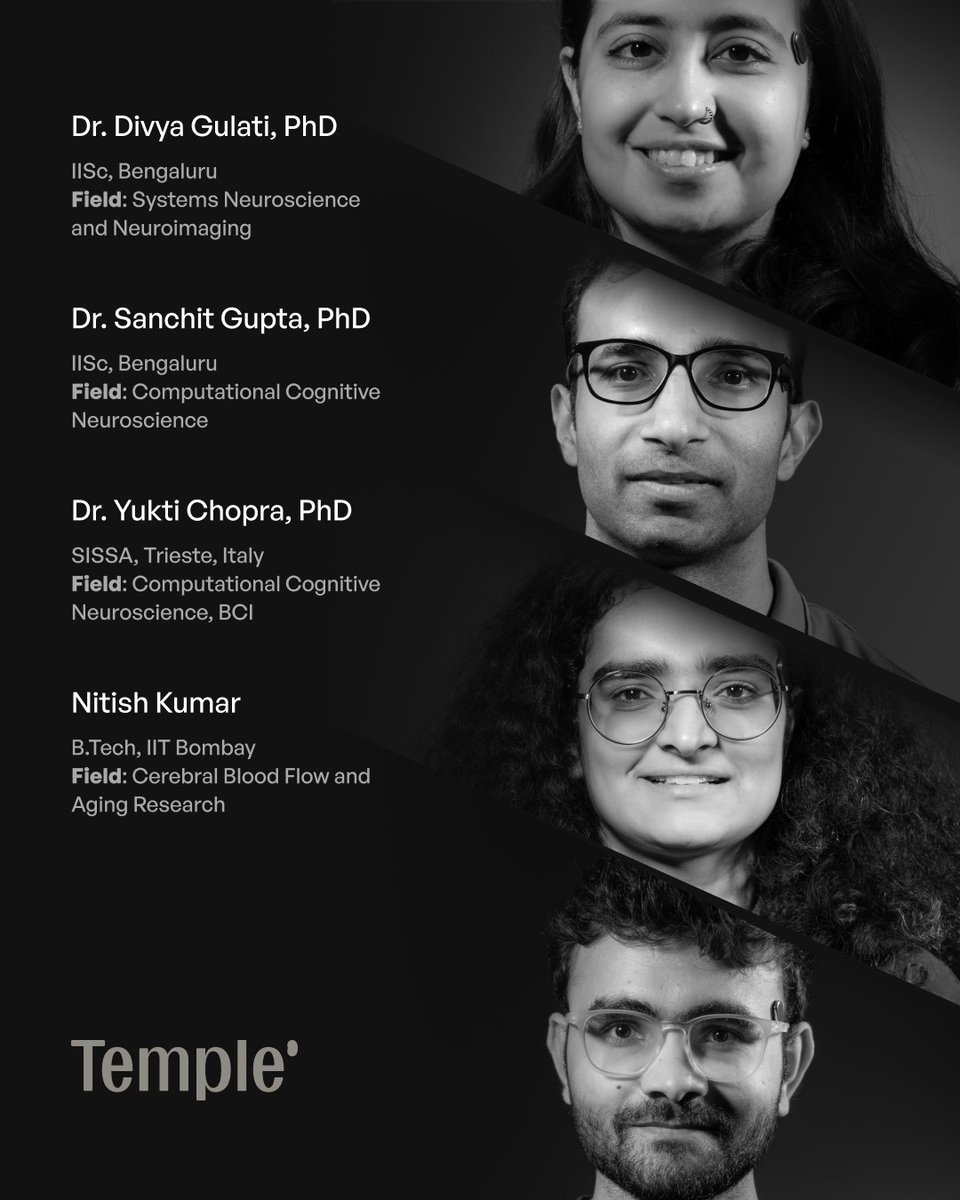
On that note, meet the Temple scientists behind Brain Flow: Dr. Divya Gulati (IISc), Dr. Sanchit Gupta (IISc), Dr. Yukti Chopra (SISSA Trieste), and Nitish Kumar (IIT Bombay).
This team led, built, and validated the first continuous, wearable measurement of blood flow to the brain.
Your brain uses 20% of your blood supply. It controls your hormones, sleep, immunity, and repair. That supply drops every year as you age, and you have never measured it. Even hospitals can only capture a single snapshot.
Measuring and maintaining brain flow could be one of the most important health and longevity interventions of our time.
At Temple, we have some of the best minds in the country, working on the one problem that sits upstream of every other: extending healthy human life.
I am proud of our team, and looking forward to a lot of firsts and breakthroughs in the future.
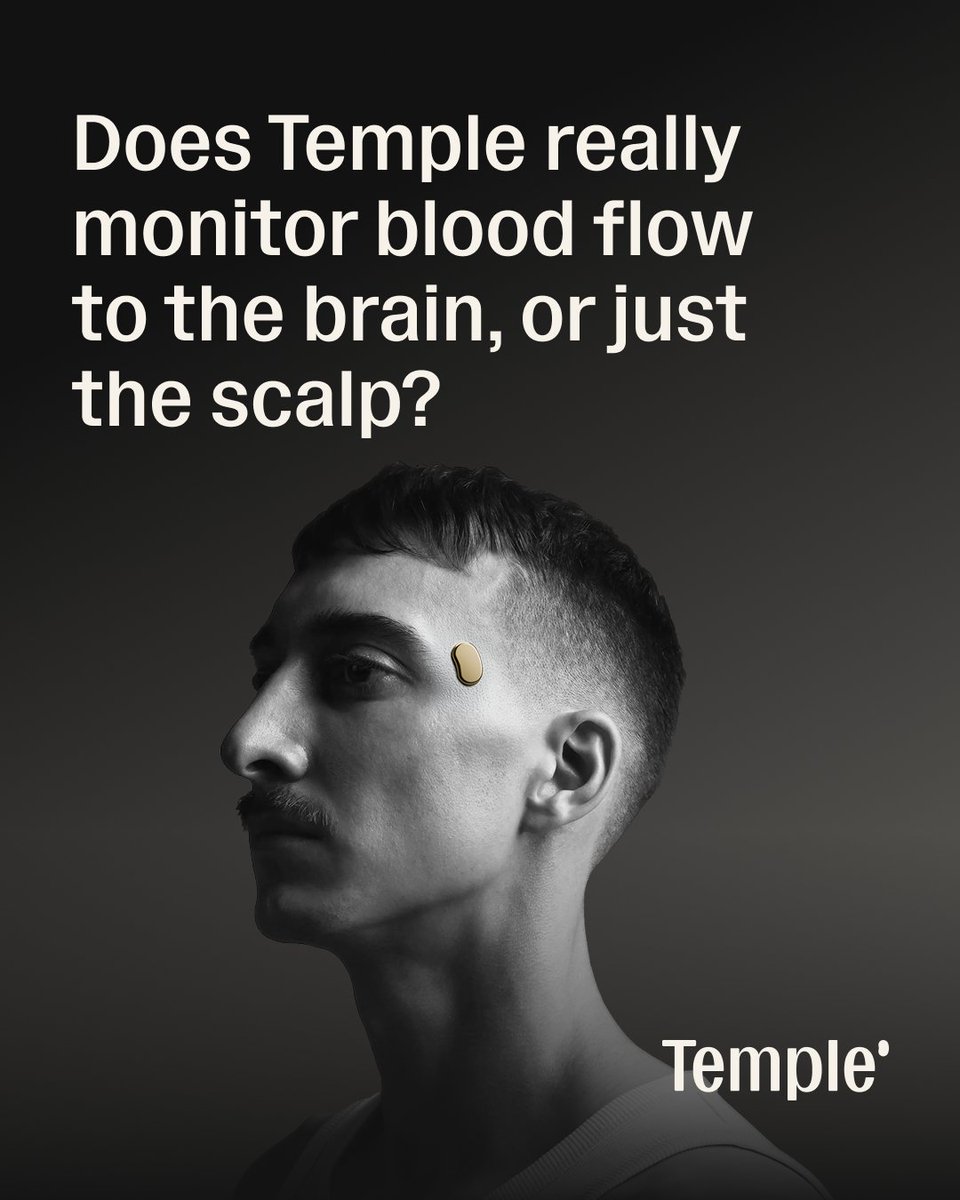
Does @temple really monitor blood flow to the brain, or just the scalp?
In our second validation study, we tested Temple BrainFlow against time-domain NIRS, one of the few technologies that can separate brain blood volume changes from scalp blood volume changes. We had 60 participants go through three physiological challenges: head-down tilt, stand-to-squat, stand-to-supine.
Across all three challenges, Temple BrainFlow tracked brain blood volume at r=0.84-0.91, significantly more than scalp blood volume. The most significant result came from head-down tilt, where Temple's correlation with the brain was 0.91, and scalp correlation was just 0.49.
Key takeaway: Temple tracks the brain, much more than the scalp.
Why this matters: Cerebral Blood Flow responds to almost everything longevity-oriented people already do. It rises with aerobic exercise, and VO2max correlates directly with it. It rises with cold exposure. It rises with meditation. Better sleep sustains it. It drops when you sit for too long. It drops when you are dehydrated. It is one of the most responsive and integrative biomarkers of how well your body is actually running, and aging.
Until now, you could only measure it in a clinical setting, in a single snapshot. Temple measures it continuously, in real time, while you live your life. And Temple is, as of today, the only wearable in the world with validations against brain blood volume, and not just scalp.
This study was guided by our Scientific Advisor, Prof. David Boas, Director of Boston University's Neurophotonics Center, and the mind behind several new, high-impact, biomedical optical technologies in neuroscience, including NIRS.
This is the second modality Temple BrainFlow is now validated against, after Transcranial Doppler. More coming soon.
Link:
https://t.co/zETs9gn5Cg
The paper is posted as a preprint and submitted for peer review. We encourage researchers to replicate this. We'll happily loan Temples to any qualified researcher who wants to pressure-test any of our metrics independently.
Cc @agingroy