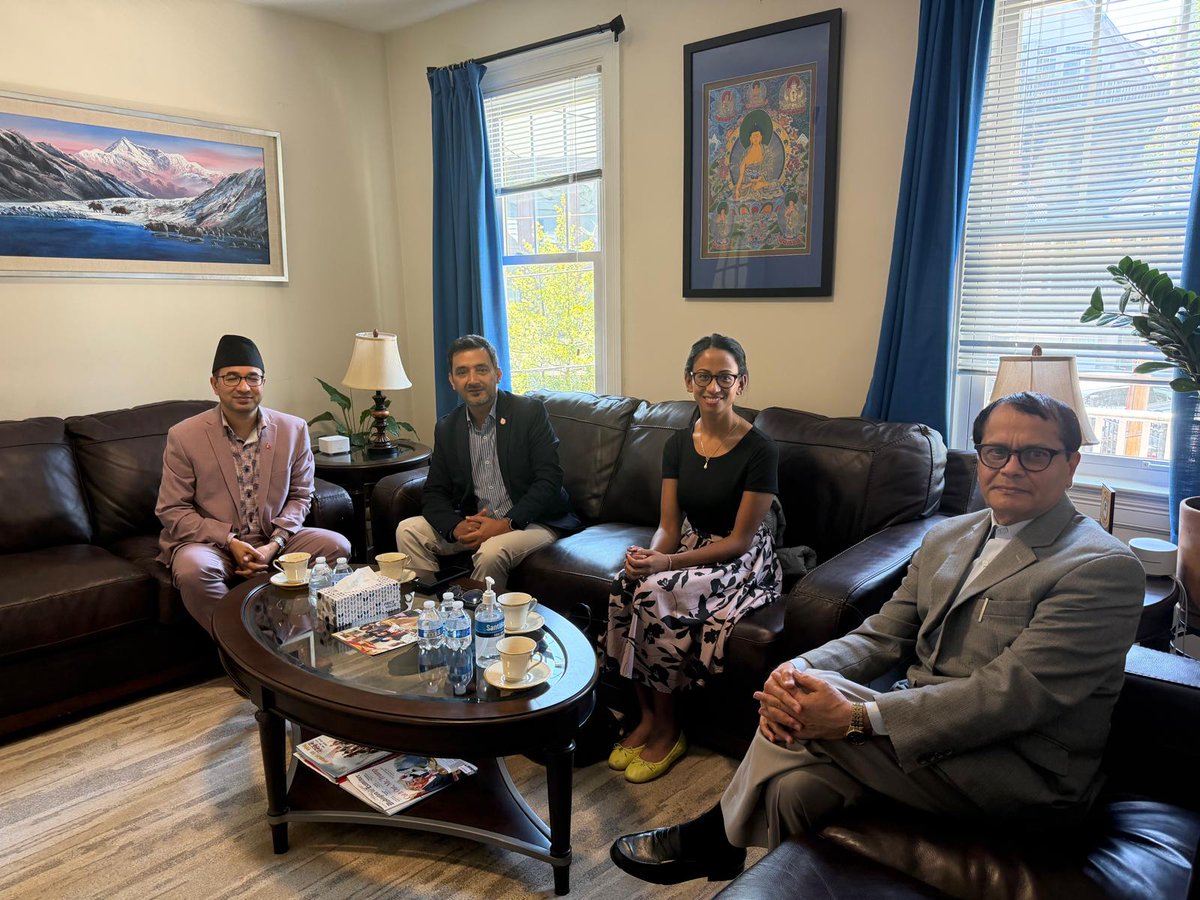
@thehimalayan covers the @Stanford dialogue on Diaspora Knowledge Engagement for Nepal, where @NPI_global presented its Diaspora Knowledge Bridges framework. The message: move beyond remittance-focused engagement toward structured knowledge partnerships.
https://t.co/45ejpmfOxa
NPI welcomes FM @SwarnimWagle’s budget move to prepare infrastructure for external voting rights of Nepalis Abroad. Since 2022, research led by @DhakalKhagen has advanced this agenda. NPI presented RSP Secretariat led by Wagle; direction endorsed same day. https://t.co/Oa0pHS9kdl
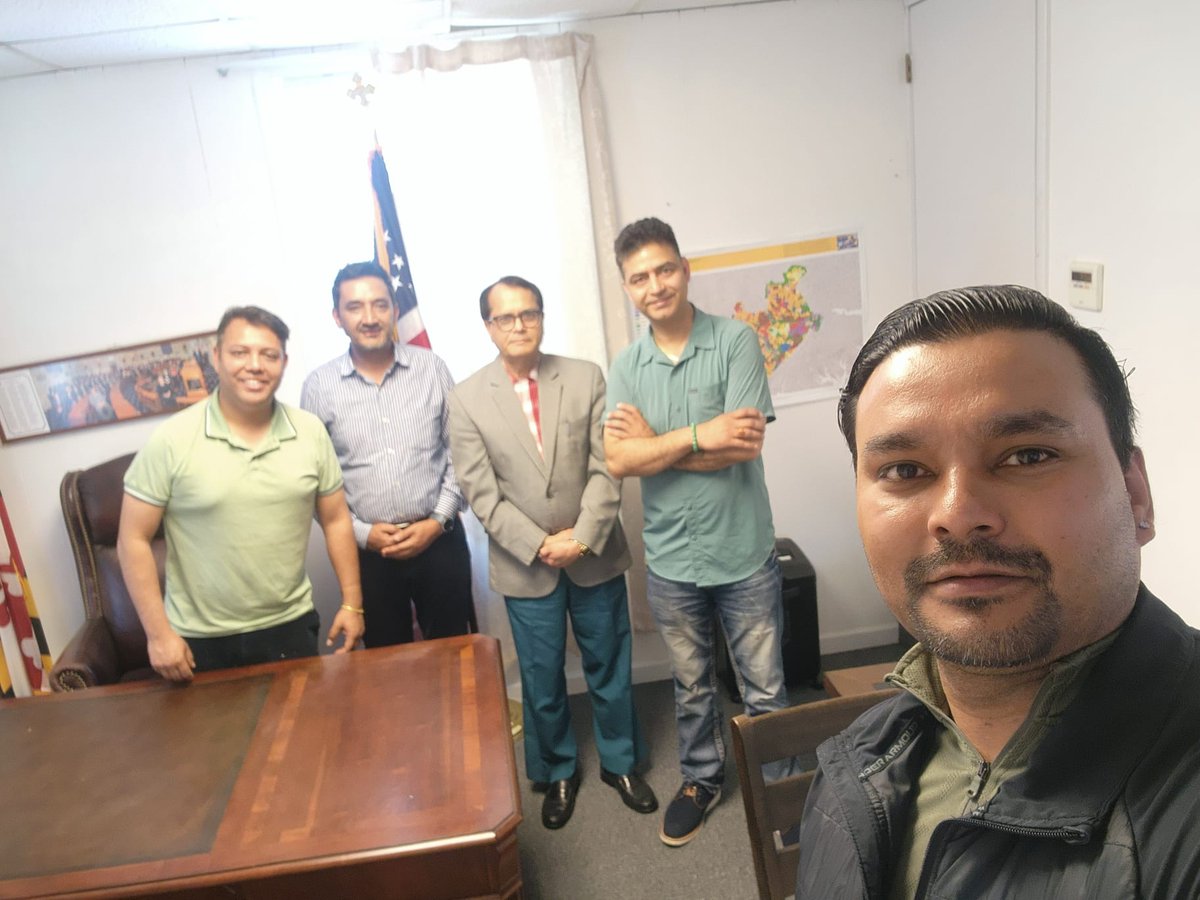
NPI Chair @DhakalKhagen met Maryland State Delegate @harry4maryland during his US visit, joined by ANA President Khagendra Adhikari. Discussion focused on diaspora engagement, knowledge diplomacy, external voting, and strengthening global Nepali networks for Nepal’s development.
Online Khabar covered the @Stanford policy dialogue where NPI Chair @DhakalKhagen shared the vision of “Knowledge Bridges for Nepal.” Nepal must better mobilize global Nepali knowledge, talent, networks, and innovation capacity for national transformation. https://t.co/DeGy1MeDjG
Chair of NPI @DhakalKhagen will speak tomorrow at Stanford University as part of the GNPN Kurakani Series on “A Roadmap for Diaspora Engagement: Building Knowledge Bridges for Nepal.” The session will focus on knowledge diplomacy and diaspora engagement for Nepal’s development.
he overwhelming votes for the @party_swatantra
reflect a collective signal of hope from voters whose aspirations were not fully addressed by established parties.
The real challenge now is to convert this hope into long-term public trust through credible governance.
A clear roadmap—100 days, 6 months, 1 year—to respond to the expectations of younger voters and reform-oriented citizens will be critical.
I shared these reflections in a conversation with OnlineKhabar Journalist @JanardanBaral .
👉 Watch the interview here and share your thoughts:
https://t.co/gihwdb7oei
@NPI_global #NepalElection2082 #GenZ
Early voting trends suggest that @party_swatantra could be heading toward a clean sweep.
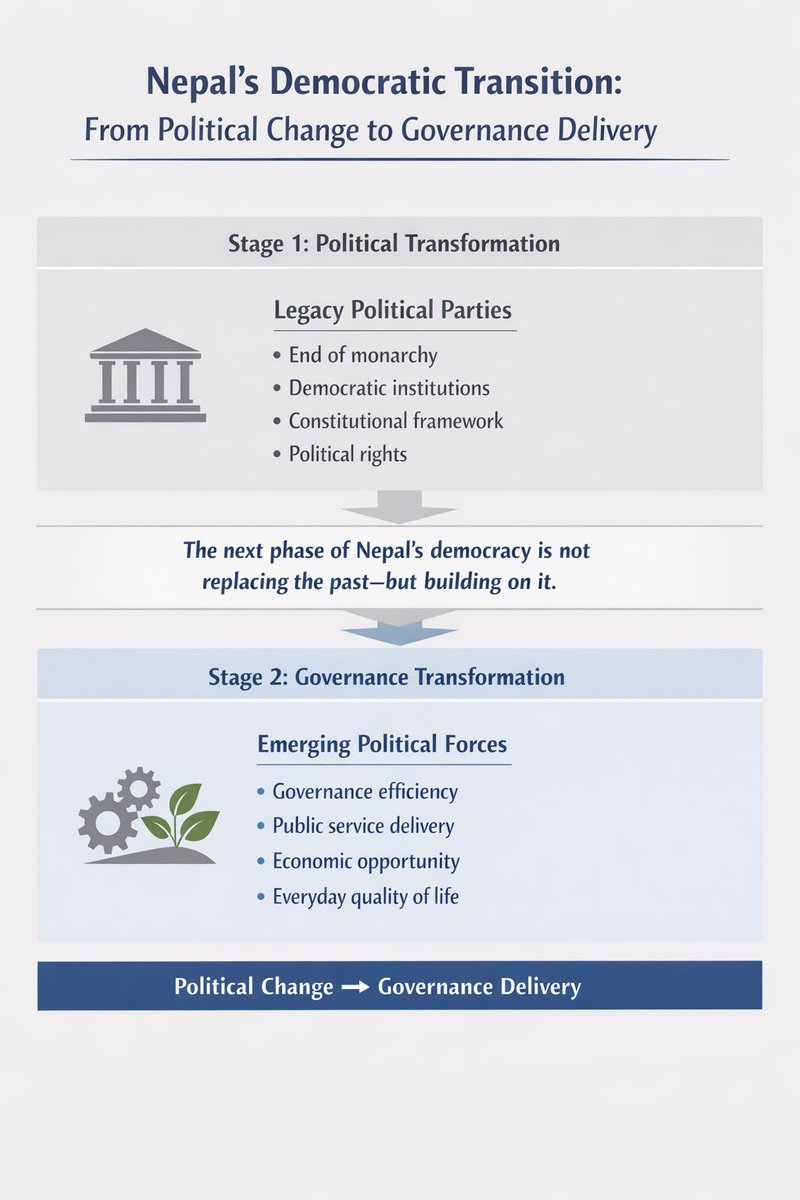
Yet the story goes beyond electoral math. What many labeled the “Gen Z movement” last September was not merely a Gen Z revolt—the election results reflected a broader civic frustration with the old parties that long anchored their legitimacy in their role in past regime changes, while everyday governance and development outcomes remained largely unchanged.
The signal from voters is increasingly clear: political change alone is no longer enough. An alternative political force is needed to close the governance and development efficiency gap—building on the democratic gains of the past while delivering better daily lives for citizens.
@NPI_global@GenZallianceNep@NepaliTimes@kathmandupost@thehimalayan@setopati@0nlineKhabar@ekantipur_com@bbcnepali
Voters don’t judge parties in absolute terms—they judge them against their own reference points. Old parties carry expectations shaped by long memories of disappointment. New parties benefit from fresher defaults, and young voters operate from a completely different baseline formed by the immediate past. This divergence is shaping Nepal’s pre-election mood.
As different generations anchor their expectations to different “defaults,” political momentum naturally shifts. Parties that fail to understand these shifting reference points risk speaking to a past that no longer exists—while those who align with emerging baselines gain disproportionate traction.
#NepalElection2026 #VoterBehavior #GenZNepal #PolicyInsight
🇳🇵“Nepal Moon Promises, Nation Builds” by economist Dr. Ram Acharya, who worked 25+ years with the Government of Canada.
A bold, realistic blueprint for Nepal’s future ahead of the March Election.
Read here 👉 https://t.co/ngy6vLHEkP
#Nepal#Policy#Economy#Governance
@NPI_global joined the Nepal People’s Forum on Sustainable Development 2025. NPI Board Member @SharuJShrestha highlighted gaps: SDG 5—35% progress on violence against women & children, SDG 8—unemployment ↑12% (target ↓4%), and NPI’s work on external voting. #SDGs#NPI#NIDWAN
A commendable policy moment. In an @Online_khabar interview, former Education Minister @SumanaShrestha explains how external and out-of-constituency voting make democracy more inclusive. Glad @NPI_global’s evidence-based recommendations are recognized.
https://t.co/33fbRP72Zw
@Online_khabar latest analysis presents a clear picture of where the national policy debate on external voting stands today. It is encouraging to see alignment between the evidence-based recommendations of both @Nepal_PRI and @NPI_global enabling voting rights for Nepalis abroad in 2026 elections. @thapagk Jee’s political commitment to expanding the franchise for millions of overseas Nepalis is an important step toward strengthening electoral legitimacy.
The analysis also reflects my assessment that, given the time constraints, i-Voting remains the most feasible and manageable option—a conclusion grounded in our study of available global technologies and implementation models.
Forward-thinking youth leaders from all parties may find this policy direction both timely and compelling.
Full story: https://t.co/JzyKXaelgG
@NepaliCongress@RONBupdates@paudelpradipNC@KulCGautam@NepalUnplugged@SharuJShrestha@PokharelBhojraj@anandanepali99@brupreti
@Online_khabar has published an in-depth analysis on Nepal’s external voting debate. NPI Chair @DhakalKhagen is quoted: “With the election date nearing, in-person or machine-based voting is no longer feasible for overseas Nepalis. i-Voting remains viable.” https://t.co/9u5j5EiHfF
Dr. Pralhad Karki highlights key insights from NPI Chair Dr. @DhakalKhagen's presentation at Nepal’s Federal Parliament Secretariat on i-Voting for 2026. His core message: “i-Voting is not just technology—it’s a bridge that restores connection and rights.”
https://t.co/Gn3j6he0f5
Can Nepalis abroad vote through i-Voting?
A new @RepublicaNepal discussion says YES — and the tech supports it.
Editor @KoshRKoirala asks sharp questions rooted in @NPI's research, and computer scientist @dovan_rai explains the real tech possibilities. https://t.co/0kzcRKScxq
External Voting is possible for Nepalis abroad. At the IGFF, NPI Chair @DhakalKhagen & Board Member @SharuJShrestha shared evidence showing that i-Voting is secure, practical & cost-effective. Voices unite for voting rights: Humla to the US, Europe & Asia. https://t.co/WyY3VftjFn