An Agriculture finance Expert with more than 10 years of Experience. Agriculture insurance is my Career!!! I am passionate on improving farmers' livelihoods.
𝐔𝐧𝐝𝐞𝐫𝐬𝐭𝐚𝐧𝐝𝐢𝐧𝐠 𝐑𝐢𝐬𝐤 𝐢𝐧 𝐀𝐠𝐫𝐢𝐜𝐮𝐥𝐭𝐮𝐫𝐚𝐥 𝐅𝐢𝐧𝐚𝐧𝐜𝐢𝐧𝐠
Agriculture plays a vital role in the economy by providing food, employment, and raw materials for industries.
However, it is also one of the most unpredictable and risky sectors to finance. Many factors such as weather changes, pests, diseases, and market price fluctuations make farming uncertain.
Because of this, both farmers and financial institutions must carefully consider risk before committing any funds to agricultural activities.
Risk in agriculture means the chance that actual outcomes such as yields, income, or profits will differ from what was expected.
For example, a farmer may expect to produce 100 bags of maize but end up with only 60 due to drought or pest damage. Such unexpected outcomes affect both the farmer and the lender, making agricultural finance a sensitive and risky investment area.
To manage these uncertainties, farmers must conduct proper risk assessment. Risk assessment helps identify potential problems, measure their possible impact, and develop ways to reduce their effects.
It is the process of understanding what might go wrong, how serious it could be, and how often it may happen.
There are three key aspects of risk assessment that are important in agricultural financing which are frequency, severity, and uncertainty.
The frequency of risk refers to how often a certain type of risk occurs. For instance, droughts may happen every three to four years, while pest infestations may occur each season.
By understanding the frequency, farmers can prepare better through measures like crop rotation, irrigation, or using resistant varieties.
The severity of risk shows how serious the damage 0r loss could be if the risk occurs. Some risks cause small losses, such as mild pest attacks, while others lead to total crop 0r livestock failure.
A good farmer must identify which risks are most harmful and take strong preventive actions such as insuring livestock or storing emergency feed.
Across Rwanda’s fertile landscapes, farmers continue to stand resilient but in a world of growing climatic uncertainties, resilience alone is no longer enough.
It now requires protection, foresight, and innovation. This is precisely what the National Agriculture Insurance Scheme (#NAIS), known as “Tekana Urishingiwe Muhinzi-Mworozi”, was designed to achieve.
Launched by the Government of Rwanda in April 2019, the scheme represents one of the country’s most visionary agricultural initiatives, a practical safety net that shields farmers and livestock keepers from the unpredictable forces of nature.
“The National Agriculture Insurance Scheme was introduced to help farmers adapt to the increasing effects of climate change,” stated Dr. @SolangeUwituze, Acting Director General at the @RwandaAgriBoard. ‘It provides protection to those whose livelihoods depend on farming and ensures that when disasters occur, they can recover quickly and continue to produce.’
Whether it’s drought, floods, pests, or animal diseases, #NAIS ensures that Rwandan farmers do not lose everything they have worked for. Instead, it empowers them to recover, rebuild, and continue producing with confidence.
Beyond compensation, the scheme has transformed agricultural financing positioning farmers as bankable partners. Today, 18 financial institutions, including banks, MFIs, and SACCOs, are confidently extending affordable credit to insured farmers, fueling innovation and investment across the sector.
So far, more than 189,000 crop and livestock farmers around 6% of all farmers nationwide have already reaped the benefits of this program.
To make this possible, over RWF 5.95 billion has been directed toward expanding farmers’ access to agricultural insurance, while RWF 8.19 billion has been paid out to those who suffered losses caused by drought, floods, pests, and other hazards. Of that amount, RWF 3.57 billion went toward livestock compensation, while RWF 4.62 billion supported crop farmers in their recovery.
This growing financial inclusion supports Rwanda’s long-term vision under the National Strategy for Transformation (#NST2), which aims to increase agricultural lending from 6% to 10% by 2029, strengthening one of the nation’s most vital economic pillars.
To ensure that every farmer understands the value of protection, an extensive mobilization drive is currently underway across the Eastern Province (@RwandaEast) specifically in @BugeseraDistr, @KireheDistrict, @NgomaDistrict, @KayonzaDistrict, @GatsiboDistrict, and @NyagatareDistr.
“We want farmers to understand that insurance is not a cost but a guarantee for the sustainability of their work,” emphasized Dr. Uwituze. “It is a key component of climate-smart agriculture.”
The National Agriculture Insurance Scheme has become a symbol of trust, a commitment to protect livelihoods and a foundation for food security across Rwanda.
As climate-induced shocks become more frequent and severe, one message remains clear: no farmer should remain uninsured. #NAIS stands as a strategic pillar for climate resilience, food security, and sustainable rural transformation.
Through NAIS, Rwanda continues to build an agricultural sector that is not only productive but also financially resilient, adaptive, and future-ready.
#TekanaUrishingiweMuhinziMworozi
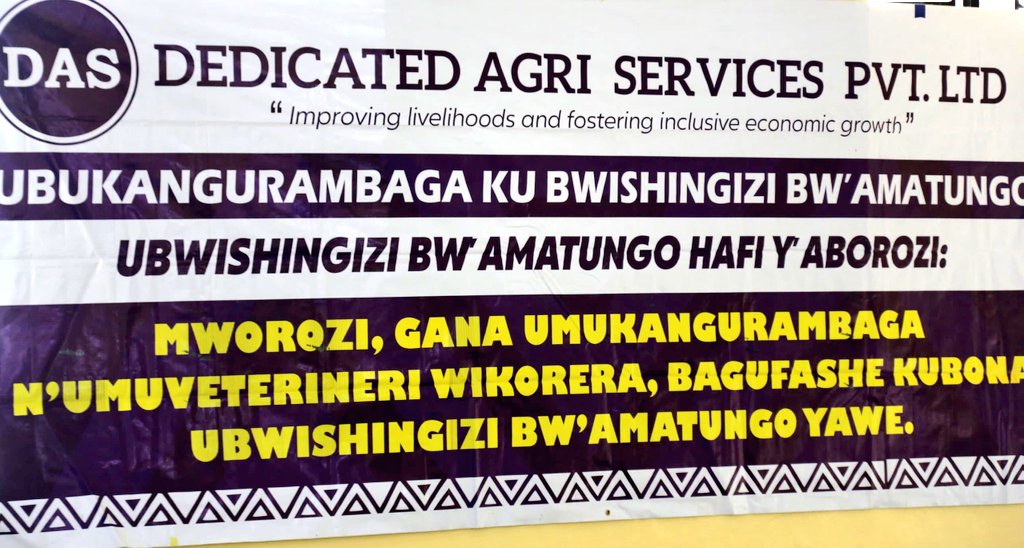
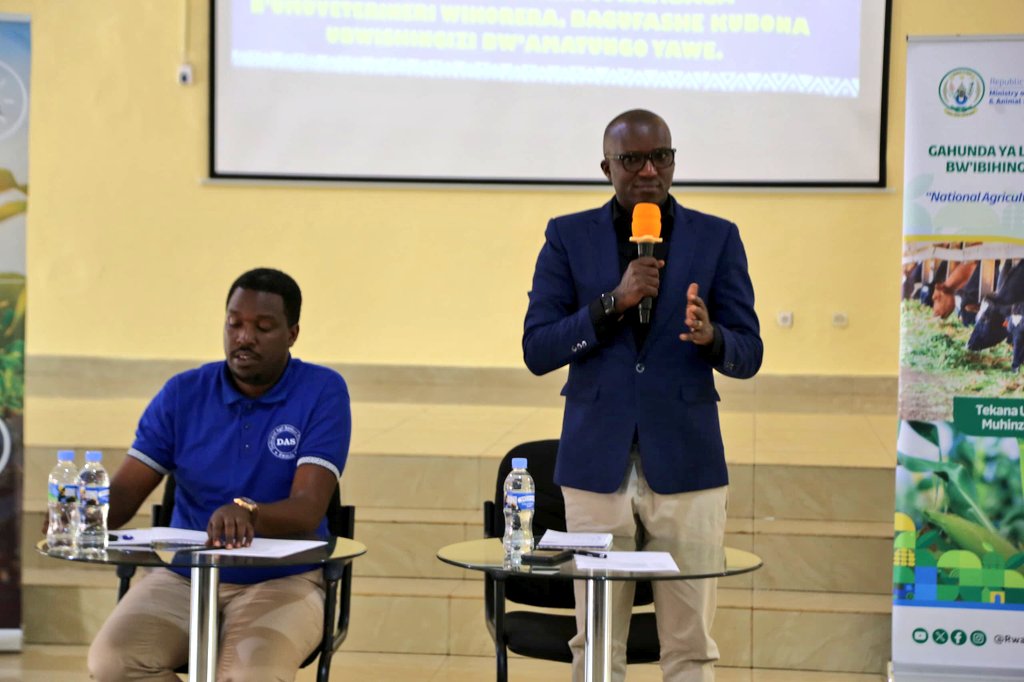
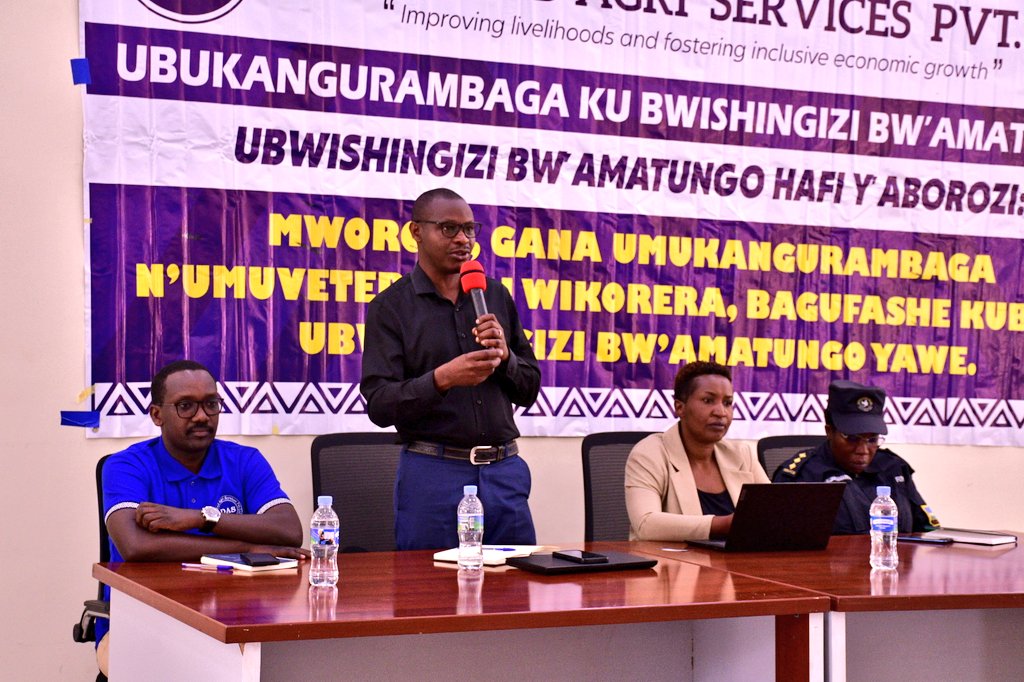
Ku bufatanye n'umushinga #DAS (Dedicated Agri Services Private Ltd) abahinzi borozi bahagarariye abandi bari mu nama y'ubukangurambaga ku bwishingizi bw'amatungo, basobanurwa gahunda ya "Tekana Urishingiwe Muhinzi-Mworozi" n'ingamba ubukangurambaga bugiye kugezwa ku borozi bose.
Habaye ubukangurambaga k' ubwishingizi bw'amatungo ku bufatanye n'ikigo DAS (Dedicated Agri Services Ltd) bwahuje ibyiciro binyuranye bifite aho bihuriye n'ubworozi n'abafatanyabikorwa mu bworozi ari bo #PRISM, #DESIRA, @WVRwanda na @compassion... 1/3
DAS advises & supports expansion of financial institutions into the agricultural sector & helps smallholder farmers with market-based financial services to support sustainable agriculture & agri-food value chains.
@RwandaAgri@AFRwanda@Kigali_IFC@CentralBankRw@RwandaFinance
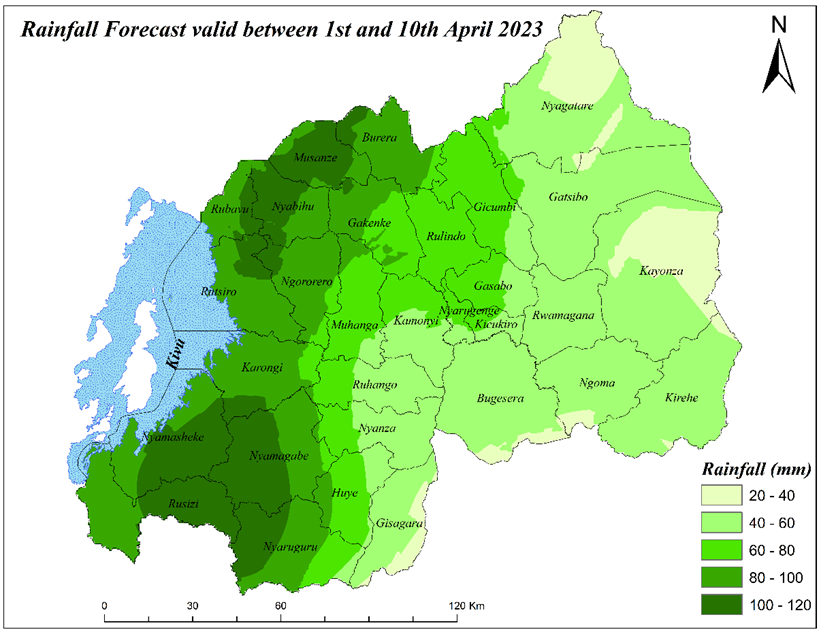
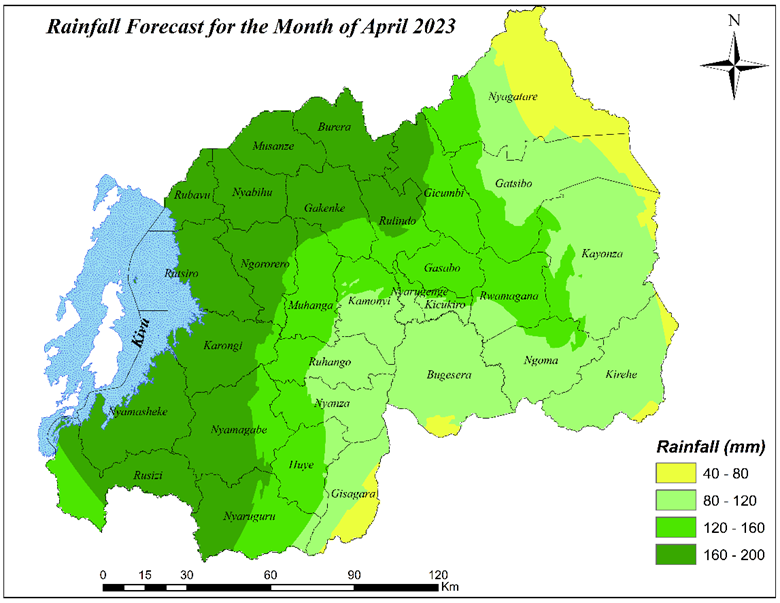
🛑10 days forecast: From 1st to 10th April 2023, rainfall ranging between 20 and 120 mm is expected across the country, a reduced rainfall compared to the rainfall recorded in last two dekads of March 2023. Details: https://t.co/HLYJWjFQsN
🚨Weather forecast for April 2023: The amount of rainfall ranging between 40 and 200 mm is expected across the country. The expected rainfall for the month of April 2023 will be slight within the range of Long-Term Mean. https://t.co/pw6L5QFdPv